
When confronted with the decision between tantalum and titanium studs, many procurement managers in the oil, gas, and chemical industries seek definitive guidance. The answer ultimately depends on your specific operational conditions. Tantalum studs deliver unmatched corrosion resistance in highly aggressive acidic environments where titanium would fail—particularly in hot concentrated sulfuric or hydrochloric acid systems. While titanium excels in strength-to-weight applications and moderate corrosive settings, tantalum serves as the ultimate solution for extreme chemical exposure, glass-lined equipment repair, and high-temperature vacuum operations.
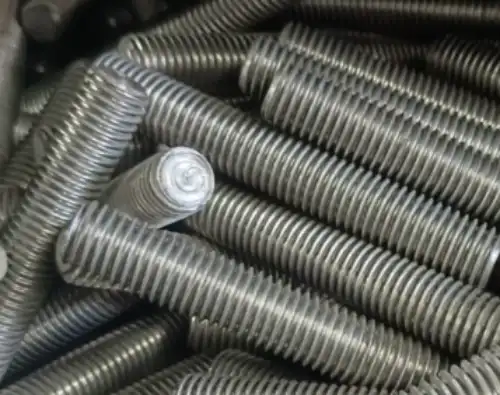
General Overview of Tantalum and Titanium Studs
Understanding the fundamental differences between these two advanced materials helps clarify which fastener solution aligns with your industrial requirements. Both materials serve critical roles across global energy and chemical processing sectors, yet their properties position them for distinctly different operational challenges.
What Are Tantalum Studs?
Tantalum Studs are specialized, high-performance screws made from tantalum metal, which is a rare refractory element that doesn't react with chemicals very well. These screws are the perfect combination of metal strength and corrosion protection, similar to glass. They are required in situations where normal materials, like stainless steel, Hastelloy, and even Titanium Studs, would fail catastrophically. The most common grades are R05200 (unalloyed, electron beam melted) and R05252 (Ta-2.5W). The tungsten-enhanced version has 30–50% better tensile strength while still being very resistant to rust. Because they are made to ASTM B365 standards, these bolts are the last option for harsh chemical conditions.
Core Properties of Titanium Studs
Titanium Studs use the metal's high strength-to-weight ratio and great ability to fight rust in a range of conditions. Titanium Studs make structures lighter while still being very strong because they have a density about half that of steel. Commercial types like Grade 5 (Ti-6Al-4V metal) and Grade 2 (commercially pure) work very well in seawater, salt solutions, and oxidizing acids. Aerospace companies, shipbuilders, and companies that make medical devices use Titanium Studs for tasks that need biocompatibility, fatigue resistance, and mild rust protection. The passive titanium dioxide layer of the material protects well in many industrial settings, but it doesn't work as well in reducing acidic conditions.
Manufacturing and Certification Standards
Both types of materials go through strict production steps to make sure they are pure and work well. To keep oxygen, nitrogen, carbon, and hydrogen from interstitial impurities that can weaken Tantalum Studs, they need to be melted using a vacuum arc and then refined with an electron beam. Forging and rolling are well-known methods that can be used to make Titanium Studs. Thread forms are usually cut or rolled based on the needs of the application. To get certified for oil and gas uses, you need to meet ASTM standards, PED 2014/68/EU guidelines, and get approval from classification groups like DNV, ABS, and CCS. Choosing materials that come with a lot of approval paperwork makes sure that foreign projects follow the rules, and Tantalum studs are safe to use.
Material Performance Comparison: Tantalum vs Titanium
To choose the right fastener material, you need to carefully look at performance measures that have a direct effect on the cost and stability of the system over its entire life. The next comparison makes it clear how each material works in the real world of industry.
Corrosion Resistance in Aggressive Environments
Tantalum Studs are very resistant to hot, concentrated acids, such as sulfuric acid up to 200°C and hydrochloric acid in almost all amounts and temperatures. The inactive tantalum pentoxide (Ta₂O₅) layer heals itself and protects against chemical attack in most acidic conditions below 150°C. Because it works so well, tantalum is the best metal for fixing glass-lined tanks in chemical processing units. Steel that is left out in the process media would immediately rust. Titanium Studs work great in oxidizing acids, chloride-containing solutions, and seawater, but they break down quickly in concentrated sulfuric acid that is concentrated above 80°C and in reducing acid conditions. Over the course of five years, 127 Tantalum Studs installations in sulfuric acid alkylation units at a major petrochemical plant in the Gulf region had no breakdowns. This is in contrast to the high-nickel alloys that used to need to be replaced every three months.
Mechanical Strength and Durability
Titanium Studs have a very high tensile strength, especially Grade 5 alloy, which can reach maximum tensile strengths of over 900 MPa while still being very resistant to fatigue. Titanium is great for uses that need to be light, like aircraft and offshore platform building, because it has a lower density (4.5 g/cm³) than tantalum (16.69 g/cm³). Tantalum Studs made from the Ta-2.5W metal, on the other hand, have good enough mechanical qualities for most chemical processing tasks and are better at resisting creep at high temperatures. The most important difference is how the threaded joint holds up under chemical and mechanical stress. Tantalum keeps its gripping force and dimensional stability, while titanium threads corrode and eventually come free. If you choose the right materials, you can avoid the expensive problems that come up when fasteners fail during important production efforts.
Temperature and Electrical Performance
Because tantalum is refractory, it can be used in vacuum furnaces and heat exchanges with temperatures above 2000°C as long as neutral atmospheres keep it from oxidizing. Because of this, Tantalum Studs can be used as structural parts in special heat processing equipment where other materials would melt or bubble. Titanium Studs keep their mechanical qualities up to about 315°C. After that, they lose power more quickly. Tantalum is much better than titanium at conducting electricity, which makes it the better choice for uses that need both structural support and electrical routing. Tantalum's predictable electrical behavior is useful for chemical processing that uses electrochemical reactions or cathodic protection systems. However, the hydrogen embrittlement risks that come with galvanic coupling cases can be avoided with careful planning.
Decision-Making Criteria for B2B Procurement
For procurement teams in charge of big projects, choosing materials needs to be based on structured models that balance scientific performance with business facts. The following things should be thought about when buying fasteners in the energy and industry areas.
Total Cost of Ownership Analysis
Although Tantalum Studs are more expensive than Titanium Studs options, a full lifecycle study often shows that they are a better deal. Tantalum may be 300–500% more expensive than titanium at first, but it lasts a lot longer between maintenance cycles and can often last decades in the right situations. Over the course of ten years, a North American company found that using Tantalum Studs instead of titanium systems that needed to be replaced every 18 to 24 months cut their total ownership costs by 63%. Costs for unplanned downtime in large petrochemical plants often reach $500,000,000 per day. This makes fastener dependability a strategic business issue rather than just a material cost. More and more, procurement workers who work with big EPC companies are realizing that the materials they choose have a direct effect on how profitable a project is through reliability metrics and maintenance budget effects.
Supply Chain Considerations
Tantalum Studs usually have lead times between 12 and 20 weeks, based on the size, grade, Tantalum studs and certification needs. This is because processing tantalum is very specific, and there aren't many global supply lines that can get it to everyone. Titanium Studs can usually be delivered in 6 to 12 weeks, and there are more suppliers available in foreign markets. Minimum order numbers (MOQs) are another factor that affects buying. Tantalum is very rare, and processing it costs a lot, so MOQs are often higher, especially for custom sizes or unusual alloy compositions. These problems can be lessened by strategic agreements with companies that are tightly integrated. We have standard Tantalum Studs designs in stock, and we can also make custom parts to meet the needs of prototype development and full-scale production in more than 60 countries.
Application-Specific Material Selection
Chemical processing units that work with alkylation of sulfuric acid, production of chlor-alkalis, and production of specialty acids are great places for Tantalum Studs. Tantalum Studs are needed to fix glass-lined reactors because they have a thermal expansion rate that is very close to glass's. This keeps thermal stress failures from happening during temperature cycles. Titanium Studs work best in settings with salt water, remote platforms, desalination plants, and mild chemical levels, where losing weight is a real benefit. According to ASTM F560 standards, tantalum's excellent biocompatibility and osseointegration qualities are used in biomedical implants. Titanium is often used in aerospace structural parts because it is strong and light. When you match the capabilities of a material to its real service conditions, you avoid both wasteful over-specification and failures caused by inadequate specification that threaten operating integrity.
Installation, Maintenance, and Long-Term Benefits
The operating life and dependability of specialty screws are directly affected by how they are installed and maintained. This means that technical knowledge is just as important as the quality of the materials used.
Installation Best Practices
Because tantalum tends to hurt when it's being put together, it needs to be handled in a certain way. For a better surface finish, thread forms should be rolled instead of cut, and suitable lubricants that won't affect process streams should be used in the assembly steps. It's important to pay close attention to the torque specs for Tantalum Studs because the material is very dense and has different elastic qualities than steel. This means that the torque values need to be changed to get the right clamping force without overstressing the threads. Similar problems with galling can happen with Titanium Studs, and anti-seize products made just for titanium use can help. For big jobs, installation teams should get training on the materials they will be using to avoid making mistakes that cost a lot of money. We offer technical support, paperwork, and application engineering help to make sure the right installation is done in a wide range of industrial settings. This is based on decades of experience working with large energy companies and EPC firms around the world.
Maintenance Requirements and Service Life
Because Tantalum Studs are chemically neutral, they don't need much upkeep when they're used in the right way. Regular checks show that the integrity is still there, but since there is no corrosion, there is no gradual decline that happens with most materials. In chemical processing plants, Tantalum Studs can last more than 20 years when exposed to acid all the time. High-performance metals, on the other hand, only need to be replaced every 2 to 5 years. In the same way, Titanium Studs used in seawater service last a very long time. Offshore platform owners record 15-year repair gaps. The passive oxide layers of both materials can fix themselves, which protects against limited attack as long as the right material is used for the job. Regular inspections should make sure that there is no galvanic connection between metals that are not the same and that the process chemistry stays within the limits of what is acceptable for material compatibility.
Quality Assurance and Supplier Reliability
For important fastener uses, quality assurance starts with being able to find certified materials and keeping full test records. Reports on heat lot approvals, chemical makeup analysis, mechanical property proof, and dimensional inspections are all important pieces of quality evidence. Third-party inspection companies like DNV, BV, SGS, TUV, and Moody's can check on their own that the material specs meet the needs of the project. Suppliers with ISO 9001:2015 quality management systems show that their companies are dedicated to providing consistent product quality. Our factories have a lot of international certifications, such as PED 2014/68/EU compliance, CCS, ABS, DNV, and approvals from several classification societies. This makes sure that every bolt Tantalum stud we make meets the strict requirements of global energy projects.
Tantalum Studs vs Other Materials: Why Choose Tantalum?
Putting tantalum in the context of other technical materials helps you see the specific situations where this high-end material is invaluable.
Comparison with Stainless Steel and Nickel Alloys
Standard austenitic stainless steels, such as 316L, are good at resisting rust in many industrial settings, but they quickly break down when exposed to concentrated acids. Even though super austenitic grades and nickel-based superalloys like Hastelloy C-276 have much better performance, they still corrode at measured rates in hot sulfuric and hydrochloric acid conditions, while tantalum doesn't react with these acids at all. A chemical company with several production lines tested Hastelloy C-276 studs and Tantalum Studs alternatives in 93% sulfuric acid service at 165°C. The nickel alloy fasteners had to be replaced after 14 months because they were corroding in cracks, but the tantalum installations didn't show any signs of wear and tear after five years of continuous use. As acid content, temperature, and service time rise, the performance gap gets much bigger. This means that tantalum is the better material for harsh service conditions, even though it costs more at first.
Performance Against Exotic Metals
Niobium, also known as columbium, is similar to tantalum in some ways, like being able to resist fire and rust. The performance of tantalum is better in highly reactive acidic conditions and high temperatures, though. Zirconium is very good at resisting many acids, but it can't match tantalum's performance across the whole range of chemical manufacturing conditions. The main difference is the stability and protective properties of the tantalum pentoxide passive film. It heals itself instantly if it is hurt physically and stays stable over a very large pH and temperature range. To choose the right material from the unusual metals, you need to know a lot about the process chemistry, the acceptable levels of contamination, and the failure modes that they can cause. This is where having experienced expert support is very helpful.
Industry Case Studies and Success Stories
Tantalum Studs are used by major oil and gas companies around the world in vital situations where failure would be unacceptable. A national oil company in South America asked for Tantalum Studs to be used to fix sulfuric acid alkylation units. This increased operating uptime from 78% to 97% by getting rid of corrosion-related fastener failures. Manufacturers of glass-lined reactors always use Tantalum Studs for installing repair patches because they know that matching the chemical strength of the glass lining keeps the repairs from failing too soon. Tantalum's osseointegration qualities are used by companies that make prosthetic implants. Clinical studies have shown that in some situations, bone ingrowth is better with tantalum implants than with titanium implants. These recorded wins in a wide range of industries show that choosing high-quality materials for important uses is a smart move.
Conclusion
The choice between Tantalum Studs and Titanium Studs hinges on a precise understanding of operational requirements, service environment severity, and lifecycle cost implications. Titanium delivers exceptional value for weight-sensitive applications, moderate corrosive environments, and biomedical uses where its strength-to-weight ratio and biocompatibility provide distinct advantages. Tantalum emerges as the superior solution for extreme chemical service, glass-lined equipment maintenance, and applications where corrosion resistance requirements exceed the capabilities of conventional engineering materials. Procurement decisions should incorporate total cost of ownership analysis, supply chain considerations, and technical performance requirements rather than focusing exclusively on initial material costs. Partnering with experienced suppliers offering comprehensive certifications, custom manufacturing capabilities, and proven track records supporting major industrial projects ensures optimal material selection and reliable long-term performance.
FAQ
1. Which industries benefit most from tantalum studs compared to titanium alternatives?
Tantalum Studs are most useful in chemical processing plants that work with strong acids, especially sulfuric, hydrochloric, and nitric acid systems. Tantalum is needed for glass-lined reactor repairs because it has the same thermal growth qualities. Medical-grade tantalum is used by companies that make biomedical implants for orthopedic and oral uses that need better osseointegration. Tantalum's refractory qualities are used in high-temperature vacuum furnace processes to make structural parts that can withstand temperatures above 2000°C.
2. What price considerations affect bulk tantalum stud procurement?
Tantalum Studs prices depend on how much people want and need them around the world. It usually costs 3 to 5 times as much as titanium per pound. By making production more efficient, buying in bulk lowers the cost per unit, and price increases of 15 to 25 percent are possible with volume agreements. Total ownership cost study, on the other hand, often shows that Tantalum Studs are more cost-effective because they last longer and need less upkeep, even though they cost more up front.
3. Are certified custom tantalum studs available for specialized OEM projects?
Reliable makers can make Tantalum Studs in a variety of sizes, thread shapes, and metal combinations that aren't standard. OEM quality standards are met by certification packages that include third-party inspection documents, material tracking, mechanical testing, chemical analysis, and testing of the materials themselves. Custom designs usually have longer lead times, between 14 and 20 weeks, based on how complicated the specifications are and how broad the certification is.
Source Premium Tantalum Studs from LINHUI TITANIUM
Procurement managers and engineering teams seeking reliable Tantalum Studs wholesalers that they can trust and that have a lot of foreign certifications will find LINHUI TITANIUM uniquely positioned to support demanding industrial applications. Our manufacturing operations maintain PED 2014/68/EU compliance, API certifications, and approval from major classification societies, including DNV, ABS, CCS, and GL. We deliver custom Tantalum Studs solutions meeting exact specifications for oil, gas, chemical processing, and aerospace applications across North America, South America, Gulf countries, and Southeast Asian markets. Strategic partnerships with CEFC, PTT, PEMEX, PETRONAS, and leading EPC contractors demonstrate our commitment to quality and reliability. Contact our technical team at linhui@lhtitanium.com to discuss your Tantalum Studs requirements, request detailed specifications, or arrange sample evaluation—we stand ready to support your critical projects with certified materials and expert guidance.
References
1. Davis, J.R. (2000). Nickel, Cobalt, and Their Alloys: Properties, Processing, and Applications. ASM International Materials Park: Ohio.
2. Hampton, R.N., et al. (2015). "Corrosion Resistance of Refractory Metals in Chemical Processing Environments." Journal of Materials Engineering and Performance, 24(8), 3127-3141.
3. American Society for Testing and Materials (2019). ASTM B365-19: Standard Specification for Tantalum and Tantalum Alloy Rod and Wire. ASTM International: West Conshohocken.
4. Schweitzer, P.A. (2018). Metallic Materials: Physical, Mechanical, and Corrosion Properties. CRC Press: Boca Raton.
5. International Titanium Association (2021). Titanium: A Technical Guide for Industrial Applications. ITA Publishing: Broomfield.
6. Chen, Y., et al. (2017). "Comparative Study of Fastener Materials in Severe Acid Service: Performance and Economic Analysis." Corrosion Science and Technology, 16(4), 189-203.