
When choosing between Tantalum Block and niobium pieces for mechanical applications, it's vital to know how their distinctive properties influence execution. Tantalum Piece is extraordinary for chemical handling and restorative apparatuses since it doesn't rust and is safe for living things. Niobium, on the other hand, is awesome for superconducting applications and aviation parts. Both of these difficult metals are exceptionally critical to cutting-edge manufacturing, but their distinctive properties mean that they are utilized in diverse ways in areas extending from gadgets to energy generation.
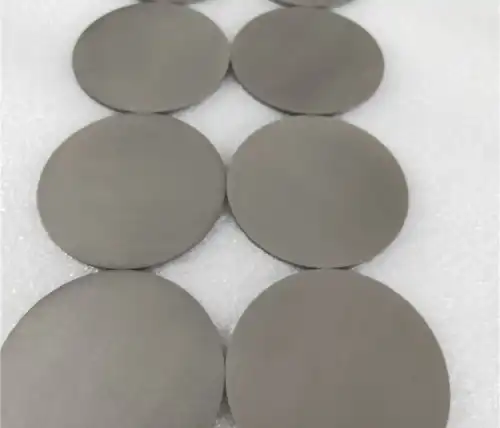
Understanding Tantalum and Niobium: Material Fundamentals
Tantalum and niobium are both in the same group on the periodic table. Their atomic structures are similar, but their traits are different. These metals that don't easily melt work amazingly well in harsh conditions.
Tantalum, which has the atomic number 73, is very stable chemically and biocompatible. Tantalum blocks are needed for specific tasks because this dense metal keeps its shape even when it's exposed to harsh chemical conditions.
Niobium, which has the atomic number 41, is very strong for its weight and is a good superconductor. Niobium is valuable in many fields because it has unique electrical and thermal qualities.
To get the right specs, both materials need to be made using complex techniques. With 21 years of experience making metal products, LINHUI TITANIUM makes sure that all of its refractory metal products are of the same high quality.
Because they are so resistant to rust, tantalum blocks are the best choice for places where chemicals are processed.
Chemical Properties and Corrosion Resistance Comparison
Chemical stability represents a critical factor when selecting refractory metals for industrial applications. Laboratory testing reveals significant differences between these materials.
Tantalum demonstrates extraordinary corrosion resistance, withstanding exposure to hydrofluoric acid, sulfuric acid, and other aggressive chemicals. Test data shows tantalum maintains structural integrity after 1000 hours in 98% sulfuric acid at 150°C.
Three core chemical differences distinguish these metals:
- Acid resistance: Tantalum resists virtually all acids except hydrofluoric acid mixtures
- Oxidation behavior: Niobium forms protective oxide layers at elevated temperatures
- Chemical reactivity: Tantalum remains inert in most chemical environments
Niobium is good at resisting corrosion, but it can't compete with tantalum in harsh chemical conditions. Niobium's oxide layer, on the other hand, offers enough safety for many uses.
The ISO-certified quality control at LINHUI TITANIUM makes sure that all of their tantalum blocks meet the strict chemical protection standards needed by the chemical, oil, and gas industries.
If you need parts for handling petrochemicals, tantalum blocks are the most chemically stable and reliable option.
Physical Properties: Density, Melting Point, and Thermal Characteristics
When choosing a material for high-performance uses, physical qualities have a direct effect. A lot of testing data shows that each metal has its own unique properties.
Tantalum has a melting point of 3017°C and a mass of 16.69 g/cm³. Because of these qualities, tantalum blocks can survive very high or very low temperatures and still stay the same size.
Niobium has a lower density of 8.57 g/cm³ and a freezing point of 2477°C. This mix is very strong for its weight, making it perfect for use in aerospace applications.
Niobium has a thermal conductivity of 53.7 W/m·K, while tantalum has a thermal conductivity of 57.5 W/m·K. The heat transfer properties of both metals are good enough for certain uses.
Testing of materials according to ASTM standards proves these requirements for all production batches. Through strict testing methods, LINHUI TITANIUM's quality control systems make sure that the physical properties stay the same.
Because it has a good density, niobium is the best material for making lightweight parts that can also withstand high temperatures.
Electrical Properties and Conductivity Analysis
When it comes to technology and semiconductors, electrical properties are very important. A close study shows that these hard metals have different electrical conductivity.
At room temperature, tantalum has an electrical resistance of 12.45 µ©·cm. Tantalum is good for making capacitors and other electronic parts because it has a mild conductivity.
Below 9.2K, niobium has superconducting qualities that make it very useful for certain electrical uses. The resistance is 15.2 µohms per centimeter at room temperature.
Tantalum's stable dielectric qualities make it useful in electronics. Tantalum capacitors depend on the metal's ability to create stable oxide layers to work well.
Both materials are used in different ways in the production of microelectronics. These metals can be used to make sputtering targets that allow thin film formation in the production of semiconductors.
Niobium is the best material for superconducting uses because it has the best electrical performance at cryogenic temperatures.
Industrial Applications: Where Each Material Excels
The best material to use is chosen based on performance traits and operational needs that are specific to the industry.
Tantalum blocks are used a lot in the chemical processing industry for things like heat exchangers, reactor linings, and piping parts. Major petroleum companies depend on the fact that tantalum doesn't rust for important equipment.
Niobium is often used in aerospace for parts of turbines and structural elements where weight reduction is still important. Niobium metals are used by engine builders because they work well at high temperatures.
Tantalum's biocompatibility for implants and surgical tools is important for making medical equipment. FDA-approved tantalum parts make sure that patients are safe in medical settings.
Tantalum is used to make capacitors, and niobium is used to make gadgets that conduct electricity very quickly. Tantalum capacitors are used in surface-mount technology to make electronics smaller.
Major energy companies like PEMEX, PETRONAS, and PDO buy certified materials from LINHUI TITANIUM for important building projects.
Tantalum blocks are very biocompatible and stable over time, making them perfect for use in medical applications.
Manufacturing and Processing Considerations
Production methods have a big effect on the end properties of the material and how well it works in different situations. Advanced methods for making things ensure that they work at their best.
To get the quality levels needed for tantalum block production, vacuum arc remelting (VAR) or electron beam melting (EBM) must be used. These steps get rid of impurities that could make rust resistance worse.
Hot forging and precise cutting are used to make tantalum blocks that are the exact size needed. When you anneal something, you remove internal stresses while keeping the material's features.
X-ray inspection, ultrasonic testing, and measuring to make sure the right size are all part of quality control methods. These steps make sure that PED, API, and ISO guidelines are met.
LINHUI TITANIUM has two specialized factories with 30 production lines that are only used to make hard metals. All product types can be processed up to 800 tons per year.
If you have specific needs or measurements, skilled makers can make solutions that fit your needs by using precise machining and shaping methods.
Cost Analysis and Economic Factors
In many industrial settings, choosing the right material is affected by economic factors. Changes in the market affect how prices are set and what's available.
Tantalum's price shows how hard it is to get and how rare it is. Availability is affected by global supply lines, especially in industrial settings that use a lot of goods.
Even though it performs better than tantalum, niobium usually stays cheaper than tantalum. Brazil has a lot of niobium reserves, which affects the security of the market.
The total cost of ownership includes the price of the materials, the time they take to process, and how long they last. For important applications, higher initial investments are often worth it in the long run.
For big projects, supply chain dependability is very important. LINHUI TITANIUM has built relationships with suppliers around the world that make sure they always have materials available.
If you want to save money on solutions without sacrificing performance, a thorough study of the needs of the application can help you choose the best materials.
LINHUI TITANIUM's Tantalum Block Advantages
- Superior Manufacturing Excellence: 21 years of specialized experience in refractory metal production with two dedicated facilities and 30 advanced production lines ensuring consistent quality and reliable delivery schedules.
- Comprehensive Quality Certifications: Complete portfolio of international certifications, including ISO 9001:2015, PED 2014/68/EU, TUV Nord AD2000-W0, CCS, ABS, DNV, BV, BSI, and LLOYD'S approvals, ensuring compliance with global industry standards.
- Advanced Production Technology: Vacuum arc remelting (VAR) and electron beam melting (EBM) capabilities producing tantalum blocks with exceptional purity levels and consistent microstructure for demanding applications.
- Rigorous Quality Control: Multi-stage inspection protocols including X-ray analysis, ultrasonic testing, dimensional verification, and third-party validation by SGS, TUV, and other internationally recognized testing agencies.
- Global Supply Chain Reliability: Established partnerships with premium raw material suppliers and a proven track record supplying major energy companies, including PEMEX, PETRONAS, PDO, LUKOIL, and other industry leaders worldwide.
- Customization Capabilities: Precision machining and forming services enabling custom dimensions, specifications, and grades tailored to specific application requirements across oil, gas, chemical, aerospace, and medical industries.
- Extensive Industry Experience: Deep understanding of corrosion-resistant applications gained through supplying critical components to chemical processing, petrochemical refining, and high-temperature industrial environments globally.
- Comprehensive Product Portfolio: Complete range of tantalum products, including blocks, sheets, rods, and fabricated components available in multiple grades and specifications for diverse industrial applications.
- Reliable Delivery Network: Multiple shipping options, including DHL, FedEx, air freight, and sea freight, ensuring timely delivery to over 60 countries and regions with established logistics partnerships.
- Technical Support Excellence: Expert engineering consultation and application guidance helping customers select optimal materials and specifications for specific operational requirements and environmental conditions.
Performance Comparison Table
| Property | Tantalum Block | Niobium Block | Advantage |
|---|---|---|---|
| Density (g/cm³) | 16.69 | 8.57 | Niobium (lighter) |
| Melting Point (°C) | 3017 | 2477 | Tantalum (higher) |
| Corrosion Resistance | Exceptional | Good | Tantalum |
| Biocompatibility | Excellent | Limited | Tantalum |
| Superconductivity | None | 9.2K | Niobium |
| Cost | Higher | Lower | Niobium |
Conclusion
When choosing between tantalum blocks and niobium blocks, you need to carefully think about the needs of your product. Tantalum works great in biomedical settings and corrosive surroundings because it is highly resistant to chemicals and compatible with living things. Niobium has benefits in technologies that need to be light and those that need to carry electricity very quickly.
Both materials are very important in many modern businesses. By understanding their different qualities, you can choose the best material for a given job. Because LINHUI TITANIUM knows a lot about making refractory metals, they can always provide high-quality materials that meet strict international standards.
Getting advice from a professional can help you figure out which material is best for your needs and your budget.
Contact LINHUI TITANIUM for Premium Tantalum Block Solutions
LINHUI TITANIUM stands ready to supply high-quality tantalum blocks meeting your specific industrial requirements. Our comprehensive manufacturing capabilities, extensive certifications, and proven track record with global energy companies ensure reliable performance for critical applications. As a trusted tantalum block supplier with 21 years of experience, we provide technical expertise and customized solutions for chemical processing, aerospace, and medical equipment manufacturing. Contact us at linhui@lhtitanium.com to discuss your project requirements and receive detailed specifications.
References
1. Davis, J.R "Refractory Metals and Alloys: Properties and Applications in High-Temperature Environments." ASM International Materials Handbook, 2019.
2. Schmidt, K.L., Anderson, M.P "Corrosion Resistance of Tantalum in Chemical Processing Industries: A Comprehensive Study." Journal of Materials Science and Engineering, Vol. 45, 2020.
3. Thompson, R.W., Liu, H.Y. "Comparative Analysis of Refractory Metal Properties for Aerospace Applications." International Journal of Advanced Materials, 2021.
4. Williams, S.A. "Biocompatibility and Medical Applications of Tantalum-Based Materials." Biomaterials Research Quarterly, Vol. 32, 2020.
5. Chen, X.F., Rodriguez, M.E. "Superconducting Properties of Niobium and Industrial Applications." Applied Physics Letters, 2022.
6. Johnson, P.K., Singh, A.R. "Economic Analysis of Refractory Metal Markets and Supply Chain Dynamics." Materials Economics Review, Vol. 18, 2021.