
Picking the correct titanium plate for a very important engineering task can mean the difference between a successful project and a costly failure of the material. The AMS 4911 plate design is a reliable guideline that engineers and purchasing managers all over the world use when choosing titanium for aerospace structures, chemical processing equipment, or underwater drilling parts. This Ti-6Al-4V (Grade 5) titanium metal has a great strength-to-weight ratio, has been shown to be resistant to corrosion, and is mechanically reliable enough for harsh conditions. When you understand the details of the AMS 4911 standard, you can make choices that meet both technical needs and government regulations.
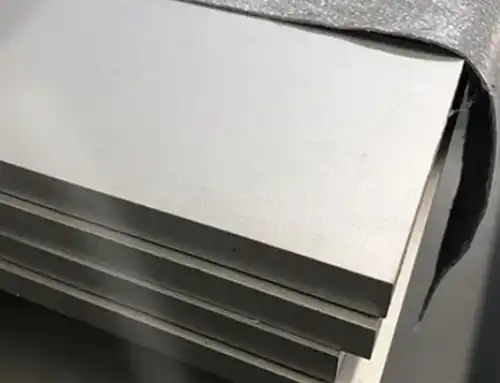
Understanding AMS 4911 Plate Specifications and Properties
When we look at what makes the AMS 4911 plate standard stand out among titanium materials, we see a carefully designed metal system that meets a number of performance requirements. This aerospace-grade Ti-6Al-4V material makes up almost half of all the titanium used in airplanes, which shows how reliable and useful it is in a wide range of challenging fields.
Chemical Composition and Elemental Control
An AMS 4911 titanium plate's metal makeup is limited to a specific set of elements that determine how well it works. The aluminum percentage is between 5.5% and 6.75%, which makes the solid solution stronger and lowers the mass. When the amount of vanadium is kept between 3.5% and 4.5%, it stabilizes the beta phase and makes the metal stronger at high temperatures. The maximum amount of oxygen is still 0.20%, and the maximum amount of iron is still 0.30%. These tight controls keep the crack toughness and stop it from becoming weak. To prevent hydrogen embrittlement, which is very dangerous in high-stress cyclic loading situations, the amount of hydrogen must stay below 150 parts per million. Controlling carbon, nitrogen, and other minor elements in the same way makes sure that the material behaves the same way in all output lots.
Mechanical Performance Parameters
When material is annealed, it has to meet strict standards for its mechanical properties according to the AMS 4911 guideline. The minimum final tensile strength is 130 ksi (896 MPa), and the minimum yield strength is 120 ksi (827 MPa). Different thicknesses have different elongation requirements, but most plate sizes need at least 10%. These features give the material the strength it needs for use in airplane bulkheads, engine parts, and pressure vessels. The density of the material is 0.160 lb/in³ (4.43 g/cm³), which makes it lighter than steel or nickel metals while still giving it higher specific strength. The temperature range for heat treatment processes is set by the beta transus temperature, which is about 1800°F (980°C).
Microstructure and Heat Treatment Considerations
In the AMS 4911 plate, the alpha-beta phase microstructure makes the best mix between strength, flexibility, and wear resistance. Careful control of the temperature during the annealing process stops the formation of continuous alpha networks at the edges of previous beta grains, which could hurt the wear performance. After air cooling, mill hardening usually takes place between 1300°F and 1450°F (704°C and 788°C). The heat process creates a smooth architecture with evenly spaced alpha grains in a changed beta matrix. The material that is made can be shaped and welded very well, and it still has the mechanical qualities needed for structural uses. After cutting or shaping, stress-relieving processes can be used to lower any remaining stresses without changing the material's features too much.
Corrosion Resistance in Harsh Environments
One thing that makes Ti-6Al-4V material that meets AMS 4911 standards stand out is that it doesn't rust in a wide range of chemical conditions. The titanium oxide layer forms naturally on surfaces that are uncovered. It protects against saltwater, chloride solutions, oxidizing acids, and many organic compounds. Because of this, the material is very useful for oil and gas uses, chemical processing equipment, and marine buildings, where other materials would break down quickly. While chloride conditions can cause pitting or crevice rust in stainless steels, seawater at high temperatures doesn't damage the titanium metal plate. The substance works well in hydraulic fluids for aircraft, jet fuels, and de-icing solutions, and it doesn't have any of the interaction problems that come with other aluminum alloys.
Comparing AMS 4911 Plates with Alternative Materials
For buying teams, knowing how AMS 4911 plate stacks up against other materials helps them make smart choices that match performance needs with project limitations and cost concerns.
AMS 4911 versus AMS 4910 Titanium Plates
The main difference between AMS 4911 and AMS 4910 specs is the product shape and the allowed range of sizes. AMS 4910 covers sheet and strip products that are usually less than 0.187 inches thick, while AMS 4911 covers plate products that are usually thicker than this. Both requirements call for the same Ti-6Al-4V alloy make-up and mechanical qualities that are similar when the metal is annealed. But making AMS 4911 plates requires different rolling methods and quality control steps that work better for thicker parts. Buyers who want to select solid parts with a lot of thickness should look at AMS 4911 to make sure they are getting the right materials. The standards for testing more often and taking samples are also different between these specifications. This is because making sheets versus plates has different difficulties.
Grade 5 Titanium versus Other Titanium Alloys
When you compare Grade 5 titanium to widely pure titanium grades, you can see that they work very differently. Commercially pure types of titanium, such as Grade 2, are better at resisting rust and can be shaped more easily, but they only have a tensile strength of about 50 ksi (345 MPa). When the load-bearing ability of the structure determines the material choice, the AMS 4911 plate is much stronger and more resistant to rust. Grade 5 is a better mix of cost, supply, and weldability compared to high-strength titanium alloys like Ti-6Al-2Sn-4Zr-2Mo. However, it can't match the performance at high temperatures of near-alpha alloys. Many businesses use Ti-6Al-4V, which has led to a lot of production infrastructure and qualification data. This makes it safer to buy than more specialized titanium grades.
Titanium Alloy Plate versus Stainless Steel and Aluminum
Titanium's higher density than stainless steel makes it a much better choice for uses that need to be lightweight. Grade 5 titanium is about 40% lighter than austenitic stainless steels, but it is just as strong or stronger. This directly leads to higher payloads in space uses and better fuel economy in transportation systems. Titanium alloys are much weaker at high temperatures than aluminum alloys, and they don't rust as well in coastal settings. Even though aluminum costs less per pound, titanium pieces that are smaller can often make parts lighter and may lower the cost of the whole system. When choosing a material, you need to think about how much it will cost to make it. For example, titanium needs different tools and welding techniques than other metals.
Procurement Considerations for AMS 4911 Titanium Plates
To make sure your project gets real, compliant AMS 4911 plate material, you need to carefully look at the skills, licenses, and supply chain stability of potential suppliers.
Supplier Certification and Quality Management Systems
Responsible titanium buying starts with checking the certifications of suppliers. Manufacturers with a good reputation keep their AS9100 quality management system certification up to date. This adds controls for aircraft to the ISO 9001 standards. This certification shows that quality assurance, configuration control, and tracking can be done in a planned way. The seller should be actively accredited by well-known aircraft primes and keep up with approval status with major OEMs. Carefully look over certification scopes to make sure they cover making titanium plates as well as selling or distributing them. Certifications from classification groups like DNV, ABS, and Lloyd's Register show that a supplier can provide equipment for marine and offshore uses, while PED 2014/68/EU certification shows that the supplier meets the standards for pressure equipment in Europe.
Material Traceability and Mill Test Documentation
Every shipment of AMS 4911 plate should come with full mill test records that show the plate's chemical makeup, mechanical qualities, and heat treatment history. These certificates need to include the exact heat number and lot number so that they can be linked back to the creation of the melt. The chemical analysis results should show real numbers for all the elements that were asked for, not just proof that they meet the requirements. The tensile test results must show the final tensile strength, the yield strength, the elongation, and the decrease in area numbers for samples from the real production lot. Check the positions and shapes of the test specimens to make sure they match the material you'll be using. Ultrasonic testing results according to AMS 2631 should be sent with plates to make sure they are sound inside and don't have any dangerous breaks.
Global Supply Chain and Delivery Capabilities
Checking a supplier's location and how well they can handle shipping can help make sure that materials are always available for projects that span more than one place. Leading makers keep strategic stock levels in North America, Europe, Asia, and the Middle East's most important markets. This cuts down on wait times and shipping costs. Suppliers who already work with international freight forwarders can handle the complicated export rules and customs steps that come up when shipping titanium. Different providers have very different minimum order sizes, which can be as low as one plate for prototype work or as high as a truckload for production projects. Finding out a supplier's production schedule and how flexible they are with their commitments can help you plan when to buy things based on project goals. Vendors that offer vendor-managed inventory programs or barter deals can help you save money on working capital while still making sure you have access to materials.
Custom Processing and Value-Added Services
In addition to standard plate supply, providers who give services like precision cutting, heat treatment, and surface finishing are useful for many uses. Suppliers who can do waterjet cutting, electrical discharge machining, and laser cutting can give you net-shape or nearly net-shape blanks that cut down on the time and material you AMS 4911 plate waste during machining. Some heat treatment services, like stress relief and custom annealing, can make the qualities of a material better for certain welding or forming operations. Bead blasting, chemical milling to get rid of alpha case, and precision grinding to get close to thickness limits are all surface finishing choices that add value and help your supply chain work together better. When looking at these services, make sure the provider has the right process controls in place and can show proof of the processing parameters and the state of the material afterward.
How to Select the Right AMS 4911 Plate for Your Project
To choose the right materials, you need to follow an organized process that takes into account technical needs, legal compliance, and realistic purchasing factors.
Analyzing Load Requirements and Service Conditions
Before you make your choice, make a detailed list of the mechanical loads, temperature exposures, and weather conditions that the part will be subjected to while it is in use. Static tension loads are only one part of the stress system. When you load something repeatedly, it can cause fatigue, which means you need to pay attention to how tough the material is and how well it stops cracks from spreading. These issues are taken care of by the AMS 4911 plate standard, which has microstructure limits that improve fatigue performance. The operating temperature has a big impact on the choice of material because it changes how strong, resistant to creep, and oxidizing it is. Up to about 600°F (315°C), grade 5 titanium keeps its useful qualities. Above that temperature, near-alpha or beta metals may be better. Contact with corrosive media, whether it's long-term soaking or short-term exposure, affects the choice of material and may need extra surface treatments or protective coatings.
Determining Optimal Thickness and Dimensional Requirements
When choosing a plate width, you have to balance the needs of the structure with the weight and production limitations. Thicker pieces can hold more weight and are less likely to break, but they are heavier and may make the making process more difficult. The AMS 4911 standard covers layers from about 0.188 inches to several inches, and the mechanical features stay mostly the same throughout this range. Standard plate sizes of 48 inches by 120 inches work for many uses, but big structure parts can be made to order in any size. When choosing the orientation of the plate in relation to the main stress directions, you should think about how the grain orientation affects the mechanical properties, since these properties can change from longitudinal to transverse directions. Material yield and manufacturing costs are all affected by tolerances for thickness, standards for flatness, and edge condition specs.
Evaluating Fabrication and Joining Methods
Your industrial process has a big impact on the materials you choose and the rules you have to follow when buying them. Annealed Ti-6Al-4V is very flexible, which makes it good for cold forming, but you need to be careful about spring-back and tool wear. Hot forming and superplastic forming at high temperatures make it possible to make complicated forms, but they take more time and cost more. Grade 5 titanium can be welded using gas tungsten arc welding, plasma arc, or electron beam methods, as long as the right shielding gas coverage keeps oxygen and nitrogen from picking up. Because the AMS 4911 plate can be welded, it can be used for built-up parts where the properties of the welding joints need to match those of the base metal. Because of how Ti-6Al-4V cuts, it's important to use the right cutting speeds, tool materials, and water to get a good surface finish and tool life.
Confirming Regulatory Compliance and Industry Standards
Titanium materials must meet different approval and paperwork standards in different businesses. Most aerospace uses need full material tracking, proof of heat treatment, and testing according to AS9100 quality systems. The AMS 4911 guideline is an aerospace standard that ensures materials always have the same qualities for uses that are very important for safety. For uses involving pressure vessels, it may be necessary to follow National Board or ASME codes, which may mean more testing and paperwork. Biocompatibility testing is needed for medical device parts, and special melting techniques may be needed to keep trace element levels in check. More and more uses in the oil and gas business use NACE standards for sour service environments. However, Grade 5 titanium usually works well in fluids that contain H2S. Titanium sales to some countries are limited by export rules that require export licenses or compliance certifications, which your provider should take care of on your behalf.
Case Studies and Practical Examples of AMS 4911 Plate Applications
The AMS 4911 plate material answers important engineering problems in a wide range of businesses and working conditions, as shown by real-life examples.
Aerospace Structural Components
To fix problems with fatigue cracking on high-cycle airplanes, AMS 4911 plate a major commercial aircraft maker switched some structural parts from aluminum to Ti-6Al-4V. When compared to older aluminum designs, wing attachment parts made from AMS 4911 conforming material had fatigue life gains of over 300%. Because titanium is stronger than steel, its width could be lowered to balance out its higher density. This saved about 15% of the total weight of each component. Because of corrosion resistance, cadmium plating and chromate conversion coats were no longer needed. This made upkeep easier and caused less damage to the environment. The material worked better than aluminum in the corrosive salt-fog climate of coastal activities, where metal showed pitting and exfoliation corrosion after long service.
Chemical Processing Equipment
A petroleum plant asked for an AMS 4911 plate for heat exchanger parts that would be used with acidic process streams at high temperatures. Stress corrosion, breaking, and pitting corrosion occurred in older stainless steel equipment, which meant it had to be shut down and replaced often. The titanium plate material was completely resistant to the chloride-containing process fluids and kept its mechanical properties at temperatures up to 232°C (450°F). Equipment made from Ti-6Al-4V had a service life of more than ten years without any noticeable rust or degradation. This is in contrast to stainless steel equipment, which needs to be replaced every three years. The higher cost of the materials at first was balanced out by lower upkeep costs and more process availability.
Offshore Oil and Gas Applications
A company that makes underwater equipment made drilling shafts out of Grade 5 titanium plate to make them lighter and more resistant to corrosion in offshore uses. Because the material is so strong for how light it is, it was possible to make risers that lowered topside loads by almost 40% compared to regular steel risers. Seawater rust resistance got rid of the need for cathodic protection and the upkeep that came with it. During the drilling process, the AMS 4911 plate-fabricated parts were able to handle the repetitive loads from wave action and current-induced vibrations. Material tracking and approval to the standards of the ABS classification society ensured that the safety-critical application would be accepted by regulators. Titanium is now used more in underwater control systems and pipes because of its successful deployment.
Conclusion
Choosing Grade 5 titanium plates that meet the AMS 4911 plate standard has been shown to work well in challenging aircraft, industrial, and chemical processing settings. The material is very strong for its weight, doesn't rust, and is mechanically reliable. These properties make it ideal for use in a wide range of settings. By reading the full specs, contrasting different options, and checking out the supplier's skills, you can be sure that the purchases you make meet expert needs and government rules. The case studies show real benefits that were gained by strategically implementing titanium. This page has a lot of information that will help you choose the right materials for your next project. You can be sure that the choices you make will be the best ones in terms of performance and total costs.
FAQ
1. What distinguishes the AMS 4911 plate from the standard ASTM B265 Grade 5 titanium?
AMS 4911 plate is an aerospace-grade standard that calls for more frequent testing, better structural controls, and lower tolerances for defects than ASTM B265 Grade 5 material used in industry. Both standards cover the same Ti-6Al-4V metal, but AMS 4911 requires stricter quality control measures, such as ultrasonic inspections in line with AMS 2631 and more frequent mechanical tests. These extra controls are helpful for aerospace uses because they make sure that materials always work well in safety-critical parts.
2. Can you weld AMS 4911 plate materials successfully?
The AMS 4911-compliant Ti-6Al-4V metal is very easy to join using gas tungsten arc welding, plasma arc welding, and electron beam welding. Strong inert gas protection with argon or helium is needed for successful welding to keep oxygen and nitrogen from getting into the metal during the thermal cycle. The right joint design, choice of filler metal, and checking after the weld make sure that the weld qualities meet or go beyond the requirements of the base metal.
3. What maximum service temperature applies to AMS 4911 plate applications?
Grade 5 titanium usually works well for long periods of time at temperatures up to 600°F (315°C). After this temperature, oxidation speeds up and, based on the stress level, creep qualities may get worse. Applications that need to work at higher temperatures should look at near-alpha titanium alloys that are made to work at high temperatures.
Partner with LINHUI TITANIUM for Premium AMS 4911 Plate Supply
LINHUI TITANIUM can meet your urgent needs for titanium plates with certified AMS 4911 plate material, full quality paperwork, and the ability to send plates all over the world. We have sold hundreds of thousands of tons of high-quality titanium products to big energy companies like PETRONAS, PEMEX, and LUKOIL, as well as to top EPC firms around the world, since 2000. We have a world distribution network that goes to over 60 countries in North America, South America, the Gulf region, Africa, and Southeast Asia. It starts in our Xi'an offices. As a verified producer of AMS 4911 plates with AS9100, PED 2014/68/EU, and certificates from several classification societies, such as DNV, ABS, CCS, BV, and Lloyd's Register, we provide fully traceable materials that are guaranteed to meet aircraft and industrial standards. Our all-in-one titanium goods store has a wide range of grades, sizes (from 0.5mm to 150mm), and extra services like precision cutting, heat treatment, and surface finishing. Email our technical team at linhui@lhtitanium.com to talk about your specific project needs and get reasonable quotes for AMS 4911 plate supplier deliveries in bulk that come with full mill test paperwork and certification packages.
References
1. SAE International. "AMS 4911: Titanium Alloy, Sheet, Strip, and Plate 6Al-4V Annealed." SAE Aerospace Material Specification, 2018.
2. Boyer, R., Welsch, G., and Collings, E.W. "Materials Properties Handbook: Titanium Alloys." ASM International, Materials Park, Ohio, 1994.
3. Donachie, Matthew J. "Titanium: A Technical Guide, 2nd Edition." ASM International, Materials Park, Ohio, 2000.
4. Peters, M., and Leyens, C. "Titanium and Titanium Alloys: Fundamentals and Applications." Wiley-VCH Verlag GmbH & Co., Weinheim, Germany, 2003.
5. Lutjering, Gerd, and Williams, James C. "Titanium, 2nd Edition: Engineering Materials and Processes." Springer-Verlag, Berlin, 2007.
6. ASM Handbook Committee. "ASM Handbook Volume 2: Properties and Selection: Nonferrous Alloys and Special-Purpose Materials." ASM International, Materials Park, Ohio, 1990.









