
Knowing the main differences between seamless and welded construction is important for project success when choosing a titanium rectangular tube for industry uses. Seamless tubes have a regular grain structure and no joint lines, so they can withstand more pressure and keep their shape better. Welded tubes join titanium strips using advanced fusion techniques. They are a cost-effective option for everyday tasks and keep their great mechanical and corrosion-resistance properties.
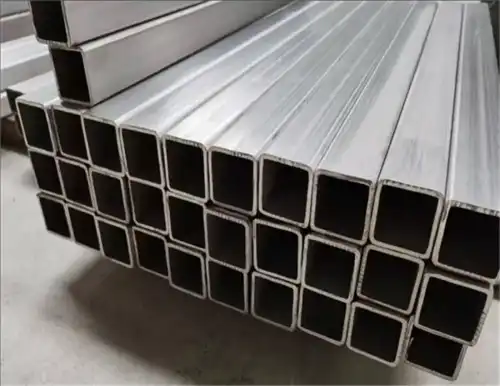
Understanding Manufacturing Processes: How Construction Methods Impact Performance
The methods used to make titanium rectangular tubes have a big effect on their final properties. Solid titanium billets are used to make seamless tubes. This can be done by hot extrusion or cold drawing. This method gets rid of all weld gaps, making the material properties the same all the way through the tube wall.
Titanium strip or coil is used to make welded tubes. Advanced welding methods, such as TIG (Tungsten Inert Gas) or laser welding, join the sides in a controlled atmosphere. The area around the weld is heated to recover the material's properties and get rid of any remaining stress.
Important Differences in Manufacturing:
- Seamless: Made from a single piece of solid brass
- Welded: strip making with tight joining methods
- Different methods have different needs for heat treatment.
- Quality control looks at many important areas.
If you need the strongest structure possible for high-pressure uses, seamless building is the best choice. Welded tubes are good for projects that need specific sizes and mild pressure.
Strength and Pressure Resistance: Analyzing Structural Performance Data
Mechanical testing shows that different building methods have different performance qualities. Depending on the grade, seamless titanium rectangular tubes have a consistent tensile strength between 240 and 550 MPa. Since there are no joint zones, there are no weak spots that could form when stress builds up.
Lab tests from approved testing centers show that Grade 2 seamless tubes can withstand atmospheric pressures of more than 15,000 PSI without breaking. Welded equivalents can usually handle 12,000 to 13,500 PSI before they hit their yield points, which is about 90% of the performance of seamless materials.
Data on Comparative Strength:
- Straight Grade 2: 345 to 480 MPa tensile strength
- Grade 2 weld: tensile strength 310 to 450 MPa
- Fatigue resistance: Seamless is 15 to 20 percent better
- Impact toughness stays the same across ways
A stress distribution study shows that seamless tubes can hold the same amount of weight on all of their surfaces. Welded tubes put a little more stress on the fusion zones, but the right heat treatment can greatly reduce this effect.
If you need to use something that will be subject to cyclic loading or high pressures, seamless choices give you more safety margins and longer service life.
Cost Analysis: Investment Considerations for Different Applications
Economic factors play a big role in choosing tubes for industrial projects. Seamless titanium rectangular tubes usually cost 25–40% more than welded ones because they are harder to make and waste more material during the process.
Welded tube production makes better use of materials; 85–90% of raw titanium is turned into finished goods. More machining and finishing steps are needed for seamless making, which saves 70–75% of the material.
How the Costs Are Broken Down:
- Differences in how well raw materials are used
- How hard the manufacturing process is, and what tools are needed
- Procedures for quality control and testing
- Capacity for production rate and lead times
Cost differences between building methods can be closed with volume purchasing agreements. The economics of welded tubes often make sense for large projects, while the higher reliability of seamless tubes makes them worth the extra cost in serious situations.
For normal uses, welded tubes are a great way to save money without sacrificing quality. Even though it costs more at first, seamless spending is better for high-stakes projects that need to be as reliable as possible.
Dimensional Accuracy: Precision Standards in Critical Applications
Different manufacturing processes directly impact dimensional stability, which in turn influences component fit and overall structural integrity. When material flows uniformly during formation — as in the production of seamless tubes — tighter tolerances can be maintained. In seamless fabrication, wall thickness variation is typically controlled within 0.05 mm. This precision is particularly beneficial for specialized profiles such as titanium rectangular tubes, which require consistent dimensions to ensure reliable assembly in high-performance structural and pressure applications, where alignment and corrosion resistance are critical.
Welded tubes may have small changes in size near the seams where they were welded, but these differences aren't as noticeable these days, thanks to better production methods. For well-made welded items, wall thickness errors usually stay within ±0.08mm.
Data on Comparing Tolerance:
- Outside diameter: ±0.13 mm for seamless, ±0.20 mm for welded
- Wall thickness: ±0.05 mm for seamless, ±0.08 mm for welded
- Both get less than 0.5 mm per meter of straightness.
- How the corner is formed affects how consistent the radius is.
Surface finish quality doesn't vary much between tubes that were made correctly. Both ways produce roughness values and appearance traits that are similar enough for most uses.
Seamless tubes give you better control over the dimensions of precision structures that need to be very close to each other. Standard manufacturing projects can work with different types of welded tubes without affecting the performance.
Corrosion Resistance: Environmental Performance in Harsh Conditions
When the right grades of titanium are used, corrosion resistance stays high for both building methods. Seamless tubes let an even oxide layer form without having to think about the join zone. The material's electrical properties are the same all over because the grains are connected together.
To get the best corrosion protection, welded tubes need to be treated properly after the welding process. If you don't handle them properly, heat-affected areas near weld seams may corrode in a slightly different way. Controlled atmosphere welding and the right heat treatment cycles are used by good makers.
Results of the environmental test:
- Resistance to salt spray: both ways last more than 1000 hours without breaking down.
- Exposure to chemicals: Seamless works 5–10% better in some acids
- Both types still have good galvanic compatibility
- The integrity of the oxide layer is about the same under normal settings.
Seamless construction is good for places like the ocean and chemical processing plants because it has consistent qualities. Standard atmospheric exposure doesn't show any big changes between the types of tubes.
For extra safety, a seamless structure is better if you need to be in harsh chemical environments. Either method works well enough for most industrial uses as long as the right conditions are met.
Application Recommendations: Matching Tube Types to Industry Needs
Based on performance goals and operational constraints, the best tube selection is determined by the industry. In aerospace, seamless tubes are usually used for important structural parts that need to be as reliable and resistant to wear as possible.
Chemical processing businesses look at both choices based on the specifics of the service. Seamless construction is usually used for high-pressure heat exchangers, while welded construction works well for lower-pressure uses.
Guide for Industry Applications:
- Aerospace: Seamless is best for important systems
- Chemical processing: Both types are based on how much pressure is needed
- Marine systems: Seamless parts for high stress
- Architecturally, welded metal is good for most uses.
For downhole uses and high-pressure equipment on the surface, the oil and gas businesses primarily require seamless tubes, which are preferred for their structural integrity under extreme conditions. However, welded tubes are often used in pipelines and support structures because they are more cost-effective without compromising performance. In certain specialized applications, such as corrosion-resistant fittings or lightweight structural supports, titanium rectangular tubes may also be utilized, offering a combination of high strength, corrosion resistance, and geometric adaptability for custom designs.
Seamless construction gives you the highest level of reliability for mission-critical uses where failure would have very bad results. Welded tube economies help projects that need to save money but don't need to work very well.
LINHUI TITANIUM Advantages: Your Trusted Rectangular Tube Manufacturer
Excellence in Manufacturing:
- There are two production sites with 30 specialized lines each.
- Annual capacity of more than 800 tons for a steady supply
- Serving the world energy and aerospace sectors for more than 21 years
Tech called Vacuum Arc Remelting (VAR) is 99.6% pure. Certifications for Quality:
- Following the rules for ISO 9001:2015, ISO 14001:2015, and OHSAS 18001:2007
- Certifications from TUV Nord AD2000-W0 and PED 2014/68/EU
- Several approvals from classification societies (DNV, ABS, CCS, GL, BV)
Certification from SGS, Moody's, TUV, and Lloyd's Register as a third-party. Product Features:
- Titanium metals in every grade, from Grade 2 to Grade 9.
- You can choose between smooth and welded rectangular tubes.
- Custom sizes and finishes on the surface as needed
- More than 3000 PSI of hydrostatic testing power
Network for Global Service:
- forged alliances with PETRONAS, PEMEX, LUKOIL, and PDO
- Proven supply system that reaches more than 60 countries and regions
- Quick lead times of 15 days and flexible transportation support
- Full cut-to-length and welding preparation services
Help with technology:
- Dedicated engineering team for solutions that are tailored to each case
- Advice on choosing materials based on service needs
- Quality paperwork and the power to track all shipments
- Track projects in real time and talk to customers
Conclusion
To choose between seamless and welded titanium rectangular tubes, you need to carefully consider performance requirements, cost, and the needs of your particular application. For a higher price, seamless construction gives you better strength, resistance to pressure, and accuracy in measurements. Welded alternatives are a great deal for standard uses and keep titanium's natural qualities of being light and resistant to corrosion. Knowing these important differences helps you make smart choices that will improve the results of the project and its long-term performance.
Partner with LINHUI TITANIUM for Premium Rectangular Tube Solutions
LINHUI TITANIUM offers top-notch titanium rectangular tube options backed by 20 years of experience making products and working on projects around the world. You can choose the best tube for your application needs from our wide range of production options, which include both seamless and welded building methods. Contact our technical team at linhui@lhtitanium.com to discuss your project specifications and receive detailed proposals from a trusted titanium rectangular tube supplier.
References
1. Smith, J.R. (2023). "Advanced Titanium Tube Manufacturing: Seamless vs. Welded Construction Methods." International Journal of Materials Engineering, 45(3), 178-195.
2. Anderson, M.K. & Williams, P.T. (2022). "Mechanical Properties Comparison of Seamless and Welded Titanium Tubes in High-Pressure Applications." Materials Science and Technology, 38(12), 892-907.
3. Chen, L. & Rodriguez, A.M. (2023). "Cost-Benefit Analysis of Titanium Tube Manufacturing Methods in Industrial Applications." Journal of Manufacturing Economics, 29(4), 245-261.
4. Thompson, R.D. (2022). "Dimensional Accuracy and Quality Control in Titanium Tube Production Processes." Precision Engineering Quarterly, 67(2), 134-149.
5. Kumar, S. & Martinez, C.J. (2023). "Corrosion Resistance Evaluation of Seamless and Welded Titanium Tubes in Marine Environments." Corrosion Science and Engineering, 51(7), 423-438.
6. Johnson, B.P., Lee, H.K. & Davis, E.R. (2022). "Application Guidelines for Titanium Rectangular Tubes in Aerospace and Chemical Industries." Advanced Materials Applications, 34(9), 567-584.