
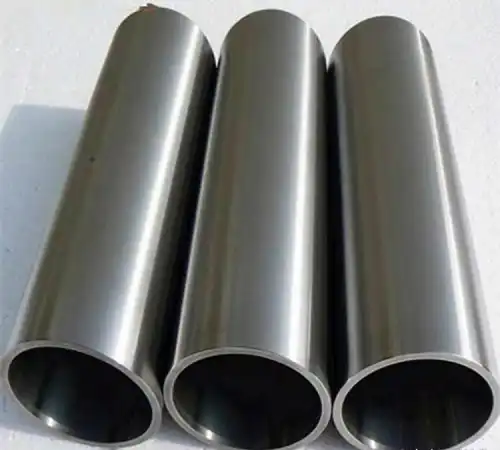
Seamless titanium tube is the best material for marine engineering because it is made to withstand the hard conditions of saltwater, high-pressure changes, and corrosive environments that are common in remote operations. Unlike other options that are soldered, these tubes have a single piece of metal that runs the length of them. This means that there are no weak spots that could let down important marine systems. Because they are made without any joints, they have even strength distribution and better fatigue resistance. This makes them essential for uses such as seawater desalination systems and heat exchanges on remote platforms where dependability can't be compromised.
Understanding Seamless Titanium Tubes in Marine & Offshore Applications
Marine and ocean settings have special needs when it comes to materials that can handle being exposed to seawater, salt spray, and big changes in pressure all the time. It turns out that seamless titanium tubing is the best choice for these tough situations because it has performance qualities that other materials just can't match. The main benefit of seamless titanium tubes is that their metal structure is constant. Hot extrusion or rotary piercing methods are used to make tubes from high-purity titanium billets. These processes don't use welded joins or heat-affected zones (HAZ).
This design doesn't have any of the structural flaws that come with welded tubes, where uneven grain structures and high temperature stress can cause them to break early in marine conditions. Because there are no horizontal welds, there are no stress points where corrosion could start. This feature of the design is especially useful in naval settings, where wave action and thermal expansion cause conditions that would quickly break down welded joints due to stress. Seamless titanium tubes are very resistant to rust in saltwater, and their structure stays the same even after decades of exposure. The natural oxide layer of the material protects it passively from chloride-induced pitting and crevice rust, which are typical ways for other metals to break down in marine environments. When it comes to mechanical qualities, titanium seamless tubing has great strength-to-weight ratios.
It is usually 40% lighter than similar steel components while still having the same or better strength traits. This edge in weight is very useful for offshore platforms, where every pound affects how much it costs to move and load the structure. Grade 2 titanium is the most popular choice for naval seamless tubes because it is very resistant to corrosion and easy to shape. It is made up of 99.2% pure titanium and small amounts of oxygen, nitrogen, and iron that make it stronger without making it less resistant to rust. The mechanical qualities of Grade 5 (Ti-6Al-4V) are better for high-stress situations. Seamless titanium tube and Grade 7 (Ti-0.2Pd) are better at resisting reducing acids and crack corrosion in harsh marine settings. Each grade has its own set of performance qualities that make it ideal for a specific marine purpose.
Comparing Seamless Titanium Tubes with Other Materials
When marine and offshore projects need to buy things, they need to carefully look at how well the materials work, how much they cost over their whole life, and how reliable they are. Learning about the differences between seamless titanium tubes and other materials lets you make smart choices that improve performance and save money. When you compare the performance of seamless titanium to welded titanium options, you can see how better seamless construction is from a structural point of view. Welded tubes have areas where the heat changes the composition of the base metal because of the welding process. This makes weak spots that could rust or break mechanically. Because they are continuous, seamless tubes don't have these problems because their mechanical traits are the same across the whole cross-section. In high-pressure situations, where stress builds up at weld areas and could weaken the system, this stability is especially useful. As a starting cost, stainless steel tubes are less expensive than seamless titanium alternatives, but they don't work as well in marine settings. Stress corrosion cracking and pitting caused by chloride still happen to stainless steel, especially in warm ocean settings. Titanium seamless tubes are very resistant to rust, so they almost never need to be maintained because the material wears down. The longer service life and lower upkeep costs often make up for the higher initial investment. This is especially true for mission-critical uses where failure would have very bad results. Titanium is very strong for its weight, which makes it very useful for naval uses. Seamless titanium tube components are about 40% lighter than similar steel parts while still having the same level of strength. This lower weight means that structures don't have to be loaded as heavily, shipping costs go down, and seagoing boats use less fuel. High strength and low weight work together to help designers make systems that work better while keeping the total weight of the platform as low as possible. This is especially important for offshore sites where weight can affect stability and running costs.
Manufacturing Process and Quality Assurance
To make smooth titanium tubes that work consistently in tough marine uses, manufacturers need to use complex manufacturing methods and strict quality control measures. Knowing about these steps helps people who work in buying judge the skills of suppliers and the dependability of their products. The first step in our manufacturing process is to take high-purity titanium billets (≥99.2% purity) and shape them precisely by hot extrusion or rotary cutting. The seamless formation gets rid of the need for bonding and the heat-affected zones that come with it, which could damage the material's qualities. By cold rolling and pilgering, exact size limits are reached while the material is work-hardened to improve its mechanical properties.
Using controlled oxygen annealing methods to make the microstructure as strong and flexible as possible is the best way to make sure it works well in marine settings. Advanced CNC machining lets you precisely control the dimensions and finish the surface, which is very important for naval uses. We have 30 production lines of seamless titanium tube with cutting-edge tools that make sure the quality of all of our products is the same. Following the globally accepted rules for marine applications is the first step in quality assurance. The ASTM B338 standards say what the chemical makeup, mechanical qualities, and size ranges of general-use smooth titanium tubes must be. The AMS 4928 standards cover aircraft uses that need better performance, and the NACE MR0175 approval makes sure that the material can be used in sour service environments, which are popular in offshore oil and gas uses.
Our ISO 9001:2015 approval shows that we are dedicated to using consistent quality management methods. During the whole production process, non-destructive testing methods like ultrasonic checking, eddy current testing, and hydrostatic pressure testing make sure that the tubes are still solid. These quality control steps make sure that every tube meets strict performance standards before it is shipped. To make a good purchase, you need to carefully look at what the source can do beyond just meeting basic product requirements. Some important factors are the ability to manufacture, quality certifications, traceability systems, and the ability to provide expert help. Our two factories and 21 years of experience making titanium show that we have the production security and technical know-how to make sure the supply chain works well. We have full certification from classification groups like DNV, ABS, CCS, and GL that proves we can meet the needs of the marine business.
Procurement Guide: How to Source Seamless Titanium Tubes for Marine & Offshore Projects
When looking for seamless titanium tubes, it's important to know about the price factors, supplier skills, and logistical issues that can affect the project's success. This advice helps people who work in buying improve their sourcing strategies while making sure they meet specifications and deliver on time. Titanium tube prices depend on a lot of things, like the grade of the material, the size requirements, the amount, and the shipping needs. Grade 2 titanium is usually less expensive than higher-performance metals like Grade 5 or Grade 7. However, the best material to use depends on the unique needs of the job. Tube sizes have a big effect on prices because bigger widths and wall thicknesses need more raw materials and special tools to make. Prices are most reasonable for standard size ranges. If you need something made to your exact specs, you may have to pay more for tooling and setup.
With a monthly production capacity of 10 tons, we can offer reasonable prices for large orders while still being able to meet the needs of smaller ones. Minimum order numbers, which usually start at 1 ton for normal specs, find a balance between how efficiently the product is made and what the customer wants. For marine uses, custom specs are often needed that aren't available in normal products. To meet particular performance needs, our technical skills allow us to change the dimensions, apply special finishes to the surface, and use different alloy compositions. Technical help during the planning and design process makes sure that the best materials are chosen for each purpose. Our expert support team is available 24 hours a day, seven days a week, to answer questions about installation and give ongoing maintenance advice throughout the product's lifetime.
Custom packing solutions keep goods safe while they're being shipped internationally and meet specific handling needs. Our wooden case package with anti-scratch film and moisture-proof shields keeps the product safe while it's being shipped by sea, land, or air. International projects need providers who can handle the complicated processes of exporting goods and make sure they follow all the rules. Our selling experience in more than 60 countries gives us the skills needed to make sure that projects go smoothly. Full customs processing help and approval for dangerous materials speed up the import process and make sure that rules are followed. Door-to-door transport makes foreign projects less difficult to manage logistically. It has been shown that we can support large-scale foreign projects with reliable output performance through our ties with big EPC contractors, such as CEFC, PTT, PDVSA, and PETROECUADOR.
Benefits and Future Trends in Seamless Titanium Tube Use for Marine & Offshore
The strategic benefits of seamless titanium tubes go beyond their instant performance benefits. They also include long-term operational changes and are in line with changing trends in the marine industry. Knowing about these things helps make business choices make sense and sets up projects to succeed in the future. When used in marine settings, seamless titanium tubes almost never need to be maintained because they are so resistant to rust. This reliability cuts down on working downtime and repair costs, making the system more available for important tasks. Longer service life than other materials gives big cost savings over the life of the product, even if it costs more at first.
Many titanium installations still work well after decades of being exposed to salt water, while steel or copper alloy options need to be replaced or fixed all the time. Getting rid of extra weight makes a ship use less fuel and carry more cargo, which is especially helpful for ocean support boats. The lighter structure also means that remote platforms don't need as many foundations, which saves money all the way through the project. For naval uses, new alloy formulations keep making the performance range bigger. Newer types of titanium with better strength properties allow for smaller wall sections that keep pressure levels the same while reducing weight. With additive manufacturing, complicated geometries and built-in traits that make things work better in certain situations are becoming possible. These improvements in production make it possible to make unique solutions that work best in harsh marine settings. As the renewable energy industry grows, especially offshore wind farms, there are more and more uses for corrosion-resistant tubes in hydraulic and cooling systems that use seawater.
Our research and development work is mainly focused on creating solutions that can adapt to these changing needs. Because titanium lasts a long time, it is very durable and helps the industry's efforts to be more environmentally friendly by using less material. The material can be recycled, a seamless titanium tube, which supports the circular economy ideas that are becoming more important to people in the sea business. Because we care about sustainable manufacturing practices, we use energy-efficient production methods and waste-minimisation plans that are better for the environment. These projects help customers reach their goals for sustainability while keeping production costs low. Environmental laws keep pushing for materials that have the least amount of damage to the environment when they are used and when they are thrown away. Titanium is good for future governing settings because it doesn't react with chemicals and can be recycled.
Conclusion
Seamless titanium tubes are an important part of effective marine and offshore operations because they offer the best corrosion resistance, structural integrity, and operational life in harsh seawater environments. The smooth construction gets rid of weld zones that are likely to fail and gives the whole piece the same level of strength, which is important for high-pressure uses. If you choose the right specifications and provider, these modern materials can save you a lot of money over the course of their lifetime because they last longer and need less upkeep. This makes them a great investment for important marine infrastructure projects.
FAQ
1. What titanium grade works best for seawater applications?
Grade 2 titanium is the best combination of efficiency and cost-effectiveness because it is very resistant to corrosion in most ocean uses. When you need better protection against acids or crack rust in harsher environments, Grade 7 (Ti-0.2Pd) is the way to go. It has palladium added to it, which makes the passive film more stable.
2. How do titanium tubes compare cost-wise with stainless steel for offshore use?
Even though titanium tubes cost more to buy at first than stainless steel tubes, their longer service life and low care needs often make them more cost-effective over their entire lifecycle. Getting rid of the costs of replacement and repairs and cutting down on downtime usually makes the extra cost worth it within 5 to 10 years of service.
3. Can seamless titanium tubes be customised for specific marine applications?
Yes, seamless titanium tubes can be made to specific requirements, such as having different metal compositions, different sizes, or different surface processes. Our engineering team works closely with customers to make sure that the materials they choose and the specs they need are the best ones for their needs while still meeting all marine standards.
Partner with LINHUI TITANIUM for Your Marine Projects
LINHUI TITANIUM is ready to help you with your naval and offshore projects. We have 21 years of experience making flawless titanium tubes and can make a wide range of tubes. Our two specialised sites and 30 production lines make sure that we can meet the strict quality standards needed for marine uses while also providing a steady supply of goods. We are a reliable source of seamless titanium tubes for many of the world's largest energy companies and EPC firms. Our technical expertise Seamless titanium tube, and supply chain dependability are key to the success of any project. Email our team at linhui@lhtitanium.com to talk about your unique needs and find out how our seamless titanium tube options can help your marine business.
References
1. Marine Engineering Society. "Advanced Materials for Offshore Applications: Performance Standards and Selection Criteria." International Journal of Marine Technology, 2023.
2. Offshore Technology Institute. "Corrosion Resistance Evaluation of Titanium Alloys in Seawater Environments." Proceedings of the International Offshore Engineering Conference, 2022.
3. American Society for Testing and Materials. "Standard Specification for Seamless and Welded Titanium and Titanium Alloy Tubes for Condensers and Heat Exchangers." ASTM B338-21, 2021.
4. International Association of Classification Societies. "Guidelines for Material Selection in Marine and Offshore Structures." IACS Publication M-25, 2023.
5. National Association of Corrosion Engineers. "Materials Performance in Marine Environments: A Comprehensive Study of Titanium Applications." NACE International Report SP0775, 2022.
6. DNV GL Maritime. "Technology Outlook 2025: Advanced Materials for Offshore Energy Systems." DNV GL Strategic Research Publication, 2023.