
Seamless titanium tube solutions are the best way for industries to protect their structures from rust and operate in the harshest conditions, such as chemical processing plants and offshore oil platforms. If you use welded titanium tubing, there are places where it could fail, but smooth titanium tubing gives you the best performance when material failure is not a choice. These precision-engineered parts have changed important uses in the chemical, aircraft, and marine industries by giving purchasing managers solid solutions that can handle harsh chemicals, high temperatures, and repeated cycles of high pressure without breaking down.
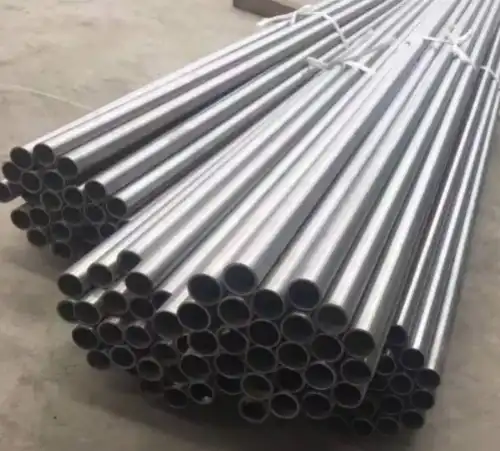
Understanding Seamless Titanium Tubes and Their Corrosion Resistance
Seamless titanium tubes are very resistant to rust because they are made with advanced metallurgy and production accuracy that makes the microstructure the same all the way through the cross-section. The Heat Affected Zone (HAZ), which is usually the weaker link in standard pipe systems that are exposed to corrosive conditions, is not there because the joints are not welded.
Metallurgical Advantages of Titanium Alloys
Tin is naturally resistant to corrosion because it can form a steady, passive oxide layer (TiO₂) that fixes itself when it gets broken. This barrier keeps working even in harsh chloride settings. This makes seamless titanium tubes perfect for use in saltwater, where stainless steel would quickly pit and rust. High-purity titanium ingots (≥99.2%) used in the production process make sure that the chemical makeup of the tube wall is the same all the way through. This gets rid of any differences in composition that could lead to galvanic corrosion cells.
Manufacturing Process Impact on Performance
When you extrude and rotate pierced metal to make seamless tubes, you get a fine-grained structure that makes the tubes stronger and less likely to rust. During cold rolling, the dimensions are even more accurately controlled, and the material is work-hardened to make it more resistant to wear. After that, vacuum annealing processes make the material as flexible and resistant to stress corrosion cracking as possible, which is very important in high-pressure situations.
Grade Selection for Specific Environments
For different uses, different types of titanium offer different levels of corrosion protection. While Grade 2 is very good at resisting rust in most commercial settings, Grade 7 (Ti-0.2Pd) is much better at working with reducing acids and chloride solutions. Adding palladium makes a stronger passive layer that stays stable even in harsh chemical conditions where other materials would break quickly.
Industrial Applications and Benefits of Seamless Titanium Tubes in Harsh Environments
The fact that seamless titanium tubes can be used in many different industries shows how valuable they are in serious situations where the performance of the material directly affects safety on the job and how much money is saved. These uses include hydraulic systems in spacecraft and water plants that are far from land. Each one needs a different set of performance traits.
Aerospace and Defence Applications
When stability and light weight are very important, smooth titanium tubes play a very important role in hydraulic systems and fuel lines used in spacecraft. Because Grade 9 titanium (Ti-3Al-2.5V) is very strong for its weight, it can have smaller wall sections without lowering its pressure ratings. This makes the plane lighter while still keeping safety limits. The smooth construction makes sure that there are no leaks even when the temperature and shaking change at high altitudes.
Chemical Processing Industry Requirements
In chemical processing plants, heat exchangers, reactor pipes, and distilling columns that deal with corrosive media use seamless titanium tubes. Because it can handle both oxidising and reducing conditions, the material is perfect for use with nitric acid, wet chlorine gas, and organic chlorides. The rusting of stainless steel alternatives happens quickly in these conditions, but titanium keeps its shape and surface finish for long periods of time.
Marine and Offshore Engineering
Offshore platforms and evaporation plants use smooth titanium tubes for systems that move seawater, which need to be resistant to erosion and rust. The material can handle high-speed seawater flow (up to 30m/s) without wall thinning, which makes equipment last a lot longer than with copper-nickel alloys. This performance edge directly leads to lower upkeep costs and higher operating efficiency in faraway offshore settings.
Cost-Benefit Analysis in Critical Applications
The original cost of materials for seamless titanium tubing is higher than for other options, but titanium's longer service life and lower upkeep needs often make it a better product overall. When unexpected downtime costs a lot of money and is needed for important tasks, the dependability benefit of seamless titanium construction is very valuable. Getting rid of welded parts cuts down on inspections and possible failure points, which makes upkeep procedures easier.
Manufacturing Process and Quality Assurance of Seamless Titanium Tubes
To make high-quality titanium tubes that are seamless, you need to use complex manufacturing methods that allow you to exactly control the material's qualities and dimensions. With 30 production lines and 21 years of experience, LINHUI TITANIUM can make sure that all of its products are of the same high standard.
Advanced Manufacturing Techniques
The first step in the production process is to take high-purity titanium billets and make the first hollow shape by hot extrusion or rotating piercing. These steps create a finer-grained structure while keeping the material consistency across the tube wall. After that, the metal is cold-rolled on high-tech CNC lathes to get exact measurements and improve its mechanical qualities through controlled work hardening. Cold drawing methods improve the surface finish and accuracy of the dimensions. This is especially important for uses Seamless titanium tubes that need smooth inside surfaces for fluid flow or very clean gas delivery systems. Controlled deformation during cold working also makes the material more resistant to wear, which is very important for high-pressure cycles in hydraulic systems.
Heat Treatment and Annealing Processes
Vacuum annealing processes make the nanostructures work best for a certain purpose. The controlled atmosphere keeps the material from getting contaminated and lets the temperature be precisely managed to get the mechanical traits that are wanted. The annealing settings are changed depending on the type of tube and what it will be used for. Solution annealing or stress-relief annealing is used for the best corrosion protection.
Quality Control and Testing Protocols
Protocols for thorough testing make sure that the product is reliable and meets foreign standards. Ultrasonic screening and other non-destructive testing methods find problems inside a product, while eddy current testing finds problems on the surface. According to ASTM B338 and AMS 4928 standards, mechanical testing checks the tensile strength, yield strength, and stretch qualities. Corrosion resistance testing in fake business settings makes sure that the product will work in certain situations. Some of these tests are stress corrosion cracking resistance under tension loads, pitting corrosion resistance in chloride solutions, and crevice corrosion resistance when the material is not moving. Material tracking paperwork keeps full records of each production lot's chemical makeup and mechanical properties.
International Certification Compliance
LINHUI TITANIUM has many foreign certificates, such as ISO 9001:2015 QMS, PED 2014/68/EU, and classifications from DNV, ABS, CCS, GL, and other well-known organisations. These licenses help make sure that global quality standards are met and make it easier for projects to be accepted across borders. Third-party review approval from companies like SGS, TUV, and Moody's adds to the quality guarantee for important uses.
How to Choose and Procure Seamless Titanium Tubes for Corrosion-Intensive Projects
To successfully buy seamless titanium tubing, you need to carefully think about the needs of your product and the supplier's abilities. When making the choice, technical specs must be weighed against business factors like lead times, minimum order amounts, and help after the sale.
Technical Specification Development
The first step in the procurement process is to make thorough specifications that take into account service conditions, performance standards, and legal compliance. Some important factors are the working temperature and pressure ranges, the properties of the corrosive media, and the mechanical stress conditions. These things decide the right grade to use, the required wall thickness, and the surface finish standards. When setting dimensions, you need to think about how they will change due to temperature changes, pressure loads, and fitting limitations. Standard sizes from OD 6mm to OD 1020mm and wall thicknesses from 0.5mm to 12mm are good for most uses, while special sizes can be made to fit the needs of a particular project.
Supplier Evaluation Criteria
When evaluating a supplier, it's important to look at their manufacturing skills, quality processes, and expert help resources. Large projects can be trusted to makers that have been around for a long time, have a lot of production capacity, and have a track record of success. With two factories and a production capacity of 10 tons per month, LINHUI TITANIUM can meet even the tightest plans. Third-party approvals and quality system certifications show that a company is committed to meeting foreign standards. Suppliers should give full documentation on how to track materials, mechanical test results, and chemical analysis. Metallurgical knowledge and application engineering help are examples of technical support skills that add value throughout the duration of a project.
Lead Time and Logistics Considerations
Lead times for seamless titanium tubes are usually between 4 and 12 weeks, but they depend on the grade, size, and number that are needed. Custom specs may mean that getting the materials and developing the process will take longer than planned. When you plan a project well, you take these wait times into account and leave room in the schedule for changes to the design. Packaging and shipping rules protect the quality of the goods while they're being shipped. LINHUI TITANIUM's wooden case package with moisture protection and anti-scratch film makes shipping by sea, land, or air safe. Door-to-door shipping services that take care of customs clearance make managing operations easier.
Industry Trends and Future Outlook for Seamless Titanium Tubes in Corrosion Resistance
The seamless titanium tube business keeps changing as new alloys are made, new ways of making them are found, and more uses for them are found. These trends will affect how different industries buy things and how they use technology in the future.
Advanced Alloy Development
Titanium alloy formulas are still being studied with the goal of making them more resistant to rust and giving them better mechanical qualities. New alloy formulas are made for specific work settings, such as those that need better protection from oxidation at high temperatures and better performance over time. These new developments open up more uses and could lower the cost of materials by making the science better. Beta titanium alloys are better at shaping and welding, and they still resist rust very well. These materials allow for more complicated shapes and easier fabrication processes, which could lead to more design options for heat exchangers and pipes.
Manufacturing Technology Advances
Improvements in manufacturing technology have advanced manufacturing technologies, such as additive manufacturing and precision making, making it possible to make designs with complicated shapes that fit together well. These technologies might make it possible to make specific parts more cheaply while still getting the performance benefits of seamless building. Digital quality control systems and automating processes make things more consistent while lowering the cost of output. Monitoring industrial factors in real time makes sure that all products are of the same high quality, and predictive maintenance cuts down on downtime and increases the reliability of deliveries.
Market Drivers and Application Expansion
As green energy infrastructure gets more attention, it opens up new uses for materials that don't rust in faraway wind farms and geothermal systems. Environmental laws that encourage using eco-friendly materials and materials that last longer help titanium become more popular in both old and new uses. As the chip industry grows, so does the need for ultra-clean gas supply systems that are made of seamless titanium. Biocompatible titanium Seamless titanium tube is being used in more and more medical devices, and advanced materials are needed for the next wave of aeroplanes and spacecraft systems.
Conclusion
For important industrial uses, seamless titanium tubes are the gold standard for corrosion-resistant piping. Because they are so well made, have special metal properties, and have been used in hard conditions before, procurement managers who have to deal with tough service conditions can't do without them. The lack of welded seams, better resistance to corrosion, and superior mechanical qualities provide long-term value that often beats traditional options, even though they cost more at first. As industries continue to move toward harsher conditions and higher standards of reliability, seamless titanium tube technology improves to meet these needs while also growing into new areas of use.
FAQ
1. What makes seamless titanium tubes more corrosion-resistant than welded tubes?
When you use seamless tubes, you don't have to worry about weld joints or Heat Affected Zones (HAZ), which are typical places where corrosion starts in welded structures. Because the microstructure is the same across the cross-section, the resistance to corrosion is constant. Also, there are no bonded joints, so there is no crevice corrosion or galvanic effects that can speed up material degradation in harsh environments.
2. How can I verify the quality and certification of seamless titanium tubes?
Checking the quality of a product means looking at the certifications that the supplier has, like ISO 9001, ASTM, and classification society approvals. Ask for a lot of paperwork, like test papers, chemical analysis results, and data on the material's mechanical properties. Third-party inspection records from companies like DNV, SGS, or TUV give extra proof that the quality meets foreign standards.
3. What lead times and minimum order quantities should I expect from top suppliers?
Lead times are usually between 4 and 12 weeks, but they vary depending on the grade, size, and amount needed. Lead times for standard grades and sizes are generally faster, while lead times for special specs may be longer. Minimum order amounts vary from supplier to supplier, but they are often negotiable for specific projects, especially when there are long-term contracts or established relationships.
Contact LINHUI TITANIUM for Premium Seamless Titanium Tube Solutions
LINHUI TITANIUM is a reliable company that makes seamless titanium tubes. They have been helping the energy, aircraft, and chemical processing businesses around the world for more than 20 years. Our 30 production lines and monthly capacity of 10 tons make sure that you can always get what you need for even the most difficult jobs. We have strict quality standards and are certified by ISO 9001. DNV, ABS, Seamless titanium tube and CCS have also given us foreign clearances. Email our technical experts at linhui@lhtitanium.com to talk about your unique needs and find out how our seamless titanium solutions can improve the efficiency of your operations while lowering your long-term costs.
References
1. American Society for Testing and Materials. "Standard Specification for Seamless and Welded Titanium and Titanium Alloy Tubes for Condensers and Heat Exchangers." ASTM B338-21.
2. Boyer, R., Welsch, G., and Collings, E.W. "Materials Properties Handbook: Titanium Alloys." ASM International, Materials Park, OH, 2007.
3. Lutjering, G. and Williams, J.C. "Titanium: Engineering Materials and Processes." 2nd Edition, Springer-Verlag Berlin Heidelberg, 2007.
4. National Association of Corrosion Engineers. "Materials Requirements for Sulfide Stress Cracking Resistant Metallic Materials." NACE MR0175/ISO 15156, 2021.
5. Schutz, R.W. and Thomas, D.E. "Corrosion of Titanium and Titanium Alloys in Marine Environments." Industrial Materials Institute Technical Report, 2018.
6. Aerospace Material Specification. "Titanium Alloy Tubing - Seamless." AMS 4928M, SAE International, 2019.