
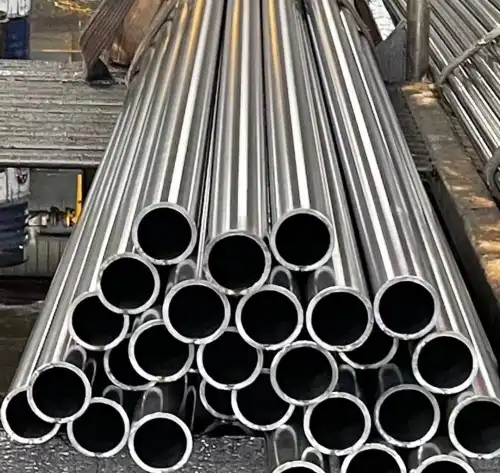
Seamless Gr2 titanium tubes represent the pinnacle of engineering excellence in modern industrial applications, combining unmatched corrosion resistance with remarkable strength-to-weight ratios. These commercially pure titanium tubes deliver exceptional performance across demanding environments, from offshore oil platforms to aerospace systems. The seamless construction eliminates potential failure points while maintaining structural integrity under extreme pressures and temperatures. Industries worldwide increasingly rely on these tubes for critical applications where traditional materials fall short, making them an indispensable choice for forward-thinking procurement professionals seeking long-term reliability and cost-effectiveness.
Introduction
Many businesses around the world prefer seamless GR2 titanium tubes because they are made of high-performance materials that are also very light. These tubes also last a very long time and don't rust. These tubes are essential in fields that need reliable, long-lasting options that work well in tough circumstances. Their uniform design makes them even more structurally sound, so they can be used in critical situations all over the world. Commercially pure titanium tube is at the cutting edge of industrial innovation because of the rising need for materials that are both strong and light. Big companies in the energy and aircraft industries always pick these tubes over other materials when they have to work in tough conditions. By using seamless manufacturing methods instead of welding gaps, stress concentration spots are greatly reduced. This leads to better wear protection and longer service life. When purchasing, professionals know about these main benefits, and they can choose the best materials for projects that need to be reliable and work well. Biocompatibility, chemical inertness, and mechanical strength are all qualities that make these tubes very useful in a wide range of situations, from making chemicals to making medical devices.
Understanding GR2 Titanium Tube: Properties and Composition
GR2 titanium tubes are made mostly of commercially pure titanium. They are different from other grades because they have the best mix of mechanical strength and corrosion protection. The seamless production method gets rid of weld joints, which makes tubes much more stable when they are under a lot of stress and pressure. Their high tensile strength and exceptional resistance to a wide range of acidic conditions are directly linked to their unique chemical makeup, which is mostly titanium with small amounts of other elements.
Chemical Composition and Metallurgy
The UNS R50400 name means that the Gr2 titanium tubes' chemical makeup has been carefully controlled, and the titanium content is higher than 99%. The only intermediate elements that are allowed are oxygen (0.25% maximum), nitrogen (0.03% maximum), and iron (0.30% maximum). This exact balance makes sure that the mechanical qualities are just right while still allowing for great shaping and welding. The alpha-phase lattice makes the titanium alloy more flexible than higher-strength alloys, which makes it perfect for complicated shaping tasks.
Manufacturing Excellence Standards
The smooth extrusion process used by LINHUI TITANIUM uses advanced cold-rolling and heating methods to get surface roughness values of less than 0.8μm. We can make things with walls that are as thin as 0.3 mm or as thick as 120 mm, and as wide as 219 mm on the inside. The company has two specialized facilities with 30 production lines for titanium metal. This makes sure that the standard is always the same, even though the company can make 800 tons of titanium metal every year.GR2 sticks out from other materials because it has strong mechanical properties and lasts a long time, which has been proven by thorough testing and industry standards. The material is very good at resisting fatigue when loaded and unloaded many times. This makes it perfect for use in marine and aircraft settings where things move around a lot.
Comparing GR2 Titanium Tube with Other Materials and Grades
When GR2 titanium tubes are compared to other types and materials, like stainless steel or aluminum, they always have a great strength-to-weight ratio and a high level of corrosion protection. A density of 4.5 g/cm³ means that the material is about 45% lighter than stainless steel while still being more resistant to rusting in chloride conditions.
Performance Advantages Over Traditional Materials
There are some uses for Grade 1 and Grade 3 titanium, but they don't work as well mechanically as GR2. For example, Grade 1 is a little easier to shape but not as strong as Grade 3, which is stronger but less flexible. Compared to 316L stainless steel, GR2 doesn't rust or pit when it's used in seawater, so there is no chance of a catastrophic failure happening in marine settings.
GR2 is better in difficult situations because of the following benefits:
- Corrosion Immunity: Complete resistance to chloride stress corrosion cracking, which is a typical way for stainless steel systems in sea situations or chemical processing settings to fail.
- Temperature Stability: Keeps structure strong from very low temperatures to 300°C, which is much higher than aluminum's working temperature range and the same as stainless steel.
- Biocompatibility: FDA-approved for medical devices and food processing equipment, biocompatibility steels offer higher safety gaps than nickel-bearing steels.
These performance traits lead to lower upkeep costs and longer service intervals, Gr2 titanium tubes, which more than make up for the higher initial investment through better lifetime economics. Even though it costs more at first, GR2 is a better deal in the long run because it lasts longer and needs less care than stainless steel and aluminum. This comparison information helps procurement teams choose the best tube material by weighing cost, performance, and the needs of their business.
Application Areas and Industry Use Cases of GR2 Titanium Tubes
GR2 titanium tubes are used in many fields, such as aircraft and medicine, where high purity and steady performance are very important. The aircraft industry really likes these tubes because they can be used in hydraulic systems and fuel lines. Reducing weight has a direct effect on how much fuel you use and how much you can carry. Suppliers to Boeing and Airbus often ask for these tubes to be used in important flying systems that need to be 100% reliable.
Medical and Biomedical Applications
Biocompatibility of GR2 is used in the medical field to make surgical tools and implantable devices. FDA approval based on ASTM F67 standards allows for direct patient touch uses, such as in hip implants and heart devices. Because the material isn't magnetic, it can be used in MRI machines, which increases its usefulness in imaging tools.
Energy and Chemical Processing
GR2 tubes are used in the chemical and industrial businesses because they don't rust in harsh settings like heat exchangers and chemical processing plants. Big oil companies like PETROECUADOR, PEMEX, and LUKOIL have used these tubes successfully on offshore sites and in refineries. Because the material doesn't break down easily when exposed to hydrogen, it is very useful in high-pressure hydrogen service applications. In the chlor-alkali business, real-life case studies show how GR2 tubing solves certain problems in wet chlorine conditions, where regular materials break down quickly. The material's resilience and design freedom are also being used in new ways in the automobile, marine, and architectural industries. This is leading to more innovation and efficiency in markets around the world.
Procurement Guide for GR2 Titanium Tubes: Sourcing and Specifications
To make sure uniform quality and compliance, you need to carefully look at the certifications and production skills of suppliers when you are looking for GR2 titanium tubes. LINHUI TITANIUM has many certificates, such as ISO 9001:2015, TUV Nord AD2000-W0, and PED 2014/68/EU, which show that they follow international rules. With 21 years of experience making things, the company has the skills to meet even the most complicated requirements.
Quality Assurance and Certification Requirements
ASTM B338 for seamless tubes, ASME SB338 for pressure vessels, and AMS 4928 for aircraft are some of the most important certification standards. Third-party testing services from DNV, SGS, TUV, Gr2 titanium tubes, and other well-known companies make sure that materials can be tracked and that rules are followed. Material test certificates (MTCs) are sent with every package to confirm the chemical makeup and mechanical properties. Procurement pros can make the most of their budgets and schedules by understanding price measures like per-meter costs, bulk savings, and lead times. The sizes that LINHUI TITANIUM has are NPS 1/8" to 12, and the schedule levels are SCH5S to SCH80. For normal uses, wall thicknesses range from 0.5 mm to 4.5 mm. For unique needs, custom specs are also available.
Supply Chain Considerations
You can buy things online or in a store, but trusted makers usually offer better customization and customer service after the sale. LINHUI TITANIUM has developed logistics agreements with DHL, FedEx, and sea freight companies that allow their products to be shipped to more than 60 countries. GPS tracking and help with customs clearance make sure that the package arrives on time and with all the necessary paperwork. The minimum order quantity should match the scope of the project. LINHUI TITANIUM offers flexible buying to meet the needs of both prototype development and large-scale production. A careful evaluation of the seller, which includes trying samples and negotiating warranty terms, guarantees smooth integration into the supply chain and dependable partnerships over the long run.
Technical Insights: Fabrication and Handling of GR2 Titanium Tubes
To make GR2 titanium tubes, you need to use specific welding methods that protect the purity of the material. Best practices deal with common problems like contamination and controlling the amount of heat that goes into the tube. When welding, the material needs to be protected with an inert gas cover to keep air and nitrogen from picking up and weakening the weld zone. Gas Tungsten Arc Welding, or GTAW, is the best way to put things together for important jobs.
Welding and Joining Considerations
For proper joint preparation, the surface should be cleaned thoroughly with acetone or alcohol to get rid of any dirt or grime. This should be followed by mechanical cleaning to make the metal surfaces shine. Back-purging with argon gas stops root rusting, and keeping the temperatures between passes below 150°C stops grain growth and keeps the material flexible. Chemical stability and good joint qualities are guaranteed by ERTi-2 filler wire. The right way to heat treat metal improves its mechanical qualities, and it's important to be careful when turning so as not to weaken the structure. To keep tubes from breaking, cold forming should keep bend radii at least 3.5 times the width of the tube. When needed, annealing at 650–750°C can ease forming stresses and make the metal more flexible.
Maintenance and Service Life Optimization
To make tubes last longer, Gr2 titanium tubes maintenance plans focus on regular checks and taking steps to stop rust. Regular visible checks for damage to the surface and regular checks of the dimensions ensure that the product continues to work well. Because the material doesn't naturally corrode, protective layers aren't needed in most situations. This makes upkeep easier . Following these rules will ensure the best performance and lower operating risks, protecting your investment and making the most of the material's lifetime in tough industrial settings. Through our 24/7 technical service team, LINHUI TITANIUM offers full technical support, including welding instructions, installation help, and problem support.
Conclusion
For businesses that need the best performance and dependability, seamless GR2 titanium tubes are a smart investment. Their unique mix of being light, being highly resistant to corrosion, and being long-lasting makes them essential for use in critical situations in the medical, energy, chemical processing, and aircraft industries. The smooth design gets rid of any weak spots, and the commercially pure titanium makes sure that the product works the same way in all kinds of conditions. When you buy these tubes from a certified maker like LINHUI TITANIUM, they offer great value because they last longer and need less upkeep, which means they have a lower total cost of ownership than other materials.
FAQ
1. Why choose GR2 titanium over stainless steel for corrosive environments?
GR2 titanium is completely resistant to chloride stress corrosion cracking and pitting corrosion, which are common ways for stainless steel to fail in chemical processes and sea environments. Wet chlorine, concentrated acids, and salt are all conditions where 316L stainless steel quickly breaks down, but this material stays strong.
2. Can GR2 titanium tubes be customized for specific applications?
Yes, LINHUI TITANIUM can be customized in a lot of ways, such as by offering non-standard sizes, special heat processes, and custom mechanical qualities. Our production freedom lets us make walls that are between 0.3mm and 120mm thick and inside diameters that are between 2.0mm and 219mm wide, so we can meet the needs of a wide range of applications.
3. What are typical lead times and minimum order quantities?
Standard products usually ship in two to three weeks, while custom goods can take anywhere from four to six weeks, based on how complicated they are. LINHUI TITANIUM offers flexible plans to meet the needs of both prototype development and large-scale production. Minimum order numbers depend on the size and specifications of the order.
4. What certifications validate the quality of GR2 titanium tubes?
LINHUI TITANIUM has many certificates, such as ISO 9001:2015, TUV Nord AD2000-W0, PED 2014/68/EU, and approvals from DNV, ABS, CCS, and GL, which are some of the most important classification societies. All of our goods meet the requirements of ASTM B338, ASME SB338, and any other related aerospace standards.
Ready to Enhance Your Projects with Premium GR2 Titanium Tubes?
You can trust LINHUI TITANIUM to make high-quality Gr2 titanium tubes because they have 21 years of experience, many foreign certifications, and a supply chain that has been shown to work. Big names in the energy industry, aircraft manufacturing, and chemical processing all over the world trust our seamless titanium tube options. We offer consistent quality and low prices for your most demanding uses thanks to our two specialized manufacturing sites, 30 production lines, and annual capacity of 800 tons.
Get in touch with our technical experts right away at linhui@lhtitanium.com to talk about your unique needs and get accurate quotes. Join companies like PETROECUADOR, PEMEX, and LUKOIL that depend on our tried-and-true Gr2 titanium tube options for their most important tasks.
References
1. American Society for Testing and Materials. "Standard Specification for Seamless and Welded Titanium and Titanium Alloy Tubes for Condensers and Heat Exchangers." ASTM B338-21, Annual Book of ASTM Standards, 2021.
2. Boyer, Rodney R., Gerhard Welsch, and E.W. Collings. "Materials Properties Handbook: Titanium Alloys." ASM International, Materials Park, Ohio, 1994.
3. International Organization for Standardization. "Titanium and Titanium Alloys - Bar and Wire for Surgical Implant Applications." ISO 5832-2:2018, Geneva, Switzerland, 2018.
4. Lutjering, Gerd and James C. Williams. "Titanium: Engineering Materials and Processes." Springer-Verlag Berlin Heidelberg, Second Edition, 2007.
5. Naval Sea Systems Command. "Handbook of Titanium Fabrication Technology for Navy Applications." Technical Publication NAVSEA T9074-BD-GIB-010/0300, Washington D.C., 2019.
6. Schutz, Richard W. and H.B. Watkins. "Recent Developments in Titanium Alloy Application in the Energy Industry." Materials Science and Engineering: A, Volume 243, Issues 1-2, 1998.