
The ASTM B550 Zirconium Alloy Bar represents a critical material solution for industries demanding exceptional corrosion resistance combined with reliable mechanical performance. This specification encompasses three distinct grades—R60702 (commercially pure zirconium), R60704 (zirconium-tin alloy), and R60705 (zirconium-niobium alloy)—each engineered to address specific operational challenges in aggressive chemical environments. Understanding the metallurgical characteristics of these materials enables procurement professionals to make informed decisions that balance performance requirements, operational longevity, and project economics for demanding applications across chemical processing, oil and gas, and marine industries.
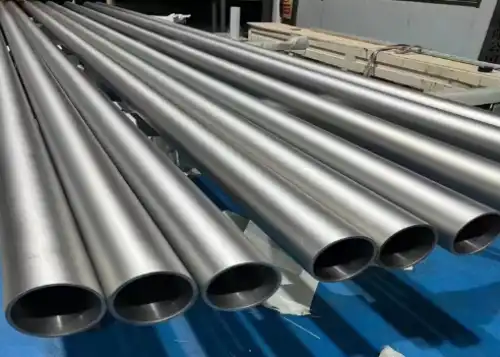
Understanding the Metallurgical Properties of ASTM B550 Zirconium Alloy Bar
The foundation of any reliable material specification begins with its chemical composition and resulting microstructure. ASTM B550 zirconium alloy bars are manufactured under stringent controls that directly influence their service performance in challenging industrial environments.
Chemical Composition and Its Impact on Performance
Review R60702, the commercially immaculate variation within the ASTM B550 detail, contains a minimum of 99.2% zirconium, with actually occurring hafnium regularly displayed at roughly 4.5%. This unalloyed composition conveys extraordinary erosion resistance over a wide range of aggressive media, including bubbling sulphuric acid up to 70% concentration, hydrochloric acid, and acidic corrosion at elevated temperatures. The absence of fortifying alloying components implies this review prioritises the greatest chemical resistance over mechanical quality, making it perfect for reactor vessels, heat exchanger components, and preparation channelling where destructive assault speaks to the essential disappointment mode.
Grade R60705 presents 2.0-3.0% niobium into the zirconium framework, generally modifying both mechanical and corrosion characteristics. The niobium expansion essentially increases tensile strength from around 380 MPa in R60702 to 550 MPa in R60705, whereas ductile quality rises from 210 MPa to 380 MPa. This upgrade permits originators to diminish divider thicknesses and component weights without compromising basic astuteness. The zirconium-niobium solid solution, moreover, improves resistance to stretch erosion splitting in chloride-containing situations, a basic concern for offshore and marine applications where seawater contact occurs.
GrGrade R60704, which contains 1.0-2.0% tin, occupies a middle ground between the other two grades, offering a balanced combination of erosion resistance and mechanical properties suitable for moderate-stress applications in chemical handling gear.
Mechanical Properties and Engineering Significance
The mechanical characteristics of zirconium alloy bars directly determine their suitability for specific design requirements. At ambient temperature, R60702 exhibits tensile strength ranging from 380 to 450 MPa with elongation values typically exceeding 20%, providing adequate ductility for cold-forming operations and fabrication processes. The material maintains excellent toughness down to cryogenic temperatures, expanding its application range to liquefied gas handling systems.
R60705 bars demonstrate superior strength-to-weight ratios compared to many corrosion-resistant alternatives. The higher yield strength allows components to withstand greater operational stresses, mechanical loads, and pressure cycling without permanent deformation. This becomes particularly valuable in pump shafts, agitator components, and structural elements within corrosive process streams where both mechanical loading and chemical attack occur simultaneously.
Hardness values correlate predictably with tensile properties across the grade range. R60702 typically exhibits Rockwell B hardness of 65-75, while R60705 measures 80-90 RB. These differences influence machinability characteristics, with the softer R60702 grade requiring careful attention to chip formation and tool wear, while the harder R60705 machines more predictably with appropriate tooling and cutting parameters.
Corrosion Resistance in Aggressive Environments
The exceptional corrosion resistance of zirconium alloy bars stems from the formation of a stable, protective zirconium oxide layer that regenerates spontaneously when damaged. This passive film remains intact across pH ranges from strongly acidic to alkaline conditions at temperatures up to 300°C, providing long-term protection in environments where stainless steels, nickel alloys, and titanium grades experience rapid attack.
In sulphuric acid service, zirconium alloys maintain corrosion rates below 0.01 mm/year across concentrations up to 70% at boiling temperatures. Beyond this concentration threshold, corrosion accelerates dramatically, defining a clear operating boundary for material selection. Hydrochloric acid applications present similarly excellent performance across all concentrations below 37% at atmospheric boiling points, with corrosion rates remaining negligible under most industrial operating conditions.
Organic acids, including acetic, formic, and oxalic acids, present minimal corrosion challenges to these alloys at any commercially relevant concentration or temperature. This characteristic makes zirconium bars particularly valuable in pharmaceutical manufacturing, speciality chemical synthesis, and food processing applications where product contamination from corrosion products cannot be tolerated.
ASTM B550 Zirconium Alloy Bar vs Alternatives: Informed Decision-Making
Material selection decisions require a comprehensive understanding of how different options compare across technical and economic dimensions. Evaluating zirconium bars against alternative materials and competing specifications clarifies their optimal application range.
Comparison with Related Zirconium Specifications
ASTM B551 covers zirconium and zirconium alloy strip, sheet, and plate products using identical grade designations as B550. The primary distinction lies in product form and manufacturing processes rather than fundamental material properties. When designing equipment, engineers often specify B550 bars for structural components, fasteners, and machined parts while selecting B551 sheet products for vessel cladding and heat exchanger construction. Both specifications maintain consistent chemical composition requirements, ensuring compatible corrosion resistance and weldability when combining product forms within a single fabrication.
ASTM B523 addresses seamless and welded zirconium tubing, again using the same R60702, R60704, and R60705 grade system. The specification differences reflect manufacturing methods and dimensional tolerances appropriate to tubular products rather than material chemistry variations. Procurement teams can confidently specify mixed product forms from these specifications within integrated equipment packages, knowing that metallurgical compatibility remains consistent across components.
Zirconium Versus Titanium Alloy Bars
Titanium and zirconium combinations involve covering application spaces; however, their erosion resistance designs contrast altogether in ways that impact fabric determination. Titanium combinations exceed expectations in chloride-containing oxidising situations, illustrating prevalent execution in seawater, damp chlorine, and hypochlorite arrangements where zirconium encounters quickened assault. Alternately, zirconium combinations outflank titanium in lessening corrosive situations, especially sulphuric and hydrochloric acids at raised temperatures and concentrations.
Cost considerations altogether affect fabric choices. Zirconium alloy bars ordinarily command costs two to three times higher than comparable titanium items, reflecting lower production volumes and more specialised fabricating requirements. This financial reality implies titanium remains favoured for large-scale applications where its corrosion resistance is demonstrated to be satisfactory, whereas zirconium is chosen when particular handling chemistry requests its special resistance characteristics.
Mechanical properties for the most part favour titanium combinations for high-strength applications. Commercial titanium grades convey tensile qualities surpassing 900 MPa, significantly higher than even the most robust zirconium-niobium combinations. Be that as it may, zirconium's density advantage—6.5 g/cm³ compared to titanium's 4.5 g/cm³—becomes less significant than corrosion resistance in most chemical processing applications where fabric determination prioritises life span over weight reduction.
Practical Use-Case Justification
In acetic acid production facilities, process streams containing 90-99% acetic acid at temperatures approaching 200°C create an environment where stainless steels corrode catastrophically within months. R60702 zirconium bars fabricated into reactor internals, agitator shafts, and valve components have demonstrated service lives exceeding 20 years under these conditions, with corrosion rates remaining below measurable thresholds. The initial material premium becomes economically justified by eliminating frequent replacements, unplanned downtime, and product contamination issues.
Chemical processing equipment handling wet chlorine gas presents another compelling application. While titanium theoretically offers adequate resistance, the presence of even trace moisture can initiate localised corrosion phenomena. R60705 zirconium-niobium bars provide enhanced resistance margins combined with superior mechanical properties for fasteners and structural elements, delivering reliable performance across varying moisture conditions that might otherwise create service challenges with alternative materials.
Manufacturing and Heat Treatment Processes of ASTM B550 Zirconium Alloy Bar
The journey from raw material to finished bar product involves multiple processing stages, each requiring precise control to achieve the specified metallurgical characteristics and quality standards demanded by critical industrial applications.
Standard Manufacturing Process Overview
Zirconium bar generation starts with high-purity wipe fabric derived from the Kroll magnesium reduction preparation or plasma circular segment softening of zirconium tetrachloride. This wipe experiences vacuum bend remelting—typically through two or three dissolve cycles—to accomplish chemical homogeneity and evacuate leftover debasements, especially interstitial components like oxygen, nitrogen, and hydrogen that altogether affect mechanical properties and corrosion behaviour.
The resulting ingots undergo hot working operations, including manufacturing or expulsion at temperatures between 800 and 1050°C. Hot working breaks down the cast structure, refines grain size, and creates the mechanical properties indicated in ASTM B550. Bigger distances across bars ordinarily require numerous producing passes with middle-of-the-road warming to keep up suitable working temperatures and maintain a strategic distance from surface breaking or internal defects.
Cold working operations take place after hot working for lighter bread bars and when upgraded mechanical properties are required. Cold drawing or cold rolling actuates work, solidifying it, which increases quality while decreasing ductility. The degree of cold work must be carefully controlled to accomplish design requirements while keeping up adequate formability for ensuing production operations. Items in the tempered condition undergo final warm treatment to soothe cold work stresses and stabilise microstructure.
Heat Treatment and Microstructure Optimisation
Annealing represents the primary heat treatment for zirconium alloy bars, typically conducted at temperatures between 550-750°C depending on prior processing history and desired final properties. This thermal processing eliminates residual stresses from cold working, promotes recrystallisation of deformed grains, and establishes the equilibrium microstructure that delivers optimal corrosion resistance and mechanical performance.
The microstructure of annealed R60702 consists of equiaxed alpha-phase grains with typical grain sizes ranging from ASTM 6 to 8, providing an excellent balance of strength and ductility. Grain size directly influences mechanical properties, with finer structures delivering higher yield strength at some reduction in ductility. The absence of second-phase particles in this unalloyed grade means the microstructure remains relatively simple and predictable across various processing histories.
R60705 microstructures incorporate niobium as a solid solution strengthening element within the hexagonal close-packed alpha phase. The niobium distribution remains homogeneous when properly processed, avoiding precipitation of second phases that could compromise corrosion resistance or introduce preferential attack sites. Heat treatment parameters require careful control to maintain this single-phase microstructure while achieving specified mechanical properties.
Compliance and Quality Assurance Requirements
ASTM B550 zirconium alloy bar orders comprehensive testing and certification to confirm conformance with detailed requirements. Chemical composition examination through optical emission spectroscopy or X-ray fluorescence affirms the basic substance meets grade-specific limits for zirconium, hafnium, alloying components, and pollution components, including iron, chromium, nickel, oxygen, nitrogen, and hydrogen.
Mechanical testing incorporates ductile tests conducted per ASTM E8 strategy to confirm malleable quality, tensile quality, and elongation values drop inside satisfactory ranges. Hardness testing provides an extra confirmation of mechanical properties and handling consistency. These tests are conducted on samples extracted from production batches, with test frequencies determined by item estimate, amount, and client requirements.
Dimensional assessment affirms bars meet indicated breadth tolerances, straightness requirements, and surface finish benchmarks. Ultrasonic testing identifies inner discontinuities including voids, inclusions, and isolation that might compromise benefit execution. Surface review recognises outside flaws such as breaks, laps, creases, and overwhelming kick-the-bucket marks that might serve as erosion start destinations or push concentration points. Documentation bundles going with certified fabric incorporate test reports, fabric certificates, and traceability records connecting wrapped up items to unique soft worms.
Applications and Industry Use Cases of ASTM B550 Zirconium Alloy Bar
The unique combination of corrosion resistance and mechanical properties positions zirconium alloy bars as essential materials across diverse industrial sectors where equipment reliability in aggressive environments directly impacts operational safety and economic performance.
Chemical Processing Industry Applications
Acidic corrosive generation speaks to one of the most demanding applications for corrosion-resistant materials. Handling gear taking care of high-purity acidic corrosive at concentrations drawing nearer 99% and temperatures up to 200°C encounters extreme destructive assault from most metallic materials. We have provided R60702 bars for the manufacture of reactor vessel internals, refining column components, and heat exchanger components, serving this industry for over two decades, with clients counting major petrochemical complexes throughout North America and the Inlet region.
Sulphuric corrosion taking care of gear utilises zirconium bars for components exposed to high concentrations, where stainless steels demonstrate insufficient but outlandish nickel amalgams would be pointless cost. Pump shafts machined from R60705 bars provide upgraded mechanical quality for turning gear while keeping up great corrosion resistance. The alloy's resistance to stretch erosion splitting avoids the serious failure mode that affects some alternative materials in the cyclic loading conditions often found in pumping applications.
Pharmaceutical fabrication facilities indicate zirconium bars for handle gear, where outright prevention of metallic contamination ensures item integrity. The material's biocompatibility and basically zero erosion rate in natural acids and solvents utilised throughout pharmaceutical manufacturing make it perfect for impeller shafts, reactor cores, and channel lodging components. Gear life span extending past 15 years is a long time without quantifiable erosion, legitimising the fabric speculation for these basic applications.
Oil and Gas Sector Utilisation
Seaward generation stages experience destructive situations combining seawater exposure, hydrogen sulphide, carbon dioxide, and natural acids that challenge customary materials. R60705 zirconium-niobium combination bars created into valve stems, pump components, and clasps provide solid execution in these multi-faceted corrosive conditions. The material's resistance to chloride push erosion breaking gives significant safety margins in applications where sudden disappointment seems to trigger disastrous natural or security incidents.
Sour gas handling offices taking care of high hydrogen sulphide concentrations indicate zirconium components for basic applications where sulphide push breaking disposes of numerous high-strength options. The fabric keeps up mechanical integrity and dimensional solidness all through amplified benefit in these situations, avoiding the embrittlement and sudden break that influence a few competing materials. Generation gear joining zirconium components accomplishes prevalent uptime and support interim compared to facilities utilising ordinary corrosion-resistant combinations.
Marine and Shipbuilding Applications
Seawater frameworks on board vessels and seaward structures utilise zirconium bars for pump shafts, valve components, and clasps in applications where titanium's execution demonstrates negligible effect and higher nickel amalgams represent over-the-top toll-taking. The material's thickness, while higher than titanium, remains worthy for applications where erosion resistance takes priority over weight optimisation. Latches machined from zirconium bars kill galvanic erosion concerns when securing titanium or zirconium-clad hardware in seawater service.
Ballast water treatment frameworks progressively incorporate zirconium components because of administrative requirements for chemical-resistant materials that prevent metallic contamination from entering treated water returned to marine environments. The material's biocompatibility and resistance to organic fouling give extra benefits beyond unadulterated corrosion resistance in these specialised applications.
Procurement Guide for ASTM B550 Zirconium Alloy Bar
Successful procurement of zirconium alloy bars requires understanding supplier capabilities, market dynamics, and quality verification procedures that ensure delivered materials meet both specification requirements and application-specific performance expectations.
Identifying Qualified Suppliers and Manufacturers
Supplier evaluation should prioritise manufacturers holding comprehensive international certifications demonstrating the maturity of their quality management systems and manufacturing process controls. ISO 9001:2015 certification represents the baseline quality management standard, while pressure equipment certifications, including PED 2014/68/EU and ASME U-stamp approval, indicate capability to supply materials for code-stamped pressure vessel construction. Classification society approvals from organisations such as ABS, DNV, Lloyd's Register, and Bureau Veritas verify their suitability for marine and offshore applications.
Manufacturing capability assessment should examine the supplier's vertical integration level, including whether they conduct in-house vacuum arc remelting, hot working, and heat treatment operations or rely on third-party processing. Vertically integrated manufacturers typically deliver superior lot-to-lot consistency and maintain better control over metallurgical characteristics compared to suppliers assembling their offerings through outsourced processing. The presence of in-house testing laboratories capable of conducting chemical analysis, mechanical testing, and non-destructive examination indicates commitment to quality assurance.
Supply chain stability represents another critical evaluation factor. Established manufacturers serving the industry for multiple decades, with documented supply relationships to major EPC contractors and end users, demonstrate the technical competency and business stability required for critical material supply. References from previous customers within your industry sector provide valuable insight into supplier performance regarding quality consistency, delivery reliability, and technical support capabilities.
Market Considerations and Pricing Dynamics
Zirconium bar pricing reflects multiple factors, including raw material costs, production volumes, product dimensions, and order quantities. Base pricing for standard R60702 bars in common diameters typically ranges from $80-120 per kilogram depending on market conditions, with R60705 zirconium-niobium alloy commanding premiums of 15-25% above unalloyed grades. Speciality sizes outside standard production ranges, small order quantities, and expedited delivery requirements increase per-unit costs through reduced manufacturing efficiency and increased setup expenses.
Lead times vary substantially based on supplier inventory positions, production schedules, and order specifications. Stock sizes from established manufacturers typically ship within 4-6 weeks, while custom dimensions or large-volume orders may require 12-16 weeks from order placement to delivery. Planning material procurement timelines to align with project schedules while avoiding expediting premiums requires early engagement with suppliers during equipment design and project planning phases.
Minimum order quantities reflect economic production batch sizes, typically ranging from 500 to 1000 kilograms depending on product specifications. Smaller quantities may be available from distributor inventory at premium pricing, while direct mill purchases offer cost advantages for larger volume requirements. Combining requirements across multiple projects or equipment packages helps achieve economic order quantities that reduce per-unit costs.
Certification and Documentation Requirements
Material traceability represents a fundamental requirement for critical applications in regulated industries. Mill test reports certified per the EN 10204 3.1 standard provide comprehensive documentation of chemical composition, mechanical properties, and heat treatment history traceable to specific production lots and original melt heats. These documents enable failure analysis and fitness-for-service assessments throughout equipment lifecycles while satisfying regulatory documentation requirements for pressure vessel construction and other code-governed applications.
Third-party inspection services through organisations including SGS, Bureau Veritas, TÜV, and Moody International provide independent verification of material conformance for high-value or critical applications. Inspection scope may include witnessing of mechanical testing, verification of dimensional conformance, review of manufacturing processes, and validation of quality documentation completeness. The incremental cost of third-party inspection represents sound risk management for applications where material non-conformance could compromise safety, trigger extended outages, or create liability exposures.
Material certificates should include detailed chemical composition analysis showing all specified elements plus common impurities, complete mechanical test results including tensile strength, yield strength, elongation and reduction of area values, heat treatment parameters, and non-destructive examination results. Product identification markings stamped or etched on finished bars enable verification of documentation correspondence and maintain traceability through fabrication processes.
Conclusion
The metallurgical characteristics of ASTM B550 zirconium alloy bar—encompassing controlled chemical composition, optimised mechanical properties, and exceptional corrosion resistance—position these materials as essential solutions for demanding industrial applications across the chemical processing, oil and gas, marine, and speciality manufacturing sectors. Understanding the distinctions between unalloyed R60702, zirconium-tin R60704, and zirconium-niobium R60705 grades enables procurement professionals to select appropriate materials balancing performance requirements against economic considerations. Successful material sourcing requires partnership with qualified manufacturers demonstrating comprehensive certifications, proven supply track records, and robust quality assurance systems that deliver consistent material performance supporting long-term equipment reliability and operational success.
FAQ
What distinguishes Grade R60702 from Grade R60705 in ASTM B550 specifications?
R60702 represents commercially pure zirconium offering maximum corrosion resistance with modest mechanical strength, while R60705 contains 2.0-3.0% niobium that significantly increases tensile and yield strength, making it suitable for high-stress components like pump shafts where both mechanical loading and corrosive attack occur simultaneously.
Can ASTM B550 zirconium bars serve nuclear reactor applications?
Industrial-grade ASTM B550 materials typically contain natural hafnium levels around 4.5%, which absorbs neutrons and proves unsuitable for nuclear reactor cores. Nuclear applications require reactor-grade zirconium per ASTM B351 specifications, where hafnium content is reduced to below 100 ppm to minimise neutron absorption.
What welding considerations apply to zirconium alloy bars?
Zirconium welding requires extremely pure argon shielding gas with dew points below -50°C and secondary trailing shields protecting solidified welds as they cool below 400°C. Contamination from oxygen, nitrogen, or moisture creates brittle welds susceptible to cracking. Post-weld heat treatment relieves residual stresses and optimises weld zone properties, particularly for the R60705 grade.
How do machining operations differ for zirconium compared to stainless steels?
Zirconium chips are pyrophoric and can ignite under dry cutting conditions. Machining requires slow speeds, heavy feeds, and copious coolant application to prevent heat buildup. Chips must be stored under water or oil to prevent fire hazards. Tool materials and geometries optimised for difficult-to-machine alloys deliver the best results.
Partner with LINHUI TITANIUM for Premium ASTM B550 Zirconium Alloy Bar Supply
As a leading ASTM B550 zirconium alloy bar manufacturer with over two decades of specialised experience, LINHUI TITANIUM delivers the quality, reliability, and technical support your critical projects demand. Our comprehensive certifications—including PED 2014/68/EU, ISO 9001:2015, and approvals from ABS, DNV, CCS, and GL—demonstrate our commitment to exceeding international quality standards. We maintain an extensive inventory across all three grades (R60702, R60704, and R60705) in standard and custom dimensions from 1 to 300 mm diameter, ensuring rapid response to your project timelines.
Our proven track record supplying major EPC contractors and global energy companies, including PEMEX, PETRONAS, and PDO, reflects the trust industry leaders place in our material performance and supply chain reliability. Whether you require small quantities for prototype development or large-volume orders for major plant construction, our integrated production capabilities and global logistics network deliver consistent quality with dependable lead times. Contact our technical sales team at linhui@lhtitanium.com to discuss your specific application requirements, request detailed technical documentation, or obtain competitive quotations for your upcoming projects.
References
1. Davis, J.R. (2000). Nickel, Cobalt, and Their Alloys. ASM International Speciality Handbook. Materials Park, OH: ASM International.
2. Flowers, R.H. & Bania, P.J. (2003). Zirconium and Zirconium Alloys. In Kirk-Othmer Encyclopedia of Chemical Technology (5th ed., Vol. 26). Hoboken, NJ: John Wiley & Sons.
3. Louthan, M.R. & Caskey, G.R. (1976). Hydrogen Transport and Embrittlement in Structural Metals. International Journal of Hydrogen Energy, 1(3), 291-305.
4. Rebak, R.B. (2000). Corrosion of Non-Ferrous Metals and Alloys. In Uhlig's Corrosion Handbook (2nd ed.). New York: John Wiley & Sons.
5. Steinbrech, R.W. & Schulz, B. (1989). Mechanical Properties and Microstructure of Zirconium Alloys. In Zirconium in the Nuclear Industry: Eighth International Symposium, ASTM STP 1023. Philadelphia: American Society for Testing and Materials.
6. Yau, T.L. & Webster, R.T. (1987). Corrosion of Zirconium and Hafnium. In Metals Handbook (9th ed., Vol. 13: Corrosion). Materials Park, OH: ASM International.