
When engineers are working on offshore platforms, chemical processing plants, or aircraft structures with a lot of operating demands, choosing the right tube component is very important. Titanium Round Tube with a large diameter is a special kind of material that is made to work in tough situations where other materials wouldn't hold up against corrosion, repeated loads, or weight restrictions. These tubes are made from commercially pure titanium, Titanium Round Tube, or high-strength alloys like Grade 5 (Ti-6Al-4V). They have great mechanical performance and don't rust, which means that the equipment will last for decades. Industrial buyers can make smart choices that protect both project timelines and long-term operating costs when they understand the science behind the materials, how to get them, and the benefits that are specific to each application.
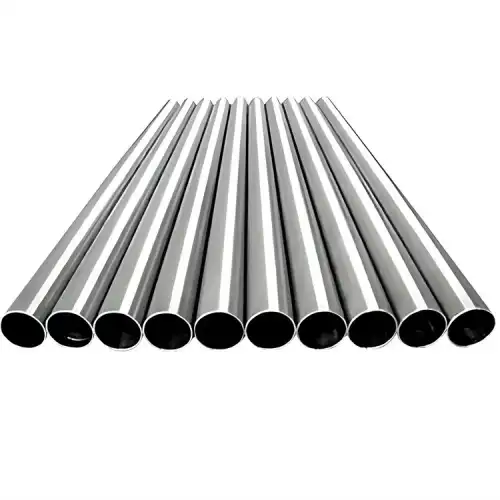
Understanding Large Diameter Titanium Round Tubes
What Defines Large Diameter in Industrial Applications
Titanium Round Tube with an outer diameter of more than 100 mm (4 inches) is usually called "large diameter." However, tubes with an outer diameter of more than 200 mm are considered truly large-bore components in some heavy industry sectors. These measurements are very important for heat exchanges, structural columns, and fluid transport systems that need to have thick walls and a large cross-sectional area to handle high flow rates and mechanical loads. Smaller precision tubes are used in medical devices. Large diameter versions, on the other hand, put structural stability and thermal control ahead of shrinking.
Core Material Properties and Mechanical Characteristics
Titanium alloys are very strong for how light they are. They have a tensile strength of about 280 MPa while being only 60% as dense as stainless steel. Grade 2 economically pure titanium is very flexible and easy to shape, which makes it perfect for cold bending in the building of heat exchangers. After the right heat treatment, Grade 5 titanium alloy (Ti-6Al-4V) has tensile strengths of more than 900 MPa, which means it can handle high-pressure hydraulic systems in aerospace applications. The low thermal expansion rate of the material (about 8.6 µm/m·°C) reduces thermal stress during temperature changes, which stops fatigue cracks that happen in places where carbon steel is used.
Heat Treatment and Performance Enhancement
Stress relief annealing at temperatures between 480°C and 650°C gets rid of any stresses that were left over from cold forming or welding. This makes the metal more flexible without weakening it. Solution treatment and ageing processes improve Grade 5 metal tubes by forming alpha-beta phase structures that make them more resistant to fatigue. Controlled atmosphere furnaces are used in our manufacturing process to keep the passive oxide layer that is so important for protecting against rust. These furnaces stop the surface from oxidising during heat processing.
Common Titanium Grades for Heavy Duty Use
Grade 2 commercially pure titanium is mostly used in seawater because it is better at resisting pitting and crevice rust in chloride settings. Grade 9 (Ti-3Al-2.5V) is a good mix between strength and weldability. It is used in aerospace hydraulic lines where reducing weight has a direct effect on fuel economy. Grade 5 is the strongest level for structural parts that have to hold a lot of weight. To get the best performance and value for money, procurement professionals should match material Titanium Round Tube types to specific weather risks, such as chloride concentration, working temperature, and mechanical stress profiles.
Comparing Titanium Round Tubes with Other Metal Tubes
Strength-to-Weight Performance Analysis
Industrial projects always have to weigh the benefits and drawbacks of different building standards. Titanium Round Tubes are as strong as high-grade stainless steel, but they weigh about 40% less than stainless steel tubes. This weight benefit means that offshore sites can have lighter foundations, mobile equipment can use less fuel, and it's easier to set up large-diameter pipe systems. Aluminium metals are even less dense than titanium, but they can't match titanium's ability to stay strong at high temperatures or fight corrosion in harsh chemical conditions.
Corrosion Resistance in Harsh Environments
Titanium surfaces naturally get a coat of passive titanium dioxide that protects them very well from seawater, chlorine chemicals, and acidic process streams. Even though stainless steel 316L is good for many naval uses, it rusts when it comes into contact with saltwater that doesn't move and chloride levels that are higher than 1000 parts per million. Carbon steel needs expensive coatings and cathodic protection, which raises the cost of upkeep over the life of the equipment. Offshore companies' studies on material choice show that Titanium Round Tube heat exchanger tubes last 20 to 30 years in seawater cooling systems, while copper-nickel metals break after 5 to 8 years.
Long-Term Cost Considerations and Total Ownership
Titanium Round Tube usually costs three to five times more than stainless steel at first, but this cost needs to be weighed against the total cost of ownership. Lifecycle costs are much cheaper in corrosive service when maintenance times are shortened, protective coatings are not reapplied, and replacement cycles are lengthened. A chemical processing plant that switched from stainless steel reactor pipes to large diameter titanium round tubes saw a 60% drop in unexpected downtime over 10 years of operation. This made up for the higher cost of the new materials by making production more reliable.
Material Selection Guidelines for Specific Industries
Grade 9 and Grade 5 metals are most often used in aerospace applications where weight savings justify higher prices and high strength meets hydraulic pressure needs. Chemical processing companies choose Grade 2 because it doesn't rust as easily in acidic and chlorinated settings. Titanium Round Tube is always used for evaporator tubes in marine distillation plants that are exposed to concentrated brine solutions. These choices of materials based on industry come from decades of field performance data and failed analysis studies.
Procurement Considerations for Large Diameter Titanium Round Tubes
Identifying Qualified Manufacturers and Suppliers
To find good sources for large diameter Titanium Round Tube, you need to check the quality control methods and manufacturing skills. LINHUI TITANIUM has two factories with 30 high-tech production lines that can make tubes that are seamless, extruded, or bonded to meet the requirements of ASTM B861, ASTM B862, or ASME SB338. Our ISO 9001:2015 approval and compliance with PED 2014/68/EU show that we follow foreign quality standards that are known in markets in North America, Europe, and Asia.
Understanding Cost Drivers and Pricing Structures
Choosing the right material grade has a big effect on the price. For example, commercially pure Titanium Round Tube costs less than high-strength alloys. Dimensional requirements, such as wall thickness, outer width, and length, affect how hard it is to process and how much material is used. Precision cutting, end finishing, and surface treatments are some of the custom manufacturing services that add value but raise unit costs. When you commit to a certain amount of work, you can negotiate better prices, which is especially helpful for long-term projects that span several years. We work closely with buying teams to set up supply deals that meet quality standards and ensure on-time delivery while staying within budget.
Certification Requirements and Quality Verification
Buyers in the industrial sector need to make sure that tube makers have up-to-date licenses from the classification societies and regulatory bodies that oversee their industries. Our certifications from DNV, ABS, CCS, BV, Titanium Round Tube, and Lloyd's Register show that we meet the standards of the marine business. The TUV Nord AD2000-W0 approval proves that the company can make pressure tools for the European market. Third-party testing services from SGS, Bureau Veritas, and Moody's check the composition of materials, their mechanical qualities, and the accuracy of measurements. This gives procurement workers faith that the products they buy will meet standards.
Custom Fabrication and Technical Support Services
Value-added services like precision cutting to length, end beveling for welding preparation, and surface cleaning are often needed for large diameter Titanium Round Tube uses. Our laser-guided cutting equipment keeps errors within ±0.05mm, which makes sure that it fits in perfectly with existing pipe systems. Technical support teams help engineering departments choose the best materials, suggest manufacturing methods, and make sure that welding procedures are safe. This way, they can improve the installation process and avoid having to make expensive changes in the field.
Industrial Applications and Benefits of Large-Diameter Titanium Tubes
Aerospace Structural and Hydraulic Systems
Large diameter Titanium Round Tubes are used by aircraft makers in the structural parts of the fuselage and the landing gear assemblies. Their high strength and low weight directly increase the amount of fuel that an aircraft can carry and the amount of fuel that it uses. For high-pressure lines working at 3000–5000 psi, hydraulic system designers use Grade 9 Titanium Round Tube. Its burst strength and fatigue resistance ensure flying safety over decades of cyclic stress. The material works well at high temperatures to support engine bearing structures that are heated by the smoke from turbines.
Chemical Processing and Refinery Infrastructure
Large diameter Titanium Round Tube is used in reactor systems at petrochemical plants to handle harsh feedstocks like sulfuric acid, chlorinated hydrocarbons, and caustic solutions. Manufacturers of heat exchangers make shell-and-tube units with Titanium Round Tube bundles that don't get clogged and keep their thermal efficiency over long periods of time. The material doesn't crack or stress rust, so it doesn't have the catastrophic failure modes that stainless steel does in chloride-contaminated process streams. This makes the plant safer and protects the environment.
Marine and Offshore Oil and Gas Platforms
Offshore bases use big Titanium Round Tube for their seawater cooling systems because they can handle large amounts of water and don't rust or biofouling. Titanium Round Tube are used in subsea production equipment for flowlines and risers that are exposed to seawater, hydrogen sulfide, and carbon dioxide, which quickly wears down carbon steel even with coats that protect it. When it comes to heat efficiency, desalination plants use Titanium Round Tube evaporator tubes because they have clean sides and thin walls, while copper-nickel tubes need to be thicker to stop erosion and corrosion.
Power Generation and Energy Infrastructure
Nuclear power plants use Titanium Round Tube condenser tubes for systems that are cooled by seawater. The dependability of the materials directly affects how much electricity the plants can make and how often they can be used. Large diameter Titanium Round Tube is used in geothermal energy projects to move high-temperature brines that contain gases and minerals that dissolve in water and eat away at normal materials. Titanium Round Tube has been used in these situations to show that it can work successfully in harsh conditions where failure of the material would have serious safety and cost effects. The above-mentioned operational benefits lead to measurable gains in the dependability of tools and lower upkeep costs. When Titanium Round Tube parts are used instead of traditional materials in corrosive service, plant workers regularly report longer response times and lower inventory needs for extra parts.
How to Optimise Performance and Longevity of Titanium Round Tubes
Heat Treatment Best Practices for Application-Specific Properties
When thermal processing is done right, the mechanical qualities of the Titanium Round Tube can be changed to meet practical needs. Annealing processes at temperatures ranging from 650°C to 760°C make microstructures that are fully recrystallised and have the best flexibility for cold forming. When Grade 5 metal tubes are treated with a solution at 900–950°C and then aged at 540°C, they reach a peak strength of more than 1000 MPa in tensile strength. Cooling rates have a big effect on the end microstructure. For example, cooling in a kiln makes the grains bigger, which makes them more resistant to creep, while cooling in air makes the grains smaller, which makes them more resistant to fatigue.
Welding and Fabrication Techniques
Titanium Round Tube welding needs an inert gas cover to keep the air from contaminating the joints and making them weak. Gas tungsten arc welding (GTAW) with argon protection on both the torch and the rear purging makes strong welds that match the strength of the base metal. Surface contaminants that cause porosity can be removed by properly preparing the joint, which includes degreasing with alcohol and mechanical cleaning. Titanium Round Tube doesn't transfer heat well, so it doesn't need to be heated up first. However, interpass temperature control stops too much grain growth in multi-pass welds.
Common Fabrication Errors to Avoid
Cutting fluids, grinding wheels, and handle tools can all contaminate materials and add iron bits that speed up corrosion. Cross-contamination from steel processing processes is avoided by using manufacturing equipment that is only used for Titanium Round Tube. When you do too much cold working without taking breaks to relieve stress, you leave behind lingering stresses that shorten the wear life and may lead to delayed cracking. When tubes are stored incorrectly, they are exposed to water and chloride salts, which damage the protective oxide layer. The surface needs to be reconditioned before installation.
Maintenance Strategies and Inspection Protocols
Visual checks done regularly find surface damage from impact or abrasion that makes rust protection less effective. Ultrasonic thickness readings keep track of wall loss during erosive service, which lets replacement happen before it fails. Eddy current testing finds cracks below the surface in areas affected by heat that are close to welds. Cleaning on a regular basis gets rid of the biofilms and deposits that cause crevice corrosion in coastal settings. These regular maintenance methods extend the life of assets and let you know early on when they are breaking down and need to be fixed.
Conclusion
Titanium Round Tube with a large diameter works better than any other material in heavy-duty industry settings where long-term dependability, resistance to rust, and strength-to-weight ratio are worth the extra cost. Choosing the right material from available pure and alloyed grades depends on how it will be used and how much it will be loaded mechanically. The success of procurement rests on hiring qualified manufacturers who keep all of their certifications up to date and can provide expert help. With the right manufacturing methods and care schedules, these engineered parts will last as long as they're supposed to, working reliably for decades in the harshest industrial settings.
FAQ
1. What diameter range qualifies as "large diameter" for industrial titanium tubes?
Large diameter Titanium Round Tube usually have outer sizes of 100 mm (4 inches), but heavy industrial uses usually focus on tubes with diameters over 200 mm. Specifications for sizes depend on the business. For example, chemical processing may need 150–300 mm shells, while saltwater intake systems on offshore platforms use diameters up to 600 mm.
2. How does the price of titanium tube compare to other materials like stainless steel?
Titanium Round Tube costs about three to five times as much per kilogram as stainless steel 316L. A lifecycle cost study needs to look at things like repairs, replacements, and downtime. Titanium Round Tube has higher starting costs, but lower total ownership costs in many corrosive service uses. This is especially true in marine and chemical processing settings where stainless steel needs to be replaced often.
3. Can makers make lengths and end preparations that are specific to my needs?
Qualified sellers give a full range of fabrication services, such as precisely cutting to lengths specified by the customer, beveling the ends for welding, and threading for mechanical connections. LINHUI TITANIUM keeps laser-guided cutting tools that can achieve tolerances of ±0.05mm. This allows for seamless interaction with current pipe systems and reduces the need for field modifications.
Partner with a Trusted Large Diameter Titanium Round Tube Manufacturer
With more than 21 years of experience, LINHUI TITANIUM has been making big diameter Titanium Round Tube for the most demanding industries in the world. Our two factories have 30 high-tech production lines that are accepted by DNV, ABS, CCS, and other major classification societies and are qualified to ISO 9001:2015 and PED 2014/68/EU. We offer material grades from Gr1 to Gr23 that meet the requirements of ASTM, AMS, ASME SB338 and NACE MR0175. Our products come with full mill test records and third-party testing services. Our engineering team can help you with any part of your project, from choosing the right materials to making suggestions on how to build it. This includes everything from seamless extruded tubes for flight hydraulics to welded large-bore pipes for offshore platforms. Email us at linhui@lhtitanium.com to talk about your unique needs with a dedicated account manager who knows how hard it is for the energy, chemical, and marine businesses around the world to get the things they need.
References
1. Boyer, R., Welsch, G., and Collings, E.W., Materials Properties Handbook: Titanium Alloys, ASM International, 1994.
2. Schutz, R.W., "Titanium in the Chemical Process Industry," Advanced Materials & Processes, Vol. 154, No. 2, 1998, pp. 25-28.
3. American Society for Testing and Materials, ASTM B861-14: Standard Specification for Titanium and Titanium Alloy Seamless Pipe, ASTM International, West Conshohocken, PA, 2014.
4. Donachie, M.J., Titanium: A Technical Guide, Second Edition, ASM International, Materials Park, OH, 2000.
5. Peters, M., Kumpfert, J., Ward, C.H., and Leyens, C., "Titanium Alloys for Aerospace Applications," Advanced Engineering Materials, Vol. 5, No. 6, 2003, pp. 419-427.
6. Francis, R., The Corrosion of Titanium and Titanium Alloys in the Oil and Gas Industry, NACE International Publication 03116, Houston, TX, 2003.