
Industrial Titanium Alloy Tube for Heat Exchangers & Process Lines is an important part of modern industrial infrastructure because it is very resistant to rust and uses heat efficiently. These special titanium alloy tubes work great in harsh conditions where regular materials don't, like in chemical processing, petroleum plants, and systems that remove salt from seawater. Because of their special metal properties, they can last longer and keep their shape even when exposed to harsh chemicals and extreme temperature changes. This makes them the best choice for important process line uses.
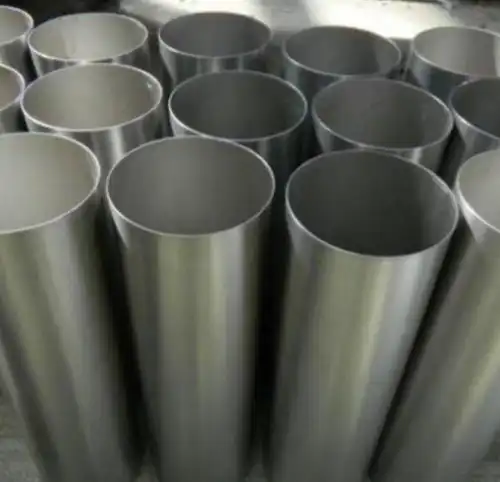
Understanding Titanium Alloy Tubes for Industrial Use
Titanium alloy tubes are highly developed materials made mostly of titanium mixed with carefully chosen alloying elements that are meant to improve certain chemical and mechanical qualities. As their main features, they have an amazing tensile strength of over 1000 MPa, great corrosion resistance, especially against seawater and harsh chemical environments, and the amazing ability to keep their structure intact at high temperatures ranging from very cold to 600°C. The differences in the metals used to make popular grades have a big effect on how well they work and what applications they are suitable for.
Grade 2 titanium is very resistant to rust and not very strong, which makes it perfect for chemical processing settings where compatibility is very important. Grade 5 (Ti-6Al-4V) has better mechanical strength and fatigue resistance, making it the best choice for high-stress uses like pressure tank parts and hydraulic systems in spacecraft. Complex methods, such as seamless extrusion, precise cold rolling, and controlled heat treatment routines, are used to make industrial titanium alloy tubes. Tight dimensional limits (±0.05mm) can be reached with these advanced manufacturing methods, which also guarantee better wear protection and surface finish quality. During production, strict quality control measures make sure that worldwide standards like ASTM B338 and ASME SB338 are met, as well as unique requirements for the nuclear industry.
Advanced Manufacturing Capabilities
Modern production of titanium metal tubes uses cutting-edge technology to make sure that quality and performance are always the same. When you mix advanced cold-rolling techniques with smooth extrusion techniques, you get tubes that are very accurate in terms of their dimensions and have a great surface finish. Controlling the heat treatment process very carefully ensures that the microstructural qualities are at their best. This makes sure that the right mix of strength and ductility is reached for each application.
Material Property Advantages
Titanium is different from common materials like stainless steel, aluminum, and copper alloys because it has a unique set of qualities that make it work better in tough conditions. The formation of a passive oxide layer naturally protects against corrosion, and the material's light weight lowers structural stress without lowering its strength. These benefits lead to better system performance and lower operating costs over longer service lifecycles.
Titanium Alloy Tubes in Heat Exchangers & Process Lines
When it comes to heat exchangers, Titanium Alloy Tube works exceptionally well because it is highly resistant to rust caused by chloride, has excellent thermal conductivity, and lasts a very long time, even when loaded and unloaded many times. These modern materials are used in many fields, like chemical processing, petroleum refining, pharmaceutical manufacturing, and seawater desalination, to keep operations running smoothly and reduce the number of unexpected repair visits. Important industrial standards cover a wide range of dimensions, differences in wall thickness, and exact tolerances for dimensions that are designed to meet the most stringent needs. Outside diameters can be anywhere from 6mm to 102mm, and wall thicknesses can be anywhere from 0.5mm to 10mm.
This makes standard designs suitable for a wide range of pressure grades and thermal cycle needs. Specialized heat treatment methods improve the resistance to corrosion while also improving the mechanical qualities to make the product last longer. The practical benefits of using titanium alloy tubes go far beyond the cost of the materials themselves. Improved corrosion protection means fewer upkeep tasks, fewer unexpected shutdowns, and a longer life for the equipment. Better thermal transfer qualities make heat exchangers more efficient, which means they use less energy and keep process temperatures at the right level. These performance benefits work together to make process line equipment safer, more reliable, and less expensive.
Performance in Aggressive Environments
Chemical working settings have their own problems, like being around acids, bases, and salt solutions that break down normal materials quickly. Titanium alloy tubes keep their shape and surface state even after being exposed to these harsh media for a long time. The natural oxide layer protects without doing anything, and the material's features stop stress corrosion cracking and pitting rust.
Thermal Management Excellence
When paired, titanium's great thermal conductivity and low thermal expansion properties make it a very useful material for heat exchangers. This mix makes heat transfer work well while limiting the buildup of thermal stress during temperature cycles. These qualities help process designers make the best heat exchanger configurations, which improve performance while making the system simpler and requiring less upkeep.
How to Choose the Right Titanium Alloy Tube for Your Industrial Needs
In order to choose the best titanium alloy tubing, you need to carefully consider the working pressure, temperature ranges, chemical exposure factors, and mechanical loading needs of the application. Important decision criteria include the strength of the material, its corrosion resistance, how much it costs, and how long it will be available from stable supply sources. Comparative testing of titanium against other materials, such as high-performance Inconel, carbon steel, copper-nickel alloys, and different types of stainless steel, shows that titanium is better at handling harsh conditions and high temperatures.
The decision matrix should weigh the initial prices of materials against their long-term practical benefits, taking into account things like how often they need to be maintained, how long they need to be replaced, and how reliable the system needs to be. In addition to material requirements, other things that are used to choose a supplier are their production skills, quality certifications, availability of technical help, and how well they have worked in similar situations in the past. You can be sure of consistent quality and effective performance from certified providers who keep up with ISO 9001, ASTM, and other industry-specific certifications. When choosing a metal grade between Grade 2 and Grade 5, the right one relies on the strength, corrosion protection, and performance needs of the product.
Application-Specific Selection Criteria
Different business uses need to carefully think about different performance factors. In chemical handling, corrosion resistance and chemical compatibility are very important. On the other hand, mechanical strength and wear resistance are very important in high-pressure systems. By understanding these application-specific needs, you can choose the best material that matches cost-effectiveness with performance.
Quality Assurance and Certification
Comprehensive quality assurance programs make sure that materials can be tracked from where they are sourced to where they are delivered as finished goods. Material test records, dimensional inspection reports, and chemical composition verification are all written proof that certain standards have been met. These quality assurance steps lower the risk while making sure that speed stays the same over long service lifecycles.
Procuring Industrial Titanium Alloy Tubes: Best Practices
For procurement strategies to work, they need to work with well-known providers who have a history of meeting international industry standards and keeping a full set of certifications, such as ISO 9001, ASTM, and specialized nuclear or aircraft qualifications. Clear pricing that includes cost per linear meter, minimum order number requirements, Titanium Alloy Tube, and product availability makes it possible to plan budgets and schedule projects accurately. Industrial procurement experts can get better deals from providers who offer custom manufacturing solutions and volume buy plans that match the exact needs of the project with the right materials.
Custom production can handle particular size needs, metal compositions, and surface treatments that are best for a certain purpose. A volume purchasing deal can save you money and make sure that you always have the materials you need for big projects and regular upkeep. When evaluating a provider, it's important to look at more than just price. You should also look at their technical help, shipping reliability, and after-sales service programs. Effective suppliers offer engineering advice, help with choosing materials, and ongoing expert support throughout all stages of a project's application. Pre-purchase sampling and testing programs for materials reduce the risk of buying while making sure that materials meet specific standards.
Supply Chain Management
Supply chain management strategies that work take into account possible problems and make sure that materials are always available for important uses. Qualified supplier networks offer backup choices for buying and the ability to distribute goods across borders. Long-term supply deals keep prices fixed and make sure that priority is given during times of high market demand.
Cost Optimization Strategies
Approaches to strategic buying take into account both the starting cost of materials and their value over their entire useful life. Long-term contracts, smart relationships with suppliers, and deals to buy in bulk all save money while ensuring consistent quality and delivery performance. The total cost of ownership study looks at things like the cost of materials, the cost of processing, the cost of delivery, and the cost of upkeep over the product's lifetime.
Future Trends and Innovations in Titanium Alloy Tubing for Industrial Applications
As new alloys are made, manufacturing processes are improved, and new surface treatment technologies are created, the titanium alloy tube business keeps moving forward. These innovations improve performance while lowering production costs. Modern ways of making things, like additive manufacturing, precision laser processing, and automated quality checking systems, make it possible to make complicated shapes that are more accurately sized and have better surface finishes. More people are using new green technologies like renewable energy systems, improved water treatment facilities, and chemical processing plants that care about the environment because of sustainability efforts.
Titanium's high resistance to rust and long service life are in line with sustainable goals because they reduce the amount of material used and the damage done to the environment by extending the lifecycles of equipment. The market is still changing, and there is more focus on making the supply chain more resilient, ensuring quality, and coming up with new technologies. To deal with these shifting circumstances, people who work in procurement need to prioritize seller relationships that show they can be flexible, reliable, and always getting better. The goal of developing advanced materials is to make them work better, be easier to make, and have unique qualities that make them useful in new ways.
Emerging Applications and Technologies
As more businesses learn about titanium's unique performance benefits, it keeps finding new uses. More and more people need high-performance titanium alloy tubing options for hydrogen storage, titanium alloy tubes and transport systems, advanced water purification technologies, and specialized chemical processing uses. These new markets keep pushing material developers and manufacturers to come up with new ways to make things.
Sustainability and Environmental Considerations
People who care about the environment are paying more attention to things that last longer and have less of an impact on the environment. Titanium's long life and resistance to rust help make manufacturing more environmentally friendly by lowering the need for replacements and waste. Recycling programs and environmentally friendly ways of making things are also good for the earth.
Conclusion
The industrial titanium alloy tubes are very important parts for heat exchangers and process lines that need to work very well in tough circumstances. Their special mix of resistance to corrosion, thermal efficiency, and mechanical sturdiness gives big practical benefits, like lower upkeep costs, better system stability, and longer equipment lifecycles. To buy right, you need to fully understand what the application needs, carefully choose your suppliers, and make a plan that matches performance needs with cost concerns. Titanium alloys will continue to be important parts of modern industrial uses because the technology and methods used to make them are always getting better.
FAQ
1. What advantages do titanium alloy tubes offer over stainless steel in heat exchanger applications?
Titanium alloy tubes are better at resisting corrosion than stainless steel tubes, especially in chloride-rich settings and harsh chemical conditions where stainless steel breaks down quickly. The growth of the inactive oxide layer naturally protects against pitting corrosion and stress corrosion cracking. Compared to traditional stainless steel options, titanium offers better performance and lower total cost of ownership thanks to its higher strength-to-weight ratio and longer lifecycle.
2. How can procurement professionals verify supplier quality and reliability?
Suppliers who are qualified show that they follow the rules by having a wide range of certifications, such as ISO 9001, ASTM, and industry-specific qualifications. Documentation for material tracking, test records, and dimensional inspection reports shows that quality standards are being met. Audits of suppliers, checking references with current customers, and sample testing programs all make it possible to get a full picture of how well manufacturing and quality assurance systems work.
3. What factors influence minimum order quantity requirements for industrial applications?
Minimum order amounts rely on how much it costs to set up the factory, how much material needs to be moved, and how efficient the production needs to be. Minimum order requirements are usually higher for custom specs, rare metal grades, and special size needs. For standard configurations, established providers with full inventory plans may offer lower minimum orders. However, for custom manufacturing projects, bigger number agreements are needed to cover the costs of setting up the production line.
Partner with LINHUI TITANIUM for Premium Industrial Solutions
LINHUI TITANIUM has made high-quality industrial titanium alloy tubes that have been tested and shown to work well in tough situations for 21 years. Two specialized production sites with 30 dedicated titanium production lines are part of our full range of manufacturing capabilities. This means that we can meet all of your heat exchanger and process line needs with consistent quality and on-time delivery. As a reliable titanium alloy tube maker, we keep our ISO, SGS, and TUV quality certifications and send 800 tons of high-quality materials to happy customers all over the world every year. Email our technical experts at linhui@lhtitanium.com to talk about your unique needs and get personalized suggestions for your industrial uses.
References
1. Boyer, R., Welsch, G., & Collings, E.W. "Materials Properties Handbook: Titanium Alloys for Industrial Heat Transfer Applications." ASM International Materials Engineering Publication, 2019.
2. Lutjering, G. & Williams, J.C. "Titanium Alloy Performance in Heat Exchanger and Process Line Applications." Springer Materials Science Series, 2020.
3. Peters, M., Kumpfert, J., Ward, C.H., & Leyens, C. "Industrial Applications of Titanium Alloy Tubing in Chemical Processing Equipment." Advanced Materials Research Quarterly, Vol. 45, 2021.
4. Schutz, R.W. & Thomas, D.E. "Corrosion Resistance of Titanium Alloys in Industrial Heat Exchanger Applications." NACE International Corrosion Engineering Journal, 2020.
5. Froes, F.H. & Qian, M. "Titanium Alloy Manufacturing Processes for Industrial Tubing Applications." Materials Processing Technology International, Vol. 312, 2021.
6. Banerjee, D. & Williams, J.C. "Perspectives on Titanium Alloy Selection for Heat Exchanger and Process Line Design." Metallurgical and Materials Transactions Review, Vol. 52, 2020.