
It is very important to know the differences between seamless and welded industrial pure titanium tube choices when looking at materials for important industry uses. These high-performance parts are the backbone of many industrial processes, from spacecraft systems to chemical processing plants. The choice between seamless and bonded setups has a big effect on how well the project works, how much it costs, and how reliable it is in the long run. When choosing the best titanium tube for their uses, people who work in procurement in the oil, gas, chemical, aircraft, and marine industries need to think about things like pressure rates, corrosion resistance needs, and working conditions.
Understanding Industrial Pure Titanium Tubes
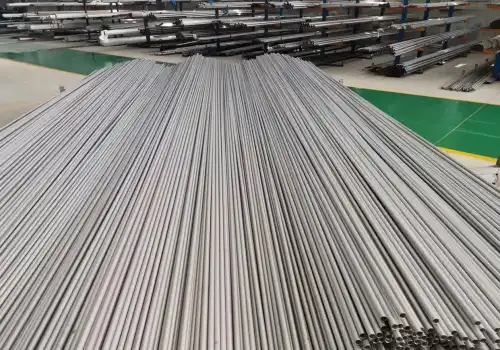
Pure titanium tubes are mostly made up of 99.6% titanium, with a few alloying elements added to improve certain qualities. In industrial settings, Grade 1 and Grade 2 are the most popular commercial and pure titanium grades. Grade 1 has better formability and resistance to corrosion, while Grade 2 has better strength properties that make it perfect for structural uses. If you want to make medicines, food, or medical devices, these types are perfect because they are biocompatible and don't react with chemicals.
The controlled chemical makeup makes sure that the product works the same way in all kinds of circumstances. The amount of oxygen in Grade 2 material is usually between 0.18% and 0.25%. This makes it stronger in tension without making it less flexible. To keep the steel from becoming too weak during service, the iron content stays below 0.30%, and the hydrogen content stays below 0.015%. Through rotating piercing and pilgering processes, advanced cold-rolling methods make titanium tubes that are smooth. This way of making things gets rid of weld gaps, which makes walls that are all the same thickness and gives them better pressure resistance. To make uniform products, titanium billets are heated to the right temperature and then carefully pierced to make hollow shapes.
After that, cold-working is used to get the final surface finishing and limits for dimensions. High-frequency induction welding or tungsten inert gas welding is used to make welded tubes. After exact shaping and welding, the strip material goes through processes of sizing and bending. Post-weld heat treatment gets rid of any remaining stresses and improves the microstructural features. Ultrasonic testing, barometric pressure testing, and verifying the dimensions are all quality control methods used to make sure that ASTM B338 standards are met. To work in aircraft, medicine, and industry, titanium tubes have to meet strict worldwide standards. ASTM B338 sets the standards for chemical makeup, mechanical qualities, and size limits for both seamless and welded titanium tubes. The AMS 4928 and MIL-T-9047 standards are for aircraft uses that need higher levels of dependability and traceability. ISO 13485 quality control systems and ASTM F67 biocompatibility standards must be followed for medical uses. NACE MR0175 standards for sour service environments must be followed in oil and gas sites. These approvals make sure that materials are honest and work the same way in all places around the world.
Comparing Seamless and Welded Titanium Tubes: Making the Right Choice
Seamless titanium tubes, industrial pure titanium tubes are better at withstanding pressure because their walls are all the same and there are no bonded parts. These tubes can handle higher internal pressures and have better stress resistance when loaded and unloaded many times. Wall width consistency helps to predict how stress will be distributed and gets rid of the weak spots that can happen in weld zones. For low-pressure uses, welded tubes are a cost-effective option that still has great corrosion resistance.
Using modern welding methods, you can make strong parts that are close to the strength of the base material. The properties of the weld zone are improved by heat treatment methods, which ensure solid performance in most industrial settings. The configuration that is chosen relies on the needs of the product, the working pressures, and the cost. When safety is very important, like when there are high pressures, harsh chemicals, or important processes, seamless building is usually the best choice. Welded alternatives can work well in standard production processes with moderate working conditions. The differences in prices between seamless and welded choices show how complicated the production process is and how well the materials are used. Because they need special tools to make and take longer to make, seamless tubes are more expensive. There needs to be a lot of money and trained operators for the cutting and piling processes. The creation of welded tubes gives you more material and faster lead times, which saves you money on big projects. Optimization of strip materials cuts down on waste and makes inventory control easier. However, extra steps like welding and heat treatment raise handling costs that partly cancel out the savings from using raw materials. Long-term lifetime costs must take into account how often something needs to be maintained, how often it needs to be replaced, and how well it works.
When used in difficult situations, seamless tubes often pay for themselves over time through longer service lives and lower upkeep costs. When it comes to corrosion protection, titanium tubes are better than stainless steel options in chloride and acidic situations. The oxide layer forms naturally and has self-healing qualities that keep its protective properties even when it is damaged mechanically. A weight decrease of about 45% compared to similar steel components makes the structure more efficient and lowers the need for support. Copper-nickel metals don't rust and are strong for their weight, but they can't handle high temperatures or be as strong as titanium. Titanium keeps its mechanical qualities even at high temperatures, where copper metals lose a lot of their strength. Titanium's nonmagnetic qualities make it useful in computer and instrumentation uses.
Applications and Benefits of Industrial Pure Titanium Tubes
Pure titanium tubes are used a lot in chemical processing plants to build heat exchangers, reactor pipe systems, and distilling equipment. Because it doesn't rust or decay easily, it can be used to process harsh chemicals like organic acids, chlorine compounds, and oxidizing solutions. Titanium's thermal conductivity and fouling resistance make it useful for heat exchangers that need to work for long periods of time. Titanium's chemical inertness is used in reactor vessels to keep products pure and free of contamination. Because the material can be used with pharmaceutical processes, it meets strict quality standards. Titanium's resistance to rust is used in the inside of distillation columns to handle corrosive top products and keep separation efficiency high. Materials that are strong, light, and can handle high temperatures and corrosive conditions are needed in aerospace uses.
Titanium tubes are very important in hydraulic systems, fuel lines, and systems that control the environment. The high strength-to-weight ratio of the material helps save fuel and increase volume. Manufacturers of airplanes use titanium tubes for engine parts that are exposed to exhaust fumes and high-temperature burning gases. The wear resistance of the material ensures that it will work reliably under the cyclic loading conditions that are common in airplane operations. Titanium's ability to pass through electromagnetic waves and avoid chemical warfare agents makes it useful in military uses. Implantable medical equipment and surgical tools are made from titanium because it is biocompatible and doesn't rust. The osseointegration qualities of titanium are used in orthopedic devices to help bone grow and stay stable over time.
Hemocompatibility and resistance to body fluids are good for the cardiovascular system. Titanium tubes are used in pharmaceutical processing tools to keep the product pure and stop it from getting contaminated. Strict hygiene standards are met by the material's ability to avoid sanitizing agents and make it easy to clean. Chemical inertness is used in laboratory tools to make sure that analysis results are correct.
Procurement Guide for Industrial Pure Titanium Tubes
To choose reliable providers of industrial pure titanium tubes, you need to look at their certifications, manufacturing skills, and quality control systems. Manufacturers that have been around for a while have complete quality management systems that are approved to meet ISO 9001 standards and industry-specific requirements. Audits of manufacturing facilities check the facilities' ability to make things and their quality control methods. Pressure equipment instructions, classification society approvals, and third-party inspection agency recognition should all be part of certification files. Certifications from DNV, ABS, CCS, and Lloyd's Register show that the ship meets maritime and ocean standards.
Certification under PED 2014/68/EU allows supply to pressure equipment users in Europe. In addition to basic supply functions, technical support services like helping with material selection, application engineering, and problem-solving give extra value. Suppliers that have been around for a while have technology teams that can handle difficult application needs and offer customization services. The measurements needed, the types of materials, and the standards that apply must all be made clear in the procurement specs. Tolerances for wall thickness, surface finish standards, and end preparation specs make sure that the product works with the fitting requirements. The conditions of the heat treatment and the standards for mechanical properties should match the needs of the product. Lead times are very different depending on the supply of materials, production plans, and the level of customization needed. Standard sizes usually have faster arrival times thanks to regular production runs and inventory plans. Custom sizes and metals mean that getting the materials and planning the production schedule takes longer. Through production efficiency optimization, the number of orders affects how prices are set and when they are delivered.
For unique grades and custom configurations, minimum order amounts are often in place. Agreements to buy in bulk can save you money and help you get what you need when supplies are low. Material test certificates, dimensional inspection reports, and tracking records are all part of complete paperwork packages. Heat analysis papers show that the chemicals' make-up meets certain standards. The results of mechanical tests show the tensile strength, yield strength, and stretch characteristics of the material. Ultrasonic inspection results for seamless tubes and radiography examination results for welded shapes are part of the non-destructive testing paperwork. Certificates of hydrostatic pressure testing show industrial pure titanium tube can withstand pressure is true. Reports from surface inspections show that there are no problems that could affect efficiency. Third-party testing services make sure that quality standards are met and that measurements are correct. Witness testing plans let people from the customer service team watch important testing processes. Digitizing documentation makes it easier to keep and find records for planning repairs and replacements.
Conclusion
When choosing between seamless and welded commercial pure titanium tubes, you need to think carefully about the needs of the purpose, the performance needs, and the cost. Seamless setups work best in high-stress, mission-critical situations where the highest level of stability is worth the extra cost. Welded options are a cost-effective way to handle normal industrial processes while still having great mechanical and corrosion resistance. When you know about the qualities of materials, how they are made, and industry standards, you can make smart purchasing decisions that improve project performance and lower costs over their lifetime. Partnering with qualified providers who have the right certifications, technical know-how, and quality systems to support demanding industrial uses is key to a successful adoption.
Partner with LINHUI TITANIUM for Your Industrial Pure Titanium Tube Requirements
If you need an industrial pure titanium tube, you can trust LINHUI TITANIUM. They have been making high-performance titanium products for over 21 years. Our large collection includes both seamless and welded options that are made to the highest international standards. This will make sure that your important projects get the dependability they need. We offer Grade 1 and Grade 2 titanium tubes that are certified by DNV, ABS, PED, and ISO. Our products are backed by strict quality control and expert help 24 hours a day, 7 days a week. Send an email to linhui@lhtitanium.com to talk to our engineering team about your unique needs and get cheap quotes for your next project. Experience the LINHUI difference by looking at our track record with world-class energy companies and our dedication to providing titanium quality all over the world.
References
1. American Society for Testing and Materials. "Standard Specification for Seamless and Welded Titanium and Titanium Alloy Tubes for Condensers and Heat Exchangers." ASTM International, 2019.
2. Boyer, Rodney R., and Harold L. Collings. "Materials Properties Handbook: Titanium Alloys." ASM International Handbook Committee, 2018.
3. Donachie, Matthew J. "Titanium: A Technical Guide, Second Edition." Industrial Metallurgical Society, 2020.
4. International Organization for Standardization. "Titanium and Titanium Alloys - Chemical Composition and Mechanical Properties." ISO Technical Committee, 2017.
5. Peters, Manfred and Christoph Leyens. "Titanium and Titanium Alloys: Fundamentals and Applications." Materials Engineering Publications, 2019.
6. Schutz, Richard W., and David E. Thomas. "Corrosion of Titanium and Titanium Alloys in Industrial Applications." NACE International Conference Proceedings, 2018.