
Choosing the right Ti-6Al-4V Grade 5 titanium material for aerospace or industrial applications requires evaluating several critical factors. The AMS 4911 plate specification delivers an optimised balance of high tensile strength, superior fatigue resistance, and corrosion durability that meets stringent aerospace standards. When selecting this material, you should assess your project's mechanical load requirements, operating temperature ranges, fabrication processes, and supplier certifications. Understanding the distinctions between annealed condition specifications and alternative heat treatments, and verifying complete traceability documentation, ensures you obtain aerospace-grade material that delivers performance and safety throughout your component's lifecycle.
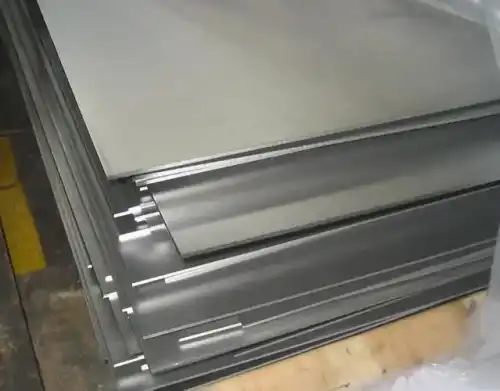
Understanding AMS 4911 Plate: Specifications and Properties
Chemical Composition and Core Alloying Elements
The Ti-6Al-4V amalgam utilised in aerospace-grade titanium sheets contains absolutely controlled components that determine its remarkable execution characteristics. Aluminium substance between 5.50% and 6.75% stabilizes the alpha stage, while generally lessening thickness, contributing to the exceptional strength-to-weight advantage. Vanadium increments extending from 3.50% to 4.50% stabilize the beta stage and upgrade elevated-temperature quality maintenance. What recognizes this aviation determination from commercial-grade fabric includes exacting impediments on interstitial elements—oxygen substance remains underneath 0.20%, nitrogen below 0.05%, and hydrogen regularly beneath 0.015% (150 ppm). These firmly controlled debasement edges anticipate hydrogen embrittlement and guarantee reliable mechanical behaviour over generation lots.
The iron substance remains at most 0.30%, whereas carbon is limited to 0.08% at most. This cautious adjustment creates a dual-phase microstructure that combines the ductility of the alpha stage with the quality characteristics of the beta stage, resulting in a material that resists crack propagation while maintaining formability for complex aviation geometries.
Mechanical Properties in Annealed Condition
Aerospace applications demand predictable and verified mechanical thresholds. Ti-6Al-4V annealed material exhibits a minimum tensile strength of 134 ksi (924 MPa) and a minimum yield strength of 126 ksi (869 MPa), providing substantial load-bearing capacity at approximately 60% the weight of equivalent steel components. The minimum elongation requirement of 10% ensures adequate ductility to absorb impact loads without brittle failure, a critical safety consideration for aircraft structural components and landing gear assemblies.
The material density of 4.43 g/cm³ (0.160 lb/in³) enables significant weight reduction compared to nickel superalloys and stainless steels commonly used in similar service environments. This weight advantage translates directly to fuel efficiency improvements in aerospace applications and payload optimisation in maritime systems. The beta transus temperature typically ranges between 1800°F and 1850°F (982°C to 1010°C), defining the thermal threshold for heat treatment operations and establishing maximum forming temperatures.
Thermal Stability and Operating Temperature Ranges
Understanding thermal limitations proves essential for material selection in elevated-temperature service. The annealed Grade 5 titanium maintains excellent creep resistance and dimensional stability at temperatures up to 600°F (315°C), making it suitable for airframe components, engine mounts, and structural brackets exposed to aerodynamic heating. Beyond 480°C (900°F), prolonged exposure to oxidising atmospheres without protective coatings causes surface embrittlement through alpha case formation—a brittle, oxygen-enriched surface layer that severely degrades fatigue performance.
Applications requiring sustained operation above these thresholds should consider near-alpha titanium alloys such as Ti-6242, which offer superior high-temperature stability. The thermal conductivity of Ti-6Al-4V remains relatively low at approximately 7.2 W/m·K, requiring careful consideration during welding operations and thermal processing to prevent localised overheating and microstructural degradation.
Heat Treatment Processes and Microstructure Control
Material delivered to aerospace specifications undergoes vacuum annealing to achieve stress relief and optimise ductility without compromising strength. This annealed condition features a uniform alpha-beta microstructure free from continuous alpha networks at grain boundaries, which could serve as crack initiation sites under cyclic loading. The controlled annealing process typically involves heating to 1300°F-1450°F (704°C-788°C), holding for sufficient time to achieve uniform temperature distribution, then furnace-cooling to room temperature.
While solution treatment and ageing (STA) can increase strength levels substantially—resulting in the AMS 4911 plate specification—material supplied as annealed titanium optimises formability for superplastic forming (SPF) and diffusion bonding operations common in aerospace manufacturing. The microstructure directly influences both corrosion resistance and fatigue crack growth rates, with equiaxed alpha morphology generally providing superior fatigue life compared to lamellar structures produced by slower cooling rates.
Key Criteria for Selecting the AMS 4911 Plate for Your Project
Evaluating Mechanical Load Requirements and Stress Conditions
Project-specific stacking scenarios direct fabric determination parameters. Components subjected to tall cyclic loads benefit from the prevalent weariness resistance characteristic in legitimately prepared Ti-6Al-4V, especially in airship basic applications where stress concentrations around clamp gaps require unsurprising break development behaviour. Inactive stack applications, such as weight vessel components or chemical-preparing hardware, take advantage of the fabulous stretch-erosion splitting resistance that titanium combinations illustrate in chloride-rich situations where stainless steels regularly fail.
Engineering groups ought to calculate plan allowables based on certified least mechanical properties or maybe more than commonplace values, consolidating suitable safety components for flight-critical applications. The score affectability of this alpha-beta combination requires careful consideration to gap-penetrating holes, edge wrapping up, and fillet radii in profoundly focused locales. Fabric introduction relative to central stretch headings, moreover, impacts execution, as rolled plate shows directional mechanical properties with longitudinal ductile quality regularly surpassing transverse course values by roughly 5-10%.
Assessing Thermal Exposure and Environmental Factors
Working environment evaluation demonstrates significance for fabric life span. Aerospace-grade titanium exceeds expectations in erosion resistance against water-powered liquids, fly fuel, and salt shower conditions common in sea and coastal aviation operations. Not at all like aluminium combinations that endure galvanic erosion when coupled with steel latches, titanium illustrates fabulous galvanic compatibility, regularly serving as the respectable material in diverse metal couples.
Chemical preparation applications, including oxidising acids, chlorides, and seawater, benefit from titanium's inactive oxide film arrangement, which gives self-healing assurance prevalent to stainless steels. In any case, lessening corrosive situations such as hydrochloric or sulphuric acids at elevated concentrations may assault titanium, requiring elective amalgam choice or defensive measures. Temperature cycling contemplations get to be imperative when fabricating over wide temperature ranges, as the coefficient of warm extension contrasts between titanium and connecting materials can initiate thermal stresses at joints and interfaces.
Comparing Alternative Aerospace Materials
Fabric choice includes assessing trade-offs between execution characteristics and handling considerations. Compared to 7075-T6 aluminium, Ti-6Al-4V conveys roughly twice the particular quality while working at temperatures 200°F higher than aluminium's viable limits. The erosion resistance advantage dispenses with defensive coating prerequisites in numerous marine applications, diminishing lifecycle support costs in spite of higher beginning fabric expenditure.
Stainless steel options such as 17-4PH offer comparable quality levels at lower fabric costs but carry a 75% weight penalty that undermines aviation execution targets. The 300-series austenitic stainless steels provide amazing erosion resistance but need the strength-to-weight proportion required for basic proficiency. Elective titanium details, including commercially pure (CP) grades, offer predominant formability and weldability at decreased quality levels, suitable for non-structural applications such as ducting and fairing boards.
Fabrication Insights: Machining, Forming, and Welding
Fabricating possibilities altogether impacts fabric determination results. Titanium machining requires specialised tooling, diminished cutting speeds, and liberal coolant application to overcome the moo warm conductivity that causes warm concentration at the cutting edges. Carbide tooling with sharp cutting geometries and chip-breaking highlights demonstrates the most successful, whereas keeping up direct support rates avoids work hardening that increases ensuing machining difficulty.
Forming operations advantage from the toughened condition's optimised ductility, although springback remains more articulated than with aluminium amalgams, requiring overbending compensation in brake-shaping operations. Superplastic shaping at temperatures between 1600°F and 1750°F (871°C and 954°C) empowers complex forms unachievable through ordinary shaping strategies, especially important for aviation channels and complex bracket geometries.
Welding methods require dormant gas protection on both the weld front and root side to anticipate barometric deflection that causes embrittlement. Gas tungsten circular segment welding (GTAW) conveys ideal quality for basic applications, whereas electron pillar and laser welding give profound penetration with negligible heat-affected zones. All welded joints require stretch alleviation, warm treatment and intensive assessment to confirm opportunity from abandonments that seem to compromise weariness execution.
Procurement Considerations for AMS 4911 Plates
Supplier Credentials and Certification Requirements
B2B procurement specialists serving the aerospace and defence sectors must verify comprehensive supplier qualifications before establishing supply relationships. AS9100 certification demonstrates aerospace quality management system implementation, while PED 2014/68/EU compliance indicates European pressure equipment directive adherence. Suppliers should maintain approval from major classification societies, including DNV (Det Norske Veritas), ABS (American Bureau of Shipping), Lloyd's Register, and Bureau Veritas, confirming the capability to supply material meeting international maritime and offshore standards.
Material traceability documentation must include mill test reports with complete chemical analysis results showing compliance with specification limits for all alloying and impurity elements. Mechanical test data should verify tensile properties, including ultimate tensile strength, yield strength, elongation percentage, and reduction of area measurements. Heat number identification enables lot traceability throughout the supply chain, essential for aerospace applications requiring positive material identification and failure investigation capabilities.
Third-party inspection acceptance by agencies such as SGS, TUV, and RINA provides independent verification of material conformance, reducing procurement risk for high-value projects. Suppliers offering ISO 9001:2015 quality management certification alongside ISO 14001 environmental management demonstrate systematic approaches to consistent quality delivery.
Quality Assurance Measures and Inspection Protocols
Aerospace material procurement demands rigorous verification beyond standard mill certification. Ultrasonic testing per AMS 4911 plate specification detects internal discontinuities invisible to surface inspection methods, essential for flight-critical applications where hidden flaws could propagate under fatigue loading. Surface inspection using liquid penetrant or magnetic particle methods reveals surface-breaking defects that require disposition before material enters production.
Chemical analysis verification through optical emission spectroscopy or X-ray fluorescence confirms alloying element content matches specification requirements. Hardness testing provides a rapid assessment of heat treatment conditions and uniformity across plate thickness. Dimensional inspection verifies that thickness tolerances, flatness requirements, and edge conditions meet drawing specifications to ensure compatibility with downstream fabrication processes.
Alpha case removal verification proves critical, as residual oxygen-enriched surface layers drastically reduce fatigue life. Chemical milling or mechanical removal followed by inspection ensures material surfaces remain free from this detrimental condition. Positive material identification (PMI) using handheld XRF analysers at receiving inspection catches material mix-ups that could introduce non-conforming alloys into aerospace production streams.
Pricing Dynamics and Lead Time Considerations
Market conditions significantly influence titanium procurement costs. Raw material pricing responds to global titanium sponge production capacity and aerospace industry demand cycles. Mill processing complexity for aerospace specifications commands premium pricing compared to commercial-grade material, reflecting the additional testing, traceability, and process controls required. Volume commitments often enable negotiated pricing advantages, though minimum order quantities may exceed immediate project requirements.
Lead times for aerospace-certified material typically extend 12-16 weeks from purchase order placement to delivery, reflecting production scheduling, heat treatment cycles, inspection protocols, and certification documentation preparation. Expedited production may be available at a premium cost when project timelines demand accelerated delivery. Maintaining strategic inventory for common sizes and thicknesses mitigates lead time impacts on production schedules, though inventory carrying costs must be balanced against supply chain responsiveness.
Custom size requirements involving special width, length, or thickness dimensions outside standard mill production add lead time and cost premiums. Establishing blanket purchase orders with scheduled releases provides supply chain stability while optimising inventory management for ongoing production programmes.
Practical Case Studies and Application Examples
Aerospace Structural Component Manufacturing
Landing gear components represent demanding applications where material selection directly influences safety and operational costs. A major aircraft manufacturer transitioned from high-strength steel to Ti-6Al-4V for main landing gear truck beams, achieving 40% weight reduction while maintaining equivalent fatigue life. The corrosion resistance eliminated protective cadmium plating requirements, reducing environmental compliance costs and simplifying maintenance procedures. Machining challenges were addressed through optimised toolpath strategies and specialised cutters that maintained productivity while achieving required surface finish specifications.
Engine mount fittings exemplify elevated-temperature applications where thermal stability proves critical. Commercial aircraft engine mounts experience sustained temperatures approaching 550°F (288°C) from radiant heat and vibration loads from engine operation. The selected titanium AMS 4911 plate material demonstrated stable mechanical properties throughout 30,000-hour service intervals, eliminating premature replacement issues encountered with aluminium alternatives that suffered creep deformation.
Maritime and Offshore Equipment Applications
Offshore platform components face aggressive corrosion environments combining saltwater exposure, high pressures, and mechanical loading. A Gulf of Mexico platform operator replaced super-duplex stainless steel riser components with titanium alternatives, achieving superior stress corrosion cracking resistance while reducing weight by 65%. The weight reduction enabled increased payload capacity and reduced foundation loading, delivering operational advantages beyond corrosion mitigation.
Shipboard seawater system components, including heat exchanger tube sheets and valve bodies, benefit from titanium's immunity to chloride-induced stress corrosion cracking. A naval vessel retrofit program replaced nickel-aluminium bronze valve bodies with titanium castings, eliminating cavitation erosion failures that previously required valve replacement every 3-5 years. The extended service life offset higher initial material costs within the first maintenance cycle.
Overcoming Common Processing Challenges
Welding defect prevention requires systematic process control and operator training. An aerospace fabricator reduced weld rejection rates from 12% to below 2% by implementing enclosed welding chambers, maintaining oxygen levels below 50 ppm, upgrading to pulsed GTAW power sources enabling superior heat control, and instituting comprehensive welder qualification programmes. Radiographic inspection revealed that prior contamination issues resulted from inadequate trailing shield coverage during root pass welding.
Machining productivity improvements were realised through carbide grade optimisation and cutting parameter refinement. Switching from general-purpose carbide to titanium-specific grades with enhanced toughness and wear resistance increased tool life by 300%, while implementing high-pressure coolant delivery directly to the cutting zone reduced cutting temperatures by 40°C. These improvements reduced per-component machining costs by 25% despite higher tool initial costs.
Conclusion
Selecting appropriate AMS 4911 plate material for aerospace, maritime, or industrial applications requires a comprehensive evaluation of mechanical requirements, environmental exposures, fabrication processes, and supplier capabilities. The annealed Ti-6Al-4V specification delivers proven performance in demanding service conditions where strength-to-weight ratio, corrosion resistance, and fatigue life determine component success. Procurement teams should prioritise certified suppliers who maintain comprehensive quality systems and offer complete traceability documentation. Matching the properties of the AMS 4911 plate to specific project demands while understanding processing requirements enables optimal component performance and lifecycle cost management. Successful material selection integrates engineering analysis with supply chain expertise, ensuring reliable AMS 4911 plate availability supports production schedules without compromising quality standards.
FAQ
What distinguishes aerospace specification from commercial-grade material?
Aerospace specifications impose significantly tighter controls on chemical composition tolerances, particularly interstitial elements like oxygen, nitrogen, and hydrogen that influence mechanical properties and weldability. The specification mandates ultrasonic inspection per AMS 2631 to detect internal discontinuities, requires lot-specific mechanical testing rather than periodic sampling, and enforces stricter defect acceptance criteria. Mill test reports must document complete chemical analysis and mechanical property verification for each heat number, enabling full traceability. Commercial-grade material may meet identical nominal composition but lacks the rigorous testing, documentation, and process controls required for flight-critical applications where material performance directly impacts safety.
Can annealed material be heat-treated for increased strength after purchase?
The Ti-6Al-4V alloy can undergo solution treatment and ageing to achieve higher strength levels corresponding to the AMS 4904 specification, typically reaching 160 ksi minimum tensile strength. However, this heat treatment reduces ductility and may affect certification status depending on the original mill certification scope. Solution treatment involves heating to approximately 1725°F-1775°F followed by rapid cooling, then ageing at 950°F-1000°F for 2-8 hours. Components requiring higher strength should be procured to the appropriate specification initially, rather than attempting field heat treatment, ensuring proper certification and traceability documentation accompany the material condition used in production.
What cutting method minimises heat-affected zone concerns?
Waterjet cutting represents the preferred method for minimising thermal effects, as the abrasive waterjet process introduces no heat into the material, eliminating heat-affected zone formation and preserving material properties to the cut edge. Abrasive waterjet cutting accommodates thicknesses up to 6 inches with cutting speeds varying by thickness and edge quality requirements. When laser or plasma cutting proves necessary for production efficiency, cut edges require subsequent chemical milling or mechanical removal of approximately 0.010-0.020 inches to eliminate the re-cast layer and any alpha case formation. EDM (electrical discharge machining) provides another low-heat-input alternative suitable for intricate profiles, though processing speed limitations restrict application to specialised geometries.
Partner with LINHUI TITANIUM for Certified AMS 4911 Plate Supply
LINHUI TITANIUM stands as your trusted aerospace-grade titanium plate manufacturer, delivering fully certified material meeting the stringent requirements of global energy, aerospace, and maritime industries. Our comprehensive certification portfolio, including AS9100, PED 2014/68/EU, ABS, DNV, Lloyd's Register, and ISO 9001:2015, ensures material traceability and quality assurance for your most critical applications. With two decades of experience supplying major EPC contractors and multinational corporations across 60+ countries, we maintain inventory depth and processing capabilities that support your project timelines. Our Xi'an headquarters facility offers precision cutting, heat treatment services, and complete inspection documentation, enabling single-source procurement efficiency. Whether your project requires standard 48" x 120" plates or custom dimensions from 0.5mm to 150mm thickness, our titanium products supermarket concept delivers the grades and specifications your engineers specify. Contact our technical team at linhui@lhtitanium.com to discuss your AMS 4911 plate supplier requirements and receive detailed quotations with competitive pricing for volume commitments.
References
1. ASM International. (2015). Titanium: A Technical Guide, 2nd Edition. Materials Park, OH: ASM International.
2. Boyer, R., Welsch, G., & Collings, E.W. (1994). Materials Properties Handbook: Titanium Alloys. Materials Park, OH: ASM International.
3. SAE International. (2019). AMS 4911: Titanium Alloy Sheet, Strip, and Plate 6Al-4V Annealed. Warrendale, PA: SAE Aerospace Material Specification.
4. Donachie, M.J. (2000). Titanium: A Technical Guide, Second Edition. Materials Park, OH: ASM International.
5. Lutjering, G. & Williams, J.C. (2007). Titanium, 2nd Edition: Engineering Materials and Processes. Berlin: Springer-Verlag.
6. Peters, M., Kumpfert, J., Ward, C.H., & Leyens, C. (2003). "Titanium Alloys for Aerospace Applications." Advanced Engineering Materials, Volume 5, Issue 6, pp. 419-427.