
When choosing the right 3-inch titanium pipe, you should carefully consider the properties of the metal, how it works, and what the application requires. The best choice takes into account the project's restrictions, such as budget, delivery dates, and security guidelines, as well as execution components, including its resistance to erosion and its structural integrity compared to its weight. Recently, when buying titanium, it's vital to ensure beyond any doubt you get the right grades (Review 1–12), check the environment, ensure beyond any doubt the sizes are worthy, and work with certified providers who can give full quality documentation and master offer assistance for critical industry employments.
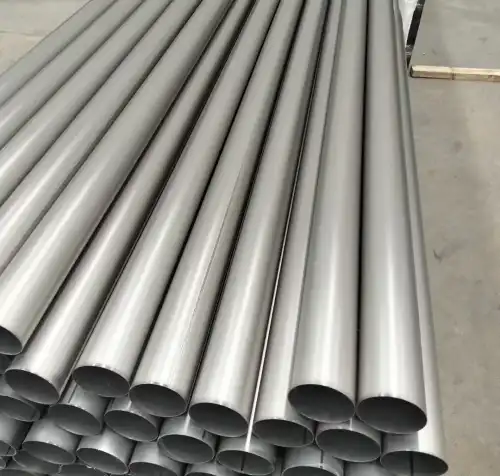
Understanding 3 Inch Titanium Pipes: Key Specifications and Properties
A 3 inch titanium pipe is one of the most flexible options for tough industrial uses. It has an outside width of about 3 inches, and the wall thickness changes depending on the pressure needs and the application requirements. The different titanium alloys used to make these pipes give them different performance qualities that are best for certain working conditions.
Material Grades and Chemical Composition
Commercially unadulterated titanium grades (Review 1-4) are exceptionally great at standing up to rust and being formed, whereas titanium amalgams like Review 5 (Ti-6Al-4V) are more grounded and way better suited for high-stress circumstances. According to ASTM B338 measures, review 2 titanium with an oxygen content of 0.15% or less is the most broadly utilized material in chemical preparation and marine situations since it has the best balance of quality, ductility, and resistance to erosion.
Mechanical Properties and Performance Characteristics
Titanium channels with a distance across of three inches have an astounding pliable quality that ranges from 35,000 psi for Review 1 to over 130,000 psi for Review 5. They moreover have incredible weakness resistance, which makes them final longer in circumstances of cyclic stacking. Since it is approximately 40% lighter than stainless steel but has the same quality, the material's incredible strength-to-weight proportion brings down basic loads and makes installation simpler in places where weight is critical, like airplane and offshore platforms.
Comparing 3 Inch Titanium Pipes with Alternative Materials
The things that are used determine how well a project works, how much it costs over time, and how effective it is. When you know how titanium pipes compare to other choices, you can make smart decisions that fit your job and your budget.
Performance Advantages Over Traditional Materials
When comparing titanium pipes to stainless steel pipes with the same diameter, several important changes in performance become clear. Stainless steel pipes can fight corrosion to a certain extent, but they are much heavier and don't work as well in chloride-filled environments, where titanium's passive oxide layer protects better. Carbon steel pipes are cheaper, but they need a lot of protective coatings and regular upkeep, which raises the total cost of ownership over longer service periods.
Aluminum pipes are light, but they don't have the high-temperature resistance and mechanical power that are needed for use in pressure vessels. Titanium is highly biocompatible and chemically inert, which makes it an ideal material for making pharmaceuticals and medical devices that need to be pure and not mix with other substances.
Cost-Benefit Analysis Considerations
3 inch titanium pipes cost more to buy at first than pipes made of other materials, but in difficult situations, the total cost of ownership often works out better for titanium. Long-term economics that support the higher material cost are helped by lower maintenance needs, longer service lives (more than 30 years in marine environments), and the removal of protective coating systems.
Criteria for Choosing the Right 3 Inch Titanium Pipe for Your Project
Effective pipe selection requires systematic evaluation of project-specific parameters, operational requirements, and compliance standards that govern material selection in regulated industries.
Technical Requirements Assessment
The first step in project specification analysis is to list the operating parameters, such as the highest working pressure, temperature ranges, and chemical exposure conditions. These factors directly affect the choice of grade. For example, Grade 2 titanium is good for most chemical processing tasks that don't go above 600°F, while Grade 5 alloy can handle higher stress and temperature needs in aircraft tasks.
Dimensional standards include both the outside diameter and the wall thickness calculations. These are based on pressure vessel codes like ASME B31.3 for process pipes or API specifications for oil and gas uses. Tolerance needs, especially for precision uses that need 0.1mm accuracy in dimensions, mean that suppliers with advanced manufacturing skills and thorough quality control systems must be chosen.
Supplier Evaluation and Quality Assurance
The choice of supplier has a huge effect on the success of a project through consistent quality, reliable delivery, and the ability to provide technical help. For important uses, quality assurance from certified makers with ISO 9001:2015 quality management certifications, PED 2014/68/EU pressure equipment directives, and industry-specific approvals from classification societies like DNV, ABS, or Lloyd's Register is a must.
Vacuum arc remelting (VAR) processing, hydrostatic testing protocols, and ultrasonic inspection techniques are all used in the manufacturing process to ensure that the material is correct and dimensions are correct. Suppliers who offer full traceability from melt heat numbers to delivery of the final product make it possible for regulated businesses to get all the quality documentation they need.
Application-Specific Recommendations for 3 Inch Titanium Pipes
Different industries have different performance standards that affect the choice of material grade, the size needed, and the quality standards for titanium piping systems.
Oil and Gas Industry Applications
For offshore drilling platforms and underwater production systems to work, the pipes need to be corrosion-resistant and able to handle high pressure, seawater, and hydrogen sulfide. Grade 2 titanium pipes that meet NACE MR0175 compliance standards work reliably in sour gas uses, and because they are light, they don't need as much support on the top of floating platforms.
Titanium is resistant to CO2 corrosion and scale formation, which makes it useful for downhole tubing. This makes well intervention intervals longer and lowers running costs. Because the material doesn't react badly with completion fluids and hydraulic fracturing chemicals, it can be used in unconventional resource development, which is hard for regular materials to do because the chemicals are so strong.
Chemical Processing and Pharmaceutical Manufacturing
Titanium's chemical inertness and lack of contamination make it useful for chemical processing plants that need very pure material transfer systems. Grade 2 titanium pipes are very resistant to chlorine, bromine, and organic acids, and they keep their surfaces clean, which is important for medicinal uses.
Because the material is biocompatible and easy to sterilize, it is perfect for making biopharmaceuticals, where regulatory compliance and product quality are very important. Electropolished surfaces with Ra values below 0.5 micrometers make it easier to clean and follow the validation procedures needed by FDA rules.
Procurement and Supply Chain Insights
By building strategic relationships with suppliers and learning a lot about the market, procurement strategies that work well balance the quality of the materials, the reliability of the deliveries, and the lowest costs.
Global Supply Chain Considerations
When buying titanium pipes, it helps to know how they are made around the world and how regional market factors affect prices and availability. Leading suppliers have production facilities strategically placed to serve major industrial areas and keep an international footprint. They also offer localized technical support and fast delivery services.
Since 2003, LINHUI TITANIUM has been making precision products and now has two specialized factories with 30 advanced production lines that can make 800 tons of metal every year. With this much production power and ISO/SGS/TUV certifications, the company can reliably meet large orders while still meeting the high-quality standards needed by global engineering giants like PETRONAS, Lukoil, and Siemens Healthineers.
Delivery and Logistics Management
Logistics networks that work well and use DHL, FedEx, air freight, and sea transportation choices make delivery times flexible so they can work with project deadlines and inventory management needs. Advanced suppliers offer real-time tracking of orders and full paperwork, such as Mill Test Certificates EN 10204 3.1, to make sure that customs clearance and project compliance checks go smoothly.
Conclusion
To select the best 3 inch titanium pipe, you need to carefully consider the specialized needs, the needs of the application, and the supplier's aptitudes that will ensure the project's success. Titanium channels are worth the beginning venture since they last longer and are safer from rust. This is because they are more grounded and lighter than other materials. When you work with experienced producers who offer certified quality, point-by-point documentation, and dependable shipping, you can be beyond any doubt that the materials you select will work in the most demanding mechanical settings for a long time.
FAQ
Q: What are the main benefits of using 3-inch titanium pipes over steel pipes?
A: Titanium pipes offer superior corrosion resistance, significantly lighter weight (40% less than steel), and longer service life exceeding 30 years in harsh environments. This results in lower maintenance costs, reduced structural loads, and improved system reliability compared to steel alternatives.
Q: How do I determine the appropriate titanium grade for my application?
A: Grade selection depends on operational pressure, temperature, and chemical exposure conditions. Grade 2 suits most chemical processing applications below 600°F, while Grade 5 accommodates high-stress aerospace applications. Consultation with certified suppliers ensures optimal material selection aligned with specific project requirements.
Q: What factors influence lead times when ordering titanium pipes?
A: Lead times vary based on material grade availability, customization requirements, order quantity, and supplier production capacity. Standard grades typically ship within 2-4 weeks, while custom specifications may require 6-8 weeks. Established suppliers with substantial inventory can provide expedited delivery for urgent requirements.
Partner with LINHUI TITANIUM for Superior 3 Inch Titanium Pipe Solutions
LINHUI TITANIUM delivers precision-crafted titanium piping solutions backed by two decades of manufacturing excellence and global project experience. Our comprehensive product range includes Grades 1-12 with 0.1mm tolerance precision and complete ASTM/ASME compliance documentation. Whether you need corrosion-resistant piping for offshore platforms or ultra-pure tubes for pharmaceutical applications, our ISO/SGS/TUV-certified manufacturing ensures reliable performance. Contact our technical experts today to discuss your project requirements and receive competitive quotes from a trusted 3 inch titanium pipe supplier. Reach out to us at linhui@lhtitanium.com for personalized consultation and expedited delivery solutions.
References
1. American Society of Mechanical Engineers. "ASME B36.19M - Stainless Steel Pipe Specifications." ASME International, 2018.
2. Boyer, R.R. "An Overview on the Use of Titanium in the Aerospace Industry." Materials Science and Engineering: A, vol. 213, no. 1-2, 1996.
3. Craig, B.D. "Handbook of Corrosion Data for Titanium Alloys in Marine Environments." ASM International, 2019.
4. Donachie, Matthew J. "Titanium: A Technical Guide, 2nd Edition." ASM International, 2000.
5. Peters, M. and Leyens, C. "Titanium and Titanium Alloys: Fundamentals and Applications." Wiley-VCH, 2003.
6. Schutz, R.W. "Performance of Titanium in Oil and Gas Production Applications." Journal of Materials Engineering and Performance, vol. 15, no. 4, 2006.