
To find a trustworthy hot rolled titanium plate factory, you need to look closely at their certifications, output skills, and quality control systems. We give more weight to suppliers who have a long history of working with the oil and gas industry, clear ultrasonic testing methods to find problems inside, and foreign certifications like ISO 9001, PED, and AMS compliance. For big projects that need plates from 4.75mm to over 100mm thick, the best manufacturer should have a stable supply chain, a wide range of grades, from commercial-purity Grade 2 to aerospace-grade Ti-6Al-4V, and strong expert support.
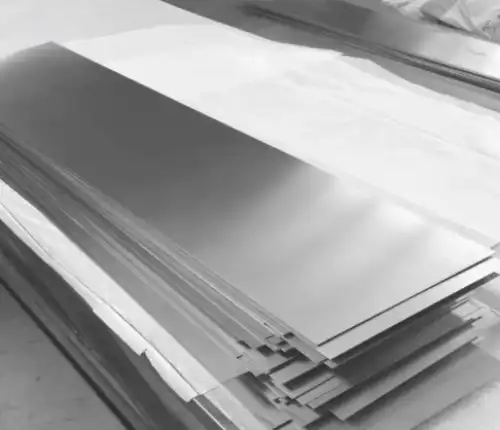
Understanding Your Decision Scenario: Why Choosing the Right Factory Matters
The world market for titanium plates is hard for people who work in buying. Supply chain planning is hard because quality standards aren't always the same across areas, lead times aren't always clear, and price structures aren't always clear. A lot of buyers come across sellers who say their products meet ASTM B265 or AMS 4911 standards, but they haven't been checked by a third party like DNV or TUV.
Choosing an unreliable hot-rolled titanium plate factory has effects that go far beyond the price you pay up front. Take a look at these major risks:
- Material Integrity Failures: Plates that have high-density inclusions or internal gaps that can't be seen may pass eye checks but fail horribly when they are put under pressure. Defect-free materials are needed for aerospace parts that are subjected to G-force loads or chemical reactions that work at 60 bar or higher pressures. One faulty plate can lead to expensive remanufacturing and put certifications at risk.
- Supply Chain Disruptions: Factories that don't have good inventory management or the ability to expand their production capacity have a hard time meeting big orders. When a desalination project in the Gulf region needs 200 tons of corrosion-resistant plates within short building windows, production delays cause whole project plans to slip, which is against the law.
- Compliance Gaps: Different working regions require different licenses for international projects. No matter how good the materials are, a supplier that doesn't have PED 2014/68/EU approval is officially not allowed to send pressure equipment to chemical plants in Europe. Buyers don't find out about these holes until after the contracts have been signed, which means they have to make expensive changes to the source in the middle of the project.
Creating relationships with trusted makers lowers these risks and opens up strategic benefits. When choosing a material, trusted companies offer expert advice, help with custom thickness needs, and keep quality consistent over multi-year supply agreements. With this partnership, sellers are turned into tech partners who help with new ideas instead of just filling orders.
Key Factors to Evaluate When Selecting a Hot Rolled Titanium Plate Factory
Material Quality and Grade Availability
To make a good product, you need to know the specs for the titanium grade. Grade 2 is commercially pure and is mostly used in chemical processing because it is better at resisting corrosion in chloride settings. Grade 5 (Ti-6Al-4V), on the other hand, is used for aircraft structural parts that need to be very strong when stretched. The hot rolled titanium plate factory you choose should keep a range of grades in stock so that they can meet the needs of different projects without having to make sacrifices.
The way materials are made has a big effect on how well they work. When you hot roll something between 1650°F and 1700°F, you make equiaxed microstructures that are strong and flexible at the same time. Factories that use controlled cooling rates and multiple passes of rolling make plates that are all the same thickness and have little leftover stress. Ask possible providers where they get their billets and if they are in charge of the whole production process, from melting the ingots to inspecting the last plate.
Certification and Compliance Infrastructure
International approvals are concrete proof of how well a product is made. Quality management systems are confirmed by ISO 9001:2015, and professional skills are confirmed by industry-specific accreditations. For Ti-6Al-4V plates, aerospace makers need to get AMS 4911 approval, while pressure vessel manufacturers need to follow ASME Section II rules. For marine uses, you must have approval from a classification group like DNV, ABS, or Lloyd's Register.
Look into third-party inspection methods in addition to the certificates that websites show. Reputable makers accept tests from SGS, Bureau Veritas, or Moody's to check the mechanical qualities and composition of materials. For each batch, they give full Material Test Reports (MTRs) that include heat numbers, chemistry analyses, and tensile test reports. This ability to track down information is very important during probes into failures or governmental audits.
Production Capacity and Customization Flexibility
Scalability is what sets strategic sellers apart from regular ones. Check to see if companies can consistently produce the amount of work that you need for your project. A manufacturer that only makes 50 tons a month can't support EPC companies who are building pipelines in three countries at the same time. Production ability and inventory depth are closely related. Factories that keep safety stock can meet pressing orders without sacrificing quality by making things quickly.
The ability to customize is just as important. Standard plate sizes don't always match up properly with machine specs. Can the seller send plates wider than 3000 mm for building a pressure tank out of a single piece? Do they offer precise thickness tolerances of less than 0.1 mm for aircraft machining? Minimum order quantities can also make it harder to change how you buy things, especially for prototypes or unique grades like Grade 7 with gold added.
Quality Control Systems and Testing Protocols
Professional makers are different from commodity sellers because they have strict quality control measures in place. Ultrasonic testing (UT) that follows the rules of AMS 2631 Class A can find flaws inside that can't be seen from the outside. This kind of non-destructive testing needs to be done on all plates that are going to be used in important uses, not just some of them at random. Factories should have their own UT labs with trained workers and equipment that meets national standards.
Inductively Coupled Plasma (ICP) spectrometry is used to analyze the chemical makeup of intermediate elements to make sure they stay within the limits set by the manufacturer. More than 0.25% oxygen in Grade 2 makes it weak, and too much iron makes it less resistant to rust. In subsea uses, LECO monitors check the amounts of hydrogen, nitrogen, and oxygen to stop delayed hydride cracking. Tensile strength, yield strength, and extension are checked mechanically at both room temperature and high temperatures to make sure the material works as it should across its intended working range.
Practical Steps to Verify and Evaluate Potential Hot Rolled Titanium Plate Factories
Conducting Comprehensive Factory Audits
Reviewing the documentation is the first step in the screening process, but on-site checks show how things really work. Plan visits to check out production sites, making sure to look at how well the equipment is being maintained, how the area is organized, and how the environment is being controlled. When compared to human activities, modern rolling mills with computerized process control produce more consistent sizes. Modern testing tools with valid certificates of calibration should be kept in good labs.
Look at how to store and handle raw materials. Titanium is reactive, so it needs to be kept away from other things that could be harmful. If you store plates outside or in buildings that aren't monitored, the surface could oxidize. Inventory management tools should keep track of heat numbers from the ingot to the finished plate so that everything can be tracked. Watch how the staff deals with materials that don't meet standards; strong quality cultures separate and look into problems instead of trying to fix them without first figuring out what went wrong.
Sample Testing and Material Validation
Before placing a big order with a hot rolled titanium plate factory, ask for examples that are typical of the whole. Choose plates from production batches instead of custom-made pieces for displays. Send samples to independent testing labs so they can check them against your requirements. When you compare the factory's MTR results to those from a third party, any differences could mean that quality control isn't working well or that the paperwork isn't correct.
Test your program in a way that is similar to how it will be used. Chemical makers should use artificial process fluids to test for rust. Aerospace buyers may do wear cycle or creep tests at high temperatures. These confirmation tasks show that the theoretical requirements are met in the real world. They also set standard data that will be used to compare quality between delivery runs in the future.
Implementing Supplier Scorecard Analysis
Make objective review standards that include measures of quality, success in delivery, and responsiveness to customer needs. Depending on your goals, you may want to put more weight on certain factors. For example, aerospace uses may value in-depth certification, while industrial buyers may value low costs. You can give possible suppliers a score based on things like the percentage of on-time deliveries, the rate of defects, and the availability of technical help.
This methodical technique gets rid of subjective bias from choices about buying. It makes records that can be checked, which helps stakeholders understand why a certain supplier was chosen, and it allows for constant performance tracking. Reviews of the evaluation every three months find performance trends that are getting worse before they have an effect on projects. This lets proactive supplier management or strategic source diversification happen.
How to Align Factory Selection With Your Specific Industry Needs
Aerospace and Defense Requirements
When it comes to buying titanium, aerospace uses have the strictest requirements. Plates that are going to be used for engine parts or airplane structures need to be able to fully trace back to when the original ingot was made, and the chemistry needs to be controlled so that it fits within narrow compositional bands. Each plate needs its own MTR that shows it meets AMS standards, such as AMS 4911 for Ti-6Al-4V or AMS 4902 for widely pure grades.
Chemical Processing and Petrochemical Applications
Buyers in the chemical business look for heat exchanger tube sheets, reactor tanks, and distillation columns that are resistant to corrosion and stable in their dimensions. Grade 2 is the most common because it works so well in chloride-containing conditions where even super-duplex stainless steels can crack and rust. To make sure that gaskets close properly in flanged joints, plates must be able to handle temperature cycles without warping and keep their flatness within the limits set by ASTM B265.
Marine and Offshore Engineering Demands
Materials that don't rust or pit in seawater are needed for uses that happen underwater. Hot-rolled titanium plates are used to make underwater pressure hulls, ship superstructures, and flash tanks for desalination plants. There is hydraulic pressure, chloride attack, and biofouling in the working environment. This means that standard marine bronzes and alloy stainless steels break down more quickly.
High-Volume Industrial Procurement Strategies
Large buyers who are in charge of multiple projects need sellers who can be flexible with numbers and offer good terms for doing business. By negotiating framework deals with yearly volume promises, you can be sure of stable prices and first-choice supply during market shortages. When a plant forms a strategic relationship, the minimum order quantity (MOQ) can be lowered from 5 tons to 1 ton for regular customers who buy a lot.
Leveraging Trusted Partnerships: Why Working with a Certified Hot Rolled Titanium Plate Factory Adds Value
Comprehensive Certification Portfolios
Manufacturers who keep a variety of foreign licenses show that they care about quality and market access. ISO 9001:2015 sets the standard for quality management, and ISO 14001 confirms environmental duty. This is becoming more and more important for projects that need to show they are sustainable. PED 2014/68/EU approval makes it legal to sell pressure equipment in all of Europe, and the Manufacturing License of Special Equipment from Chinese officials proves compliance in China.
With approvals from classification societies like CCS, ABS, DNV, BV, and GL for a hot rolled titanium plate factory, companies can work on marine and offshore projects all over the world without being limited by geography. These licenses need to be checked on a regular basis to make sure that quality systems stay up to date and aren't just one-time accomplishments. Third-party inspection acceptance from companies like SGS, Moody's, and Bureau Veritas makes it easier for customers to check the quality of your products, which cuts down on inspection costs and delivery times.
Technical Support and Engineering Collaboration
In addition to fulfilling orders, strategic providers work as expert advisors. Their engineering teams can help you choose the right material grade for your needs based on how it will be used, suggest the best plate sizes based on performance and weight, and find ways to save money by optimizing specifications. During the planning phase, when important choices that affect how well the equipment works in the long run are made, this consultation is very helpful.
Building collaborative relationships opens the door to new ideas. When suppliers put money into research and development, they can make custom metal compositions or surface processes that solve problems in specific applications. They give data on how well a material works that can be used to support finite element analysis or estimates of wear life. With this partnership method, buying things goes from being a battle over prices to creating value together that benefits everyone.
Supply Chain Reliability and Risk Mitigation
Supply interruptions can be avoided by building ties with manufacturers that are financially sound and have enough cash. Factories that have been in business since 2000 and have a history of working with big EPC firms show that their businesses can survive changes in the market. They keep a lot of supplies on hand in case they run out of raw materials, and their output is backed up in case one part fails.
The supply chain is more flexible when it has providers that serve North America, South America, the Gulf area, Africa, CIS countries, and Southeast Asia. When there are problems with logistics or instability in the area, different sourcing methods keep the project going. Long-term supply deals with performance guarantees and shipping commitments make buying things more predictable, which is very important for complicated, multi-year building projects.
Real-World Partnership Benefits
LINHUI TITANIUM is a good example of the strategic supplier model because it focuses on the customer and has combined capabilities. The company has been sending hundreds of thousands of tons of goods to over 60 countries since 2000. Its headquarters are in Xi'an, China, which is a Belt and Road Initiative transportation hub. Their "Titanium Products Supermarket" stocking plan keeps a wide range of grades and specs, so common materials don't have to be ordered for long periods of time.
As well as industrial licenses, TUV Nord AD2000-W0, and PED 2014/68/EU, the company also has approvals from CCS, ABS, DNV, BV, GL, and Lloyd's Register. This full certification lets the aircraft, petrochemical, marine, and industry sectors get what they need without any qualification delays. Being able to meet the strictest requirements is proven by partnerships with CEFC, PTT, PDVSA, PETROECUADOR, KOC, KNPC, and other national oil companies.
Conclusion
To find the best hot-rolled titanium plate factory, you need to carefully look at their licenses, output skills, quality control systems, and experience in the field. The choice will have an effect on the project's prices, its ability to stay on schedule, and the safety of operations for decades to come. Give more weight to providers who can show that they have all the necessary foreign certifications, follow strict ultrasonic testing methods, and offer technical collaboration beyond order fulfillment. Strategic relationships with makers who have a history of success in your industry can help you get more stable supply chains, engineering support, and chances to come up with new ideas than buying generic goods can. Spend time thoroughly verifying suppliers through factory surveys, sample testing, and checking references to build relationships that will bring long-term value and a competitive edge.
FAQ
What distinguishes hot rolled from cold rolled titanium plates?
When heated above 1650°F, hot-rolled plates change shape, which lets thick gauges with even microstructures be made from 4.75 mm to over 100 mm. Titanium's work-hardening properties make cold rolling of thick parts unworkable, but this process gets around that problem. Cold-rolled plates have better surface finish and tighter standards for size, but they can only be made in smaller gauges, usually less than 6mm. Hot rolling makes single-piece plates that are up to 3000 mm wide, which means that pressure tanks don't need as many weld lines as they would with cold-rolled sheets that are joined together.
What lead times should buyers expect for custom orders?
Standard grade plates in typical sizes ship from providers who keep stock in 4 to 6 weeks. Custom specs that need specific heat production take an extra 10 to 14 weeks and include melting, casting, rolling, heat treatment, and quality testing. Materials made for aerospace that need stricter testing procedures may take 12 to 16 weeks longer because they need more approval paperwork. Through a faster production schedule, rush orders can sometimes get delivered in 6 to 8 weeks, but the price is higher.
Which certifications verify manufacturer reliability?
ISO 9001:2015 proves the basics of quality management, while industry-specific certifications like AMS specifications confirm expert know-how. The PED 2014/68/EU approval shows that the company is able to serve the European markets for pressure tools. Classification society approvals from DNV, ABS, Lloyd's Register, and other groups show that a marine business is following the rules. Third-party testing agencies like SGS, Bureau Veritas, and Moody's that accept a product make it easier for customers to check its quality.
Partner With LINHUI TITANIUM for Reliable Hot Rolled Titanium Plate Supply
Get a reliable hot rolled titanium plate factory to join your supply chain with over 20 years of experience making high-quality products, a wide range of foreign certifications, and a track record of success on world-class projects. Our Xi'an facility keeps a large stock of both commercial-purity and aerospace grades. This lets us respond quickly to urgent needs while also supporting large-scale contracts by making production capacity flexible.
We want buying managers, engineers, and OEM clients to see how committed we are to quality and service. Email our team at linhui@lhtitanium.com to get personalized quotes that take into account your exact grade needs, thickness requirements, and shipping dates. You can ask for examples of the material to be tested by someone else, set up workplace audits to see how well we can make things, or talk to our technical experts about how they can help you choose the right material. LINHUI TITANIUM has the wide range of certifications, reliable supply chains, and technical collaboration that your important projects need. Get in touch with us today to start a relationship that will guarantee your success.
References
1. American Society for Testing and Materials. (2020). ASTM B265: Standard Specification for Titanium and Titanium Alloy Strip, Sheet, and Plate. West Conshohocken: ASTM International.
2. Aerospace Material Specification. (2019). AMS 4911: Titanium Alloy, Sheet, Strip, and Plate 6Al-4V Annealed. Warrendale: SAE International.
3. Lütjering, G., & Williams, J. C. (2007). Titanium (2nd ed.). Berlin: Springer-Verlag.
4. Boyer, R., Welsch, G., & Collings, E. W. (1994). Materials Properties Handbook: Titanium Alloys. Materials Park: ASM International.
5. Peters, M., Kumpfert, J., Ward, C. H., & Leyens, C. (2003). Titanium Alloys for Aerospace Applications. Advanced Engineering Materials, 5(6), 419-427.
6. Donachie, M. J. (2000). Titanium: A Technical Guide (2nd ed.). Materials Park: ASM International.