
The Zr705 zirconium bar is fabricated through a thorough multi-stage preparation process, as specified in ASTM B550 Zirconium Alloy Bar. The fabrication starts with selecting a high-purity zirconium wipe combined with niobium alloying components, followed by vacuum circular segment remelting or electron bar softening to accomplish homogeneous chemical composition. The production of ingots involves hot forming or extrusion at controlled temperatures, followed by precision machining, heat treatment, and comprehensive quality testing. This ASTM B550 method for producing zirconium alloy bars guarantees the material achieves the exceptional corrosion resistance and mechanical properties required for demanding applications in chemical processing, oil and gas, and aerospace industries.
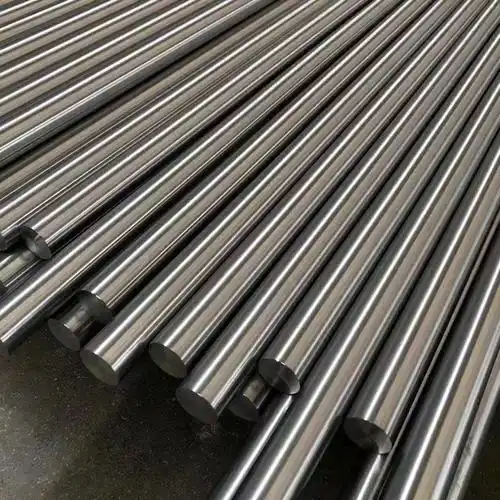
Understanding Zr705 Zirconium Alloy Bar and ASTM B550 Standard
The Review R60705 zirconium-niobium combination speaks to a specialised fabric arrangement planned particularly for extraordinary benefit conditions. This amalgam contains 2.0-3.0% niobium, which essentially upgrades both quality and fabricability compared to unalloyed zirconium variations. The ASTM B550 Zirconium Alloy Bar determination administers three essential grades—R60702 (unalloyed zirconium), R60704 (zirconium-tin), and R60705 (zirconium-niobium)—each custom-made to particular mechanical requirements.
Chemical Composition and Performance Characteristics
The R60705 combination chemistry is absolutely controlled to maintain erosion resistance, whereas moving forward, mechanical execution. The niobium expansion shapes a strong arrangement that fortifies the zirconium lattice without compromising the arrangement of the defensive zirconium dioxide layer. This oxide film recovers consequently when harmed, giving ceaseless assurance against sulphuric acid, hydrochloric acid, and organic acids at temperatures exceeding 150 °C. The chemical composition straightforwardly impacts the benefit of life in acidic corrosive generation columns, urea amalgamation reactors, and desalination warm exchangers, where competing materials' involvement quickly degrades.
Key Mechanical Properties per ASTM B550 Requirements
Tensile strength for R60705 bar typically ranges from a minimum of 552 MPa, with yield strength exceeding 380 MPa. Elongation values of 16% minimum ensure adequate ductility for field fabrication and welding operations. These mechanical properties remain stable across a wide temperature range, making the material suitable for thermal cycling applications common in petrochemical processing. The combination of strength and corrosion resistance eliminates the need for frequent replacement cycles that plague stainless steel and nickel alloy installations.
Industrial Application Scenarios
Major vitality companies utilise zirconium-niobium bars in basic hardware, where downtime costs can surpass hundreds of thousands of dollars daily. Shell-and-tube heat exchangers dealing with damp chlorine benefit from the material's insusceptibility to stretch erosion splitting. Pharmaceutical producers indicate the amalgam for reactors creating antimicrobials and steroids, where metallic defilement must stay below parts-per-billion levels. Atomic control offices utilise the fabric in fuel reprocessing circuits, where radiation resistance and zero hydrogen assimilation are basic.
Step-by-Step Manufacturing Process of Zr705 Zirconium Bar
Creating high-quality zirconium-niobium bars requires sophisticated metallurgical control at every production stage. The manufacturing workflow directly impacts final product integrity, traceability, and compliance with international standards that procurement teams demand.
Raw Material Selection and Preparation
Production of ASTM B550 Zirconium Alloy Bar begins with reactor-grade zirconium sponge sourced from hafnium extraction processes. The sponge material undergoes rigorous chemical analysis to verify that hafnium content remains below 100 ppm—a critical threshold for non-nuclear applications. Niobium pellets meeting 99.8% purity standards are weighed precisely to achieve the target alloy composition. All raw materials are stored in climate-controlled environments to prevent moisture absorption, which can introduce hydrogen contamination during subsequent melting operations.
Advanced Melting Technologies
The arranged charge is stacked into a vacuum circular segment, remelting heaters working at pressures below 10⁻³ torr. This preparation includes striking an electric bend between a consumable cathode and a water-cooled copper cauldron, making a liquid pool that sets continuously from foot to beat. Numerous remelting passes—typically three or more—ensure total homogenisation of niobium throughout the zirconium network and kill isolation absconds. A few producers utilise electron bar softening as an option, where a centred electron bar gives higher purity indeed through prevalent vacuum conditions. The coming about ingots regularly measure 400-600 mm in breadth and weigh a few metric tonnes.
Hot Working and Forming Operations
Ingots are warmed to 800-900°C in defensive air heaters, sometimes recently experiencing hot manufacturing or expulsion. Temperature control amid distortion is critical—excessive warmth causes grain coarsening, whereas inadequate temperature leads to splitting. Water-powered presses apply controlled powers to diminish cross-sectional measurements incrementally, with middle warming cycles between passes. The fabric shows critical work solidifying, requiring cautious checking of decrease proportions to maintain microstructural keenness. Circular bars are ordinarily created through revolving fashioning or pilgering forms that maintain a uniform distance across resistances within ±0.5 mm.
Heat Treatment and Annealing Procedures
Post-deformation heat treatment relieves residual stresses and optimises grain structure for corrosion performance. Bars are heated to 650-750°C and held for durations calculated based on cross-sectional thickness—generally one hour per 25 mm of thickness. Controlled cooling rates prevent the formation of undesirable phases that could compromise corrosion resistance. The annealing atmosphere must be strictly controlled; oxygen levels above 50 ppm can form a surface scale requiring subsequent removal through chemical pickling or mechanical grinding.
Quality Inspection and Certification Protocols
Each generation of parcel experiences damaging and non-destructive testing to confirm ASTM B550 Zirconium Alloy Bar compliance. Ultrasonic assessment identifies inner surges bigger than 1.5 mm compared to the flat-bottom gap measure. Dimensional confirmation affirms straightness resiliences within 3 mm per meter length. Chemical investigation by means of optical emission spectroscopy proves the niobium substance and interstitial debasement levels. Mechanical testing on agent tests provides ductile quality, surrender quality, and elongation information. Documentation bundles incorporate process test reports certified to EN 10204 3.1 benchmarks, fabric traceability through warm number coding, and third-party review certificates from offices including DNV, BV, and SGS.
Comparing ASTM B550 Zr705 Bars with Other Zirconium Alloys
Material selection decisions significantly impact project economics and operational reliability. Understanding performance differences between available options enables informed procurement strategies.
R60705 versus R60702 Unalloyed Zirconium
ASTM B550 Zirconium Alloy Bar is described as follows: Whereas R60702 offers the most extreme erosion resistance, its lower quality limits basic applications. The niobium expansion in R60705 increments pliable quality by roughly 35% without relinquishing erosion execution in most situations. This quality advantage permits creators to decrease divider thicknesses and generally gear weight. Even so, R60702 maintains superior performance in boiling sodium hydroxide solutions over 50% concentration, while R60705 may experience accelerated attack. When mechanical loads govern design criteria, contemplations typically favour R60705, which has taken a toll.
Performance Against Titanium and Nickel Alloys
Titanium amalgams like Review 2 offer great erosion resistance at lower fetches but come up short catastrophically in anhydrous methanol and ruddy smouldering nitric corrosive, where zirconium exceeds expectations. Nickel-based combinations such as Hastelloy C-276 give broader chemical compatibility but at three to four times the cost of zirconium-niobium bars. The self-healing oxide characteristic of zirconium eliminates the setting erosion that plagues inactive film materials when mechanical damage occurs to the defensive layers. Life cycle taken a toll examination reliably illustrates lower add up to possession costs for zirconium in sulfuric corrosive concentrator benefits and damp chlorine taking care of frameworks.
Application-Specific Material Recommendations
Chemical processing applications involving mineral acids below pH 2 strongly favour R60705 material. Nuclear fuel cycle facilities require documented hafnium content below specified thresholds, making material certification paramount. Pharmaceutical reactors benefit from the material's biological inertness and ease of validation and cleaning. Marine aquaculture systems utilising ozone disinfection specify zirconium-niobium for structural components that are exposed to highly oxidising seawater environments.
Procurement Insights for ASTM B550 Zr705 Zirconium Alloy Bars
Successful procurement requires understanding supplier capabilities, quality assurance practices, and logistics considerations that affect project timelines and costs.
Identifying Qualified Suppliers and Manufacturers
Reputable suppliers maintain comprehensive certification portfolios demonstrating compliance with international quality standards. LINHUI TITANIUM holds the Manufacturing License of Special Equipment of China, the TUV Nord AD2000-W0 certification, the PED 2014/68/EU certification, and approvals from classification societies including CCS, ABS, DNV, BV, and GL. These certifications validate manufacturing process controls and traceability systems essential for critical applications. Suppliers with integrated "Titanium Products Supermarket" capabilities offer advantages in consolidating multiple material grades within a single purchase order, reducing administrative overhead and freight costs.
Pricing Factors and Lead Time Expectations
Material pricing reflects raw material costs, production complexity, and order volume. Standard diameter bars in common lengths typically ship within 6-8 weeks, while custom dimensions may require 10-12 weeks for tooling preparation and production scheduling. Minimum order quantities often start at 500 kilograms to justify melting campaigns for specific heat lots. Volume discounts typically apply to orders exceeding one metric tonne. Currency fluctuations and hafnium market volatility can impact pricing, making long-term framework agreements advantageous for projects with recurring requirements.
Quality Assurance and Third-Party Verification
For ASTM B550 Zirconium Alloy Bar, prudent procurement practices include specifying third-party inspection witness points during manufacturing. Independent agencies can verify chemical analysis results, witness mechanical testing, and certify dimensional conformance before shipment. Material traceability through continuous heat number marking enables field tracking and facilitates failure analysis if issues emerge during service. Supplier quality history and references from similar applications provide valuable risk assessment data. Companies with decades of experience supplying major EPC contractors—such as partnerships with CEFC, PTT, PDVSA, and PETROECUADOR—demonstrate proven capability to meet stringent project requirements.
Best Practices and Future Trends in Zirconium Alloy Bar Manufacturing
The industry continues evolving through technological innovation and sustainability initiatives that benefit end users through improved product quality and supply chain reliability.
Manufacturing Technology Advancements
Recent developments in electron beam cold hearth refining enable the production of ultra-low interstitial content material with oxygen levels below 800 ppm. Advanced forging simulation software optimises deformation sequences to minimise material waste and improve microstructural uniformity. Automated ultrasonic inspection systems now detect smaller defects with higher confidence levels, reducing field rejection rates. These technological improvements translate directly into enhanced reliability for end users operating critical process equipment.
Sustainable Production Practices
Environmental stewardship increasingly influences manufacturing operations. Closed-loop water recycling systems minimise freshwater consumption in cooling operations. Energy recovery from exhaust gases reduces the carbon footprint per tonne of material produced. Scrap recycling programmes reclaim production offcuts for remelting, improving raw material utilisation rates above 90%. These sustainability measures align with corporate responsibility goals while controlling production costs.
Storage, Handling, and Maintenance Recommendations
Proper material handling preserves surface quality and prevents contamination. Bars should be stored in covered facilities protecting against moisture and atmospheric pollutants. Handling equipment must be free of iron contamination that could galvanically attack zirconium surfaces. Installation procedures should follow AWS welding codes specific to reactive metals, employing argon purge gas and avoiding copper contact during elevated temperature operations. Periodic inspection of installed equipment using ultrasonic thickness monitoring detects unexpected corrosion before equipment integrity becomes compromised.
Market Outlook and Emerging Opportunities
Global demand for zirconium alloy products continues to expand, driven by growth in speciality chemicals production and nuclear power capacity additions. Desalination plant construction in water-stressed regions creates opportunities for corrosion-resistant heat exchanger materials. Pharmaceutical manufacturing capacity expansions require materials meeting stringent purity standards. Energy transition initiatives, including hydrogen production from electrolysis, may open new applications where material compatibility with high-purity gases proves essential. Standards organisations continue refining specifications to address these emerging applications, creating opportunities for early adopters to gain competitive advantages.
Conclusion
Manufacturing Zr705 zirconium bars demands precision metallurgical control from raw material selection through final inspection. The ASTM B550 Zirconium Alloy Bar specification provides a rigorous framework ensuring material consistency and performance reliability across global supply chains. Understanding the manufacturing process, comparative material advantages, and procurement best practices enables industrial buyers to specify appropriate materials for demanding applications. As technological advancements improve production efficiency and product quality, zirconium-niobium alloys will continue serving as indispensable materials, solving corrosion challenges in energy, chemical, and advanced manufacturing sectors worldwide.
FAQ
What diameter ranges are available for R60705 bars?
Production capabilities typically cover round bar diameters from 10mm to 300mm, square sections from 10x10mm to 300x300mm, and rectangular profiles from 10x8mm to 300x400mm. Custom dimensions outside these ranges may require special tooling and minimum order quantities to justify production setup costs.
How does niobium content affect corrosion performance?
The 2-3% niobium alloying maintains the excellent corrosion resistance characteristic of pure zirconium while significantly improving mechanical strength and weldability. Niobium remains in solid solution and does not form secondary phases that could create galvanic cells or preferential attack pathways in corrosive environments.
What documentation should accompany material shipments?
Complete material traceability requires mill test reports certified to EN 10204 3.1 standards, chemical analysis certificates showing compliance with ASTM B550 composition limits, mechanical test results from the production heat, dimensional inspection reports, and third-party verification certificates when specified. Heat number marking on each bar enables tracking throughout fabrication and installation.
Partner with LINHUI TITANIUM for Your Zirconium Alloy Bar Requirements
LINHUI TITANIUM stands as your trusted ASTM B550 zirconium alloy bar manufacturer with over two decades of metallurgical expertise serving the global energy and chemical processing industries. Our integrated production capabilities span the complete value chain from vacuum melting through precision finishing, ensuring consistent quality and reliable delivery for your critical projects. We have many international certifications, such as PED 2014/68/EU, approvals from several classification societies, and ISO quality management systems that meet the strict requirements of major EPC contractors around the world. Whether you need standard dimensions or custom profiles for specialised applications, our engineering team collaborates closely with your procurement and technical staff to specify optimal material solutions. Contact our experienced team at linhui@lhtitanium.com to discuss your project requirements and receive detailed technical specifications along with competitive pricing for your upcoming zirconium alloy bar needs.
References
1. Davis, J.R., ed. (2000). Corrosion of Zirconium and Zirconium Alloys. Materials Park, OH: ASM International Handbook Committee.
2. Northwood, D.O., & Kosasih, U. (1983). "Hydrides and Delayed Hydrogen Cracking in Zirconium and Its Alloys." International Metals Reviews, 28(1), 92-121.
3. American Society for Testing and Materials. (2019). ASTM B550/B550M-19: Standard Specification for Zirconium and Zirconium Alloy Bar and Wire. West Conshohocken, PA: ASTM International.
4. Cox, B. (2005). "Some Thoughts on the Mechanisms of In-Reactor Corrosion of Zirconium Alloys." Journal of Nuclear Materials, 336(2-3), 331-368.
5. Lustman, B., & Kerze, F., eds. (1955). The Metallurgy of Zirconium. New York: McGraw-Hill Book Company.
6. Banerjee, S., & Mukhopadhyay, P. (2007). Phase Transformations: Examples from Titanium and Zirconium Alloys. Amsterdam: Elsevier Science Ltd.