
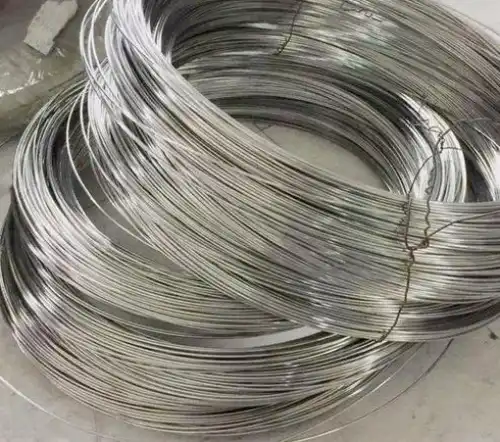
Zr 702 Pure Zirconium Wire manufacturing involves a sophisticated multi-stage process that transforms raw zirconium materials into high-performance wire products. The process begins with careful raw material selection, followed by vacuum melting, hot working, cold drawing, and precise annealing treatments. Each manufacturing step adheres to strict quality controls and international standards, including ASTM B863-13, ensuring the final product delivers exceptional corrosion resistance and mechanical properties required for demanding industrial applications across chemical processing, aerospace, and energy sectors.
Understanding Zr 702 Pure Zirconium Wire
UNS R60702 is the name of a commercially pure zirconium grade called Zr 702. It is known for being chemically very pure and meeting strict international standards. This premium zirconium alloy has a minimum Zirconium + Hafnium percentage of 99.2% and meets the standards set by ASTM B550 and ASTM B351, which are trusted by industry buyers for important uses.
Chemical Composition and Material Properties
Because of its unique chemical makeup, this zirconium wire is much more resistant to rust, stable at high temperatures, and stronger than most materials. Unlike nuclear-grade zirconium, Zr 702 keeps its naturally occurring Hafnium content (which is usually around 4.5%). This makes it much cheaper to make while still having better chemical qualities. The material has a mass of 6.51 g/cm³, a melting point of about 1852°C, and a lower thermal expansion rate than stainless steel. This means that it will stay the same size even when it is heated and cooled many times. The wire has great mechanical qualities, with a minimum Tensile Strength of 380 MPa (55 ksi) and a Yield Strength of 205 MPa (30 ksi). This makes it very flexible for cold drawing and shaping. One of its main benefits is that it doesn't crack or stress rust in salt environments, which fixes important failure points that common materials have in harsh industrial settings.
Comparative Advantages Over Alternative Materials
Compared to zirconium wire, titanium, and stainless steel alternatives, Zr 702 has a better mix of longevity and performance in tough industrial settings. When exposed to oxygen, the material instantly forms a thick, self-healing oxide film (ZrO2). This eliminates the need for regular repairs and part replacements that happen with less durable materials in chemical processing equipment. This type of zirconium works really well in hot sulfuric, hydrochloric, and acetic acid streams, where stainless steel and nickel metals usually fail. But people who work in buying should know that even though it works very well in most acids, it still needs to be protected from hydrofluoric acid and dry chlorine gas to avoid catastrophic failure.
The Manufacturing Process of Zr 702 Pure Zirconium Wire
Zr 702 Pure Zirconium Wire is made by carefully choosing the raw materials and using strict quality control measures to make sure they meet international standards for the business. Our all-around manufacturing process includes many complex steps meant to make sure that the wire goods we make are always of high quality and meet the exact needs of our B2B industrial customers.
Raw Material Selection and Preparation
To make great products, you must start by getting high-quality raw zirconium from trustworthy sources that follow strict purity rules. We test each batch of raw materials to see what chemicals are in them. We make sure that the amount of zirconium and hafnium meets or exceeds the minimum 99.2% requirement, and we keep the amount of impurities like iron and chromium below 0.2%, as required by ASTM B550 standards. During the raw material preparation phase, the materials are carefully cleaned and sized to get rid of surface contaminants and set up the furnace so that it can charge properly. Any impurities added during preparation can weaken the finished wire's ability to fight corrosion and keep its shape, so this first step is very important for the next melting steps.
Advanced Melting and Casting Techniques
In our melting process, vacuum induction furnaces work in controlled air conditions to keep things from oxidising and getting dirty during the high-temperature processing step. Vacuum arc remelting (VAR) methods are used to make ingots that are regular and free of impurities. These ingots are the building blocks for making high-quality wire. The controlled melting environment makes sure that the zirconium matrix is completely homogenised while keeping the exact chemical makeup that is needed for best performance. Controlling the temperature during melting is still very important because zirconium reacts strongly with gases at high temperatures and needs complex management of the atmosphere. The casting process makes the liquid metal into rough shapes that can be used in later hot and cold working steps. This sets the dimensions for the wire drawing steps that follow.
Hot and Cold Working Operations
After the casting goes well, the material goes through carefully controlled hot working processes like moulding and rolling to get it to the right intermediate dimensions. These processes are carefully watched to make sure that the right temperatures are kept at all times, which makes the materials easier to work with and stops grain growth that could damage their mechanical qualities. During the cold drawing phase, the most important part of the manufacturing process, the cast material is pulled through several progressively dies to make sure it meets all the requirements for size and finish. Each drawing pass makes the material harder by reducing the thickness of the wire. To avoid surface flaws or differences in size, it is important to carefully control the drawing speeds and reduction ratios. Our multi-stage cold drawing method for Pure Zirconium Wire Zr 702 makes sure that the wire has the same shape and still has the flexibility needed for the next steps in the process. Drawing dies are checked and changed on a regular basis to keep the surface quality at a level that meets the needs of industrial welding and manufacturing.
Annealing and Heat Treatment
After being cold-drawn, the wire goes through controlled melting processes that lower its internal stress and make it easier to shape for its final use. Temperature, time, and atmospheric conditions are carefully adjusted during annealing to achieve the desired mechanical properties while keeping the rust resistance qualities. To keep the wire from becoming brittle, which could affect its performance in difficult situations, the heat treatment process needs to carefully control how much air and nitrogen it takes in. Our controlled atmosphere ovens keep the conditions stable during the annealing stage. This makes sure that the properties of the wire are the same all the way along its length.
Quality Control and Testing Procedures
During the whole production process, thorough non-destructive testing (NDT) and mechanical testing methods make sure that the integrity of the product is maintained. To make sure that the products meet international standards and customer needs, each batch is carefully checked for chemical purity, tensile strength, and resistance to rust. As part of our quality control procedures, we check the dimensions, look at the surface finish, and use advanced spectroscopic methods to do chemical analysis. Each shipment comes with detailed certification and tracking paperwork. This gives procurement workers trust in the consistency of the supply chain and the quality of the products they buy.
Comparing Zr 702 Wire to Other Materials for Procurement Decision-Making
Understanding the benefits of Zr 702 Pure Zirconium Wire compared to other materials helps buyers make choices that are best for both performance and cost in business settings. This study looks at the main factors that make material choice different in a number of challenging settings.
Zr 702 Versus Other Zirconium Grades
When looking at different kinds of zirconium wire, Zr 702 is clearly better than Zr 705 and Zircaloy in some situations. While Zr 705 (R60705) has Niobium alloying (2.0–3.0%), which gives it higher tensile strength, Zr 702 is better at resisting rust and is easier to shape into wires. The commercially pure makeup of Zr 702 makes it perfect for chemical processing tasks that need high rust resistance and high strength. Different types of zircaloy, which are mostly made for nuclear uses, have to go through expensive processes to get rid of hafnium. These processes make the materials much more expensive without making them better for chemical processing settings in industry. Zr 702's natural hafnium percentage lowers production costs while keeping its great chemical qualities for uses other than nuclear ones.
Performance Comparison with Titanium and Stainless Steel
This zirconium wire is much better than titanium wire in low-temperature conditions, where titanium wire is usually weak. Titanium works best in oxidising situations, but zirconium works better in acidic ones, like hot acetic acid and mineral acids with a lot of concentration. The material is almost immune to stress corrosion cracking in strong alkalis, which is a problem that often happens with stainless steel options. Cost makes stainless steel the better choice for most uses, but lifetime analysis often shows that zirconium is more cost-effective in harsh chemical conditions. The longer service life and lower upkeep needs make up for the higher original material costs, especially in situations where stainless steel parts break down often.
Procuring Zr 702 Pure Zirconium Wire: Tips and Best Practices
To get high-quality zirconium wire, you need to do a full supplier review that looks at the trustworthiness of the maker, their certifications, and their product warranties. Doing your research on a supplier's skills and making clear specs for customisation needs are important parts of successful buying strategies.
Supplier Assessment and Certification Requirements
When you buy something professionally, you have to check that the maker has the right certifications, like ISO 9001:2015 Quality Management Systems, PED 2014/68/EU compliance, and approvals from classification societies like DNV, ABS, and CCS. These certificates show that the company follows international quality standards and makes sure that all of its products are made the same way, which is important for business use. Check the supplier's experience with processing zirconium, especially how well they can keep the atmosphere under control during heat treatment and how well they follow thorough testing methods. For controlled industries, ask for thorough evidence of the quality control processes and tracking systems that help keep the supply chain honest.
Customisation Capabilities and Order Specifications
When you know what customisation options are available, you can make sure that your buying methods are in line with the needs of your project. The wire diameter, surface finish, and packing choices should all meet the needs of the application, and the minimum order amounts should be set in a way that keeps costs as low as possible. Managing lead times is very important for planning projects, especially when handling zirconium, which is a very specialised process. Set clear delivery dates that take into account how complicated the manufacturing process is and allow enough time for quality control checks and possible changes to the specifications.
Troubleshooting and Identifying Authentic Zr 702 Zirconium Wire
Preventing procurement errors requires a comprehensive understanding of authentic material identification and quality verification procedures. Establishing robust inspection protocols protects against inferior substitutes while ensuring material performance meets application requirements.
Material Authentication and Verification Methods
Certain qualities set authentic Zr 702 Pure Zirconium Wire apart from cheaper options or materials that have been misled. As long as the residue levels meet ASTM B550 standards, the chemical study should show that the zirconium and hafnium content is higher than 99.2%. Verification through mechanical testing makes sure that the tensile and yield strengths meet the standards for the grade and show the right amount of flexibility for the intended use. The quality of the surface finish is another sign of authenticity, since real Zr 702 wire has a uniform surface that isn't contaminated or flawed during processing. Dimensional tolerances should meet certain standards, and the shape of the wire should be the same all the way along its length.
Storage and Handling Best Practices
The right way to store wire keeps its quality and stops pollution that could hurt its performance in important uses. Massive zirconium is stable in normal conditions, but fine wire needs to be stored in a controlled environment to keep its surface clean, which is necessary for welding. The places where things are stored should stay cool, dry, and away from things that could get dirty and change the surface qualities. Big coils of wire need the right kind of support to keep them from deforming and to make them easy to check and handle.
Conclusion
Making Zr 702 Pure Zirconium Wire is a complicated process that needs careful management of many factors to produce reliable, high-performance outcomes. From choosing the raw materials to making sure the finished product is of high quality, every step in the manufacturing process adds to the material's exceptional rust resistance and mechanical properties, which make it stand out in tough industrial settings. Understanding the whole manufacturing process helps people make smart choices about what to buy and sets realistic goals for what products can do and when they can be delivered in important industry projects.
FAQ
What certifications should I expect from reputable Zr 702 wire suppliers?
Suppliers you can trust keep their ISO 9001:2015 Quality Management license, make sure they follow PED 2014/68/EU, and get classification society approvals from groups like DNV, ABS, CCS, and GL. As well as ASTM B550 compliance paperwork, other certifications may include third-party review approvals from well-known companies like SGS, TUV, and Lloyd's Register.
Can Zr 702 wire be customised for specialised industrial applications?
Yes, good makers allow for a lot of customisation, such as changing the diameter of the wire, the finish on the surface, and the way the products are packed. Customisation options usually cover diameters from fine welding wire to heavy structural uses, and surface treatments can be chemically pickled or precision ground, based on the needs of the application.
How does Zr 702 wire perform under extreme temperature conditions?
The structure of Zr 702 wire stays strong at temperatures up to 400°C in most chemical conditions. Its melting point is around 1852°C. Because it has a lower thermal expansion coefficient than stainless steel, the material is very good at resisting thermal cycling. This means it can be used in places where temperatures change a lot.
Partner with LINHUI TITANIUM for Premium Zr 702 Pure Zirconium Wire
LINHUI TITANIUM stands ready to support your procurement needs with our comprehensive range of Zr 702 Pure Zirconium Wire products backed by over two decades of manufacturing excellence. As a leading zirconium wire supplier, we maintain extensive certifications, including ISO 9001:2015, PED 2014/68/EU, and approvals from major classification societies worldwide. Our Xi'an facility serves global clients across the oil, gas, chemical, and aerospace industries with proven reliability in high-volume supply chains. Contact our technical team at linhui@lhtitanium.com to discuss your specific requirements and experience the LINHUI TITANIUM advantage in premium zirconium materials.
References
1. Davis, J.R. (2006). ASM Speciality Handbook: Heat-Resistant Materials. ASM International Materials Park.
2. Lustman, B. & Kerze, F. (1955). The Metallurgy of Zirconium. McGraw-Hill Book Company.
3. American Society for Testing and Materials. (2019). ASTM B550-19 Standard Specification for Zirconium and Zirconium Alloy Bar and Wire. ASTM International.
4. Pickering, H.W. (1983). Corrosion Behaviour of Zirconium and Its Alloys in Aqueous Solutions. Electrochemical Society Proceedings.
5. Cox, B. (1990). Zirconium Production and Technology: The Kroll Process and Beyond. Canadian Institute of Mining and Metallurgy.
6. International Atomic Energy Agency. (2008). Zirconium in the Nuclear Industry: Properties and Applications. IAEA Technical Reports Series.