
Manufacturing Zirconium Wire Coil to ASTM standards involves a precise, multi-stage process that transforms high-purity zirconium raw material into specialized wire products. The process begins with material selection that meets ASTM B550 specifications, followed by wire-drawing operations that achieve exact dimensional tolerances. Heat treatment protocols enhance mechanical properties while maintaining corrosion resistance. Quality assurance testing verifies tensile strength, chemical composition, and surface integrity throughout production. ASTM compliance ensures consistent performance in nuclear, aerospace, and chemical processing applications, where material failure could have catastrophic consequences.
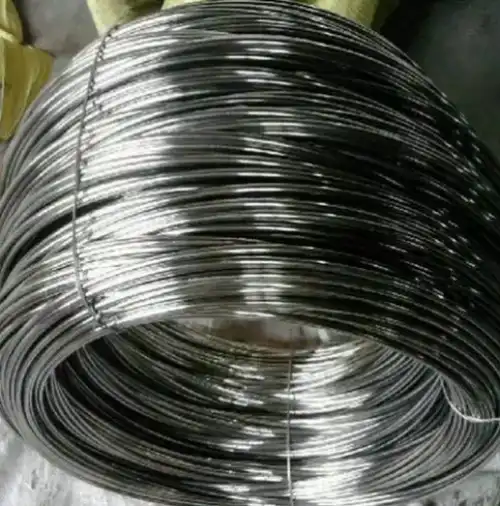
Understanding Zirconium Wire Coil and Its ASTM Standards
You can find Zirconium Wire Coil, a high-tech metal product designed for harsh working conditions where conventional materials don't perform well. This continuous, spooled zirconium thread is highly resistant to acidic media, especially hot sulfuric and hydrochloric acids, which rapidly corrode stainless steel. The material is essential for nuclear reactor parts and fuel rod sections because it has special nuclear qualities, such as a low thermal neutron absorption cross-section.
Key Properties of Zirconium Wire Products
The main features of zirconium wire goods come from the metal's chemical makeup and solid structure. It is amazing how resistant zirconium is to rust in most acids, except hydrofluoric acid, which completely breaks it down. The material remains structurally sound at high temperatures; its melting point of 1855°C enables it to perform well in high-temperature environments.
Another important benefit is that zirconium wire is biocompatible, making it the best choice for medical implants and surgical tools. Because the material is non-toxic and doesn't react with body fluids, it will remain effective for a long time without adverse biological effects. In uses like cardiovascular stents and joint implants, this trait is very useful.
ASTM Standards Governing Zirconium Wire Manufacturing
ASTM B550 sets the main requirements for bars, rods, and wires made of zirconium and zirconium alloys. Manufacturers must meet the requirements for chemical makeup, mechanical property limits, and dimensional tolerances set out in this standard. For example, Grade R60702 zirconium that is sold in the market must have at least 99.2% zirconium and hafnium, with iron, chromium, and nitrogen impurities that are managed.
In addition to ASTM B550, ASTM B551 covers specifications for zirconium and zirconium alloy strip, sheet, and plate. Wire coil makers often refer to these standards for surface finish and dimensional accuracy. These standards work together to make sure that quality control is done all the way through the manufacturing process.
The Manufacturing Process of Zirconium Wire Coil According to ASTM Standards
The process of turning raw zirconium into a finished Zirconium Wire Coil includes complex metalworking steps that keep the material's natural qualities while achieving exact size requirements. At every step of the manufacturing process, it's important to keep mechanical properties safe and avoid contamination.
Raw Material Selection and Preparation
Finding high-quality zirconium is the first step in making wire that meets ASTM standards. Suppliers must show material certificates that show chemical analysis and prove that the amount of hafnium in the material is right for the purpose. For nuclear-grade use, hafnium must be removed to below 100 parts per million. For industry uses, bigger hafnium concentrations are usually fine.
Spectrographic analysis is used upon the arrival of new materials to make sure that their chemical makeup meets ASTM standards. A look at the surface shows any flaws that might spread during the wire drawing process. During the preparation phase, the surface is treated to get rid of rust layers and other impurities that could lower the quality of the end product.
Wire Drawing Operations and Dimensional Control
Through a series of drawing dies that gradually reduce the diameter, the wire drawing process turns zirconium rod stock into precise-diameter wire. To prevent the material from breaking or changing size, each step of the reduction process must carefully balance the rate of bending with the material's work-hardening rate.
Drawing oils are very important for getting a good surface finish and making sure that the dimensions stay the same. Specialized oils that work with zirconium's reacting nature keep the surface clean and lower the drawing forces. The design and material choice have a significant impact on the surface quality and physical accuracy of the finished product.
Heat Treatment and Property Enhancement
During annealing processes, mechanical qualities that were changed during cold working are restored. Controlled oxygen kilns keep oxidation from happening while maintaining temperatures that make the structure of the grains and their mechanical features better. Vacuum annealing is the best way to go for high-purity uses that need to keep surface debris to a minimum.
Accurate temperature control within ±10°C makes sure that the mechanical traits of each production batch are the same. Changing the cooling rate lets you fine-tune the end mechanical properties to fit the needs of a particular application. Tensile testing and metallographic analysis are used in the post-annealing check to ensure that the mechanical properties are met.
Comparing Zirconium Wire Coil to Alternative Materials and Types
When choosing a material, people often have to make trade-offs between how well it works, how much it costs, and how readily it is available. Procurement professionals can make better choices that fit the needs of the project and the budget if they know how zirconium wire goods compare to other options.
Zirconium vs. Titanium Wire Performance
Both aluminum and zirconium are very good at resisting rust, but zirconium works better in some chemical conditions. When placed in hot, acidic liquids, zirconium stays solid while titanium breaks down in pits and stresses. Zirconium is more valuable to the nuclear business than titanium because it doesn't absorb neutrons as well.
The mechanical qualities of these materials are very different from one another. Titanium is better for aircraft structural uses because it has a higher strength-to-weight ratio. Zirconium Wire Coil, on the other hand, resists creep better at high temperatures, which is important for chemical production equipment that has to work under constant heat stress.
Stainless Steel Limitations in Harsh Environments
In harsh chemical conditions, where zirconium does well, regular types of stainless steel break down quickly. Stress corrosion cracking caused by chloride is a common way for stainless steel to fail in chemical processing and marine environments. Because zirconium is not affected by chloride attacks, this failure mechanism is not used at all.
Because it is cheaper, stainless steel is often chosen for uses that don't need a lot of strength. But the total cost of ownership estimate needs to take into account how often the parts need to be replaced, how much it costs to have them down, and how unsafe it is if a material fails. The longer service life of zirconium often makes up for its higher starting cost in lower maintenance needs and better operating reliability.
Procurement Considerations for Zirconium Wire Coil Compliant with ASTM Standards
To strategically buy zirconium wire goods that meet ASTM standards, you need to know how the market works, what your suppliers can do, and what certifications they need. A good buying process strikes a balance between quality control and cutting costs, all while making sure that the supply chain works reliably.
Supplier Qualification and Certification Requirements
Suppliers who are qualified must show that they have complete quality management systems that include the ability to track materials, keep an eye on the production process, and test the finished product. ISO 9001 certification is a basic way to make sure of quality, but for some end uses, industry-specific approvals like ASME Section III for nuclear purposes may be needed.
The level of technical know-how, the complexity of the tools, and the process control systems should all be looked at in a manufacturing capability review. Suppliers who use old tools or don't have the right environmental controls may find it hard to consistently meet ASTM requirements. Site surveys check what the provider says and look at how well they're maintaining capabilities.
Customization Options and Lead Time Considerations
Customization of Zirconium Wire Coil includes thickness requirements, coil sizes, surface finish needs, and changes to the mechanical properties. Standard width numbers are usually between 0.010 inches and 0.125 inches, but non-standard sizes may be needed for certain tasks.
When planning lead times, you need to think about where to get the raw materials, how hard the process will be, and how the quality will need to be checked. Wait times for special products can be 12 to 16 weeks, while those for standard products can be 4 to 6 weeks. People who sign long-term partnership deals often get better scheduling and shorter lead times for items that come back.
Our company, LINHUI TITANIUM, keeps a large stock of basic zirconium wire goods and can also make a lot of changes to them. Our technical knowledge, gained over twenty years of experience making specialized metal products, and our global marketing network make sure that projects all over the world are delivered quickly and efficiently.
Benefits and Applications of ASTM-Compliant Zirconium Wire Coil
Zirconium Wire Coil that meets ASTM standards provides measured performance benefits in a wide range of industry settings. Knowing about these benefits helps to support choices about what materials to use and how to get the best performance for each purpose.
Nuclear Industry Applications and Safety Benefits
When it comes to demanding environments, the nuclear business is where zirconium goods are most often used. Zirconium wire used to make reactor core parts is very good at reducing stray neutron absorption, which lowers the efficiency of the reactor. Zirconium doesn't rust in high-temperature water, which is important for fuel covering uses.
When it comes to nuclear uses, it's impossible to say enough about how material choice affects safety. Following ASTM standards makes sure that materials can be tracked and that quality records are kept, which is needed for governmental approval and operating licensing. The Nuclear Regulatory Commission needs all reactor internals to have thorough material certification. This means that ASTM compliance is not just a choice; it is required.
Chemical Processing and Corrosion Resistance Advantages
Equipment used in chemical processes that has zirconium wire parts lasts a lot longer than equipment made with other materials. Processing plants that make acetic acid, medicines, and specific chemicals can use zirconium because it doesn't rust when exposed to chemicals in the process.
Another important benefit of chemical handling is that it prevents contamination. Zirconium is chemically neutral, so metallic ions don't get into product streams. This keeps product purity levels high, which is important for making pharmaceutical and electronic-grade chemicals. This feature gets rid of expensive product contamination events and the legal issues that come with them.
Medical Device Manufacturing and Biocompatibility
The biocompatibility and corrosion resistance of zirconium in body fluid conditions are used in medical devices. Cardiovascular stents made from zirconium wire work very well over a long period of time and don't cause inflammation. Zirconium's ability to fuse with bone and its aesthetic appeal make it a good material for dental implants.
For medical applications to follow the rules, all of the materials must be fully documented and tracked. For FDA approval, materials must be ASTM-compliant and come with full certification packages that list their chemical makeup, mechanical qualities, and biocompatibility testing results.
Conclusion
For example, making Zirconium Wire Coil according to ASTM standards is a very difficult metalworking task that turns raw zirconium into precision-engineered products that can work in harsh conditions. The full production process, which includes choosing the right materials, drawing the wires, heating them, and checking the quality, makes sure that the products work the same way in all kinds of industry settings. Compliance with ASTM standards sets the quality standards for nuclear power, chemical processing, and medical devices, where material failure can have major consequences. As businesses continue to need higher-performance materials, ASTM-compliant zirconium wire goods provide the dependability and performance needed for important tasks all over the world.
FAQ
What makes ASTM standards essential for zirconium wire coil quality?
ASTM standards set regular requirements for chemical composition, mechanical property limits, and testing methods that make sure materials from different makers and production batches work the same way. These standards give the quality guidelines needed for situations where a failed material could put people in danger or cause big financial losses.
Can coils of zirconium wire be made to fit special needs?
Yes, zirconium wire goods can be made to fit particular diameter needs, as well as specific mechanical qualities and surface finish needs. Customization choices include coil sizes that aren't standard, different ways of heating them, and changing the chemicals they contain to fit specific needs.
How do you verify that a supplier's zirconium wire coils meet ASTM standards?
For verification, you need to look over test papers for materials, paperwork for the quality management system, and inspection reports from a third party. Reliable providers offer full certification packages that include ASTM-compliant dimensional inspection records, chemical analysis results, and data from mechanical property tests.
Partner with LINHUI TITANIUM for Premium Zirconium Wire Solutions
LINHUI TITANIUM stands as your trusted zirconium wire coil manufacturer, delivering ASTM-certified products that exceed industry performance expectations. Our manufacturing services cover everything from choosing the materials to doing the final check. This makes sure that the quality of every output batch is the same. We have been experts in our field for more than 20 years and have certifications from well-known international groups like PED, CCS, ABS, and DNV. This means we can give your projects the professional know-how and quality guarantee they need. Our global distribution network helps customers in South America, the Gulf area, Southeast Asia, and North America. It is made possible by relationships with top companies in the field, such as CEFC, PTT, and PETROECUADOR. Email us at linhui@lhtitanium.com to talk about your unique needs and find out how our premium zirconium wire options can help your project run more smoothly and reliably.
References
1. ASTM International. "ASTM B550 - Standard Specification for Zirconium and Zirconium Alloy Bar, Rod, and Wire for Nuclear Application." Annual Book of ASTM Standards, Volume 02.04.
2. Whitmarsh, C.L. "Review of Zirconium Alloy Development for Nuclear Applications." Journal of Nuclear Materials, Vol. 443, pp. 12-25.
3. International Atomic Energy Agency. "Zirconium in Nuclear Applications: Manufacturing and Quality Assurance Guidelines." IAEA Technical Document Series No. 1549.
4. Lowe, A.L., and Murphy, R.J. "Corrosion Behavior of Zirconium Alloys in Chemical Processing Environments." Materials and Corrosion Engineering Journal, Vol. 68, No. 4, pp. 289-301.
5. Nuclear Regulatory Commission. "Standard Review Plan for Reactor Materials: Zirconium Alloy Components." NUREG-0800, Section 4.5.1.
6. Zhang, H., and Thompson, K.R. "Manufacturing Processes and Quality Control for Zirconium Wire Products in Medical Applications." Biomedical Materials Research Quarterly, Vol. 112, pp. 156-168.