
Seamless titanium tube production changes the way industries work because it uses a special way of building that doesn't use bonded joins, which makes the microstructure the same all the way through the cross-section. This modern tube product solves some of the biggest problems in the industry, like systems that fail too soon under high pressure, corrosion in harsh settings, and the need to cut weight without affecting the structure's strength. The seamless building method guarantees consistent mechanical properties, better resistance to fatigue, and higher stability under harsh working conditions. This makes it the best choice for mission-critical uses in the energy, chemical processing, and aircraft sectors.
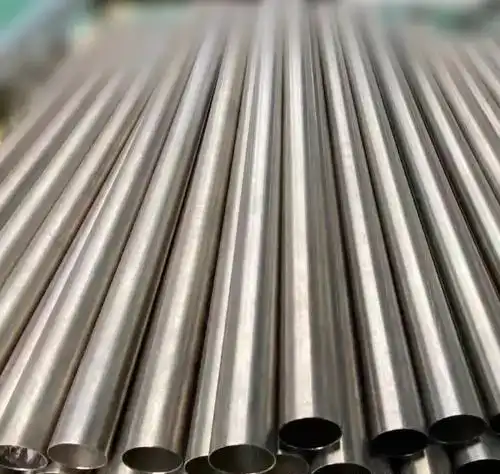
Understanding Seamless Titanium Tubes: Properties and Composition
Advanced manufacturing methods are needed to make smooth titanium tubes, which are basically different from welded options. Our production method starts with high-purity titanium ingots that are at least 99.2% titanium. These ingots are then either hot extruded or rotary pierced. With these methods, continuous tube structures are made without the heat-affected zones that usually weaken the material integrity of welded goods. Because there are no horizontal welds, there are no weak spots that can happen with regular tube systems. This smooth construction makes sure that the wall thickness and grain structure are the same around the whole diameter. This makes the mechanical behavior predictable under different loading conditions.
Precision cold-rolling methods are also used in the production process to improve the accuracy of the dimensions while keeping the material's natural strength. Our seamless titanium tubes are made up of alloy elements that are carefully adjusted to improve certain performance qualities. Grade 2 titanium is often used in industry because it has few alloying elements and is very good at resisting rust and being shaped. Grade 9 titanium (Ti-3Al-2.5V) has aluminum and vanadium added to it, which makes it much stronger for its weight. This makes it perfect for high-pressure and hydraulic systems in spacecraft. Advanced alloys, such as Grade 7 (Ti-0.2Pd), have palladium added to them, which makes them very resistant to reducing acids and environments with salt. In some business situations, these special formulas are used to solve problems where regular stainless steel materials would break down quickly. Controlling interstitial elements like oxygen, nitrogen, and carbon very precisely makes sure that the material qualities are the same from one production batch to the next. Heat treatment methods are very important for making the microstructural properties of smooth titanium tubes work better.
Vacuum annealing at controlled temperatures gets rid of any leftover stresses that were created during the making process and makes the material more flexible and tough. These heating processes also make the grain structure more regular, which makes sure that the mechanical properties are the same all the way through the thickness of the tube wall. To reach certain mechanical property goals, the heating temperature and cooling rate are carefully managed. Solution treatment followed by aging processes can make some titanium alloys even stronger, giving users the ability to adjust their performance qualities for different uses. These changes to the metals directly lead to longer wear life and better resistance to stress corrosion cracking.
How Seamless Titanium Tubes Enhance Performance Across Industries
Seamless titanium tubing that is seamless has a great strength-to-weight ratio that is very useful in the aircraft business. When aircraft hydraulic systems work with huge changes in temperature and pressure, they need materials that keep the structure strong without adding extra weight. The tensile strength of our Grade 9 titanium tubes is over 620 MPa, but they are only about 60% as dense as seamless titanium tubes and steel options. When used in engine manifolds, smooth titanium tubes can handle going from very cold fuel temperatures to very hot combustion chamber temperatures. The low thermal expansion rate of the material keeps thermal stress from building up, and its high fatigue resistance ensures that it works reliably over long service times.
These traits make it possible for airplane builders to cut down on weight without sacrificing safety. Aggressive chemical conditions cause equipment to break down over and over again in chemical production plants. Seamless titanium tubes are very strong against many acidic substances, like nitric acid, wet chlorine gas, and organic chlorides, which break down other materials very quickly. Because seamless production creates a uniform microstructure, there are no crevices where rusting can start, which is common at weld surfaces. Titanium doesn't crack or stress rust in chloride settings, which is good for heat exchangers in chemical plants. Titanium keeps its passive oxide layer even in very harsh conditions, while stainless steel options can get pitting rust and crevice attack. This corrosion resistance directly means that the tools will last longer and need less upkeep.
Facilities that make electricity, especially those that use cooling systems that use seawater, gain a lot from using smooth titanium tubes. Surface condensers that deal with fast-moving seawater can handle higher flow rates without getting damaged by erosion and rust, which lowers the performance of copper-nickel alloys. Because the building is smooth, there are no galvanic corrosion cells that could form at the weld surfaces. For effective heat transfer, desalination plants that use Multi-Stage Flash (MSF) evaporation depend on smooth titanium tubes. Because the material doesn't rust in seawater, it can be used at high temperatures and salt amounts that would quickly break down other materials. This level of dependability is necessary for ongoing running in remote areas where it's hard to get to for maintenance.
Key Performance Advantages of Seamless Titanium Tubes
Seamless titanium tubes have better mechanical performance because their microstructure is constant and they don't have stress concentration places like welded construction does. It has been shown through fatigue tests that seamless tubes can handle a lot more stress cycles than soldered ones, especially when the pressure and temperature change. By getting rid of heat-affected zones, weak phases that could form during welding are stopped before they can happen. This even microstructure makes sure that the tube's dynamic behavior stays the same over time, so engineers can build systems that will work well in the long run.
The better response to fatigue means that important applications can go longer between repair visits and save money over their entire lifecycle. One big reason why seamless titanium tube is better than other materials is that it is resistant to environmental factors. The passive titanium oxide layer that forms naturally on objects that are exposed protects very well against corrosion in the air, chemical attack, and marine settings. This inactive layer stays stable over a wide pH range and fixes itself when it gets broken. Since there are no welded joins, there are no places where rusting could start because different microstructures could form galvanic cells. This even rust resistance makes sure that the tube will work the same way the whole way, so you don't have to worry about specific degradation that could weaken the system. In high-temperature oxidation settings, where many other materials would quickly scale, the corrosion protection also goes to those places. Every time, our seamless titanium tubes meet the strict requirements of foreign standards like ASTM B338, AMS 4928, and NACE MR0175.
These certificates make sure that the chemical makeup, mechanical qualities, and size tolerances meet the standards set by the business. Regular audits by a third party make sure that the manufacturing processes keep their certifications valid and that consistent quality delivery is made. Quality assurance routines include thorough testing methods that measure each production batch's tensile strength, yield strength, stretch, and hardness. Ultrasound inspection and eddy current examination are two non-destructive testing methods that are used to make sure that the smooth construction is solid. These quality measures give people who work in buying faith in the performance of materials and their ability to follow the rules.
Seamless Titanium Tubes vs Competitor Materials: Making the Right Choice
When you compare smooth and Seamless titanium tube welded titanium tubes, you can see that they work very differently, which affects which applications they are best for and how much they cost over their lifetime. Welded tubes have areas where the heat changes the composition of the base material. This could make these areas less resistant to rust and weaker mechanically. When the load changes over and over, these areas become the best places for rust to start and cracks to spread. These weak spots are gone with seamless construction because the material qualities stay the same across the whole tube cross-section. While seamless tubes usually cost more at first than soldered ones by 15 to 25 percent, their higher stability and longer service life make them a better investment for important uses.
Not having to check welds also lowers the cost of quality control during the making and installation stages. Even though stainless steel tubes are cheaper at first, they aren't very good in harsh settings where titanium works best. Austenitic stainless steels can't be used in seawater or chemical processes that use halide substances because they can crack from chloride stress corrosion. Titanium is not affected by this process of decline, which makes it more reliable than stainless steel. Titanium is also better for uses where reducing mass affects the total speed of the system because it is lighter. Because it is 60% lighter than stainless steel, it can be used to make structures that work better in aircraft and mobile uses. Titanium also has a lower elastic stiffness, which makes it better at dampening vibrations. This means that stress isn't transferred to linked parts as easily, and the system lasts longer overall.
When choosing the right titanium grade, you need to carefully think about the needs of the application, such as the need for mechanical strength, resistance to rust, and the ability to be fabricated. Grade 2 titanium is great for general industrial uses because it doesn't rust and is easy to shape. Grade 9 titanium, on the other hand, is stronger for high-pressure systems that need to minimize weight. Specific grades, like Grade 7, have palladium added to them to make them work better in settings that are less acidic. Grade 12, on the other hand, has molybdenum and nickel added to it to make it stronger. To get the best value for each application, the grade selection process has to find a mix between performance needs and cost factors. Our expert team helps you choose the right grade based on the conditions of use and the results you expect.
Procurement Insights: How to Source and Optimize Your Purchase of Seamless Titanium Tubes
To effectively buy seamless titanium tubes, you need to know how the market is changing right now. Titanium prices change based on the cost of energy, the supply of raw materials, and changes in world demand. Long-term supply deals often keep prices stable and make sure that materials are available when demand is high. When compared to spot market prices, volume buying agreements usually save you between 10 and 20 percent on costs. Lead times for smooth titanium tubes depend a lot on how complicated the metal is and what the dimensions need to be.
Standard sizes and grades usually have delivery times of 4 to 6 weeks, but special metals or custom sizes may take 8 to 12 weeks. Planning your buying plan around these wait times will keep your project on track and save you money on emergency sourcing costs. With 30 specialized production lines and a monthly production capacity of 10 tons, we can reliably meet the delivery needs of big orders. An effective review of a seller takes into account more than just price at first. Certifications like ISO 9001, PED 2014/68/EU, and ASME rules for manufacturing show that the product meets international quality standards. Third-party testing services from companies like DNV, SGS, and TUV add to the quality guarantee for important uses that need to track materials and check their performance. It's especially important for project-critical uses where material delays affect total schedules that the supply chain is reliable.
Suppliers that have been around for a while and have a history of on-time deliveries and expert help offer more than just basic materials. We've been making things for 21 years and have worked with big foreign companies like CEFC, PTT, and PETRONAS. This shows that we're committed to building strong partnerships. In many situations, the performance needs of the tube must be met by unique measurements or special processing. Custom production options like precise machining, special heat treatments, and non-standard measurement limits make it possible to get the best results for certain uses. We can meet the individual needs of each customer thanks to our advanced CNC machining and customized annealing methods. Technical support services, Seamless titanium tube, such as help choosing materials, application engineering, and help with installation, make the buying connection much more valuable. Our technical help is available 24/7, and we keep detailed records of all the materials used to make sure that the job goes smoothly. The 12-month guarantee against manufacturing flaws gives you even more confidence in the product's long-term performance.
Conclusion
A seamless titanium tube is a revolutionary option for businesses that need high performance in tough conditions. By using modern production techniques to get rid of welded parts, uniform microstructures are made that are stronger, more resistant to corrosion, and last longer than traditional options. These performance benefits lead to lower upkeep costs, longer equipment lifecycles, and higher operating efficiency in fields like power generation, chemical processing, and aerospace. Investing in seamless titanium technology pays off in the long run by improving system performance and lowering the total cost of ownership. This makes it the best choice for mission-critical uses where failure is not an option.
FAQ
1. What industries benefit most from seamless titanium tube applications?
Seamless titanium tubes are very useful in the aircraft business because they are strong for their weight and don't wear out easily in hydraulic systems and engine parts. Chemical processing plants use these tubes because they don't rust easily in harsh conditions with acids, chlorides, and organic solvents. Power plants and purification plants can use them because they don't rust in seawater and work well at high temperatures.
2. How do seamless titanium tubes compare to welded variants in terms of cost and performance?
Most of the time, seamless tubes cost 15 to 25 percent more than soldered ones, but they are more reliable because they don't have any heat-affected zones or possible failure points. Even though the original investment is higher, the longer wear life and resistance to corrosion often lead to lower lifetime costs. Critical apps that need to be able to handle zero failures can explain the higher price by getting more reliable operations and fewer maintenance tasks.
3. What certifications should buyers look for when sourcing seamless titanium tubes?
Some important approvals are ASTM B338 for general industry uses, AMS 4928 for aerospace needs, and NACE MR0175 for oil and gas settings. Quality management certifications like ISO 9001 and pressure equipment certifications like PED 2014/68/EU make sure that the rules for manufacturing are followed. Organizations like DNV, SGS, and TUV offer third-party inspection services that add to the quality guarantee for important uses.
4. What are typical lead times and minimum order quantities for seamless titanium tubes?
Standard grade materials usually take 4 to 6 weeks to deliver, but it could take 8 to 12 weeks for unique metals or custom sizes. Minimum order amounts depend on the supplier and the goods, but for normal sizes, they are usually between 100 and 500 kilograms. When you buy in bulk, you can often get better prices and faster scheduling, which makes it a good way to go for big jobs.
Partner with LINHUI TITANIUM for Superior Seamless Titanium Tube Solutions
LINHUI TITANIUM is a reliable company that makes flawless titanium tubes. They have over 20 years of experience making precision-engineered solutions for tough industrial uses. Our complete manufacturing capabilities, which include 30 specialized production lines spread across two sites, guarantee reliable supply chain performance. Each month, we can make up to 10 tons of goods. Our dedication to world quality standards is shown by the many certifications we have, such as ISO 9001, PED 2014/68/EU, Seamless titanium tube, and approvals from multiple classification societies. We are the best company to work with for your important titanium tubing needs because we have a history of helping large foreign builders and energy companies in more than 60 countries. Email our expert team at linhui@lhtitanium.com to talk about your unique application needs and find out how our seamless titanium tube solutions can help your business run more efficiently while lowering your total cost of ownership.
References
1. Boyer, R., Welsch, G., & Collings, E.W. (2007). Materials Properties Handbook: Titanium Alloys. ASM International, Materials Park, Ohio.
2. Donachie, M.J. (2000). Titanium: A Technical Guide, Second Edition. ASM International, Materials Park, Ohio.
3. Schutz, R.W. & Thomas, D.E. (1987). Corrosion of Titanium and Titanium Alloys in Industrial Process Applications. Industrial Corrosion, ASM International.
4. Lutjering, G. & Williams, J.C. (2003). Titanium Engineering Materials and Applications. Springer-Verlag, Berlin Heidelberg.
5. Peters, M., Kumpfert, J., Ward, C.H. & Leyens, C. (2003). Titanium Alloys for Aerospace Applications. Advanced Engineering Materials, Volume 5, Issue 6.
6. Craig, B.D. & Anderson, D.B. (1995). Handbook of Corrosion Data, Second Edition. ASM International, Materials Park, Ohio.