
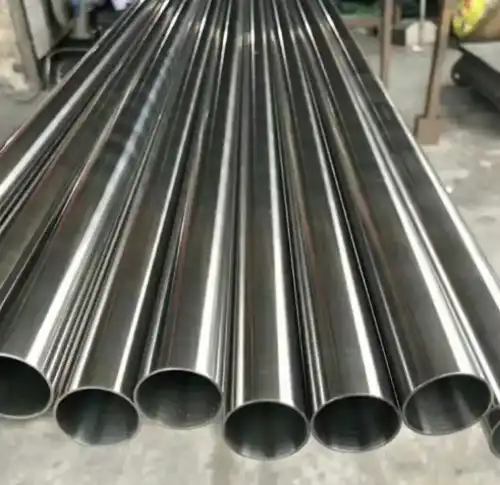
Procurement professionals always find that Gr5 titanium tube performs better than other metals when they are looking at materials for important industrial uses. The formula Ti-6Al-4V gives it great strength-to-weight ratios, great resistance to corrosion, and amazing durability that steel, aluminum, and even other types of titanium can't match. This alpha-beta alloy has been used successfully in the medical, military, and energy industries. It is the best combination of good performance and cost-effectiveness for harsh industrial settings.
Understanding Gr5 Titanium Tube: Properties and Composition
Chemical Composition and Manufacturing Standards
Aluminum (6%) and vanadium (4%), which are carefully controlled amounts in Titanium Grade 5, make up the rest of the metal. This particular mixture makes an alpha-beta microstructure that has great tensile qualities and is also very easy to work with. Leading companies like LINHUI TITANIUM use 30 production lines with modern metallurgical methods to make sure that the quality is always the same and meets international standards like ISO, SGS, and TUV approvals. Vacuum arc remelting and careful heat treatment methods that improve the alloy's microstructure are used to make it. These steps make sure that the grains are spread out evenly and get rid of any flaws that might affect performance in serious situations. Established suppliers have been making titanium products for 21 years and have strict quality control systems that make sure materials can be tracked and that they meet certification requirements.
Mechanical Properties and Performance Characteristics
The tensile strength of Ti-6Al-4V tubes is between 895 and 1000 MPa, which is much higher than the strength of standard pure titanium grades. They are also very flexible. The bending strength usually goes up to 828 MPa, which gives structural uses a lot of safety reserves. This mix of strength and toughness makes titanium Grade 5 a great choice for parts that are loaded and strained in a dynamic way. This material keeps its mechanical qualities over a wide temperature range, working well from very cold temperatures to 400°C. This thermal stability is very important for uses where the temperature changes a lot or where the working conditions are high. Its low modulus of elasticity (114 GPa) is very close to that of bone tissue, which makes it perfect for biological implants that need to protect against stress as little as possible.
Corrosion Resistance and Environmental Durability
One of the best things about Ti-6Al-4V tubes is that they are very resistant to rust. When used in chloride settings, like seawater, where regular stainless steels get pitting and crevice rust, Gr5 titanium tube works really well. This protection comes from the formation of a steady, self-healing oxide layer that keeps chemicals from attacking the metal below. The metal is resistant to organic acids, alkalis, and many industrial poisons, which makes it useful in many fields. This rust resistance is important for installations in the energy sector, especially those that desalinate rainwater or work on platforms in the ocean. These installations can last for more than 30 years. This lowers the need for upkeep and the cost of repair, which has big economic effects over the lifecycle of the component.
Comparing Gr5 Titanium Tube with Other Common Alloys
Performance Against Stainless Steel Alternatives
Grades of stainless steel like 316L don't rust and have been used successfully in commercial settings for a long time. But a straight comparison shows big differences in performance that make titanium Grade 5 better in tough settings. Even though 316L stainless steel is good at resisting corrosion in many situations, it can still crack and pit in marine settings because of chloride stress corrosion. In uses that care a lot about weight, Ti-6Al-4V's strength-to-weight edge stands out even more. Titanium tubes are about 40% lighter than stainless steel parts that are the same size and shape, but they are stronger. This decrease in weight directly leads to higher efficiency in aircraft use and lower structural stress in offshore sites. At first, cost makes stainless steel look better, but a lifetime study often shows that titanium is more cost-effective. The higher original investment is worth it because of lower upkeep needs, longer service life, and no more breakdowns caused by corrosion. More and more energy sector projects call for titanium Grade 5 because it lowers the total cost of ownership by making operations more efficient and reducing the need for upkeep.
Aluminum Alloy Comparisons and Applications
Aluminum metals work great in situations where weight is important, and they're also great at moving heat around. However, aluminum's limited strength and vulnerability to damage from the environment become clear in harsh industrial settings. If you compare grade 5 titanium to high-strength aluminum metals, it is about twice as strong while still being about the same weight. An area where aluminum usually does well is thermal performance. However, titanium Grade 5 has good enough thermal conductivity for most uses while also keeping its strength better at high temperatures. Titanium's temperature performance and rust resistance make it a good choice for cooling EV batteries, especially in systems that use coolants that could be harmful to the batteries. Titanium's ability to work with galvanic currents is useful in mixed-material systems where aluminum might rust more quickly. This trait makes it easier to use more flexible design methods and makes rust protection systems in buildings made of more than one material simpler.
Carbon Steel and Low-Alloy Steel Alternatives
When it comes to structural alloys, carbon steel has the lowest starting material cost, which makes it a good choice for uses that need to save money. But the need for rust protection and the extra weight that comes with carbon steel often make its benefits useless in serious situations. It is not necessary to use protective coats on titanium Grade 5, which has better strength properties.Ti-6Al-4V has a lot better wear resistance than carbon steel, especially in corrosive settings where protection coatings may be worn away. This benefit is very important in situations with changing loads, where wear failure is the main type of failure. Titanium is being used more and more in aerospace and automobile uses for parts that are loaded and unloaded many times. Titanium replacement saves weight. Gr5 titanium tube, which lets designers make better designs and improves performance, balancing out the higher costs of the material. Applications in racing show this principle in action: lowering unsprung weight with titanium parts directly improves how the car moves and how fast it goes.
Procurement Considerations for Gr5 Titanium Tubes
Market Dynamics and Pricing Factors
The titanium market is stable right now, with steady demand growth across many industries. This growth is mostly caused by the growth of military and energy infrastructure. Prices change depending on the cost of energy, the supply of raw materials, and changes in world demand. Understanding these changes helps with planning when to buy things and managing relationships with suppliers. Because making titanium is so specialized, supply chain issues must take this into account. Due to limited global production capacity, wait times for purchases can grow greatly during times of high demand. Building ties with makers who have a lot of production capacity, like those who run multiple factories that make more than 800 tons of goods a year, gives you security over your supply and scheduling options. Price and supply are both affected by where something is made. The main production hubs are in Asia, North America, and Europe. Transportation costs and rules about importing can have a big effect on the total delivered costs. This is why having ties with area suppliers is helpful for large orders. LINHUI TITANIUM's global logistics choices, such as DDP terms and various shipping options, show how important it is to have a wide range of supplier services.
Quality Assurance and Certification Requirements
It is important for procurement standards to include thorough approval requirements that make sure materials can be tracked and their performance is checked. Some important approvals are ASTM B265 for plate and sheet forms, ASTM B337 for seamless tubes, and the right PED, API, and ISO standards for pressure tank uses. Third-party review by groups like DNV, SGS, or TUV adds to the quality guarantee. Complete chemical analysis, mechanical property verification, and non-destructive testing data should all be on material test papers. Advanced providers have full quality management systems that keep track of the properties of materials and production factors in real time. This paperwork is very important for applications that need to follow rules and handle liabilities. For specialized uses, like making medical devices or aircraft parts, testing standards may need to be tailored to specific needs. As long as the suppliers have a lot of experience with testing and licensing, they can meet these needs while still meeting delivery dates and cost goals.
Supply Chain Management and Logistics
For procurement plans to work, they need to take into account how complicated titanium supply lines are, from finding the raw materials to delivering the finished product. Suppliers whose businesses are vertically integrated or who have good ties with other suppliers can offer more stable prices and more reliable service. Being able to get different types and sizes of products from a single source makes purchasing easier and cuts down on administrative costs. The needs for packaging and shipping are very different depending on the purpose and location. To keep medical materials from getting contaminated, they need to be packed in safe containers that are sealed with nitrogen. Standard protective packing can be used for industrial purposes. Global shipping options, such as air freight for pressing needs and sea freight for cost-effective bulk exports, make it possible to meet project deadlines in a variety of ways . Strategies for managing inventory should weigh the costs of keeping items on hand against the safety of having enough supplies. This is especially important for important uses where missing materials could delay production. Some sellers offer exchange agreements or vendor-managed inventory programs that lower customers' need for stock while still making sure materials are available.
Trusted Brands and Industry-Recognized Suppliers of Gr5 Titanium Tubes
Manufacturing Excellence and Industry Leadership
In the world titanium business, Gr5 titaniumtube, there are a number of companies that have a history of making high-quality Ti-6Al-4V tubes. LINHUI TITANIUM is a star in its field thanks to its 21-year history of production and wide range of certifications. The company was founded in 2000 and has its headquarters in Xi'an, China. It has grown into a well-known "Titanium Products Supermarket" that serves customers all over the world. When judging a company's manufacturing potential, you should look at its production capacity, quality processes, and technological know-how. Companies that have many plants and long production lines show that they have the size and dedication to provide large amounts of goods reliably. Modern mechanical tools and process control systems make sure that the quality is always the same and allow for customization for specific uses. Being present in international markets gives you information about how reliable a supplier is and how happy your customers are. Linhui Titanium has sent hundreds of thousands of tons to more than 60 countries, showing that it works well in a wide range of markets and situations. Partnerships with well-known companies like PETRONAS, LUKOIL, and PEMEX show that the seller can meet strict shipping and specification needs.
Certification Standards and Quality Validation
Leading providers can be told apart from product makers by their extensive certification holdings. Some important licenses are ISO 9001:2015 for quality management, different pressure vessel rules like PED 2014/68/EU, and approvals from classification societies like ABS, DNV, and Lloyd's. These licenses show that you care about quality and let you sell to businesses that are regulated. Third-party approval through independent inspection agencies gives buyers even more trust in the supplier's skills. Approval from groups like TUV, SGS, and Bureau Veritas shows that the product meets foreign standards and best practices for making. Regular checks and monitoring activities make sure that rules are followed and performance keeps getting better. In addition to official certificates, customer reference validation gives useful information about how well a seller is doing. Long-term partnerships with big energy companies, aerospace manufacturers, and EPC contractors show that they can produce high-quality goods on time and provide technical help throughout the lifecycle of a project.
Partnership Development and Long-term Relationships
Strategic supplier ties are more than just business deals; they also include technology teamwork, product management, and efforts to keep getting better. Leading providers put money into their relationships with customers by giving them specialized account management, technical support, and the ability to make changes that meet the needs of specific applications. Geographical location and the ability to provide local help make a supplier more valuable, especially for customers who do business all over the world. Having regional offices, expert centers, and inventory sites lets you provide quick service to customers and lower the cost of transportation. Some suppliers give expert help and consultation services on-site, which makes them more useful than just supplying materials. Customers can benefit from suppliers' knowledge in material development and application improvement when they have the chance to work together on new ideas. Suppliers who can do research and development can help customers become more competitive by giving them information about new metals, industrial methods, and ways to cut costs.
Making the Right Choice: Why Select Gr5 Titanium Tubes?
Economic Analysis and Lifecycle Value
A thorough economic study shows that titanium Grade 5 tubes are a great deal, even though they cost more at first. Lifecycle cost analysis looks at how much it costs to buy materials, put them in place, keep them in good condition, and replace them over the part's useful life. Premium material prices are often justified by longer service lives, less upkeep, and not having to use corrosion protection systems. When used in transportation, the benefits of losing weight directly translate into lower operating costs. Less fuel use is good for aerospace applications, and better speed and economy are good for automotive uses. These operational gains add up over the lifetime of the component, giving a big return on the money spent on it. Reliability and lowering risk are extra economic benefits that might not show up in normal cost studies. Getting rid of failures caused by corrosion cuts down on unexpected repair costs and stops production. Because of insurance and legal concerns, materials that have been used before and have been shown to be reliable may be preferred in serious situations.
Technical Advantages and Performance Benefits
Ti-6Al-4V tubes have a special mix of qualities that make it possible to improve performance and design in ways that aren't possible with other materials. Higher rates of strength-to-weight make it possible to reduce weight without lowering safety limits. In dynamic loading uses, parts with good wear resistance last longer. Biocompatibility traits are useful in making medical devices because they allow materials to connect with living things in a way that requires careful thought. Since titanium Grade 5 has a low modulus of elasticity and a history of being biocompatible, it is perfect for use in implants and surgical tools. Titanium is very easy to work with and join, which gives designers a lot of freedom. Normal methods can be used to weld, shape, and make the material without changing its useful qualities. This ability to be fabricated makes it possible to make complicated shapes and integrated designs that might be hard to make with other high-performance materials.
Strategic Advantages and Market Positioning
Choosing high-end materials like a Gr5 titanium tube can help your product stand out and gain a place in the market. Sustainability and lifecycle success are becoming more and more important to businesses, even more so than the starting cost. Products that are made with modern materials usually cost more, but customers are happier with them. As technology moves forward, it tends to support materials that allow for new ideas and better performance. Titanium alloys have qualities that help with the growth of electric vehicles, the infrastructure for renewable energy, and the progress in space travel. Companies that use new products early on will be better prepared for changes in the future market . Diversifying beyond standard materials and providers is good for the resilience of the supply chain. Building up your skills with modern materials gives you choices when your supply chain is interrupted and lets you respond quickly to changing market needs. This adaptability is especially useful in markets that are always changing and where technology needs are always changing.
Conclusion
A thorough study of Ti-6Al-4V tubes compared to other materials shows that they are clearly better in terms of strength, resistance to rust, and value over time. Even though the starting prices are higher than those of regular materials, the performance benefits, cost savings, and longer service life make the case for them very strong. When choosing key materials, procurement workers need to look at the total cost of ownership instead of just the cost of the materials themselves. Partnerships with experienced suppliers who have a wide range of production skills and a track record of success are needed fora successful application. Leading suppliers in this specialized market can be told apart by their quality certifications, expert help, and ability to ship goods all over the world. Spending money on high-quality materials and building relationships with providers gives you long-term competitive benefits by making your products more reliable, better at what they do, and happier customers.
FAQ
1. What industries benefit most from Ti-6Al-4V tubes?
The main industries that use titanium Grade 5 tubes are aerospace, medical device production, and energy. These fields value the mix of high strength, resistance to rust, and reduced weight, which makes the higher cost of the material worth it by improving performance and dependability.
2. How does corrosion resistance compare between titanium and stainless steel?
Titanium Grade 5 is more resistant to rust than other types of stainless steel, especially in chloride settings. 316L stainless steel is pretty resistant to corrosion in general, but titanium completely gets rid of the problems of pitting, crevice corrosion, and stress corrosion cracking in naval settings.
3. What are typical lead times for custom titanium tube orders?
Lead times depend on the specs, the quantity, and the supplier's availability. For normal sizes, they usually take 4 to 12 weeks, while for custom sizes, they take 12 to 16 weeks. Established sellers with a lot of production capacity can often meet immediate needs by speeding up plans.
4. How do transportation costs affect titanium tube procurement?
Due to their high value-to-weight ratio, titanium tubes can be sent by air freight for urgent packages, while sea freight is a more cost-effective way to move big amounts. Suppliers with a variety of shipping options and global transport skills give you options for matching delivery needs with cost.
5. What quality certifications are essential for titanium tube procurement?
AsTM B265, ASTM B337, and related pressure tank codes like PED or ASME are all necessary licenses. Third-party review by groups like DNV, SGS, or TUV adds to the quality guarantee. There may be times when you need extra licenses, like AS9100 for aircraft or FDA compliance for medical uses.
6. How do I verify the authenticity of titanium Grade 5 material?
For genuine Ti-6Al-4V material to be sold, it needs to come with a lot of paperwork, like material test papers that show chemical analysis and mechanical qualities. Inspection and testing by a third party confirm the qualities of a material. The risk of getting fake materials goes down when you buy from approved sellers with well-established quality systems.
Contact LINHUI TITANIUM for Premium Titanium Solutions
LINHUI TITANIUM is ready to meet your needs for titanium tubes because we can make them all and know how to ship them all over the world. With 21 years of experience, ISO/SGS/TUV certifications, Gr5 titanium tube, and the ability to produce 800 tons per year, we can guarantee a steady supply for important uses. As one of the best companies to make Gr5 titanium tubes, we work with big names in the industry like PETRONAS, LUKOIL, and PEMEX, and our quality and service record speak for themselves. You can email our expert team at linhui@lhtitanium.com to talk about your unique needs and get customized quotes for buying titanium.
References
1. ASM Worldwide. The 1990 ASM Handbook has an article called "Properties and Selection: Nonferrous Alloys and Special-Purpose Materials."
2. "Materials Properties Handbook: Titanium Alloys." ASM International, 1994. Boyer, Rodney, et al.
3. Donachie, Matthew J. 2000. ASM International. "Titanium: A Technical Guide, 2nd Edition."
4. Lynch, Gerd, and James C. Williams. Publisher: Springer-Verlag; year: 2003; title: "Titanium: Engineering Materials and Processes."
5. Peters, Manfred, et al. "Titanium Alloys for Aerospace Applications." Advanced Engineering Materials, Vol. 5, No. 6, 2003.
6. The editors are Christoph Leyens and Manfred Peters. Published by Wiley-VCH in 2003, "Titanium and Titanium Alloys: Fundamentals and Applications."