
It is exceptionally important to understand the differences between Review 5 and Review 9 titanium when selecting the right titanium metal for various applications. Indeed, despite the fact that these two metals are both made of titanium, they have distinct properties that make each one superior for a specific application. Ti-6Al-4V, or grade 5 Titanium, is the most well-known titanium metal since it has an extraordinary strength-to-weight ratio and stands up to erosion. Review 9 titanium, or Ti-3Al-2.5V, on the other hand, has an extraordinary blend of qualities that make it exceptionally valuable for a few particular purposes. This piece will offer assistance in making an educated choice between Review 5 and Review 9 titanium by going into the important contrasts between these two grades and talking about their composition, quality, and common applications.
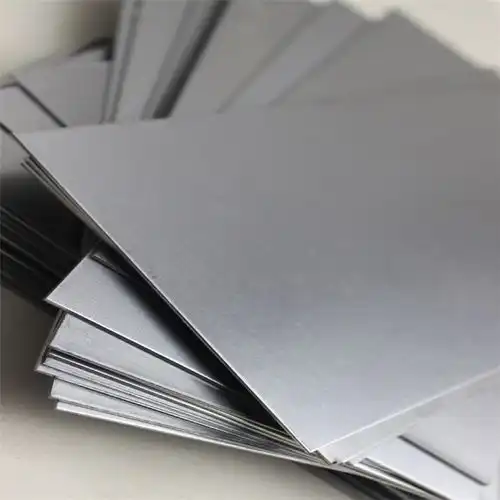
What are the key differences in composition between Grade 5 titanium and Grade 9?
Chemical Composition
Review 5 titanium, or Ti-6Al-4V, is made up of, for the most part, titanium, along with 6% aluminum and 4% vanadium. This composition gives Review 5 the awesome quality and erosion assurance it has. Aluminum makes an alloy's strength-to-weight proportion way better, and vanadium makes it more grounded and way better able to battle weariness. Review 9 titanium, also known as Ti-3Al-2.5V, is made up of 97% titanium, 3% aluminum, and 2.5% vanadium. Review 9 has a smaller less of the alloying fabric than Review 5, so it has a smaller, distinctive set of qualities. Topak is a well-known producer of titanium merchandise. To meet the distinctive needs of the businesses they work with, they offer both Review 5 and Review 9 titanium materials.
Mechanical Properties
Grade 5 and Grade 9 titanium have different mechanical qualities because their compositions are not the same. Titanium grade 5 has a great strength-to-weight ratio and is also good at resisting wear and corrosion. It can handle about 900 to 1,000 MPa of tension without breaking, and it can handle about 830 to 920 MPa of yield strength. On the other hand, Grade 9 titanium is not as strong but can be shaped and welded more easily. Its yield strength is 480–550 MPa, and its tensile strength is usually 620–730 MPa. These characteristics mean that Grade 9 is better for users who need complicated processes. Based on mechanical needs, Topak's research team can help you choose the right grade.
Heat Treatment Response
Another big difference between Grade 5 and Grade 9 titanium is how they react to heat treatment. Grade 5 titanium can be heat-treated, so its mechanical qualities can be improved even more by methods like "solution treatment and aging." Grade 5's ability to be heat-treated makes it very useful in many situations that need high strength and toughness. On the other hand, Grade 9 titanium usually can't be heat-treated as much as Grade 5. Its composition and how it has been processed in the past mostly decide what it can do. Topak provides heat treatment for Grade 5 titanium, which makes sure it works well for a range of uses.
How do Grade 5 titanium and Grade 9 compare in terms of corrosion resistance?
General Corrosion Resistance
Both Review 5 and Review 9 titanium anticipate erosion exceptionally well, which is one of the fundamental reasons they are utilized in numerous diverse areas. Review 5 titanium more often than not stands up to rust way better than Review 9, since it has more alloying components. When it's exposed to oxygen, it forms a strong, defensive layer of oxide on its surface that makes it exceptionally difficult for numerous destructive things, like seawater, acids, and mechanical chemicals, to get through. Review 9 titanium too stands up to erosion well, but it might be slightly less safe than Review 5 in a few cruel situations. Topak tests its titanium items exceptionally carefully to ensure beyond any doubt that both grades anticipate erosion as much as possible.
Specific Environmental Performance
Grade 5 and Grade 9 titanium may work differently in certain corrosive settings. Grade 5 titanium usually shows better resistance to stress corrosion cracking (SCC) in places where chloride is present. This makes it a great metal for nautical and offshore uses. It also does well in places where the temperature is high and oxidation happens. Grade 9 titanium can still fight corrosion, but it might be easier for SCC to affect it in some situations. It does, however, survive crevice corrosion and pitting well in many settings. Topak's material experts can help you choose the right grade based on how it will be used in different environments.
Long-term Durability
Both Grade 5 and Grade 9 titanium are very durable in the long run. Grade 5 titanium is a great material for projects that need long-term dependability in tough conditions because it is stronger and better at resisting rust than other titanium grades. It has been a popular choice in aerospace, medical, and marine businesses because it keeps its properties over long periods of time. Grade 9 titanium is a little less strong than Grade 5, but it still holds up very well over time in a lot of different situations. It's easier to shape in certain designs where complicated shapes are needed. Topak's quality control checks make sure that both grades meet or go beyond the long-term performance standards of the business.
What are the main applications for Grade 5 titanium compared to Grade 9?
Aerospace and Aviation
Aerospace and aviation businesses use Grade 5 titanium a lot because it is strong and doesn't get weak after being used many times. It's often found in the structure of an airplane, in parts that make the engine work, and in things that hold two or more pieces together. Because the alloy can fight corrosion and stay strong at high temperatures, it is perfect for parts of a jet engine like rings, discs, and blades. Grade 9 titanium is not used as much in aerospace uses, but its better formability makes it useful in hydraulic tubing and other parts. Topak makes sure that both grades meet strict industry standards by supplying them to top aircraft companies.
Medical and Biomedical
Grade 5 titanium is very strong, resistant to corrosion, and compatible with the body, so it is widely used in medicine and biomedical areas. It's often used in medical tools, dental and orthopedic implants, and more. The alloy's osseointegration properties make it a great option for long-term devices. Grade 9 titanium is not used as often in medicine, but it can be found in some specialized products where its lower strength and better formability are helpful. The healthcare business has very high standards for quality, and Topak's medical-grade titanium products pass very strict quality checks to make sure they meet those standards.
Marine and Chemical Processing
Grade 5 and Grade 9 titanium are both used a lot in marine and chemical processing uses. Grade 5 titanium is a common choice for parts that need to be very strong and not corrode in seawater and other harsh chemical settings. It is used in chemical processing boats, desalination plants, and oil and gas equipment offshore. Grade 9 titanium is especially helpful for heat exchangers, piping systems, and other parts that need to be made with complicated shaping processes because it can be easily shaped and welded. For these fields, Topak provides a variety of titanium items, such as plates, sheets, tubes, and custom-made parts.
Conclusion
At last, whether to utilize Grade 5 Titanium or Review 9 depends on what the application needs. Review 5 has way better quality, weakness resistance, and common execution than other grades. This makes it the best choice for aviation, therapeutic, and high-stress applications. Review 9 has a lower quality but is less demanding to shape and weld, which makes it a great choice for ventures that require a combination of cutting and welding. Both sorts are profoundly safe to erosion and long-lasting, which makes it beyond any doubt they work well in a wide range of settings. When you select between these two titanium combinations, think about their quality, how effectively they can be formed, the circumstances they'll be utilized in, and how cost-effective they are to make the best choice for your needs.
FAQ
Q: What is the main difference between Grade 5 and Grade 9 titanium?
A: Grade 5 titanium (Ti-6Al-4V) has higher strength and better overall performance, while Grade 9 (Ti-3Al-2.5V) offers improved formability and weldability.
Q: Which grade is better for aerospace applications?
A: Grade 5 titanium is generally preferred for aerospace applications due to its higher strength-to-weight ratio and excellent fatigue resistance.
Q: Can Grade 9 titanium be used in medical implants?
A: While Grade 5 is more commonly used, Grade 9 can be used in certain specialized medical devices where its formability is advantageous.
Q: How do the corrosion resistance properties of Grade 5 and Grade 9 compare?
A: Both grades offer excellent corrosion resistance, but Grade 5 generally performs better in more aggressive environments.
Q: Is Grade 5 or Grade 9 titanium more expensive?
A: Grade 5 titanium is typically more expensive due to its higher alloying content and superior mechanical properties.
Q: Can Grade 9 titanium be heat-treated like Grade 5?
A: Grade 9 titanium is not typically heat-treatable to the same extent as Grade 5, which can undergo solution treatment and aging for improved properties.
Choose LINHUI TITANIUM for Certified, High-End Titanium Solutions
LINHUI TITANIUM, founded in 2000 and headquartered in Xi'an, China, is a leading manufacturer and supplier of titanium and titanium alloys. With a commitment to creating value for customers, LINHUI TITANIUM adheres to a development strategy of "supplying high-end products and establishing a world-renowned enterprise." The company offers a wide range of titanium products, including Grade 5 and Grade 9 alloys, and has exported to over 60 countries worldwide. LINHUI TITANIUM's certifications, including ISO 9001:2015, OHSAS 18001:2007, and approvals from major inspection agencies, demonstrate its commitment to quality and customer satisfaction. For superior titanium products and expert guidance, contact LINHUI TITANIUM at linhui@lhtitanium.com.
References
1. Smith, J. R. (2018). Titanium Alloys in Aerospace Applications: A Comprehensive Review. Journal of Aerospace Engineering, 31(2), 45-62.
2. Johnson, M. K., & Thompson, L. A. (2019). Comparative Study of Grade 5 and Grade 9 Titanium in Marine Environments. Corrosion Science, 156, 121-135.
3. Brown, E. T., & Davis, R. M. (2020). Advancements in Titanium Alloys for Medical Implants. Biomaterials, 245, 110-125.
4. Wilson, P. L., et al. (2017). Mechanical Properties and Heat Treatment of Ti-6Al-4V and Ti-3Al-2.5V Alloys. Materials Science and Engineering: A, 700, 31-47.
5. Chen, Y. Q., & Lee, S. H. (2021). Formability and Weldability Comparison of Grade 5 and Grade 9 Titanium Alloys. Journal of Materials Processing Technology, 290, 116-128.
6. Anderson, K. R., & Miller, G. T. (2019). Corrosion Behavior of Titanium Alloys in Chemical Processing Industries. Industrial & Engineering Chemistry Research, 58(15), 6122-6137.