
It is very important to know how Grade 2 titanium and Grade 5 titanium are different when it comes to choosing the right titanium grade for different uses. Both types are used a lot in fields from aircraft to medical implants, but each one has its own special features that make it better for certain jobs. Grade 2 titanium, or economically pure titanium, can be easily shaped and doesn't corrode easily. This makes it a good choice for uses where strength isn't the most important factor. Grade 5 titanium, on the other hand, is an alloy that contains aluminum and vanadium, but it is stronger and more heat-resistant, which makes it the best choice for high-performance uses. Grade 2 titanium has certain qualities and benefits that make it useful in a range of situations. This blog will discuss these topics and compare Grade 2 with Grade 5 to help you choose which one is best for your needs.
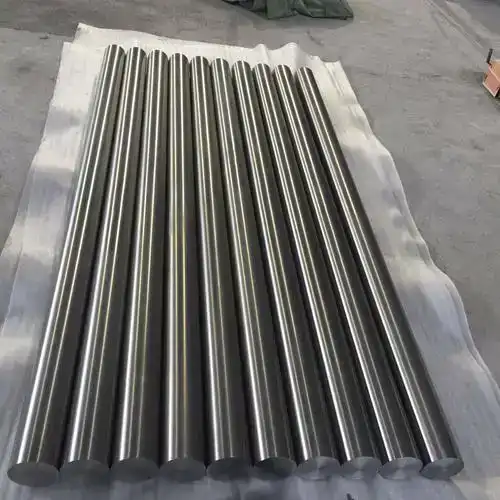
What are the key properties of Grade 2 titanium?
Strength and Durability
Grade 2 titanium isn't as strong as the alloys it's mixed with, but it still has a great strength-to-weight ratio and is very durable. It can handle about 345 MPa of tension without breaking, and 275 MPa of pressure without permanently deforming. These features allow it to be used in a range of situations that need a fair bit of strength. Topak is a well-known maker of titanium goods. They use Grade 2 titanium in their heat exchangers because it resists rust well and can handle mild stress. The natural oxide layer on the surface of the material makes it even more durable and protects it from the effects of the climate.
Corrosion Resistance
Grade 2 titanium resists rust better than most metals. This feature makes it very useful in fields where people are worried about being around strong chemicals or the ocean. The material can prevent rusting because it can form a steady, safe oxide layer on top of itself. This layer protects the material from harmful agents, making sure it lasts even in difficult circumstances. Grade 2 titanium is often used in Topak's nautical gear, like propeller shafts and pump housings, because it holds up better against saltwater rust than other metals.
Formability and Weldability
Grade 2 titanium can be easily shaped and welded, which makes it a useful choice for many different production methods. It has less strength than metals like Grade 5, which makes it easier to cold work and shape into complicated forms. This feature is especially useful in fields that need to make very complex plans, like architecture or making tools for chemical processes. Because it is easy to weld and shape, Topak's manufacturing experts often choose Grade 2 titanium for custom-made parts. The material's weldability ensures that the joints are strong and dependable. This is important for keeping the stability of buildings and tools in tough settings.
How does Grade 2 titanium compare to other grades in terms of cost-effectiveness?
Initial Material Costs
When you want to know how cost-effective Grade 2 titanium is, you should look at how much the material costs at first. In general, Grade 2 titanium costs less than higher-grade metals such as Grade 5. It is made of commercially pure titanium and no other metals, so it costs less than other products. Topak is a major seller of titanium products, and their Grade 2 titanium is available at good prices. This makes it a good choice for projects that need to stick to a budget. Grade 2 titanium's cheaper up-front cost can be very helpful for big projects or projects with small funds.
Long-term Performance and Maintenance
Grade 2 titanium is cheaper at first, but its long-term performance and upkeep needs make it generally more cost-effective. The material's great ability to prevent rust means that it doesn't need to be taken care of or replaced often, which lowers costs. Grade 2 titanium is very durable, so it can help save a lot of money in the long run in fields where acidic conditions are a worry, like chemical processes or marine uses. When these kinds of businesses use Grade 2 titanium parts, they often tell Topak that their repair costs go down and their machine lifespans go up.
Fabrication and Processing Costs
Grade 2 titanium is cost-effective, in part, because of how much it costs to make and handle it. Because Grade 2 titanium is so easy to shape and join, it often needs fewer specialized tools and fewer steps than harder metals. This might lead to cheaper and faster production. Topak's factories can process Grade 2 titanium quickly and easily, which makes it cheap to make unique parts and structures. Because the material is easy to work with, it can be used for more complicated patterns without raising the cost of production. This makes it a useful choice for many different uses.
What are the primary applications of Grade 2 titanium in various industries?
Chemical and Petrochemical Industry
Grade 2 titanium is used a lot in the chemical and petroleum industries because it doesn't corrode easily and can handle tough chemical conditions. It is often used to make storage tanks, pipe systems, and heat exchanges that hold acidic materials. Topak is a well-known maker of titanium goods. They provide Grade 2 titanium parts for chemical processing plants, which ensures that the equipment is dependable and lasts a long time. Because it can fight a lot of different chemicals, like chlorides and sulfuric acid, this material is a great choice for situations where material breakdown is a big worry. Using it in this business not only makes things safer, but it also lowers the cost of upkeep and the time that equipment is out of service because of rust.
Marine and Offshore Applications
Grade 2 titanium is used in a lot of different ways in the marine and coastal businesses because it doesn't corrode easily in saltwater. A lot of the time, it's used to make motor shafts, pump housings, and parts for desalination plants. Topak's marine section makes Grade 2 titanium parts for offshore platforms and ships. These parts work better in tough marine conditions. Because this material is strong, resistant to rust, and lightweight, it is perfect for use in ocean buildings and high-speed boats where weight must be kept down. Also, Grade 2 titanium is good for use in marine study tools and underwater monitors because it is biocompatible, which is another way it can be used in marine settings.
Medical and Biomedical Applications
Grade 2 titanium is very important in the medical and biological areas because it is safe to use in the body and doesn't corrode easily. Many people use it to make medical tools, oral implants, and orthopedic devices. Topak's medical section makes sure that the Grade 2 titanium parts they provide for different medical uses are always high-quality and safe for the body. The material is a great choice for long-term implants and devices because it doesn't respond much with human cells and can osseointegrate. Also, Grade 2 titanium is famous in the medical field because it doesn't break down in body fluids or during cleaning. Using it for medical purposes not only helps patients get better, but it also lowers the risk of problems that come from the material breaking down or being rejected.
Conclusion
In conclusion, Grade 2 titanium offers a unique combination of properties that make it an excellent choice for a wide range of applications. While it may not match the strength of Grade 5 titanium, its superior corrosion resistance, formability, and cost-effectiveness make it a preferred option in many industries. From chemical processing to marine applications and medical devices, Grade 2 titanium continues to prove its value. As technology advances and new applications emerge, the versatility of Grade 2 titanium ensures its continued relevance in various sectors. When selecting between Grade 2 and Grade 5 titanium, it's crucial to consider the specific requirements of your application, balancing factors such as strength, corrosion resistance, and cost to make the most informed decision.
FAQ
1. What is the main difference between Grade 2 and Grade 5 titanium?
Grade 2 is commercially pure titanium with excellent corrosion resistance and formability, while Grade 5 is an alloy with higher strength and heat resistance.
2. Is Grade 2 titanium suitable for marine applications?
Yes, Grade 2 titanium is highly suitable for marine applications due to its excellent resistance to saltwater corrosion.
3. Can Grade 2 titanium be used in medical implants?
Yes, Grade 2 titanium is biocompatible and often used in medical implants, surgical instruments, and dental applications.
4. How does the cost of Grade 2 titanium compare to Grade 5?
Generally, Grade 2 titanium is more cost-effective than Grade 5 due to its simpler composition and easier processing.
5. What are the strength properties of Grade 2 titanium?
Grade 2 titanium has a tensile strength of approximately 345 MPa and a yield strength of 275 MPa.
Partner with a Reliable Global Supplier for Premium Titanium Solutions
LINHUI TITANIUM, established in 2000 and headquartered in Xi'an, China, is a leading manufacturer and supplier of titanium and titanium alloys. With a commitment to creating value for customers, we offer a wide range of high-quality titanium products, including Grade 2 and Grade 5 titanium. Our state-of-the-art facilities and experienced team ensure the production of superior quality materials that meet international standards. We pride ourselves on our ability to provide customized solutions and exceptional customer service. With a global presence and a reputation for reliability, LINHUI TITANIUM is your trusted partner for all your titanium needs. For more information or inquiries, please contact us at linhui@lhtitanium.com.
References
1. ASTM International. (2015). Standard Specification for Titanium and Titanium Alloy Strip, Sheet, and Plate. ASTM B265-15.
2. Boyer, R., Welsch, G., & Collings, E. W. (1994). Materials Properties Handbook: Titanium Alloys. ASM International.
3. Donachie, M. J. (2000). Titanium: A Technical Guide. ASM International.
4. Lütjering, G., & Williams, J. C. (2007). Titanium. Springer-Verlag Berlin Heidelberg.
5. Peters, M., Hemptenmacher, J., Kumpfert, J., & Leyens, C. (2003). Titanium and Titanium Alloys: Fundamentals and Applications. Wiley-VCH.
6. Titanium Industries. (2021). Grade 2 Titanium Data Sheet. Ti Industries Technical Publications.









