
When it comes to tough industrial uses, Grade 2 titanium square tubing is the most flexible and commercially pure choice. This very light but very strong material is biocompatible, resistant to rust, and stable at high temperatures in a wide range of applications. When you buy high-quality titanium square tubing, you're buying a solution that will last longer than traditional materials and have better structural stability in harsh situations. Our titanium square tubing is reliable enough to meet the strict ASTM standards needed for important uses in the aircraft, medical, energy, and marine industries.
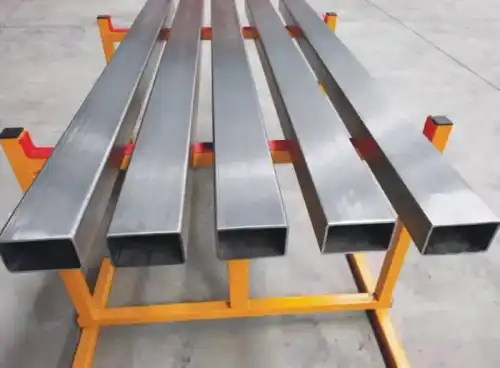
Understanding Grade 2 Titanium Properties and Specifications
When it comes to pure titanium alloys for sale, grade 2 titanium is the engine. This substance is mostly titanium (99.2%), with only a small amount of oxygen (0.18% to 0.25%). The low oxygen levels make the material more flexible and easier to shape while keeping its high strength. Tensile strength of 345–450 MPa and yield strength of 275–380 MPa are two important mechanical qualities. As of now, the density is 4.51 g/cm³, which means it is 45% lighter than steel but just as strong. Temperatures of up to 300°C can be used without damaging the structure. The sizes of our titanium square tubing range from 10x10mm to 100x100mm, and the wall width can be between 0.5mm and 10mm. Standard lengths go up to 6 meters, but special sizes can be made to fit the needs of a particular job. You can choose from mill finish, anodized, and electropolished techniques for the surface finish.
Core Benefits of Titanium Square Tubing
The fact that titanium square tubing doesn't rust is one of its best features. This substance can handle tough chemical environments, being in sea, and acidic conditions that quickly break down other metals. The naturally occurring oxide layer protects against damage from the atmosphere and fixes itself. The ability to reduce weight changes the design options in many fields. Engineers can save 45% of the weight of buildings made of this material compared to steel structures while keeping the same level of strength. This benefit is especially useful in flight, where every gram affects how much fuel is used and how much weight can be carried. Biocompatibility means that these tubes can safely interact with human flesh, which makes them perfect for making medical devices. Because it is non-toxic and works well with flesh, it can be used in implant uses and surgical tool frames. Temperature stability means that the material can be used in very high or very low temperatures without breaking down. The low thermal expansion coefficient keeps the dimensions accurate even when the temperature changes, which is very important for precision uses. When things are loaded and unloaded over and over, fatigue resistance makes them last longer. This quality is very important for parts that are stressed over and over again in aircraft and automobile use.
Industrial Applications and Use Cases
Titanium square tubing's strength and lightweight benefits are widely used in the aerospace industry. The high strength-to-weight ratio makes it ideal for engine mount frames, hydraulic system housings, and structural parts. Because it can handle high temperatures and changes in pressure, the material is essential for making airplanes. Biocompatible qualities are used in the production of medical devices like surgical tools and monitoring equipment frames. The housings for MRI parts need to be made of non-magnetic materials that won't mess up image systems. Titanium square tube is great for reusable medical tools because it is easy to clean and doesn't react with body fluids. In the energy industry, it is used to build heat exchangers, floating platform parts, and tools for chemical handling. The high resistance to rust keeps it from breaking down in sea and tough chemical conditions that are common in oil and gas activities. Titanium square tubing is being used more and more in automotive making for high-performance exhaust systems and battery cases for electric vehicles. The material is stable at high temperatures and doesn't weigh much, which helps make vehicles more efficient and perform better. Marine uses gain from better resistance to rust in saltwater. Even though they are constantly exposed to seawater, boat bodies, offshore tools, and underwater vehicle frames keep their structural integrity.
LINHUI TITANIUM vs Competitors: Quality and Service Excellence
LINHUI TITANIUM has been making titanium square tubing for more than 21 years and is very good at what they do. Our two plants have 30 dedicated production lines that can make up to 800 tons of goods each year. This means that we can reliably meet the needs of large orders while also being able to adapt to individual needs. Quality approval makes us stand out from others in the same field. We keep our ISO 9001:2015, TUV Nord AD2000-W0, and PED 2014/68/EU certifications, as well as approvals from DNV, ABS, CCS, BV, SGS, and other well-known inspection companies around the world. These certificates show that we are dedicated to upholding industrial standards that are the best in the world. Our "Titanium Products Supermarket" method offers more than just basic tubes when it comes to material options. Clients can get different grades, sizes, and processing choices for titanium from a single source. This makes purchasing easier and lowers the complexity of the supply chain. Through relationships with DHL, FedEx, and other major freight companies, global logistics skills make sure that packages get delivered on time all over the world. We get certificates for dangerous materials and cover them with plastic caps, foam-lined wooden boxes, and moisture-proof wraps. Long-term relationships with big names in the industry like CEFC, PTT, PDVSA, and PETROECUADOR show that we can regularly meet strict requirements. These ties have been going on for decades and show how committed we are to providing solid service.
Optimization Strategies for Maximum Performance
Understanding the needs of the product is the first step in choosing the right material. Titanium square tubing of Grade 2 is best for normal industry uses, while Grade 5 tubing is better for high-stress medical and aircraft uses. Talk to our expert team to find out what the best requirements are for your project. Fabrication issues have a big effect on the end result. For precise uses, cold-drawn smooth tubes are the most accurate in terms of size, while welded choices are more cost-effective for bigger sizes. Argon-arc welding (TIG) makes sure that the joints are clean and free of contamination. Some qualities get better when the surface is treated. Anodizing makes something more resistant to wear and gives you color choices for identity. Electropolishing makes surfaces very smooth, which is important for medical and industrial uses. For building purposes, mill finish is a cost-effective option. Eddy current testing, hydraulic pressure testing, and X-ray checking are some of the quality control methods used. These non-destructive testing methods make sure that goods meet strict industry standards and don't have any flaws. To make sure of the material's qualities and its tracking, ask for approved test results. The way things are stored and handled protects their identity while they are being moved and put in place. Stay away from carbon steel tools that could make you sick. To keep surfaces from getting damaged, store things in clean, dry places and use the right lifting gear.
Critical Considerations and Best Practices
To weld, you need to use special tools and methods. Use pure argon as a protective gas and tungsten electrodes made for titanium square tubing. Keep the area where you're welding clean to avoid pollution that could weaken the resistance to rust. Before you start soldering, clean all the surfaces with acetone or alcohol. When machining, it's important to use sharp cutting tools and make sure there is enough water flow. Titanium doesn't carry heat well, so heat can build up and damage cutting tools. Make sure the feed rates stay the same and don't let the tools rest on the workpiece's surface. Different surroundings have different chemical interactions. Titanium doesn't react with most acidic substances, but strong acids and high-temperature chlorine chemicals can break it down. For individual chemical risks, look at suitability charts. Different popular building materials have different thermal expansion factors. When adding titanium parts to steel or aluminum structures, you need to take into account how the different materials will expand. To allow for temperature movement, use the right joint types or expansion joints. Cost optimization makes sure that material costs and lifetime benefits are balanced. Longer service life, less upkeep, and no need for protective coats usually make up for higher starting costs in the long run. Figure out the total cost of ownership, which should include factors for installation, upkeep, and repair.
Conclusion
Grade 2 titanium square tubing delivers exceptional performance across demanding applications through superior corrosion resistance, lightweight construction, and biocompatibility. The material's versatility supports diverse industries from aerospace to medical device manufacturing while providing long-term value through extended service life and reduced maintenance requirements. LINHUI TITANIUM's manufacturing excellence, comprehensive certifications, and global supply capabilities position us as your trusted partner for premium titanium solutions. Our commitment to quality, technical expertise, and customer service ensures successful project outcomes while meeting the most stringent industry standards and delivery requirements.
FAQ
Q1: What wall thickness options are available for titanium square tubing?
A: We offer wall thickness ranging from 0.5mm to 10mm, depending on the outer dimensions. Thinner walls provide weight optimization, while thicker sections deliver enhanced structural strength. Custom thickness specifications can be accommodated for specific applications requiring unique performance characteristics.
Q2: How does Grade 2 titanium compare to Grade 5 for square tubing applications?
A: Grade 2 offers excellent corrosion resistance and formability at lower cost, making it ideal for chemical processing and marine applications. Grade 5 provides higher strength and temperature resistance, preferred for aerospace and high-stress structural applications. The choice depends on specific performance requirements and budget considerations.
Q3: What quality certifications does LINHUI TITANIUM maintain for square tubing production?
A: Our facilities maintain ISO 9001:2015, TUV Nord AD2000-W0, PED 2014/68/EU certifications, and approvals from DNV, ABS, CCS, BV, SGS, and other international inspection agencies. Each shipment includes certified test reports verifying chemical composition, mechanical properties, and dimensional accuracy to ensure compliance with industry standards.
Partner with LINHUI TITANIUM for Premium Titanium Square Tubing Solutions
LINHUI TITANIUM stands ready to support your titanium square tubing requirements with unmatched quality and service excellence. Our 21 years of manufacturing expertise, comprehensive certifications, and global logistics capabilities ensure a reliable supply for your critical applications. Whether you need standard dimensions or custom specifications, our technical team provides expert guidance to optimize material selection and performance outcomes. Connect with our titanium square tubing supplier team today to discuss your specific requirements and receive a detailed quote within 24 hours. Contact us at linhui@lhtitanium.com to begin your partnership with industry-leading titanium specialists.
References
1. American Society for Testing and Materials. "ASTM B338-18: Standard Specification for Seamless and Welded Titanium and Titanium Alloy Tubes for Condensers and Heat Exchangers." ASTM International, 2018.
2. Boyer, R.R., Welsch, G., and Collings, E.W. "Materials Properties Handbook: Titanium Alloys." ASM International, Materials Park, Ohio, 1994.
3. Donachie, Matthew J. "Titanium: A Technical Guide, 2nd Edition." ASM International, Materials Park, Ohio, 2000.
4. Lutjering, Gerd and Williams, James C. "Titanium: Engineering Materials and Processes." Springer-Verlag, Berlin Heidelberg, 2007.
5. Peters, M., Kumpfert, J., Ward, C.H., and Leyens, C. "Titanium Alloys for Aerospace Applications." Advanced Engineering Materials, Volume 5, Issue 6, 2003.
6. Schutz, R.W. and Thomas, D.E. "Corrosion of Titanium and Titanium Alloys." Metals Handbook, Volume 13, Corrosion, ASM International, 1987.