
Choosing the best Dental Titanium Disc needs a close look at the material specs, production standards, and what the different suppliers can do. Today, dental repair needs parts that are made with precision and meet strict biocompatibility standards. These parts also need to be very strong and long-lasting. The right titanium disc is the key to making sure that transplant procedures, crowns, and bridges work well and fit in with human flesh. Quality makers must follow international guidelines like ASTM B348, ASTM F67, and ASTM F136. This ensures that every disc meets the strict requirements of modern dental practice.
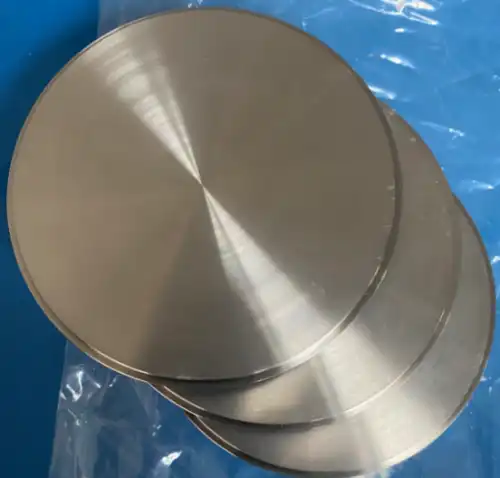
Understanding Titanium Alloy Standards for Dental Applications
When dental workers choose titanium parts to help patients, they need to make sure that the materials are compliant. The ASTM B348 standard sets the rules for commercially pure titanium bars and billets. This standard forms the basis for high-quality materials used in tooth repair. ASTM F67 talks about surgical implants and defines the exact chemicals and mechanical qualities needed for osseointegration to work.
ASTM F136 is the most reliable standard for titanium metal that is used in medical implants. This standard makes sure that the implant is compatible with the body and keeps its shape so that it stays in place over time. Manufacturers that follow these standards show that they are dedicated to making sure patients are safe and that treatments work.
The cellular reaction in the mouth is directly affected by the makeup of the chemicals present. For most dentistry uses, Grade 2 economically pure titanium has great biocompatibility and resistance to rust. Grade 4 titanium is stronger and better for use in high-stress situations. Ti-6Al-4V metal is controlled by ASTM F136 and provides better mechanical qualities for challenging prosthesis uses.
Quality control methods must make sure that the materials can be traced from the beginning to the end of the process. Third-party approval from well-known groups like SGS, TUV, and ISO shows that industrial methods and material quality are good. These credentials give people faith that every part of the tooth repair job is done safely and correctly, as required by global standards.
Essential Manufacturing Processes: Forging and CNC Precision
Using advanced production methods, clinicians can get highly accurate tooth parts from raw titanium. The casting process makes the material denser and gets rid of any problems that could affect how well the implant works. High-temperature forging realigns the crystalline structure, making it better mechanically than cast options.
CNC cutting makes sure that the dimensions are exactly right so that the Dental Titanium Disc fits and works the way it is supposed to. With modern CNC technology, limits within microns are possible. This makes sure that implant abutments and crown preparations get consistent thread patterns and exact margins, respectively. The quality of the surface finish has a direct effect on osseointegration rates and long-term stability.
Multi-axis CNC can make complicated shapes that work best with living materials. Titanium surface changes made by controlled cutting factors have an effect on cell reaction and bone growth. The mix of CNC accuracy and forging strength makes parts that are better in both quality and performance than parts made with older casting methods.
How well the production line works impacts the ability of dentistry offices to consistently get good quality and stay within budget. Manufacturers with various titanium production lines show that they can scale up and meet the needs of long-term supply. Before being packaged, automated quality control systems built into CNC methods make sure every part meets the requirements.
Quality Control Systems and International Certifications
Quality management methods that are broad in scope form the basis for making dental titanium discs with reliable results. ISO 9001:2015 approval shows that you have structured ways of dealing with quality control, ongoing progress, and customer happiness. These guidelines make sure that each batch is the same as the last, which is important for getting expected health results.
Third-party inspection companies make sure that manufacturers follow the rules by doing regular checks and tests. DNV, BV, and SGS are examples of companies that confirm the qualities of materials and production methods independently. Their acceptance means that the factories keep up with global standards during all stages of production.
Material testing procedures check how the material interacts with chemicals and living things, as well as its dynamic qualities. Tensile strength testing makes sure that the structure stays intact under clinical stress conditions. Corrosion resistance testing makes sure that parts will last by simulating long-term contact with the mouth.
Documentation tools keep track of where materials come from, from the first melting to the last check. There is a certificate of compliance with every package. This gives dentistry workers faith in the materials' reliability and performance. This ability to trace back helps governmental compliance and patient safety.
Biocompatibility and Osseointegration Considerations
The success of tooth implants rests a lot on how the materials and surfaces interact with the body. Because its steady oxide layer stops bad tissue reactions, titanium is highly biocompatible. This natural passivation forms an inactive layer that helps the tissue heal and stay stable over time.
The success of osseointegration is directly linked to the quality of titanium surfaces and how they are made. Controlled surface roughness makes the first touch with bone better and helps cells connect. The production process needs to keep these useful surface properties and the correct size and shape of the part.
Contamination control during production stops the entry of materials from outside that could cause inflammatory reactions. Manufacturing settings with clean rooms get rid of possible pollutants that could affect biocompatibility. Surface consistency is maintained from production through clinical application as long as the right handling and packing are used.
Researchers have found that how pure titanium is has a big effect on how well it biologically integrates. When compared to metals that might have explosive elements, higher pure grades have better osseointegration. To get the best possible success rates in clinical trials, manufacturing methods have to keep very high standards of cleanliness.
Global Supply Chain and Delivery Considerations
Global dentist markets need dependable networks that can meet a variety of rules and shipping times. Established makers keep networks that let them ship their goods to North America, South America, the Gulf, Africa, and Southeast Asia. With this worldwide reach, the product is always available, no matter where you are.
Shipping methods need to keep the purity of the goods while meeting quick clinical deadlines. DHL and FedEx offer express shipping choices that can be used in emergencies when parts need to be replaced right away. For normal orders, air freight strikes a good mix between cost and speed, and for large orders, sea freight is the most cost-effective choice.
Packaging methods keep titanium parts safe from dirt and damage during shipping across countries. Specialized cases keep things clean and safe from damage. Tracking tools let you keep an eye on the progress of a package and get arrival proof in real time.
Regional licensing needs differ from one market to the next around the world, so big document sets are needed. Regulations change all the time, and experienced providers keep up with these changes. They also make sure that each target market gets the right approval. This knowledge keeps things from getting stuck at customs and makes sure that all rules are followed.
Cost-Effectiveness and Long-Term Value Analysis
Buying high-quality titanium tooth discs is a better long-term choice because they break less often and make patients happier. Even though the upfront costs might be higher than those of lower-quality options, the better results in the clinic make it worth the money because there are fewer revisions and guarantee claims.
The ease of manufacturing affects the prices directly while keeping the quality up to standard. Businesses that use high-volume production lines are able to achieve economies of scale, which are good for end users. The ability to make 800 tons a year shows that a lot of work can be done and costs can be lowered.
Laboratory networks and big dentistry offices get better prices on supplies through bulk purchasing deals. Volume commitments make sure that supply is always available and allow for better prices. Long-term partnerships usually come with the perks of fast shipping and expert help.
Total cost of ownership estimates must include how well the material works, how efficient the work is, and how well the patient does. Premium titanium parts improve the fit and finish of the chair, which lowers the amount of time that is needed to use it. Better biocompatibility means fewer complications and lower treatment costs.
Conclusion
Selecting the optimal dental titanium disc requires careful evaluation of manufacturing standards, quality certifications, and supplier capabilities. Success depends on partnering with established manufacturers who demonstrate consistent quality, international compliance, and reliable delivery performance. The investment in premium titanium components delivers superior clinical outcomes through enhanced biocompatibility, precision manufacturing, and proven durability. Modern dental practice demands nothing less than excellence in material selection and supplier partnership.
Partner with LINUI TITANIUM for Premium Dental Titanium Solutions
LINUI TITANIUM stands as your trusted dental titanium disc manufacturer, combining 21 years of specialized experience with world-class production capabilities. Our comprehensive quality systems, international certifications, and proven track record with global clients ensure a reliable supply of premium components for your dental applications. Contact us at linhui@lhtitanium.com to discuss your specific requirements.
References
1. American Society for Testing and Materials. "Standard Specification for Titanium and Titanium Alloy Bars and Billets." ASTM International, 2018.
2. International Organization for Standardization. "Biological evaluation of medical devices used in dentistry." ISO 10993-5, 2020.
3. Journal of Biomedical Materials Research. "Surface characteristics and osseointegration of titanium dental implants." Wiley Publications, 2019.
4. Clinical Oral Implants Research. "Long-term success rates of titanium dental prostheses: A systematic review." European Association for Osseointegration, 2021.
5. Materials Science and Engineering Reports. "Manufacturing processes and quality control in dental titanium component production." Elsevier Scientific Publications, 2020.
6. International Journal of Oral and Maxillofacial Implants. "Biocompatibility assessment of commercially pure titanium in dental applications." Quintessence Publishing, 2022.