
One of the most advanced techniques in modern metalworking is welding titanium tubes together. These tubes have amazing strength-to-weight ratios and are very resistant to rust. These high-quality tubes are used in important ways in the medical, chemical processing, aircraft, and marine engineering fields. When choosing the right titanium tube for your project, it's important to know the full list of specs, grade classifications, and production standards. This guide talks about everything from ASTM standards to needs that are specific to an application. It is meant to help engineers and procurement workers make smart choices about welded titanium solutions.
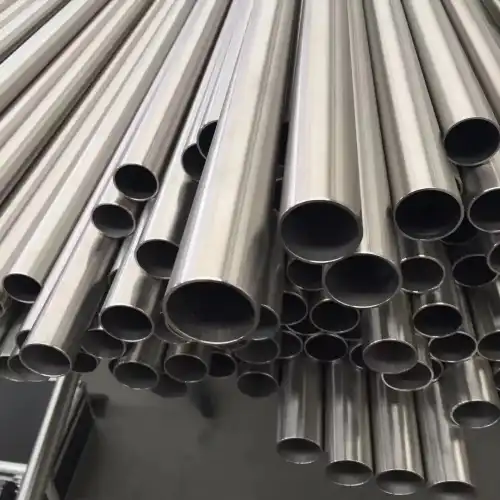
Understanding Welded Titanium Tube Manufacturing Process
To keep the material's natural qualities, the temperature, atmosphere, and welding factors must be carefully controlled when making welded titanium tubes. Unlike options that are smooth, welded construction lets you make parts with bigger diameters and at a lower cost for certain uses.TIG (Tungsten Inert Gas) welding is used in modern methods, but the atmosphere must be managed. This process makes sure that the tube is completely penetrated and keeps it from getting contaminated, which could affect how well it works. Welding is usually done in a place with a lot of oxygen, which keeps the titanium from oxidizing during the critical heating phase. Ultrasonic testing, x-ray viewing, and pressure testing to check the stability of the weld are all quality control methods. These strict rules make sure that welded titanium pipes can handle the tough conditions of fields where failure is not a choice. Depending on the grade and use, a heat treatment after the weld may be needed. This process gets rid of any remaining stresses and improves the microstructure so it works better.
Key Titanium Grades for Welded Tube Applications
The most common type of material for welded tube building is grade 2 titanium. This grade is economically pure and has good formability and weldability as well as good rust protection. Because it is moderately strong, it works well in heat exchanges and tools used in chemical processing. Because Grade 5 (Ti-6Al-4V) is stronger than other grades, it is the best choice for aircraft use. This alpha-beta metal keeps its great mechanical qualities at high temperatures and has great resistance to wear. Grade 9 (Ti-3Al-2.5V) is a good middle ground between Grade 2 and Grade 8. It is stronger than Grade 2 and still resists rust very well. This grade is used a lot in naval engineering and building platforms offshore. Grade 12 (Ti-0.3Mo-0.8Ni) is better at resisting rust in places where the amount of metal present is low. This grade is often asked for in the chemical and petroleum businesses when hydrochloric acid or other strong media are to be used. Medical-grade titanium (Grade 23) is biocompatible and can be used to make surgical instruments and implants. This extra-low interstitial version of Grade 5 makes sure that it works best in cellular settings.
ASTM Standards and Specifications
ASTM B338 is the main standard for making both smooth and welded titanium tubes. For different grades, this standard sets the required chemical makeup, limits for size, and mechanical property requirements. The standard says that differences in wall thickness are allowed as long as they don't go beyond ±10% for normal grades. Outside width limits are usually between ±0.005 and ±0.015 inches, but this can change based on the size of the tube and the needs of the application. Chemical makeup boundaries make sure that all production lots work the same way. Each heat of material is thoroughly tested to see if it meets certain standards for elements like iron, oxygen, nitrogen, hydrogen, aluminum, vanadium, and oxygen. Measurements of tensile strength, yield strength, and stretch are needed for mechanical tests. For reliable success in service applications, these qualities must be within certain areas. For uses that hold pressure, other standards, like the ASME Boiler and Pressure Vessel Code, offer advice. For important installs, these specs cover design factors, allowed loads, and safety issues.
Dimensional Specifications and Tolerances
Welded titanium tubes usually come in outside sizes ranging from 1/4 inch to 24 inches, so they can be used in a variety of situations. For heavy-wall uses, wall thicknesses range from 0.035 inches to several inches. Length specs can be changed to fit the needs of the job. Standard lengths come in 10-foot, 20-foot, and 40-foot pieces. Custom cutting services let you get the exact length you need while reducing waste. Different uses have different surface finish needs. For most industry uses, a normal mill finish is fine. For certain uses, better finishes are available, such as bright annealed, pickled, or polished surfaces. Tolerances for straightness make sure that everything fits right during fitting. Standard standards usually allow for a maximum of 1/8 inch of variation for every 5 feet of length, but tighter limits can be made if needed. There are different ways to prepare the ends, such as with regular ends, rounded ends, or threaded links. The angles for beveling are usually between 30 and 37.5 degrees, which are the same angles used for preparing pipes.
Industry-Specific Applications and Requirements
For bad service users, the oil and gas businesses need materials that don't rust easily. Compliance with NACE MR0175 makes sure that the system can work in hydrogen sulfide conditions that are typical in downhole activities. For aerospace uses, strict material tracking and approval paperwork are needed. Each piece of aircraft titanium tubing comes with a full mill test report that lists the metal's chemical makeup, mechanical qualities, and history of heat treatment. Titanium tube is used to build heat exchangers in chemical processing plants, especially chlor-alkali plants and chemical synthesis activities. Because the material doesn't crack under salt stress, it is perfect for these tough conditions . Titanium is resistant to rusting by seawater, which is useful in marine engineering. Titanium tube is used in difficult marine settings for a long time on offshore bases, water plants, and naval systems. To make medical devices, safe materials that follow FDA rules are needed. Medical-grade titanium tubing goes through extra steps of processing to make sure the surface is clean and safe for living things.
Quality Control and Testing Procedures
Inspection of arriving raw materials, including welded titanium tube, is the first step in complete quality control. Chemical analysis checks that the makeup is correct, and measurement checking makes sure that the pieces are the right size for welding. In-process tracking includes recording welding parameters in real time and checking the quality of the weld visually. To keep results constant, automated systems keep track of current, voltage, trip speed, and the flow of protective gas. Non-destructive testing methods check the quality of the weld without damaging the final product. Ultrasonic testing finds internal breaks, and x-ray testing keeps a lasting record of the quality of the weld. Hydrostatic pressure testing makes sure that the structure is still strong when it is in use. Test forces usually go above and beyond what was planned by certain safety factors. This makes sure that the product works reliably throughout its entire lifecycle . Each package comes with certification paperwork that lets you follow the whole process, from the raw materials to the final review. These records meet the quality standards of the company and the requirements of the law.
Corrosion Resistance Properties
Titanium is very resistant to rust because it can form a steady oxide layer in most conditions. When this passive film gets hurt, it quickly heals itself, protecting itself from further attack. Titanium works better than other materials in seawater uses. The fact that it doesn't rust, pit, or corrode in general makes it perfect for naval work. Acidic, alkaline, and chlorine chemical conditions don't pose much of a threat to titanium types that have been carefully chosen. Choosing the right grade relies on the weather, chemical amounts, and working conditions. Titanium tube can be used in high-temperature environments without any protective coverings because it doesn't oxidize at high temperatures. This trait is useful in heat exchangers and other thermal handling tasks. Stress corrosion cracking protection gives you peace of mind in situations that are under a lot of stress. Titanium, unlike many other materials, stays strong even when it is loaded with both mechanical and chemical forces.
Cost Considerations and Economic Benefits
Titanium tubing costs more than other materials at first, but it is often more cost-effective over its entire life. Higher initial investments are balanced out by lower upkeep needs and longer work lives. Downtime caused by corrosion has a big effect on the economy of industrial processes. Titanium is resistant to most toxic conditions, so it doesn't have to be shut down unexpectedly, which would mean lost production. Getting rid of extra weight is especially useful in aircraft and marine uses. Titanium has a high strength-to-weight ratio, which lets structures be optimized, and fuel economy be raised. Some ways to lower maintenance costs are to get rid of protected coating systems, check things less often, and repair things more often. These things have a big effect on the total cost of ownership for changes. Because titanium has so many unique properties, it can be used to improve design. Material cost increases are often balanced out by thinner walls, lower safety factors, and simpler designs.
Conclusion
Welded titanium tubes represent a critical component in modern industrial applications where performance, reliability, and longevity are paramount. Understanding the specifications, grades, and manufacturing standards enables informed decision-making for project success. From aerospace hydraulic systems to chemical processing equipment, the right titanium tubing selection ensures optimal performance while minimizing lifecycle costs. The comprehensive standards framework, combined with rigorous quality control procedures, provides confidence in material performance across diverse operating conditions. As industries continue to demand higher-performance materials, welded titanium tubing remains at the forefront of advanced engineering solutions.
Partner with LINHUI TITANIUM for Premium Welded Titanium Tube Solutions
LINHUI TITANIUM stands ready as your trusted welded titanium tube manufacturer, combining 21 years of expertise with state-of-the-art production capabilities. Our comprehensive certifications, including ISO, PED, and NACE compliance, ensure your projects meet the most stringent international standards. With 800 tons of annual production capacity across two factories and 30 production lines, we deliver reliable supply solutions for your bulk requirements. Contact us at linhui@lhtitanium.com to discuss your specific titanium tubing needs.
References
1. American Society for Testing and Materials. "Standard Specification for Seamless and Welded Titanium and Titanium Alloy Tubes for Condensers and Heat Exchangers." ASTM B338-18, 2018.
2. Boyer, R., Welsch, G., and Collings, E.W. "Materials Properties Handbook: Titanium Alloys." ASM International, Materials Park, Ohio, 1994.
3. Donachie, Matthew J. "Titanium: A Technical Guide, 2nd Edition." ASM International, Materials Park, Ohio, 2000.
4. National Association of Corrosion Engineers. "Petroleum and Natural Gas Industries - Materials for Use in H2S-Containing Environments in Oil and Gas Production." NACE MR0175/ISO 15156, 2015.
5. Schutz, R.W. and Thomas, D.E. "Corrosion of Titanium and Titanium Alloys in Marine Environments." Corrosion Engineering Handbook, Marcel Dekker Inc., New York, 1996.
6. American Society of Mechanical Engineers. "ASME Boiler and Pressure Vessel Code, Section II - Materials Properties." ASME International, New York, 2019.









