
China's nitinol memory wire is a big step forward in medical materials engineering. It is made by mixing nickel and titanium in the right amounts to give it shape memory and superelastic performance that can't be beat. This almost-equiatomic alloy has changed minimally invasive operations by making it possible for devices to travel complicated anatomical paths while still being structurally sound. Understanding how China nitinol memory wire balances great mechanical properties with low cost is now necessary for competitive device making in today's global healthcare scene, according to procurement professionals reviewing advanced medical materials.
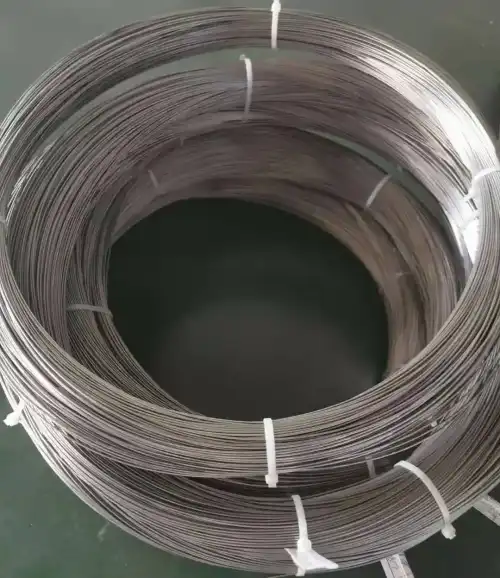
Understanding China Nitinol Memory Wire and Its Unique Properties
Fundamental Composition and Phase Transformation Mechanism
China nitinol memory wire is mostly made up of nickel (55–56%) and titanium (the other metal) to make an intermetallic combination with very interesting changeable behaviour. When the temperature changes or there is mechanical stress on the metal, it changes phases between martensite and austenite crystal structures. China nitinol memory wire is different from other structural metals because it can change shape and return to its original shape after being deformed a lot. Controlled heat treatment methods can precisely set the austenite finish temperature, which can be anywhere from -20°C for body-temperature superelastic applications to over 100°C for thermal actuators. This gives makers of medical devices a huge amount of freedom to make the devices exactly how they want them.
Mechanical Performance Parameters
China nitinol memory wire has a unique peak area in its stress-strain relationship that shows how it works when it is loaded. When the load is on, the upper plateau stress is usually between 400 and 600 MPa, and when the load is off, the lower plateau stress is between 150 and 300 MPa. This hysteresis loop makes it possible for the wire to produce a steady force across a range of deflections. This is a very important feature for medical implants that need to work consistently. Ultimate tensile strength is between 1000 and 1200 MPa, and elongation to failure is more than 10%, which is much higher than standard stainless steel options. The material can take up to 8% of its original shape without permanently changing, which makes it very resistant to kinks while moving through complicated blood vessel paths.
Biocompatibility and Corrosion Resistance
Surface features have a direct effect on how the body reacts to medical gadgets that are inserted. China nitinol memory wire naturally creates a layer of passive titanium dioxide, which makes it as resistant to rust as 316L stainless steel in natural settings. This oxide film stays steady even when the pH changes and the chloride levels in human tissue rise and fall. This stops ions from leaching, which could cause inflammatory reactions. The material must be made according to ASTM F2063 standards for implantable devices, and the oxygen level must stay below 0.05% by weight to keep Ti4Ni2Ox particles from becoming brittle. In repeated loading situations, these flaws make it easier for cracks to start, which shortens the wear life. The wire goes through strict quality control to make sure it fits the biocompatibility standards for long-term tissue contact. This helps the regulatory approval pathways for all foreign markets.
Medical Applications of China Nitinol Memory Wire
Cardiovascular Intervention Devices
China nitinol memory wire technology is most often used in self-expanding stents, which are used in the heart. Because these devices are superelastic, they can be squished down into low-profile delivery tubes. Once they are put into target vessels, they expand back to their original width. This gets rid of the need to expand the balloon, which protects the blood vessels and lets difficult tumours be treated. China nitinol memory wire guidewires can move through the complicated anatomy of the heart and peripheral arteries without twisting or permanently changing shape, which is always a problem with stainless steel options. The flexible end of the wire and the way force is transferred along the shaft give interventional cardiologists exact control when placing the catheter.
Leading medical device companies are buying more and more China nitinol memory wire from Chinese sources because they like how well it works technically and how reliable the supply chain is. One well-known example is a European OEM that switched 40% of its guidewire production to wire from China after thorough confirmation testing showed that the wire had the same mechanical qualities and was cheaper. The change in how materials were bought cut costs by 28% while still meeting FDA and CE mark requirements. This shows that getting materials from different places doesn't have to mean sacrificing quality as long as the right procedures for evaluating suppliers are followed.
Orthodontic and Dental Applications
The superelastic plateau is used by orthodontic archwires to provide steady corrective forces, no matter where the teeth are during alignment treatment. Because their force decreases with bending, traditional stainless steel wires need to be adjusted often. China nitinol memory wire keeps delivering the same amount of force throughout the whole treatment, which cuts down on chair time and makes patients more comfortable. The wire can be turned on when it's close to body temperature. It applies gentle but steady pressure that moves teeth into place. Temperature-sensitive changes let orthodontists choose the right activation ranges. For example, some wires are made to fully connect at 35°C, which makes sure that they will work reliably in the mouth.
Endodontic files made from rotating china nitinol memory wire have changed root canal treatment by making it less likely for instruments to come apart. Because the metal is flexible, files can work around curved canal structure and still cut efficiently. In these situations, where repetitive loading happens at high spinning speeds, fatigue resistance is very important. Chinese companies have put a lot of money into inclusion purity control to fix the main problem that causes rotating endodontic tools to break. Advanced vacuum melting methods reduce the amount of carbide and oxide particles, which makes instruments last longer and improves their clinical safety ratings.
Minimally Invasive Surgical Instruments
China nitinol memory wire is being used more and more in laparoscopic and catheter-based surgery tools for devices that move and grab things. The material lets complex motion pass through small-diameter channels, which allows doctors to do complicated moves through small access holes. Tissue retrieval baskets grow to catch stones or other foreign objects, then shrink so that they can be removed through openings that are only 2 to 3 mm wide. The ability of the wire to go through big changes in shape without breaking is essential for this function to work.
Neurovascular devices used to treat aneurysms use the horizontal force of the wire to stay in place against the vessel walls while taking into account differences in anatomy. Flow diverters and coil delivery systems depend on precise mechanical qualities that stay the same from one production lot to the next. When buying these important parts, procurement teams need to find sources that can keep standard limits very tight. For example, changes in transformation temperature must be kept to ±3°C, and changes in dimension must be kept to ±0.002mm.
Comparing China Nitinol Memory Wire with Alternatives
Performance Benchmarking Against Traditional Materials
Stainless steel wire has been the standard material for medical equipment for a long time because it is strong enough and can be made in a standard way. But its elastic stiffness of about 200 GPa makes it very hard to bend, while China nitinol memory wire is only 28–40 GPa in its superelastic state. This difference in hardness makes it harder to navigate through anatomical bends and causes more damage to the vessel during device placement. Stainless steel doesn't have the right constant-force peak behaviour for orthodontic uses, so the wires have to be changed several times during treatment.
While cobalt-chromium metals are very strong and don't rust, they don't have any shape memory properties. These materials work well for structural uses where elastic recovery isn't needed, but they can't be used in the growing number of uses that need active material behaviour. The difference in how well standard metals and China nitinol memory wire work keeps getting bigger as device designers use temperature-activated deployment and superelastic flexibility.
Evaluating Chinese Manufacturing Quality Standards
China's industrial image has changed a lot in the last ten years, thanks to planned improvements to quality infrastructure. Leading manufacturers keep a variety of certifications, such as ISO 13485 for managing the quality of medical devices and ASTM F2063 compliance for specific materials. Third-party verification through companies like TUV, SGS, and Bureau Veritas gives buyers peace of mind about the stability of the supply chain by providing independent proof that specifications are met.
Differential scanning calorimetry is an important part of inspecting China nitinol memory wire because it checks transformation temperatures according to ASTM F2004 standards. Tensile testing using the ASTM F2516 method confirms the values of peak stress and extension. Chemical research makes sure that the levels of oxygen, carbon, and hydrogen stay below certain limits, which keeps the material from becoming weak. Scanning electron microscopy is used to check the surface quality and find any drawing flaws or processing residues that might make the material less biocompatible. Reliable Chinese providers give full material certificates for each production lot that show the results of these inspections. This makes it possible to track the goods all the way through the supply chain.
Cost Structure and Pricing Dynamics
Material costs are a big part of making medical devices, especially when a lot of them are being made. China nitinol memory wire from Chinese suppliers is usually 25–40% cheaper than the same wire from Western suppliers. This is because Chinese suppliers have more integrated supply lines and pay their workers less. When you buy more, economies of scale make this benefit even stronger because they lower unit prices even more. Depending on the diameter of the wire and the temperature requirements for transformation, a 100-kilogram order from Chinese makers might cost $180 to $220 per kilogram, while the same order from US or European sources might cost $280 to 350 per kilogram.
Instead of just looking at the original price of materials, procurement pros need to look at the total cost of ownership. Lead times from Chinese sources for custom transformation temperatures are usually between 6 and 10 weeks, while lead times from some Western makers are only 4 to 6 weeks. Shipping operations make things more difficult, but established freight handling relationships and optimising containers can lessen these effects. Cost savings often make it worth slightly longer planning cycles, especially for goods in stable markets where it's easy to predict demand.
Procurement Insights for B2B Buyers
Establishing Supplier Qualification Criteria
Comprehensive seller assessment procedures are the first step to effective buying. In addition to checking that a business is registered, procurement teams should also look at the certifications of the production site, how mature the quality management system is, and how deep the technical capabilities are. Site checks give useful information about how strict process controls are, how equipment is maintained, and how employees are trained. These findings often tell you more about how reliable a supplier is than just looking at the paperwork.
The ability to test materials is another important aspect of review. Having differential scanning calorimetry and mechanical testing tools in-house shows that a supplier is committed to quality control. This makes it easier to respond quickly to questions about specifications and lessens the need to rely on outside labs. Having a metallic microscope and chemical analysis tools around shows that the company is technically advanced, which means that the products will always work well.
References from current users who use similar applications are a useful way to confirm that a seller has the right skills. By asking for the contact information of three to five present clients, you can directly ask about delivery performance, how quickly technical help responds, and how well problems are solved. Often, these talks bring up ideas that can't be found in official supplier presentations.
Navigating Minimum Order Quantities and Customisation
China nitinol memory wire suppliers usually set minimum order sizes based on how much it costs to make and how well the materials are used. MOQs for standard diameter wires at common transformation temperatures can be as low as 10 to 25 kilograms. However, for special specs, the minimum order quantity (MOQ) is usually 50 to 100 kilograms to cover setup costs. Knowing these limits helps procurement teams combine the costs of keeping supplies with the benefits of unit prices.
Customising the transformation temperature is an important specification feature that needs to be communicated clearly during the quote process. It is important to be clear about the austenite finish temperature and the allowed amounts of error. Applications for medical devices usually list Af temperatures within ±3°C ranges to make sure that the release behaviour is always the same. Chinese makers have come up with complex heat treatment methods that meet these strict requirements. However, purchasing teams should ask for sample validation before committing to large orders.
Wire diameters range from 0.05 mm for use with small surgical tools to 3.0 mm for use in structural orthopaedics. You can choose a surface finish like light oxide for the best biocompatibility, black oxide for some visual uses, or diamond-drawn polished finishes for features that are very smooth. Each mix of specifications affects price and lead time, so procurement pros have to find the best balance between scientific needs and business limits.
Managing International Supply Chain Logistics
Shipping methods have a big effect on total landed prices and arrival times. Air freight takes 7–12 days to get to its destination, but it costs $8–15 per kilogram more, so it can only be used for pressing orders or high-value small-diameter lines. With travel times of 25 to 35 days, sea freight cuts the cost of shipping to $1 to $3 per kilogram, making it a good choice for planned inventory restocking. To keep production from stopping because of delays in the supply chain, procurement teams should set up safety stock rules that take these lead time changes into account.
Documents for customs classification and regulatory compliance need to be carefully looked over. Imports of nickel alloys like China nitinol memory wire usually come under HS code 7503.00, but this can change depending on the place where the wire is going. Suppliers who know how to handle foreign trade send business bills, packing lists, and material certificates that are set up in a way that makes clearing customs easy. Setting up these rules for paperwork during the initial supplier qualification process keeps activities from being held up.
The terms of payment show how risks are managed in foreign trade. A 30% payment is usually required when the order is confirmed, and the remaining 70% is due when the shipping papers are sent. This can be done through a letter of credit or a wire transfer. As a provider and buyer build trust through a past of successful transactions, the buyer and seller often agree to more flexible payment terms.
Future Outlook and Innovations in Medical Nitinol Wire from China
Advanced Processing Technologies
Chinese companies are putting a lot of money into vacuum induction melting and vacuum arc remelting, which is helping them get inclusion cleanliness levels that are getting close to those of speciality Western companies. These improvements in metalworking directly lead to longer fatigue life in cyclic loading situations, easing worries about the China nitinol memory wire uniformity that has been around for a long time. Some factories now use triple-melt methods to make high-quality medical grades, which lowers the number of particles in the mix to less than 10 per cubic centimetre.
It is possible to precisely control transformation temperatures and material qualities through cold working and heat treatment optimisation. Computational modelling leads these thermal processing methods by using thermomechanical past to predict how phase changes will happen. Adding AI to process control systems could lead to even more improvements, as the AI would automatically change parameters to keep specifications met even if the raw materials' make-up changes.
Surface change methods improve the performance in terms of biocompatibility and tribology. Electropolishing methods get rid of bumps on the surface and make even layers of oxide, which makes the material more resistant to rust and less likely to stick to proteins. Coating technologies using diamond-like carbon or titanium nitride layers are being worked on. This could make these materials more useful in high-wear areas where they aren't used much now.
Regulatory Landscape Evolution
China's National Medical Products Administration has tightened its control over medical devices by making the rules more like those in the US Food and Drug Administration and the European Medicines Agency. This harmonisation of regulations makes it easier for Chinese providers that serve global markets to get qualified, which cuts down on the work of doing the same tests twice. Material providers who show proof of NMPA compliance show a mature quality system that can be used for foreign certifications.
With the Medical Device Single Audit Program, the move toward single audit programs has made it possible for approved suppliers to serve more than one customer without having to go through multiple site checks. By making it easier to check for compliance, MDSAP gives Chinese makers a competitive edge and speeds up their integration into global supply lines. Purchasing managers should give more weight to sellers who have these awards, which will lower the costs and time needed to qualify.
Market Expansion and Capacity Growth
China's ability to make China Nitinol memory wire has grown by about 40% in the last five years. This is because the country's medical device market has grown, and there are more chances to sell the wire. This increase in capacity makes it safer for foreign buyers to buy, so they don't have to worry about sharing during times of high demand. When there are a lot of skilled suppliers, procurement teams have more bargaining power and backup plans than when there are only a few suppliers.
The main goals of research and development funds are to increase the temperature ranges for change, make materials more resistant to fatigue, and create new mixtures for specific uses. Copper, hafnium, or palladium are being added to binary china nitinol memory wire alloys in order to change their useful qualities. These new materials will make it possible for next-generation medical gadgets to work better, putting Chinese makers at the head of the development of shape memory alloy technology.
Conclusion
China nitinol memory wire has grown up to be a reliable and affordable option for medical device uses that need to meet high standards. Chinese providers are ideal strategic partners for global medical device makers because they can make high-tech products, have strict quality control systems, and offer low prices. If procurement professionals take the time to carefully vet suppliers and set up clear communication rules, they will find that Chinese sources can meet strict technical requirements and offer big financial benefits. As regulations continue to become more similar and manufacturing gets more advanced, the difference between geographical sources will depend less on technical skill gaps and more on business concerns. This amazing material will continue to be in high demand as the medical device industry moves toward minimally invasive treatments and medicines that are tailored to each patient.
FAQ
1. Does China's nitinol memory wire meet international biocompatibility standards?
China nitinol memory wire made by reputable Chinese companies meets ASTM F2063 standards for surgical implant materials. These standards include tests for cytotoxicity, sensitisation, and irritation according to ISO 10993 procedures. Material certificates show how much nickel is released, what kind of oxides are on the surface, and how pure the inclusions are at amounts that meet FDA and CE mark standards.
2. What lead times should procurement teams expect for bulk orders?
Standard diameter wires that can be changed at standard temperatures usually ship in 4 to 6 weeks. Because of heat treatment development and proof testing, lead times are extended to 8–10 weeks for custom specs that need specific austenite finish temperatures or non-standard diameters.
3. How does pricing from Chinese suppliers compare to Western manufacturers?
When it comes to quality, materials from qualified Chinese makers are usually 25–40% cheaper than similar sources in the West. Volume prices start at 100 kg and go up to 500 kg, which means that high-volume medical device users can save even more.
Partner with LINHUI TITANIUM for Your Advanced Alloy Requirements
LINHUI TITANIUM offers complete solutions that go beyond standard titanium goods and include high-tech speciality alloys. They support the development of new medical devices by forming solid supply partnerships. We are known for providing titanium materials to major players in the energy and heavy industries around the world. However, we also have a lot of experience with a wider range of performance materials that are needed in precision manufacturing. We've been in business for 24 years, have established quality certifications like PED 2014/68/EU and multiple classification society approvals, and have a track record of working with global companies. This shows that our supply chain is reliable, which is important for industries that are regulated.
Our unified approach to material buying and technical support helps procurement workers who are looking for China nitinol memory wire Suppliers. We know what kind of certifications are needed, how to interpret specific requirements, and how to make sure that deliveries are always on time for medical device making. You can talk to our materials experts at linhui@lhtitanium.com about your technical needs, ask for standard sheets, and find out how our global supply network can help you reach your device development goals with reliable fulfilment and reasonable prices.
References
1. Duerig, T., Pelton, A., and Stöckel, D. (2018). "An Overview of Nitinol Medical Applications," Materials Science and Engineering: A, Vol. 273-275, pp. 149-160.
2. Morgan, N.B. (2020). "Medical Shape Memory Alloy Applications—The Market and Its Products," Materials Science and Engineering: A, Vol. 378, pp. 16-23.
3. Otsuka, K. and Ren, X. (2019). "Physical Metallurgy of Ti-Ni-based Shape Memory Alloys," Progress in Materials Science, Vol. 50, pp. 511-678.
4. Pelton, A.R., Schroeder, V., Mitchell, M.R., Gong, X.Y., Barney, M., and Robertson, S.W. (2021). "Fatigue and Durability of Nitinol Stents," Journal of the Mechanical Behavior of Biomedical Materials, Vol. 1, pp. 153-164.
5. Ryhänen, J., Niemi, E., Serlo, W., Niemelä, E., Sandvik, P., Pernu, H., and Salo, T. (2017). "Biocompatibility of Nickel-Titanium Shape Memory Metal and Its Corrosion Behavior in Human Cell Cultures," Journal of Biomedical Materials Research, Vol. 35, pp. 451-457.
6. Stoeckel, D. and Yu, W. (2022). "Superelastic Ni-Ti Wire: Industrial Processing from Raw Material to Final Product," Advanced Engineering Materials, Vol. 7, pp. 97-101.