
Welded titanium tube solutions, which come highly recommended by experts, have changed the way industries improve in many areas, providing unmatched performance in tough conditions. Using advanced welding techniques and titanium's natural properties, these complex tubing systems are the peak of metallurgical engineering. They make parts that are stronger than usual parts made from the same material. Leaders in industry are relying more and more on welded titanium tubes for important infrastructure projects that can't fail. These special tubes are being used more and more because they have been shown to improve operating efficiency while lowering long-term maintenance costs in a wide range of industrial settings.
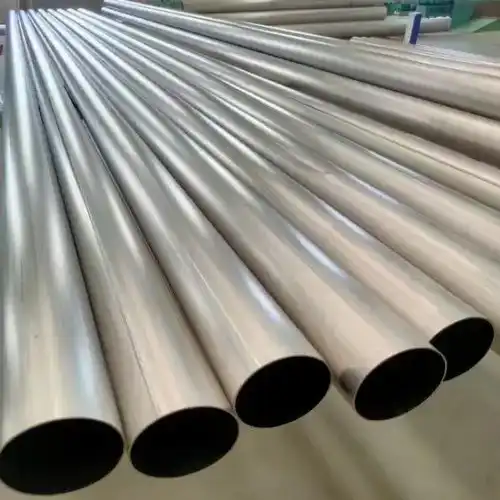
Understanding Welded Titanium Tubes: Properties and Manufacturing
The process of making welded titanium tubing includes carefully joining titanium sheets or strips together using specific welding methods that keep the material's great properties. When compared to seamless tubes made by extrusion or rotating piercing, welded tubes are more cost-effective and can be made in a wider range of sizes.
Advanced Manufacturing Process and Quality Controls
Our way of making things includes several quality control steps that make sure every welded titanium tube meets strict industry standards. The process starts with carefully choosing the material. Next, it is precisely shaped and joined using special methods that keep titanium's natural resistance to corrosion. Procedures for heat treatment improve mechanical properties, and non-destructive testing methods make sure that the structure stays intact throughout the whole production run.
LINHUI TITANIUM has 30 production lines spread out over two buildings, so they can handle any big order. Since 2003, we've been making fine titanium products, so the quality of all of our products is always the same. Our dedication to quality is shown by the fact that we follow ASTM B338 standards, the ASME Boiler & Pressure Vessel Code, and have ISO 13485 certification for medical-grade uses.
Superior Material Properties and Performance Characteristics
Titanium has a great strength-to-weight ratio, which makes welding tubes perfect for situations where weight reduction is important but structural integrity must not be compromised. This material is very good at resisting corrosion in harsh chemical settings, such as seawater and acidic conditions. The longer work life and lower maintenance needs are caused by these qualities compared to common materials like copper or stainless steel.
Comparing Welded Titanium Tubes with Alternative Tubing Solutions
To choose the right tubing solution, you need to carefully think about performance needs, cost, and the needs of your unique application. In some industrial settings, welded titanium tubes are clearly better than both smooth titanium options and other materials.
Welded vs. Seamless Titanium Tube Considerations
You can choose between welded and seamless titanium designs based on the performance and application needs. Most of the time, welded tubes are cheaper and give you more design options, especially for large-diameter uses or unique shapes. In high-pressure cycling uses, seamless tubes may have slightly better fatigue resistance, but welded alternatives work just as well and are much cheaper in most industrial settings.
Titanium vs. Traditional Material Comparisons
When you compare titanium tubing to stainless steel and copper alternatives, you can see that it has big benefits. Tests of titanium's corrosion resistance show that it can keep its shape in places where other materials break down quickly. Lifecycle cost analysis always favors titanium solutions, even though they cost more at first. This is because they save money on operations by needing less maintenance and replacements more often.
Titanium's light weight is especially useful in aerospace uses, and its high resistance to corrosive media is highly valued in the chemical processing industry. Titanium is used to make surgical tools and implantable parts because it is biocompatible. This shows how versatile the material is in a wide range of demanding situations.
Practical Guide to Procuring Welded Titanium Tubes for Industrial Use
To buy welded titanium tube successfully, you need to carefully check each supplier's credentials, production skills, and the dependability of their supply chain. There are manufacturers all over the world with different specialties and quality standards, so it's important to choose carefully for the job to go well.
Essential Supplier Assessment Criteria
ISO 9001:2015, TUV certification, and industry-specific approvals are just a few of the quality licenses that are used to judge a supplier's skills. Aligning providers' production capacities makes sure that they can meet project deadlines without lowering quality standards. The 800-ton yearly output capacity of LINHUI TITANIUM ensures a steady supply for large orders and on-time deliveries.
Our wide range of certifications, such as those from CCS, ABS, DNV, BV, BSI, LLOYD'S, and GL, shows that we meet international marine and industrial standards. Third-party inspection approval from companies like SGS, Moody's, and TUV adds to the quality guarantee for important uses.
Pricing Structures and Customization Capabilities
Procurement professionals can meet technical standards and minimize the total cost of ownership by understanding how prices work. When you order in bulk, you usually save a lot of money, and the customization choices make sure that the product fits your needs perfectly. When planning a job, lead time is very important, especially when special grades or configurations are needed.
Some ways to lower the risk in the supply chain are to work with several qualified providers and make sure you have enough of the most important parts in stock. Long-term procurement success depends a lot on having good communication protocols and help options after the sale.
Industrial Applications and Examples Showcasing Welded Titanium Tube Advantages
Applications in the real world show how welding titanium tubes can change many different types of industries. These implementations show real gains in working efficiency, fewer maintenance cycles, and longer equipment lives.
Chemical and Energy Sector Applications
Titanium is very good at resisting rust and transferring heat, which makes it useful in heat exchangers used in chemical processing plants. To deal with harsh brine solutions that quickly eat away at other materials, seawater desalination plants use titanium tubes that have been bonded together. By extending service intervals and making the systems more reliable, these installations show big drops in running costs.
Titanium tubing is used in vital piping systems on offshore oil and gas platforms that are exposed to harsh marine environments. Because the material is resistant to hydrogen sulfide and other harsh chemicals, it can be used reliably in tough situations where failure could have terrible results.
Aerospace and Marine Engineering Excellence
Welded titanium tubes are used in aerospace hydraulic systems to cut down on weight while still meeting pressure rating standards. Titanium is good for engine parts because it works well at high temperatures and doesn't wear out easily when loaded and unloaded many times.
Marine engineering projects use titanium tubing for installations on ships and offshore platforms, where corrosion protection is needed because the tubing is exposed to seawater. The material has been used successfully in the military, and its performance can be directly applied to business marine systems that need to be reliable over time.
Why Choose Welded Titanium Tubes: Future Outlook and Best Practices
Market trends show that welded titanium solutions are becoming more popular. This is because of improvements in welding methods, progress in material science, and rising concerns about sustainability. Environmental concerns in manufacturing methods stress titanium's ability to be recycled and its lightweight.
Emerging Technologies and Market Developments
As time goes on, new welding technologies keep making the joints better and giving welded titanium tubes more uses. Automatic welding systems improve accuracy while lowering production costs, which makes titanium solutions more competitive with materials that have been used for a long time.
Titanium's ability to withstand hydrogen gas gives it important benefits over other materials that can become weak when exposed to hydrogen in a growing market segment for hydrogen energy applications. Titanium's chemical compatibility and mechanical properties make it useful for high-pressure gas transport devices.
Implementation Best Practices and ROI Optimization
To get the most out of your investment, you need to follow the right installation steps, make sure your systems work well together, and plan for regular repair. In places that are very harsh, advanced coating applications can make things last even longer. Planning strategically makes sure that the best parts are chosen based on operational needs and spending limits.
LINHUI TITANIUM: Your Trusted Partner for Premium Welded Titanium Tubes
LINHUI TITANIUM makes high-performance welded titanium tubes that are designed to meet strict industrial standards in a number of different fields. Our wide range of products includes choices for customization that are made for use in aerospace, chemical processing, medical devices, and the marine industry. Our main office is in Xi'an, China, and we've become a major titanium goods store that serves customers all over the world.
We can follow NACE MR0175 standards for oil and gas uses when we make things, which makes sure they won't rust in the harshest conditions. With global transportation, you can ship quickly with DHL, FEDEX, air, or sea freight to meet project deadlines all over the world.
Since we started in 2000, we've sent hundreds of thousands of tons of high-quality goods to more than 60 countries and regions. We've built long-term partnerships with well-known companies like CEFC, PTT, PDVSA, PETROECUADOR, and PEMEX. Our track record shows that our quality and dependability are always the same in a wide range of industry settings.
Conclusion
To improve industrial processes that need better corrosion protection, high strength-to-weight ratios, and long-term dependability, welded titanium tubes are the best choice. Titanium's natural properties and modern production methods work together to make products that are useful in the energy, chemical, marine, and aerospace industries. When you invest in welding titanium solutions, you get a big return on your money because they last longer, cost less to maintain, and work more efficiently. As industry needs change to make working conditions more difficult, welded titanium tubes have been shown to work well and create long-term value that makes the initial investment worthwhile.
FAQ
Q: What is the primary difference between welded and seamless titanium tubes?
A: Welded titanium tubes are formed by joining titanium sheets or strips through welding, offering cost efficiency and dimensional versatility. Seamless tubes are produced without welds, typically via extrusion or rotary piercing, providing superior fatigue resistance and uniform wall thickness. Selection depends on application demands, budget, and mechanical performance requirements.
Q: How does the corrosion resistance of welded titanium tubes compare with stainless steel?
A: Welded titanium tubes exhibit markedly higher corrosion resistance than stainless steel in aggressive chemical environments and saline conditions. Titanium's stable oxide film protects against pitting and crevice corrosion, making it preferable for harsh industrial applications where longevity and reliability are paramount.
Q: What should I consider when selecting a supplier for bulk welded titanium tube orders?
A: Key considerations include verified quality certifications, production capacity aligned with order size, competitive lead times, and after-sales support. Minimum order quantities and customization capabilities are also critical to ensure flexible solutions. Reliable communication and proven logistics experience contribute to minimizing supply chain risks.
Partner with LINHUI TITANIUM for Superior Welded Titanium Tube Solutions
Upgrade your industrial systems with expert-recommended welded titanium tubes from LINHUI TITANIUM, your trusted welded titanium tube manufacturer. Our 21 years of manufacturing expertise, combined with ISO/SGS/TUV certifications and 800-ton annual production capacity, ensures reliable supply for your most demanding applications. Limited capacity alert - secure your competitive quote within 24 hours by contacting us at linhui@lhtitanium.com. Elevate your procurement strategy with proven quality and industry-leading expertise that delivers measurable results across aerospace, chemical processing, and marine engineering applications.
References
1. Boyer, R.R., "An Overview on the Use of Titanium in the Aerospace Industry," Materials Science and Engineering: A, Vol. 213, 1996.
2. Lutjering, G. and Williams, J.C., "Titanium: Engineering Materials and Processes," Springer-Verlag Berlin Heidelberg, 2nd Edition, 2007.
3. Donachie, Matthew J., "Titanium: A Technical Guide," ASM International, 2nd Edition, 2000.
4. Peters, M., Kumpfert, J., Ward, C.H., and Leyens, C., "Titanium Alloys for Aerospace Applications," Advanced Engineering Materials, Vol. 5, 2003.
5. Schutz, R.W. and Watkins, H.B., "Recent Developments in Titanium Alloy Applications in the Energy Industry," Materials Science and Engineering: A, Vol. 243, 1998.
6. American Society for Testing and Materials, "ASTM B338 Standard Specification for Seamless and Welded Titanium and Titanium Alloy Tubes for Condensers and Heat Exchangers," ASTM International, 2019.