
Working with a certified titanium grade 4 plate factory becomes a top concern when corporate buyers around the world are looking for dependable material providers. Direct workplace interaction gets rid of markups in distribution, makes the whole production chain clear, and makes sure that customers can get unique solutions made to fit their needs in the energy, chemical processing, aerospace, and marine industries. This detailed guide shows purchasing managers and engineering teams what they need to think about when they buy titanium grade 4 plates straight from factories.
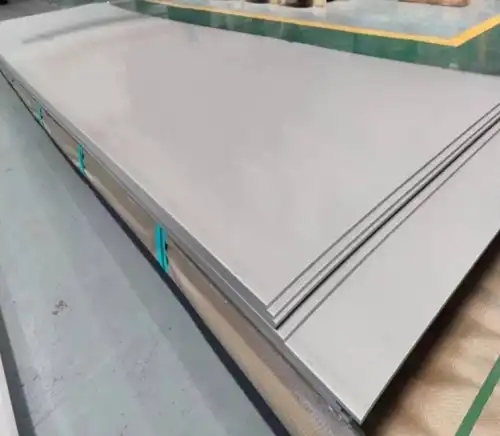
Understanding Titanium Grade 4 Plate – Essential Industry Insights
Material Composition and Mechanical Properties
Titanium grade 4 is commercially pure titanium that has intermediate elements that are managed. It has higher mechanical strength than lower grades. The chemical make-up has iron (0.50%), oxygen (0.40%), carbon (0.08%), nitrogen (0.05%), and hydrogen (0.015%) at their highest levels. Titanium makes up the rest. According to ASTM B265 standards, this exact composition has a maximum tensile strength of more than 550 MPa and a yield strength of more than 483 MPa.
The material is very resistant to corrosion in neutral, oxidizing, and slightly reducing conditions. We've seen how well it works in chemical processing situations where other types of stainless steel fail too soon. It can withstand long-term exposure to saltwater, chloride solutions, and organic acids that are common in petrochemical plants because the protective oxide layer forms on its own.
Comparative Analysis with Other Grades
Knowing how Grade 4 stacks up against other options helps buyers choose the right products. Grade 2 titanium is very resistant to rust but not as strong, so it can be used in construction applications that don't need to be very strong. By alloying, Grade 5 (Ti-6Al-4V) makes the metal much stronger, but it also makes the material more expensive and makes it harder to shape cold.
Grade 4 is the best of both worlds; it is 40% stronger than Grade 2 and still easy to work with when it comes to fabricability and weldability. In areas like building pressure vessels, heat exchangers, and pipe systems where both power and resistance to corrosion are important, this balance is very useful. When the right methods are used, the material still has enough flexibility to be cold-formed.
Industrial Applications Across Key Sectors
The main area where grade 4 titanium plates are used is in oil and gas activities. We've given materials for parts of offshore platforms, housings for underwater equipment, and process equipment that has to work in sour gas conditions. Because it doesn't crack when exposed to hydrogen sulfide or chloride, this material can't be used anywhere else.
Grade 4 plates are used for reactor tanks, column interiors, and heat transfer equipment in chemical processing plants. The substance can handle harsh chemicals like nitric acid, wet chlorine, and hypochlorite liquids. Aerospace companies use these plates in parts of the frames and engines, where the strength-to-weight ratio has a direct effect on performance. In marine settings, saltwater corrosion is a constant problem for propeller shafts, ballast tank parts, and equipment that desalinates seawater.
How to Choose the Right Titanium Grade 4 Plate Factory
Before choosing a production partner, it's important to make sure they have all the necessary foreign certifications. A good titanium grade 4 plate factory should have ISO 9001:2015 quality management approval, which shows that they have structured process controls.
Essential Certification Requirements
If you want to sell your products in Europe, you need to get PED 2014/68/EU approval, which shows that you follow the rules for pressure tools in Europe. Classification society approvals from DNV, ABS, CCS, BV, and Lloyd's Register show that the material is suitable for use in marine and offshore environments. The ASTM B265 approval shows that the materials meet American standards that are commonly used in North American projects. Other certificates, like OHSAS 18001 for health and safety at work and ISO 14001 for environmental management, show that the company is making good products.
Production Capacity and Customization Capabilities
Industrial buyers need providers that can handle large orders and keep the quality of the goods uniform. Look at how much a factory can make each year, what kind of tools it has, and how technically skilled its workers are. To work with titanium today, you need places to melt it in a vacuum, hot rolling mills, cold rolling tools, and heat treatment ovens that work in controlled atmospheres.
How flexible a maker is with customization shows if they can meet the needs of a certain project. We now have the tools to make plates that are between 0.5 mm and 100 mm thick, up to 3000 mm wide, and up to 12000 mm long. Different types of surface finishes, such as hot-rolled mill finish, cold-rolled, and annealed conditions, can be used to meet different production needs. Specialized processing, such as precise cutting, edge preparation, and surface cleaning, adds value and makes things easier for buyers.
Strategic Advantages of Chinese Manufacturing
China has become a world hub for making titanium because it has lower costs, a larger production scale, and better infrastructure for exports. In Xi'an, which is historically where the Belt and Road Initiative began, there are already supply lines that connect the places where raw materials come from to foreign logistics networks that help factories.
To meet foreign standards, Chinese companies have put a lot of money into high-tech production tools and quality control methods. Because the local market is so competitive, speed and customer service are always getting better. Support for strategic materials businesses from the government ensures steady long-term growth and scientific progress.
Benefits of Buying Directly from a Titanium Grade 4 Plate Factory
Why buying directly from a titanium grade 4 plate factory is better: Distribution markups can raise the cost of materials by 20–40%. Direct factory buying gets rid of these markups.
Cost Efficiency Through Disintermediation
Trading firms and middlemen add to the profit margin without adding to the value of the goods being made. By working directly with factories, buyers can get factory-level price models that are based on the real costs of production. Pricing tiers based on volume save you even more money when you place large orders. Instead of unclear prices based on the market, buyers can discuss clear pricing models that are linked to raw material trends and processing costs. This openness makes it possible to accurately price projects and predict costs over multi-year contracts.
Fewer transaction levels make payment terms easier to understand and speed up the processing of orders. With direct relationships, there are no delays in communication that come with plans with more than one party. We help buyers set up payment terms that work with their project's cash flow. For example, for big contracts, we set up lines of credit, payment plans with installments, and payments based on progress.
Customized Production Meeting Specific Requirements
Standard distributor stocks don't give you the freedom that titanium grade 4 plate factory manufacturing facilities do when it comes to specifications. Buyers can be very specific about the sizes, standards, edge preparations, and surface finishes that are needed for the next steps in the manufacturing process. Custom plate sizes cut down on trash during cutting, which lowers the total cost of purchase.
Within the limits of the grade, the chemical makeup can be improved to improve certain qualities. People who want the best corrosion protection might ask for less iron, while people who want the best strength might want oxygen levels close to the upper limits of the standard. You can change the settings of the heat process to get the hardness ranges and microstructural properties you want.
Enhanced Supply Chain Reliability
Direct connections with factories let you see how production is planned and how capacity is used. Buyers don't have to rely on distributors to always have stock; they can plan their buying cycles around when manufacturers need to make things. Long-term supply deals protect capacity during times when the market is tight, and spot buyers are affected by material shortages.
When buyers talk to manufacturing quality control teams directly, quality security is stronger. Inspection methods can be changed to fit the needs of each project, and third-party checks can be set up during production instead of after the goods have been shipped. Material test results, dimensional inspection records, and documents on surface quality make it possible to fully track an item.
Quality Control of Titanium Grade 4 Sheet: Critical Verification Standards
Rigorous Mill Test Certificate Validation
To buy titanium grade 4 sheet, Mill Test Certificates must be carefully checked against EN 10204 3.1 standards. These papers have important quality information on them that procurement teams need to check against the standards spelled out in the specifications. Knowing the important checking factors makes sure that the material is suitable for its intended use.
Comprehensive Mechanical Testing Protocols
Verification of mechanical properties makes sure that the material meets performance standards. According to ASTM E8 standards, tensile testing at room temperature shows that the maximum tensile strength is more than 550 MPa and the yield strength is more than 483 MPa. Test pieces cut from production sheets are loaded at a controlled strain rate until they break. This makes stress-strain graphs that show the elastic modulus, yield behavior, and elongation traits.
Microstructure Assessment and Dimensional Verification
A metallographic study shows the underlying structure of the material, which affects how well it works. When the material is properly treated, grade 4 titanium has a regular alpha-phase grain structure. Strength and resistance to fatigue are affected by grain size, with finer grains usually having better qualities. Optical microscopy and electron microscopy are used to look at the shape of the grains, how the phases are distributed, and any possible flaws, like spots or segregation.
Titanium Grade 4 Plate vs Alternative Materials and Grades – Making the Informed Choice
Performance Comparison with Grade 5 Titanium Alloy
The maximum tensile strength of Grade 5 titanium metal (Ti-6Al-4V) is at least 895 MPa, which is a lot higher than Grade 4. Adding aluminum and vanadium to this alpha-beta metal gives it better mechanical qualities. The higher price is worth it for aircraft structures and high-performance race parts that need the highest strength-to-weight ratios.
Grade 4 maintains advantages in specific applications despite lower absolute strength. The commercially pure mixture is more resistant to corrosion in some chemical conditions where grade 5 alloying elements make the composition less stable. Because grade 4 material doesn't have any strengthening steps that speed up the work hardening process, it's easier to cold form and join.
Evaluation Against Stainless Steel Alternatives
316L and other grades of stainless steel are popular options that are thought about when choosing a material. In many situations, austenitic stainless steels are better than titanium at resisting rust, and they cost less to make. Because it costs less to buy at first, stainless steel is a good choice for projects with limited funds.
Titanium grade 4 works better than stainless steel in places where chloride is present, where stainless steel gets pitting and cavity rust. Titanium has a clear edge when used in marine applications and chemical processes that use halides. When repair costs are taken into account, service life studies often show that titanium is better, even though it costs more at first.
Comparison with Nickel Alloys and Aluminum
Nickel-based superalloys are very good at resisting rust and working at high temperatures. Some alloys, like Hastelloy and Inconel, can handle very harsh chemical conditions better than titanium can. Nickel metals are much more expensive than titanium, but they are needed in places with strong reducing acids or temperatures above titanium's service range.
Titanium grade 4 works well and doesn't cost too much in a wide range of temperatures and corrosion conditions. Titanium's material costs are usually 40–60% less than those of similar nickel metals. This makes it possible to find cost-effective options for uses within its range of capabilities. Titanium is useful in many industrial settings because it is resistant to rust well, has good mechanical qualities, and doesn't cost too much.
Procurement Best Practices for B2B Buyers of Titanium Grade 4 Plates
Strategic Market Analysis and Price Benchmarking
To do good buying for a titanium grade 4 plate factory, you must first learn how the titanium market works. The quantity of titanium sponge affects the cost of raw materials, which in turn affects the cost of energy and the economics of production. Keeping an eye on London Metal Exchange indices and trade magazines gives you information about the market that helps you make negotiation plans.
By asking for specific price breakdowns from several manufacturers, you can set standards for competition. Compare quotes based on the same set of specifications, making sure that all providers offer the same sizes, quantities, and delivery times. Look at the different parts of the price, like the base material, processing fees, testing fees, and packing costs, to find ways to make the price even lower.
Managing Minimum Order Quantities and Lead Times
Manufacturing sites set minimum order amounts that are based on the costs of production. For setup costs to be worth it, rolling mill campaigns usually handle several tons of material per standard. Buyers can lessen the effect of MOQ by mixing orders with different specs or buying materials with other departments that need the same things.
Lead times depend on when the materials are available, how complicated the handling is, and how the production is planned. Standard orders from current stock are shipped within days, but special orders that need to be melted down and processed from scratch take 12 to 16 weeks. We keep a strategic inventory of widely stated measurements that lets us meet urgent needs quickly.
Quality Assurance and Compliance Verification
Using strong quality assurance methods guards against using materials that aren't up to par. In buy orders, list the certifications and testing procedures that must be followed. This will make compliance legally needed. Ask for witness testing so that your quality officials can watch as the product is being made and its mechanical and physical properties are checked.
Independent checks of material conformance are done by third-party testing companies. Set up a pre-shipment review that checks the sizes, the quality of the surface, the legibility of the markings, and the integrity of the packing. Before letting the package go, look over the Mill Test Certificates and compare the written results to the requirements in the standard.
Conclusion
Direct engagement with certified titanium grade 4 plate factories provides strategic advantages for industrial buyers. Saving money by cutting out middlemen, being able to customize products to exact needs, and making the supply chain more reliable all add up to a lot of value that goes beyond just buying materials. Understanding the features of materials, enforcing strict quality control, and building relationships with reliable suppliers set procurement teams up for success in tough industry settings. We've built our name by consistently delivering high-quality materials that meet international standards to large energy companies, EPC contractors, and industrial makers around the world.
FAQ
How can buyers verify the authenticity of titanium grade 4 plates?
Authenticity verification needs more than one step of proof. Ask for Mill Test Certificates that are in line with EN 10204 3.1 standards. These will show the chemical make-up through spectroscopic analysis and the mechanical qualities through standard testing. Check the credentials of the test laboratories and the licensing bodies that issue certificates. Independent material verification services are offered by third-party testing companies like SGS, Bureau Veritas, and TUV. Using X-ray fluorescence to look at the composition of sample coupons and tensile tests to check their mechanical features proves that the paperwork is correct. Check the manufacturer's certificates, such as ISO 9001, ASTM approvals, and classification society recommendations that prove the integrity of the production system for any titanium grade 4 plate factories.
What lead times and minimum order quantities should buyers expect?
Lead times depend on how complicated the specifications are and how much material is available. Standard sizes from stock that are already in stock ship within one to two weeks. Custom standards that need dedicated production runs usually take 10 to 14 weeks, which includes melting, processing, testing, and packing. Minimum order amounts depend on the size of the plates and are usually between 500 kg and 2000 kg, depending on the standard. Meeting MOQ levels more quickly can be done by combining different specs or coordinating purchases across divisions. We keep a strategic inventory of popular setups that allow us to support smaller order numbers and faster shipping for projects that need to be done right away.
Does customization affect pricing and delivery terms significantly?
Customization changes both prices and schedules, but it often ends up being worth it because it cuts down on waste and makes production more efficient. Dimensions that aren't normal may cost 5–15% more because of the extra costs of setting up the processing. If you need an unusual surface finish or a tight standard, you'll have to pay extra for extra finishing steps. When custom production schedules are taken into account, lead times are longer by 2 to 4 weeks compared to normal goods. Usually, the money spent on customization saves money in later stages of production because there is less waste from cuts, better use of materials, and better handling. Together with the customer, we look at the total cost effect and suggest ways to keep general project costs as low as possible.
Partner with LINHUI TITANIUM: Your Trusted Grade 4 Plate Manufacturer
LINHUI TITANIUM is ready to help you with your purchasing needs for a titanium grade 4 plate factory. They have a history of working with global industry leaders and can do so without any problems. Since 2000, we've sent hundreds of thousands of tons of high-quality titanium goods to more than 60 countries. We've done this by working with well-known companies like LUKOIL, CEFC, PTT, and PDVSA. Our long list of certifications, which includes PED 2014/68/EU, ISO 9001:2015, and approvals from DNV, ABS, CCS, BV, and Lloyd's Register, shows that we are always dedicated to quality and compliance.
Our integrated manufacturing plant in Xi'an, China, is like a supermarket for titanium goods. It has a lot of different grades, shapes, and specs from a single reliable source. We take away the hassle of buying while making sure that the standard of all of your material needs is the same. Our expert team works closely with the engineering groups to help with applications, give advice on choosing materials, and make solutions that are unique to each project. Email us at linhui@lhtitanium.com to talk about your needs and find out how a direct factory relationship can help your important industrial uses get better value, reliability, and performance.
References
1. American Society for Testing and Materials. ASTM B265-20: Standard Specification for Titanium and Titanium Alloy Strip, Sheet, and Plate. West Conshohocken: ASTM International, 2020.
2. European Committee for Standardization. EN 10204:2004 - Metallic Products - Types of Inspection Documents. Brussels: CEN, 2004.
3. Donachie, Matthew J. Titanium: A Technical Guide, 2nd Edition. Materials Park: ASM International, 2000.
4. Schutz, R.W. and Thomas, D.E. "Corrosion of Titanium and Titanium Alloys." ASM Handbook Volume 13B: Corrosion - Materials. Materials Park: ASM International, 2005.
5. Boyer, R., Welsch, G., and Collings, E.W. Materials Properties Handbook: Titanium Alloys. Materials Park: ASM International, 1994.
6. Peters, M., Kumpfert, J., Ward, C.H., and Leyens, C. "Titanium Alloys for Aerospace Applications." Advanced Engineering Materials, Volume 5, Issue 6, 2003.