
When OEM makers need precise parts that work very well in harsh situations, thin-walled titanium tube solutions become the best option across many important industries”. These high-tech tube parts use precision manufacturing methods along with titanium's natural strength-to-weight benefits to make solutions that meet the strictest requirements. We at LINHUI TITANIUM have spent 21 years developing these unique parts, which help our OEM partners achieve breakthrough performance in medical, energy, industrial, and aircraft settings. When it comes to durability and efficiency, our precision-engineered tubes are what set world-class OEM designs apart from other options.
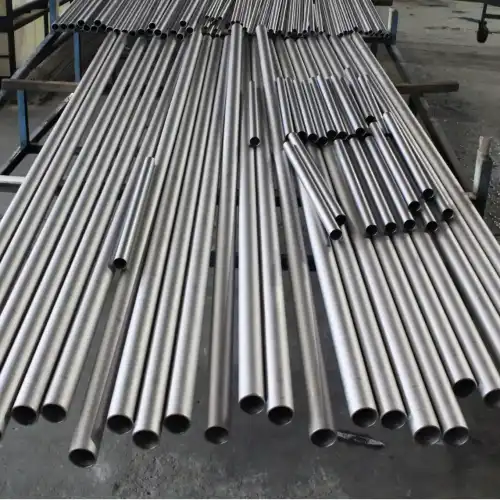
Understanding Thin-Walled Titanium Tubes for OEM Applications
When used in OEM applications, the titanium tube is better for engineering reasons because of its basic qualities that solve several design problems at once. These specialized parts have amazing mechanical qualities that make them essential in fields that need strong but lightweight solutions.
Exceptional Mechanical Properties and Performance Benefits
Thin-walled titanium tubes are stronger and lighter than standard materials. This lets OEM designers make systems lighter while still keeping their structural integrity. Titanium is very good at resisting corrosion, which makes these tubes very useful in tough situations where chemicals, saltwater, or high or low temperatures would damage other materials. Because they can keep working at high temperatures without breaking down, heat-resistant properties are very important for thermal control in aircraft and energy systems. Because thin-walled designs are more flexible, they can be used in complicated route and installation arrangements that thick-walled designs can't handle. This design flexibility lets OEM engineers make the best use of the room while still meeting performance standards in a wide range of situations.
Critical Comparison: Thin-Walled vs. Thick-Walled Titanium Tubes
Knowing the main differences between thin-walled and thick-walled titanium tubes helps OEM designers choose the best options for each job. For example, thin-walled versions work great in places where weight is important, like in aircraft fuel lines or medical device parts. Because they use less material, they are also cheaper to make in large quantities. Alternatives with thick walls are better at resisting pressure and supporting structures, but they are heavier and cost more in materials. The right wall thickness is eventually determined by the application setting. Thin-walled solutions are chosen when flexibility, weight reduction, and limited room are the most important factors.
Titanium Grades and International Standards for OEM Compliance
Titanium grades 1 and 2 are often used to make thin-walled tubes because they are the most resistant to rust. Grade 5 (Ti-6Al-4V), on the other hand, is stronger and is better for demanding structural uses. Each grade has its own benefits that are best for a certain OEM need or working setting. International standards like ASTM B337, ASTM B338, and ASME SB-338 make sure that quality and performance are the same all over the world. These certificates give OEM makers faith in the properties of the materials and the consistency of the manufacturing process, which is important for keeping products reliable and following the rules.
Advanced Manufacturing Processes for OEM Quality
Precision forming methods and advanced quality assurance protocols are used together in our production process to make sure that the parts we send to OEMs meet all of their exact requirements. Stress cracks are avoided by cold-rolling methods, which also keep the dimensions accurate within ±0.05mm. This precise level makes sure that the fit and performance are always the same in high-volume production settings. In hospital settings, electron beam welding gets rid of worries about pollution, and electrolytic polishing meets biocompatibility standards. Ultrasonic cleaning gets rid of tiny particles, a thin-walled titanium tube, and 100% eddy current testing makes sure that the wall thickness is the same all the way through each part.
Choosing the Right Thin-Walled Titanium Tube for Your OEM Design
To choose the best titanium tubing options, you need to carefully weigh performance factors against the needs of your individual application. As part of the selection process, operating environments, performance standards, and cost factors are looked at to find the best option.
Performance Criteria and Application-Specific Requirements
When it comes to OEM uses, strength standards are very different. For example, aerospace systems need different properties than medical devices or car parts. Some things to think about when it comes to durability are how resistant it is to fatigue, how it wears, and how stable its dimensions are over time under working loads. When there is a lot of thermal cycling or constant exposure to high temperatures, heat protection is very important. The amount of corrosion resistance needed depends on the surroundings. For example, marine settings need different levels of protection than clean medical settings. Knowing these exact needs lets you choose the right material and grade, which improves performance while keeping costs low.
Material Comparison: Titanium vs. Alternative Solutions
Compared to rival materials made of stainless steel, titanium tubes are more resistant to rust and much lighter, but they cost more at first. The strength-to-weight edge is especially strong in situations where system weight has a direct effect on how well or how efficiently it works. While carbon fiber materials may be lighter, they don't have the same temperature protection and chemical compatibility as titanium solutions. Lifecycle cost analysis often favors titanium tubes because they last longer and need less upkeep, which makes up for the higher starting cost through savings in operations.
Customization Possibilities and Design Optimization
People can change the thickness of the walls to get the best strength, weight, and flexibility for their unique OEM uses. There are different types of surface finishes, from normal mill finishes to processes that make the material biocompatible or better at resisting corrosion. With these customization options, OEM makers can get exact performance specs without having to pay extra for materials or labor. During manufacturing, complex design features like formed ends, specialized links, or built-in fixing holes can be added. When you use the knowledge of your suppliers during the planning phase, you can often find ways to optimize the process that lower costs and improve performance.
Optimizing Procurement for Custom Thin-Walled Titanium Tubes
To make good purchasing plans for titanium tubing solutions, you need to look closely at the skills, quality systems,thin-walled titanium tubes, and production powers of each provider. Because working with titanium is so complicated,you need sources with a track record of making precise products.
Supplier Evaluation and Certification Requirements
The first step in finding suitable providers is to look at their production capability, quality certifications, and ability to make things. ISO 9001:2015 is an important certification for quality management, and so are standards specific to the business, like AS9100D for aircraft uses or ISO 13485 for medical devices. These licenses show that you can do thorough quality control and follow the rules. Production skills should include the whole process of making something, from getting the raw materials to inspecting and checking the finished product. When compared to suppliers who rely on outside handling steps, those whose operations are integrated offer better quality control and shorter wait times.
Cost Considerations and Value Analysis
To figure out how much titanium tubes cost, you have to look at how much the materials cost, how hard the process is, and how much you need. The price of raw materials changes based on the market for titanium, and the price of handling depends on how complicated the specifications are and what quality standards are needed. Prices that are based on volume usually offer big benefits for buying bigger amounts. The total landed cost study looks at base prices plus shipping, handling, and any possible import taxes. Long-term value factors include how reliable the provider is, how consistent the quality is, and how well they can help with technical issues. These all affect the overall success of the buying process.
Streamlined Ordering and Supply Chain Management
Ordering methods that work well cut down on lead times and make buying easier. Specifications that are easy to understand, thorough drawings, and material certifications all make it easier to talk to each other and avoid mistakes. Electronic paperwork systems make it possible to quickly handle orders and keep track of their progress throughout the production cycle. Tracking tools for deliveries and proactive contact make sure that deliveries happen on time and work with production schedules. Support after the sale, such as expert help and warranty coverage, adds value and lowers risk for complicated OEM uses.
Enhancing OEM Designs Through Innovative Thin-Walled Titanium Solutions
Titanium tube improvements are being used more and more in modern OEM applications to gain a competitive edge through better performance and lower operating costs. These improvements are made in many different fields and businesses where titanium's special qualities allow for ground-breaking solutions.
Diverse Industry Applications and Performance Enhancement
Titanium tubes are used in aircraft to make fuel systems, hydraulic lines, and heat exchanges that are light but still meet strict safety and performance standards. Boeing and Airbus specifications identify titanium's benefits for key flight systems, where reducing weight has a direct effect on how much fuel is used and how far the aircraft can fly. Titanium's biocompatibility is used in medical devices like MRI parts and minimally invasive surgery tools. Titanium is important for medical equipment that works in harsh biological settings because it is not magnetic and doesn't rust. Seawater desalination condensers and geothermal pipe systems are two examples of uses in the energy sector where corrosion protection and temperature performance are very important. Titanium tubes are being used more and more by automakers for engine housings and EV battery cooling systems, where they help reduce weight and control temperature.
Manufacturing Advancements and Technology Evolution
As time goes on, precision forming methods keep getting better, allowing for tighter tolerances and more complicated shapes while still keeping the purity of the material. Advanced surface treatments make things last longer and last better by making them less likely to wear down and rust. Because of these advances in technology, thin-walled titanium tubes are now at the center of how OEM technologies are changing. Improving the speed of manufacturing cuts down on costs while keeping quality standards high. This makes titanium options available to a wider range of customers. Automated checking systems make sure that the quality is always the same while cutting down on costs and production times.
Market Trends and Competitive Advantages
As industries focus on being more efficient and protecting the environment, the market is growing drawn to options that are both strong and light. These trends are in line with titanium tubes, which allow systems to be lighter and use less energy in a wide range of situations. Adding titanium tubing options that improve product performance while lowering lifetime costs gives procurement workers a competitive edge. OEM makers are ahead of rivals who are still using old materials because they were early adopters of advanced titanium technologies.
Best Practices for Designing and Implementing Thin-Walled Titanium Tubes in OEM Products
To successfully add titanium tubes, you need to follow tried-and-true design principles and execution strategies that get the job done while reducing problems that could go wrong. These methods have been developed over many years of working in the field in a variety of settings.
Engineering Design Principles and Performance Optimization
Efficient load distribution design principles make sure that titanium tubes work within the best stress levels while also getting the most out of their structure. The right support space and fastening arrangements keep the structure from deflecting too much and putting too much stress on certain areas, which could affect its long-term dependability. When designing something together, you need to think about things like how to expand it for heat cycling and the best way to connect the parts so that the whole system stays together. Strategies for reducing stress focus on getting rid of sharp corners, making sure there are enough bend radii, and making sure that the wall thickness is spread out correctly across complicated shapes. These design features make the product last longer while keeping its shape under working loads.
Welding and Surface Treatment Selection
The right welding method depends on the job and the type of material being used. For medical jobs that need clean joins, electron beam welding is the best choice. Gas tungsten arc welding is a cost-effective way to get great results in a wide range of business settings. It may be necessary to do a heat treatment after the welding process to improve the mechanical qualities and ease any remaining stresses. Choosing the right surface treatment affects both performance and cost. For example, electrolytic polishing is better for biocompatibility, while normal finishes are fine for most commercial uses. Specialized coats can make surfaces more resistant to rust or give them specific properties that are needed for certain uses.
Common Challenges and Practical Solutions
Welding flaws are the most common quality problem in thin-walled titanium tubes. They are usually caused by contamination or not enough shielding gas coverage. Most welding problems can be avoided by following the right steps and keeping the work area clean. This also ensures that the quality of the joints stays the same. The complexity of the supply line can affect when things are delivered and how much they will cost. Keeping track of materials all the way through the supply chain makes sure that quality is consistent and lets any quality problems be fixed quickly. Working with providers who have knowledge and know how to process titanium properly reduces supply chain risks and makes sure that specifications are met.
Conclusion
Custom thin-walled titanium tube options are an important technology for OEM makers who want to gain a competitive edge by improving performance and lowering costs. The unique mix of strength, light weight, and resistance to corrosion makes titanium tubes necessary in situations where other materials can't meet the strict needs. To successfully adopt these high-tech solutions, you need to choose qualified providers with a track record of producing high-quality goods and complete quality systems that guarantee consistent performance in a wide range of situations.
FAQ
1. What wall thickness ranges are available for custom titanium tubes?
The wall thickness of our thin-walled titanium tubes can be anywhere from 0.18mm to 3.0mm, based on the width of the tube and the needs of the application. Standard tolerances are kept at ±0.05mm for most standards. Tighter tolerances are offered for important jobs that need higher accuracy.
2. Which titanium grades are best suited for medical device applications?
For medical uses, Grades 1 and 2 titanium are the most biocompatible. Grade 5 (Ti-6Al-4V), on the other hand, is stronger when structural performance is very important. All medical-grade materials come with the right licenses and material test certificates to make sure they meet FDA and ISO 13485 standards.
3. What lead times should be expected for custom thin-walled titanium tube orders?
Standard thin-walled titanium tube shapes usually take 15 days to make and send. However, complex custom specs can take up to 30 days, based on how complicated the geometry is and what other processing needs to be done. Our accelerated production schedule makes it possible for us to often meet urgent requests.
4. How do you ensure consistent quality across high-volume production runs?
Our quality control process includes using precise measuring tools to do a full dimensional check, ultrasonic cleaning to get rid of contaminants, and 100% eddy current testing to make sure the wall thickness is always the same. Statistical process control tracking keeps an eye on key factors during production to make sure that quality standards are always met.
5. What shipping and packaging options are available for international deliveries?
Export packaging includes foam-sealed boxes with VCI film protection against corrosion, which keeps the product's identity while it's being shipped internationally. You can choose from DHL, FedEx fast services, air freight, and sea freight for delivery, based on how quickly you need it and how much it costs.
Partner with LINHUI TITANIUM for Your Thin-Walled Titanium Tube Requirements
LinHui Titanium offers unique thin-walled titanium tube options that are the best in the world. They have been making these tubes for 21 years and have a history of working with thin-walled titanium tube global leaders in the industry. Our two state-of-the-art facilities run 30 production lines that can produce 800 tons of parts each year. This means that we can reliably serve your most important OEM projects. We are dedicated to quality achievement, as shown by our many certifications, such as ISO 9001:2015, PED 2014/68/EU, and aircraft AS9100D standards. Please email our technical team at linhui@lhtitanium.com to talk about your unique needs with thin-walled titanium tube makers who have experience and understand your need for precision.
References
1. Boyer, R., Welsch, G., and Collings, E.W. "Materials Properties Handbook: Titanium Alloys." ASM International Materials Park, Ohio, 1994.
2. Donachie, Matthew J. "Titanium: A Technical Guide, Second Edition." ASM International, 2000.
3. Lutjering, Gerd and Williams, James C. "Titanium: Engineering Materials and Processes." Springer-Verlag Berlin Heidelberg, 2007.
4. Rack, H.J. and Qazi, J.I. "Titanium alloys for biomedical applications." Materials Science and Engineering C, Volume 26, Issues 6-7, 2006.
5. Peters, M., Kumpfert, J., Ward, C.H., and Leyens, C. "Titanium Alloys for Aerospace Applications." Advanced Engineering Materials, Volume 5, Issue 6, 2003.
6. American Society for Testing and Materials. "ASTM B337 Standard Specification for Seamless and Welded Titanium and Titanium Alloy Pipe." ASTM International, West Conshohocken, PA, 2019.