
When OEM makers have to make important choices about what material to use in harsh conditions and high-pressure situations, ASTM B861 Titanium Pipe stands out as the best smooth option. This standard covers seamless titanium and titanium alloy pipes that are made to work well in high-temperature and ASTM B861 Titanium Pipe corrosion-resistant situations in a variety of challenging industry areas. Unlike welded pipes, these seamless pipes have consistent structural stability because they don't have any longitudinal weld joints, which often break when pressures change. With 34 different grades of titanium, ranging from widely pure Grade 2 to high-strength Grade 5 (Ti-6Al-4V), OEM buyers can get solutions that are specifically made to solve problems in petrochemical processing, flight hydraulics, and marine desalination systems.
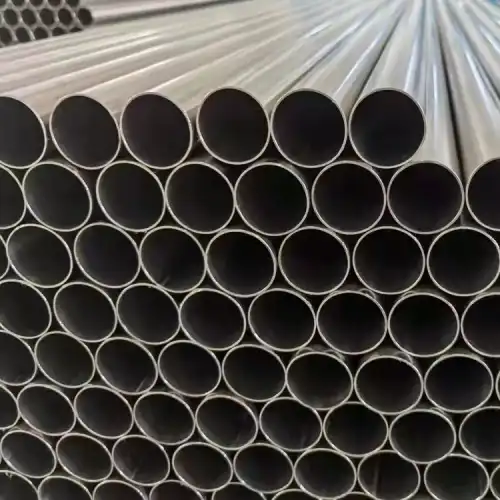
Understanding ASTM B861 Titanium Pipe and Its Specifications
To choose the correct seamless titanium pipe, you need to fully understand the technical details that have a direct effect on how well it works and how long the project lasts. The ASTM B861 Titanium Pipe standard sets strict rules that make sure quality is the same all along the world's supply lines.
Key Grades and Their Chemical Compositions
The standard covers a number of different types of titanium, each of which is designed to work in a different setting. As far as industrial purity goes, Grade 2 titanium is the most popular choice. It has no more than 0.25% oxygen and 0.30% iron, making it very easy to shape and very resistant to corrosion. This type is good for chemical processing jobs that need a modest amount of strength. The minimum compressive strength of Grade 5 titanium alloy, which is also known as Ti-6Al-4V, is 895 MPa, which is much higher than Grade 2's 345 MPa. This is because Grade 5 has about 6% aluminum and 4% vanadium. Palladium or nickel-molybdenum is added to Grade 7 and Grade 12 versions, making them more resistant to crevice corrosion in reducing acid environments where normal grades break down more quickly.
Dimensional Standards and Tolerances
Precision production is what makes a continuous pipe good. Our production follows the measurements set by ASME B36.19M. This makes sure that our products can be used with standard pipe fittings on foreign projects. Tolerances for wall thickness kept at ±10% ensure that pressure ratings stay the same during production runs. Outside diameters can be anywhere from 6mm to 114mm, so they can meet a wide range of OEM needs, from small hydraulic lines for aircraft to large transfer systems for chemical plants. Length choices usually range from 1000mm to 6000mm, but special lengths can be made to cut down on field welding and possible contamination points.
Manufacturing Excellence Through Advanced Processing
Our ASTM B861 Titanium Pipe products are made from vacuum arc remelted (VAR) titanium billets, which get rid of any impurities that could weaken the material. This first step of cleaning is necessary in situations where even a small amount of contamination can cause rust to speed up or a machine to break. When you combine advanced cold-rolling methods with precise CNC machining, you can get dimensions that are accurate to within ±0.1mm, which is much tighter than the usual limits in the industry. Post-process annealing processes improve the architecture of the material, making it more resistant to stress while keeping its flexibility. This controlled heat treatment works really well for high-pressure oil and gas pipes that are loaded and unloaded over and over again, as well as for aeroplane hydraulic systems that need to be resistant to fatigue over millions of cycles of operation. The seamless manufacturing method makes sure that the pipe wall has the same mechanical qualities all the way through, which stops the directional weakness that happens in welded designs. When you use rotary cutting or extrusion, you make regular grain structures that spread stress out evenly when the pressure is applied. This way of making things is why seamless pipes always work better than welded ones in situations where there are changes in pressure, changes in temperature, and contact with acidic media.
Critical Performance Benefits for OEM Applications
There are real benefits to using seamless titanium pipes that lead to lower running costs and higher safety margins. The material doesn't rust because when it comes in contact with air, a solid layer of titanium dioxide forms on the surface right away. This passive film can fix itself if it gets broken physically. It protects against pitting, crevice corrosion, and stress corrosion cracking in chloride-rich environments all the time. The strength-to-weight ratio is about 45% higher than that of stainless steel, which makes it possible to make lightweight systems that are very important in aerospace uses, where every kilogram affects fuel economy. The material's thermal conductivity makes it easier for power generation equipment to move heat consistently, and its nonmagnetic qualities, ASTM B861 Titanium Pipe, keep sensitive instruments in medical and research facilities from being affected.
Comparing ASTM B861 Titanium Pipe with Other Materials and Standards
Before committing to big orders, OEM buying teams often look at more than one material choice. Understanding the differences in performance lets you make smart choices that fit the needs of the job and your budget.
ASTM B861 Versus ASTM B862: Seamless Versus Welded Construction
Basically, the main difference between these standards is how they are made. ASTM B862 specifies the rules for welded titanium pipes that are made by shaping a flat sheet into a tube shape and then welding it longitudinally. Welded pipes are cheaper for bigger sizes and thinner walls, but the weld zone makes them more likely to break. Heat-affected areas next to welds may have changed grain structures that make them more likely to rust in harsh chemical conditions. Seamless pipes that meet ASTM B861 Titanium Pipe completely get rid of this problem because they have the same features all the way through the cross-section. In situations where hydrogen sulfide is present, this production difference is very important because weld zones can be attacked more quickly, which can cause catastrophic leaks.
Performance Against Stainless Steel Alternatives
Titanium pipes are better at resisting localised rust in chloride settings than austenitic stainless steels like 316L. When seawater or strong chloride solutions stay still, they can cause pitting and crevice rust in stainless steel, but titanium is completely immune to these conditions. Titanium has a lower mass (4.51 g/cm³ vs. 8.0 g/cm³ for stainless steel), which makes it easier to load and install. But titanium's higher starting material cost means that the whole process needs to be carefully looked at. When projects expect something to last 15 years or more in corrosive conditions, they usually end up with a lower total cost of ownership because they don't have to repair things as often and don't have to do as much upkeep.
Evaluation Against High-Nickel Alloys Like Inconel
Inconel and other related nickel-chromium-molybdenum metals work well in places where oxygen is present at high temperatures, and they are better at resisting sulfidation than titanium. But their density is close to that of steel, which means they don't have any weight benefits that are important for mobile uses. Titanium keeps its mechanical qualities at cryogenic temperatures, while Inconel breaks down. This makes it a better choice for tools used to handle LNG. Titanium is usually more cost-effective for corrosion-prone uses below 315°C, while Inconel is more cost-effective for high-temperature use above 450°C, where titanium starts to oxidise quickly.
Selecting Optimal Grades for Chemical Processing
For use in the chemical business, grades must be carefully matched to the conditions of the process. Grade 2 titanium works well with neutral chloride liquids and most reactive acids. Grade 7, which has between 0.1 and 0.25% palladium, is very resistant to reducing acids like hydrochloric acid and sulfuric acid over a wider range of concentrations and temperatures. With 0.2% to 0.4% molybdenum and 0.6% to 0.9% nickel, Grade 12 gives performance close to Grade 7 at a low cost in many reducing settings. OEMs that make equipment for chemical handling can use corrosion resistance charts that show how different chemicals react with different types of materials. This helps them choose the right materials from the start of the project.
Procurement Guide for Custom ASTM B861 Titanium Pipes
To get specialised titanium products through the global supply chain, you need to use strategic approaches to make sure quality, compliance, and on-time delivery. These realistic procurement suggestions come from our work with large EPC contractors and international companies.
Identifying Qualified Suppliers and Manufacturers
Getting titanium pipes that work well starts with carefully evaluating the suppliers. Manufacturers should have up-to-date ISO 9001:2015 approval that shows they know how to run a quality management system. Industry-specific certificates are more important. For example, PED 2014/68/EU compliance is needed for projects involving pressure equipment in Europe, and API 5LC certification makes it possible for use in the oil and gas industry. Classification society approvals from DNV, ABS, Lloyd's Register, and other similar groups prove that materials can be tracked and that the manufacturing process is controlled. LINHUI TITANIUM has a lot of different certifications, such as the Manufacturing License of Special Equipment of China, the TUV Nord AD2000-W0, and approvals from CCS, BV, BSI, and GL. Through centralised buying, our "Titanium Products Supermarket" model gives you access to a wide range of grades and specs, making it easier to get the ASTM B861 Titanium Pipe parts you need for complicated projects.
Understanding Pricing Structures and Cost Drivers
Titanium pipe prices depend on more than just the cost of the base metal. 40–60% of the total cost of a pipe goes to the raw materials. The price of titanium sponge changes based on world supply and demand. The more complicated the manufacturing process, the higher the costs. For example, tight tolerances, rare metal grades, and small-diameter thin-wall designs cost more because they are harder to make and have higher scrap rates. Order number has a big effect on unit economics; sales of more than 5 tons usually qualify for tiered price savings.
Managing Minimum Order Quantities and Custom Requirements
MOQ rules strike a mix between making things efficiently and giving customers a lot of freedom. According to the guideline, standard grade seamless pipes in typical sizes must carry at least 100 to 500 kg. Exotic metals or special sizes may need minimums of one to two tons to cover the costs of setting up the production line. When collaborative suppliers work on a project, they may combine orders or keep strategic supplies for combinations that are often asked for. Custom sizing is what sets prompt makers apart from commodity sellers. Our CNC cutting centres can handle outside sizes, wall thicknesses, and lengths that aren't available from other manufacturers. This adjustment gets rid of expensive extra steps and makes building simpler. During the initial question, giving thorough specs such as ASTM B861 Titanium Pipe dimensional tolerances, surface finish requirements (Ra values), straightness standards, and end preparation preferences speeds up the accuracy of quotes and planning for production.
Logistics Coordination and Quality Assurance
For international shipping of titanium pipes, careful logistics planning is needed to protect the quality of the product and get the best freight rates. Express companies like DHL and FedEx ship sample numbers, which let you quickly check out the supplier's skills and the material's properties. For large sales, ocean freight in containers is used under either FOB or CIF terms, based on what the buyer wants for controlling freight and managing risk. Protective packaging keeps surfaces from getting damaged while they are being shipped or stored. As a normal procedure, we put anti-scratch plastic film directly on the pipe surfaces and then bundle and secure them in wooden crates that meet ISPM-15 international phytosanitary standards. This multiple-layer protection keeps the surface in perfect condition, which is necessary for instant fitting without any extra cleaning or preparation. Every package comes with quality paperwork, such as material test results that have been approved by independent inspection agencies. If needed, third-party testing services from SGS, Bureau Veritas, TUV, or other well-known groups can add extra proof. Complete traceability is made possible by dimensional inspection reports, chemical analysis approvals, mechanical testing results, and heat treatment records. These help quality management systems and regulatory compliance checks.
Practical Applications and Industry Benefits of ASTM B861 Titanium Pipes
There is real value in seamless titanium pipes for both OEM makers and end users, as shown by their use in demanding industry areas. When these systems work well, they show material success that leads to operational excellence.
Chemical Processing Infrastructure
Titanium's resistance to corrosion is important for chemical plants that work with harsh media to keep their processes safe and effective. When Grade 7 seamless pipes are used in sulfuric acid transfer systems, they stay intact at temperatures up to 100°C, pressures above 40 bar, and concentrations ranging from very weak to 98%. Because of this performance, stainless steel or plastic-lined options don't need to be replaced as often. Hydrochloric acid service has similar problems that can be fixed by choosing the right grade. Chlor-alkali plants that work with wet chlorine gas use ASTM B861 Titanium Pipe all along their production lines. This keeps them from breaking down in terrible ways, which can happen when lower metals crack quickly from stress corrosion. The material is chemically inert in more ways than one. It is also resistant to rusting. Titanium pipes keep the process pure by keeping metal ions from getting into the process and lowering the quality of the products made in medicinal manufacturing and chip processing. This protection against pollution is very important in fields where small amounts of impurities can cause batches to be rejected and big financial losses.
Aerospace Engineering Applications
Weight-critical aeroplane systems use titanium's high strength-to-weight ratio to get performance that wouldn't be possible with heavy materials. Small-diameter seamless pipes are used to make hydraulic tubing that can work at pressures up to 5,000 psi and is still flexible enough to be routed through tight aircraft spaces. Suppliers to Boeing, Airbus, and regional aircraft makers make sure that their products meet the requirements of aerospace material specs AMS 4928 as well as ASTM B861. This makes sure that the materials can be tracked and that their properties meet safety standards for flight.
Marine and Offshore Platform Systems
Seawater is one of the most naturally acidic places, which makes it very hard for normal materials to work. Titanium cooling water systems are used on offshore oil rigs and can last for 25 years or more without any upkeep. Because of weathering, corrosion, and biofouling, the same systems made of copper-nickel metals need to be replaced every 8 to 12 years. Total lifetime costs are better for titanium, even though it costs more at first. This is especially true when you look at the costs of not being able to make things during repair breaks.
Power Generation Infrastructure
Geothermal power plants that get their power from naturally occurring hot brine have to deal with very harsh conditions that include high temperatures, dissolving salts, and aggressive gases like hydrogen sulfide. Grade 12 smooth titanium pipes carry geothermal fluids at temperatures up to 200°C. Installations in Iceland, New Zealand, and the Philippines have shown that these pipes can work for 15 years or more. This is very different from carbon steel pipes, which need to be replaced every two to three years in the same circumstances. Titanium is used in cooling systems at nuclear power plants because it doesn't crack when exposed to salt, which has caused problems with stainless steel installations. The material is non-magnetic, so it doesn't conflict with tracking equipment. This gives it more useful qualities than just resistance to corrosion.
How to Choose the Right ASTM B861 Titanium Pipe for Your OEM Needs
Strategically choosing materials makes sure that technical needs are met while also taking into account practical realities and budget limits. This improves project results and lowers costs over their entire lifecycle. This methodical technique helps people who work in buying make important decisions.
Defining Application-Specific Requirements
Before choosing materials, it's important to have a full idea of how they will be used. Write down the highest and lowest temperatures that the material can be used at, as thermal cycling can change how it wears down over time. List all the chemicals that are touching the pipe surfaces, along with their amounts, temperatures, flow rates, and lengths of time they ASTM B861 Titanium Pipe are exposed. Corrosion resistance charts show what type of metal should be used in certain chemical settings, but for important uses, testing in the real process removes any doubt.
Evaluating Supplier Technical Capabilities
Check to see if possible suppliers can do more than just simple manufacturing. Also, see if they can provide engineering help that adds value. Suppliers who offer rust testing, application engineering advice, or finite element analysis for complicated shapes show that they are committed in ways that go beyond just selling goods. This relationship in technology is especially helpful for new uses that don't have a lot of examples.
Balancing Initial Investment Against Lifecycle Economics
ASTM B861 Titanium Pipe costs more than stainless steel or carbon steel, so it needs to be carefully analysed from a financial point of view. Titanium's higher starting cost might not be worth it for projects that only need to last a short time or are used in safe circumstances. However, titanium is usually the best choice for uses where there are corrosive environments, limited access for upkeep, or high consequences for failure.
Establishing Long-Term Supplier Relationships
Stable, cooperative supplier ties that go beyond individual deals are good for large OEM projects. Suppliers who take the time to learn about your products, how they will be used, and the quality standards you expect will be more attentive and help you solve problems before they happen. Strategic relationships make it possible to agree on how to handle inventory, set prices for projects that last more than one year, and give priority to certain items when supplies are low. Technical support availability differentiates commodity suppliers from strategic partners. Having access to materials engineers, welding experts, and application experts speeds up the process of solving problems in the field and helps with efforts to keep getting better. LINHUI TITANIUM has been providing large international companies for 20 years. This shows that we are committed to partnership-based business models that put customer success ahead of transactional volume.
Conclusion
Custom ASTM B861 Titanium Pipe seamless pipes have been shown to work better in OEM production tasks that need strength, dependability, and resistance to corrosion. The specification includes a wide range of grades that make it possible to precisely match the properties of materials to operational needs. This is true whether the materials are used in chemical processing plants that work with strong acids, aerospace hydraulic systems that need to be lightweight and durable, or offshore platforms that need to last for decades in saltwater. A good procurement process combines technical requirements with the abilities of the provider, quality control procedures, and the cost of the product over its entire life. OEM makers can be sure that their projects will be successful and their operations will run smoothly in all global markets if they choose partners with a lot of certifications, production knowledge, and a commitment to long-term relationships.
FAQ
1. What distinguishes ASTM B861 from ASTM B862 titanium pipes?
The main change is how the products are made. ASTM B861 Titanium Pipe describes titanium pipes that are smooth and are made by extrusion or rotating piercing. These pipes don't have any lengthwise weld gaps. The rules for welded pipes made by shaping and joining flat sheet are set by ASTM B862. Seamless construction gives regular qualities and better dependability in situations with changing pressure and corrosive conditions where weld zones are more likely to be attacked.
2. Can manufacturers produce custom sizes beyond standard dimensions?
Reliable makers can meet special needs, such as outside diameters, wall thicknesses, and lengths that aren't normal. With CNC cutting, you can precisely control the dimensions to meet OEM standards. When you ask for custom sizes during your original request, suppliers can figure out if it's possible and give you accurate quotes that include any extra processing needs.
3. How does titanium compare to stainless steel for corrosion resistance?
Titanium is better at resisting localised corrosion in salt conditions than stainless steel, which can cause pitting and crevice corrosion. The material stays strong in salt water, wet chlorine, and concentrated chloride solutions that quickly break down stainless steel. In corrosive environments, this performance advantage usually makes up for higher starting costs through longer service life and fewer repair rounds.
Partner with LINHUI TITANIUM for Your ASTM B861 Titanium Pipe Requirements
LINHUI TITANIUM is ready to help you with your OEM production projects by providing you with approved seamless ASTM B861 Titanium Pipe that meets the strictest requirements. As a top manufacturer with more than 20 years of experience working with chemical processors, energy companies, and aircraft contractors around the world, we can give your projects the quality, certifications, and technical know-how they need. Our wide range of certifications, such as PED, API, ISO 9001:2015, and classification society approvals from DNV, ABS, Lloyd's, and others, makes sure that we follow all international rules. Email our technical team at linhui@lhtitanium.com to talk about your unique needs, get full quotes, or set up sample shipments that show how well we can make things. We have flexible MOQ terms, low bulk prices, and fast shipping choices to help you meet your project deadlines.
References
1. American Society for Testing and Materials. (2021). ASTM B861-21: Standard Specification for Titanium and Titanium Alloy Seamless Pipe. ASTM International, West Conshohocken, PA.
2. Donachie, M.J. (2000). Titanium: A Technical Guide, 2nd Edition. ASM International, Materials Park, Ohio.
3. Schutz, R.W. & Watkins, H.B. (1998). Recent developments in the application in the energy industry. Materials Science and Engineering A, 243(1-2), 305-315.
4. Peters, M., Kumpfert, J., Ward, C.H., & Leyens, C. (2003). Titanium alloys for aerospace applications. Advanced Engineering Materials, 5(6), 419-427.
5. International Titanium Association. (2019). Guidelines for Design with Titanium in Chemical Process Industries. ITA Technical Handbook Series.
6. Sedriks, A.J. (1996). Corrosion of Stainless Steels: Comparison with Titanium Alloys. John Wiley & Sons, New York.