
Cost-Effective Titanium Tube Wholesale for OEM Manufacturers represents a strategic procurement approach that balances superior material properties with optimized unit costs through bulk purchasing. This specialized B2B supply model addresses critical industry demands for high-performance tubing solutions while maintaining economic viability. Through established wholesale channels, OEM manufacturers can access premium titanium tubes that deliver exceptional corrosion resistance, lightweight strength, and compliance with international standards, ultimately reducing the total cost of ownership across aerospace, energy, and chemical processing applications.
Understanding Titanium Tubes and Their Industrial Value
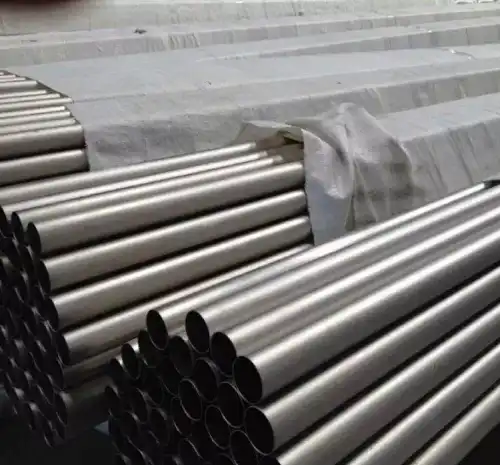
Titanium tubes are essential parts in many industries because they work better than any other material, which contributes to their high price in the materials market. Titanium metals have a special set of qualities that make them valuable in ways that go far beyond the cost of buying them.
Key Types and Manufacturing Processes
There are three main types of titanium tubes that are made, and each one is designed to meet specific performance needs. When made through extrusion, seamless tubes have higher pressure values and better structural stability, which makes them perfect for hydraulic systems and high-stress situations. Welded tubes made from rolled strip materials are very cost-effective and have good concentricity, making them perfect for heat transfer uses. To get tight dimensional limits, precision tubes go through extra processing steps. They are used in important ways in aircraft and medical device making.
We at LINHUI TITANIUM use cutting-edge technologies like cold rolling, seamless extrusion, and laser welding to make sure that all of our tubes are the right size and don't leak. We use Grade 2 (commercial pure) and Grade 5 (Ti-6Al-4V) alloys in our production methods. These alloys were chosen because they are reliable in high-stress situations.
Superior Material Properties Driving Industrial Adoption
Titanium tubes are used in so many important situations that their technical specs make them impossible to do without. Titanium tubes have a density of 4.51 g/cm³, which is about 60% that of stainless steel. They have great strength-to-weight ratios that help with design efficiency and weight reduction. Its freezing point of 1668°C makes it stable for use in very hot or very cold places, and the stable oxide film it forms makes it almost completely resistant to pitting and stress corrosion cracking in salt environments.
With a yield strength of 275 MPa, Grade 2 titanium is very easy to shape. Grade 5 titanium, on the other hand, has a tensile strength of over 895 MPa, making it ideal for difficult structural uses. Because it is biocompatible, chemically inert, and has good mechanical qualities, it is widely used in hydraulic systems for spacecraft, chemical processing pipes, surgical tools, and parts of nuclear reactors.
Industry Standards and Compliance Requirements
When analyzing titanium tube specs and supplier skills, it is very important to know the relevant industry standards. For general use, ASTM B338 sets the rules for seamless and welded tubes, and ASTM B861 sets the rules for seamless pipes used in critical situations. For aerospace uses, you need to follow AMS 4928 to make sure that the properties of the material meet strict safety standards for flying.
LINHUI TITANIUM has many certificates, such as TUV Nord AD2000-W0, PED 2014/68/EU, and ratings from DNV, ABS, CCS, and other well-known groups. Our quality control systems meet the requirements of ISO 9001:2015. For more specific uses, we have ISO 13485 medical approval and API 5CT oil and gas compliance.
How to Choose the Right Titanium Tube for Cost-Effective Wholesale Procurement
To choose the right titanium tubes, you have to carefully weigh the performance needs against the cost factors. This way, you can get the best value for your specific uses. For this process to work, working factors, environmental conditions, and long-term performance goals must all be carefully looked at.
Assessment of Performance Requirements and Environmental Conditions
Before choosing the right tube, it's important to do a full analysis of the mechanical strength needs, working temperatures, and chemical exposure conditions. For high-pressure systems, smooth construction and higher-grade metals are needed. On the other hand, welded tubes with commercially pure grades can be used for heat exchangers. Corrosive settings, especially those with chlorides or oxidizing acids, can benefit from titanium's natural resistance to rust. This could mean that protective coatings or frequent repairs are not needed.
Dimensional requirements are just as important in the decision process as other factors. When deciding on wall thickness, pressure ratings, and weight must be taken into account. Length standards affect both efficiency and the logistics of purchase. Tolerance needs are very different depending on the application. For example, precision tools need tighter controls than structural parts.
Comparative Analysis with Alternative Materials
When comparing Titanium Tube Wholesale choices to traditional materials, the total lifecycle value is taken into account along with the original purchase cost. Even though stainless steel tubes are cheaper up front, they may need to be replaced more often in places where they are likely to rust, while titanium tubes can last forever. Aluminum tubes are lighter than other materials, but they aren't strong enough or resistant to rust enough for many commercial uses.
A recent case study of offshore platform heat exchangers showed that using titanium tubes cut down on repair costs by 75% over ten years of operation, even though the materials were more expensive at first. Getting rid of planned repair cycles and cutting down on downtime provided a lot of value that made the higher investment worth it.
Supplier Evaluation and Quality Assurance Protocols
Suppliers' skills and quality control methods play a big role in how well bulk purchases go. Certifications for manufacturing, methods for tracking products, and the ability to test are all important factors in the review process. Suppliers should show that they follow the industry standards that apply to them and keep full mill test papers that list the chemicals used and the materials' mechanical qualities.
With 21 years of experience, two plants, and more than 30 production lines, LINHUI TITANIUM guarantees a dependable supply chain and consistent quality. Ultrasonic inspection, dimensional verification, and chemical analysis are just a few of the many tests we do. The results are written down in approved mill test records. Recognized agencies like SGS, TUV, and BV offer third-party inspection services that add to the quality guarantee for important uses.
Navigating the Titanium Tube Wholesale Market for OEM Manufacturers
The wholesale titanium tube market presents both opportunities and challenges for OEM manufacturers seeking cost-effective procurement solutions. Knowing how the market works, how prices are set, and what suppliers can do lets you make smart choices that improve both performance and cost.
Market Pricing Dynamics and Cost Structures
Wholesale prices depend on a lot of things, like how much titanium sponge costs, how hard it is to make, and how many orders are placed. Grade 2 industrial pure titanium usually sells for less than Grade 5 Ti-6Al-4V because it is easier to work with and costs less for raw materials. When compared to welded tubes, seamless tubes usually cost more because they take more steps to make and require better work.
Prices on the market change a lot because of changes in world demand and the supply of titanium sponge. By understanding these cycles, you can plan when to buy things in a way that saves you a lot of money. A lot of savings are available when you buy in bulk, but the exact amounts depend on the seller and the product.
Global Supplier Landscape and Evaluation Criteria
The global Titanium Tube Wholesale market is made up of companies from many different countries. Each has its own benefits when it comes to price, quality, and customer service. Chinese companies like LINHUI TITANIUM offer reasonable prices, as well as full approvals and well-established quality systems. European and North American providers usually charge more, but they may be able to offer special features or shorter lead times to customers in the area.
When evaluating a supplier, you should look at their producing skills, quality certifications, financial security, and customer service. LINHUI TITANIUM's dedication to international quality standards is shown by its large collection of certifications, which includes approvals from TUV, PED, and several classification societies. Our global supply network, which serves more than 60 countries, gives us proven transportation and customer service infrastructure.
Order Customization and Logistics Management
To do bulk purchasing well, you need to pay close attention to order details, delivery times, and coordinating operations. Custom sizes usually have minimum order numbers that indicate the size of the manufacturing batch, which are usually between 100 kg and 200 kg for things that aren't in stock. Lead times are very different for stock and custom items. Stock items can be delivered within days, but special orders may take 8 to 12 weeks.
When a product is being shipped or packaged, it's important to keep it in good shape during travel. To keep things from getting dirty or broken, LINHUI TITANIUM uses special package methods like polyethylene covers, end caps, and reinforced cases. Our transportation companies make sure that packages get delivered safely to places around the world, and we can track them all the way through the supply chain.
Maximizing Value: Best Practices for OEM Manufacturers Buying Titanium Tubes Wholesale
To get the most out of buying titanium tubes, you need to come up with strategies that balance lowering costs with making sure the quality is good and the supply chain works well. By using these methods, producers can take advantage of titanium's unique qualities while still making money.
Strategic Procurement and Inventory Management
Accurately predicting demand and making the best use of inventory are the first steps in making buying plans work. To get bulk deals on multiple orders while keeping costs low, it's important to carefully balance the cost savings from purchasing with the cost of investing in inventory. Long-term supply deals can help keep prices stable and ensure access, which is especially helpful since the price of titanium changes a lot.
Creating partnerships with qualified providers like a Wholesale titanium pipe supplier can lead to better prices, faster distribution during outages, and the creation of new products together. LINHUI TITANIUM has long-term agreements with big energy companies and EPC contractors, which shows that we are committed to working together in ways that benefit both sides.
Quality Assurance and Risk Mitigation
Comprehensive quality assurance procedures keep out material flaws and performance problems that could hurt the purity of the product and make customers unhappy. When something comes in for review, the processes should check the dimensions, the quality of the surface, and the material certification paperwork. Keeping things in the right way stops pollution and oxidation that could change the qualities of the material.
Strategies for lowering risk should include ways to deal with problems in the supply chain, poor quality, and unstable markets. Different types of suppliers, smart stocking buffers, and thorough quality agreements all help protect against different types of risk. Our thorough testing methods and ability to have third parties check materials make sure that they are compliant and can be tracked all the way through the supply chain.
Sustainable Sourcing and Future Considerations
Buying choices and how suppliers are chosen are affected by the growing focus on environmentally friendly ways of making things. Titanium can be recycled and lasts a long time, which helps with sustainable design goals. Also, environmental management systems for suppliers are becoming more and more important when evaluating suppliers.
New technologies, such as additive manufacturing and the creation of advanced alloys, could change the needs for and supply of titanium tubes in the future. Manufacturers can take advantage of new possibilities and handle technological changes by keeping up with changes in technology and keeping relationships with suppliers open.
Conclusion
For Titanium Tube Wholesale buying to be cost-effective, you need to know a lot about the qualities of the material, how the market works, and what your suppliers can do. To be successful, you need to find a balance between performance needs and cost concerns while keeping quality standards high and the supply chain reliable. Long-term relationships can work well with LINHUI TITANIUM because of its many years of knowledge, many certifications, and track record of success. OEM makers can get the most out of their investments in titanium tubes and make sure they work perfectly by using strategic purchasing practices, quality assurance procedures, and building partnerships with suppliers.
FAQ
What is the primary difference between seamless and welded titanium tubes in wholesale procurement?
ASTM B861 says that seamless titanium tubes must be made using extrusion methods. These tubes have better pressure ratings and structural stability, which makes them perfect for hydraulic systems and high-stress situations. Welded tubes made according to ASTM B338 from rolled strip materials are very cost-effective and have good concentricity. They are especially good for heat transfer uses with low-pressure needs.
How do minimum order quantities affect wholesale titanium tube procurement?
While the minimum order quantity for stock items is usually smaller, the minimum order quantity for custom dimensions is usually between 100 and 200 kg. This is because of the limitations of production batches. LINHUI TITANIUM keeps a lot of stock on hand to meet the needs of smaller orders and offers low prices for bulk purchases that make production more efficient.
What quality assurance measures should OEM manufacturers expect from wholesale suppliers?
Suppliers you can trust will give you full mill test certificates, dimensional proof records, and chemical makeup analyses. Third-party inspections by well-known companies like SGS, TUV, or BV should be easy to get. LINHUI TITANIUM uses quality systems like ultrasonic testing, surface inspection, and full tracking documents to make sure that their materials meet standards and work reliably.
How does titanium tube corrosion resistance compare to stainless steel in practical applications?
When titanium is exposed to chloride, seawater, and oxidizing acids, it makes a solid, continuous oxide film that protects it from pitting and stress corrosion cracking almost completely. Stainless steel is generally resistant to rusting, but it can still rust in certain places where there is salt. On the other hand, it can work in these conditions forever without breaking down.
Are custom-sized titanium tubes available for large volume wholesale orders?
For bulk orders, custom measurements are easy to get, with specs that are made to fit the needs of each application. Custom orders can take anywhere from 8 to 12 weeks to ship, based on how complicated they are. Standard orders, on the other hand, may ship within days. LINHUI TITANIUM's industrial freedom lets them meet a wide range of size needs while still upholding high-quality standards throughout the whole process.
Partner with LINHUI TITANIUM for Superior Titanium Tube Wholesale Solutions
LINHUI TITANIUM stands as your trusted Titanium Tube Wholesale manufacturer, delivering precision-engineered solutions backed by 21 years of industry expertise and comprehensive global certifications. Our advanced production skills, large stock inventories, and reliable supply chain make sure that your OEM operations get the best goods delivered as quickly as possible. Contact our expert team at linhui@lhtitanium.com to find out how our wholesale titanium tube programs can help you make your manufacturing processes more efficient while lowering the total cost of ownership for your most challenging projects.
References
1. American Society for Testing and Materials. "ASTM B338 Standard Specification for Seamless and Welded Titanium and Titanium Alloy Tubes for Condensers and Heat Exchangers." ASTM International, 2021.
2. Boyer, Rodney R. "An Overview on the Use of Titanium in the Aerospace Industry." Materials Science and Engineering: A, Vol. 213, Issues 1-2, 1996, pp. 103-114.
3. Donachie, Matthew J. "Titanium: A Technical Guide, Second Edition." ASM International, Materials Park, Ohio, 2000.
4. International Organization for Standardization. "ISO 5832-2 Implants for Surgery - Metallic Materials - Part 2: Unalloyed Titanium." ISO Standards, 2018.
5. Peters, Manfred, et al. "Titanium Alloys for Aerospace Applications." Advanced Engineering Materials, Vol. 5, No. 6, 2003, pp. 419-427.
6. Society of Automotive Engineers. "AMS 4928 Titanium Alloy, Seamless Tubing." SAE Aerospace Material Specifications, 2019.