
When procurement managers choose materials for OEM production in harsh industrial settings, they have to balance performance needs with limited budgets. For the best answer, ASTM B550 Zirconium Alloy Bars are the best choice because they don't corrode in harsh chemical environments and are cheaper than fancy alternatives like tantalum. These bars, which are made to strict ASTM International standards, are used as the main material for chemical processing equipment, valve parts, and pump shafts, where catastrophic equipment failure would mean big losses in operations. If you know how to carefully find these materials, you can make your supply chain work better and make your tools last longer.
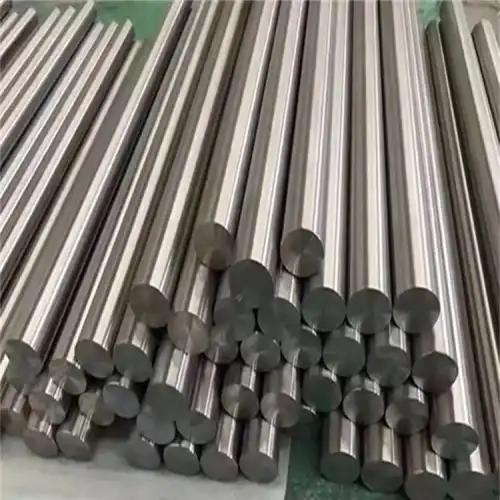
Understanding ASTM B550 Zirconium Alloy Bars and Their Key Benefits
Materials that can work in places where regular metals fail are needed in industry. Making zirconium bar stock to the ASTM B550 standard is a big step forward in the making of corrosion-resistant materials. This standard covers three main grades, each of which is designed to meet unique operational needs in OEM uses.
Core Material Grades and Compositions
Grade R60702 is the basic version that isn't alloyed. It is made of commercially pure zirconium and hafnium amounts that can reach 4.5%. This grade is very flexible and has a minimum tensile strength of 380 MPa, which makes it perfect for parts that need to be shaped or welded a lot. While stainless steel quickly breaks down in acidic settings, this material works amazingly well in those conditions. Grade R60705 has 2.0–3.0% niobium in it as a beta-stabilizer, which makes the mechanical qualities much better. This method of alloying raises the tensile strength to at least 550 MPa while keeping the rust resistance profile the same. These grades are chosen by OEM makers for high-torque uses like stirrer shafts in acetic acid factories, where strength and resistance to chemicals are essential. ASTM B550 Zirconium Alloy Bars are different from nuclear-grade zirconium alloys because they still contain hafnium. This addition was made on purpose to cut down on operating costs while keeping all of the service's full usefulness. In terms of density, the material is about 6.51 g/cm³, which puts it between titanium and steel. This makes it lighter without sacrificing its strength.
Superior Corrosion Resistance Mechanisms
The amazing performance of zirconium bar materials comes from the oxide films that form on their own. When zirconium is introduced to corrosive media, it creates a solid ZrO2 layer on its own, which can grow back even after being damaged by force. This defense system protects against reducing conditions, especially hydrochloric acid up to the boiling point and sulfuric acid in a wide range of concentrations. Comparative tests show that these zirconium alloy bars work better than titanium alloys in hydrochloric acid, which is important for chlor-alkali plants and hydrometallurgical processes. The material is resistant to both general corrosion and specific attack mechanisms, such as stress corrosion cracking and crevice corrosion in chloride settings. This makes it better than other materials at stopping these types of failures. In controlled atmospheres, temperature stability goes up to 400°C, but long-term contact with air above this temperature needs safety steps because it absorbs oxygen. The microstructure is improved even more by heat treatment methods, which relieve residual stresses from forming processes while keeping the good corrosion-resistant qualities needed for long-term service reliability.
Mechanical Property Advantages for OEM Manufacturing
When choosing materials for OEM production, you have to keep a lot of performance factors in mind. Zirconium bars have a great strength-to-weight ratio, which means they can hold a lot of weight while still being light. This trait is useful in spinning machinery, where extra weight speeds up bearing wear and makes the machine use more power. The difference in yield strength between grades helps design engineers choose the best material for the job based on the amount of stress that will be put on it. For parts that are mostly being attacked by corrosion, R60702 is better because it can be shaped easily. On the other hand, R60705 is better for high-load uses because it is stronger. This grade freedom within a single material system makes buying materials easier and makes inventory less complicated. Fabrication properties allow for normal cutting operations, but equipment factors are different from steel because of its tendency to work harden. With sharp carbide tools and the right cutting speeds, the material can be machined smoothly, and good surface finishes can be made without any special equipment. When you follow the rules for welding with inert gas protection, you get sound joints. This lets you put together complex structures without lowering the resistance to rust at the fusion zones.
How to Select Cost-Effective ASTM B550 Zirconium Bars for Your OEM Needs
When buying corrosion-resistant ASTM B550 Zirconium Alloy Bars materials strategically, you need to do more than just compare prices per kilogram. You need to do a thorough evaluation. Effective sourcing weighs the costs of acquisition against the value of the product over its entire life, taking into account things like the dependability of the supply chain and the availability of expert help. For industrial OEM uses, the best buying choices are based on a few key factors.
Procurement Evaluation Criteria
The price of a material depends on the grade chosen, the size requirements, and the number of items ordered. Grade R60702 usually costs less than alloyed versions because it is easier to work with, but the difference in price gets smaller as more of it is made. Bar width and length affect how well it is used because custom sizes require less wasteful cutting than standard stock dimensions, which need a lot of material to be removed. The economics of manufacturing mean that minimum order amounts are important, and full production runs offer a good price per unit. Building relationships with providers and keeping an eye on inventory levels lets you buy smaller amounts for prototype development or short production runs. Lead time factors combine the need for speed with the cost of doing so, since faster handling costs more, and standard scheduling makes output more efficient. Not only can the sizes be changed, but the heat treatment conditions, surface finish standards, and licensing paperwork can also be customized. Value-added service providers streamline OEM production processes by getting rid of unnecessary secondary processing steps and shortening the time it takes for final goods to reach the market. Being able to find materials in nearly flat forms lowers the overall cost of production, even if the raw materials cost more.
Comparative Material Analysis
Knowing the performance trade-offs between different material choices helps you make smart design choices. Zirconium is more expensive than titanium alloys, but titanium alloys are better at resisting corrosion in many situations. This makes them the best choice for work in oxidizing acids. However, reducing acids, especially hydrochloric acid, quickly breaks down titanium. This is where ASTM B550 Zirconium Alloy Bars clearly shine. Most of the time, nickel-based superalloys cost more than zirconium bars because they are stronger at high temperatures and don't rust. The choice of material depends on the specific service conditions. Zirconium claims to be the best in reducing acid environments below 200°C, where nickel alloys don't offer any performance edge that would explain the higher cost. Tantalum is the most corrosion-resistant material that can be used in chemical processing. It can't be damaged by almost all natural acids. The difference in the prices of the materials is big; tantalum costs about ten times as much as zirconium bar stock. Because of this, ASTM B550 Zirconium Alloy Bars are the most cost-effective choice for uses within their performance range. Tantalum should be used in situations where zirconium's capabilities are exceeded.
Supplier Qualification Standards
For buying to be reliable, factory qualifications and quality management systems must be checked. Suppliers that are accredited keep their certifications, such as ISO 9001 quality management, which shows that they use methods for systematic process controls and ongoing growth. Certifications specific to the industry, like PED 2014/68/EU for pressure equipment and different classification society approvals, show that strict safety standards are met for uses in oil, gas, and chemical handling. Testing a material by a third party gives you an independent way to check its chemical makeup and mechanical qualities. Reliable sources let inspections by groups like DNV, SGS, TUV, and Lloyd's Register happen, and test results for materials can be linked to specific production lots. This paperwork chain is very important for projects that need to check the full history of materials and make sure they are compliant. A production capacity review makes sure that suppliers can adjust the amount of goods they give to meet the needs of the project. Manufacturers who can handle raw materials and make finished bars all in-house offer supply chain security that wholesalers and smaller fabricators can't match. Logistics prices and delivery times are affected by where things are located, but established global shipping networks make distance less of ASTM B550 Zirconium Alloy Bars a problem for qualified foreign suppliers.
Manufacturing Process and Quality Assurance of ASTM B550 Zirconium Bars
Several controlled processing steps are needed to turn raw zirconium into precision-engineered bar stock. Each step in the manufacturing process affects the end qualities of the material, which decide how well it will do its job. Knowing these ways of making things gives you faith in the consistency and dependability of the materials for important OEM uses.
Raw Material Selection and Melting Technology
Getting the raw materials is the first step in quality control. Choose a zirconium sponge that meets purity standards for hafnium content, interstitial elements, and minor flaws. Before accepting a material, providers check its composition using spectroscopy. This makes sure that the qualities desired by later processing are met. Vacuum arc remelting technology is used in the melting process to make ingots with controlled grain structure and uniform chemistry. Several remelting processes smooth out the material, lowering segregation and getting rid of any holes. This method creates thick ingots that don't have any flaws that could weaken their mechanical qualities or start corrosion. Controlling the temperature during melting stops phase changes that aren't wanted, laying the mechanical groundwork for the next steps in the process. The resulting stock of ingots is used as raw material for hot working processes that make the finished bar shapes.
Thermomechanical Processing and Heat Treatment
When you start hot forging above the beta transus temperature, you use controlled deformation to break up the structure of the cast and make the grains smaller. Increasing the reduction rate over several forging passes improves the mechanical qualities while reaching the desired dimensions. Rolling reduces the cross-sectional area even more, adding directional qualities that make the lengthwise strength better, which is useful for shaft uses. Heat treatment processes reduce leftover stresses caused by hot working while improving the microstructure's ability to fight corrosion. It is possible to exactly control the annealing temperatures and cooling rates. This makes the grain structures regular and gets rid of any preferred corrosion paths. Specific heat processes are used on Grade R60705 materials to improve the spread of niobium. This makes sure that the mechanical properties are the same across all bar cross-sections. During surface cleaning operations, oxide scale that forms during hot working is removed by mechanical descaling or chemical pickling. This leaves metal surfaces that are clean. This preparation is very important for rust performance because leftover scale can keep the metal from getting a protective oxide film. The final surface finishes range from "as rolled" to precision ground sizes with tight specs that require little or no machining.
Quality Control and Certification Protocols
Full testing proves that the material meets the requirements of ASTM B550. Optical emission spectroscopy or X-ray fluorescence is used for chemical analysis to prove that the composition fits grade standards for all regulated elements. Standard test pieces cut from production bars are used for mechanical testing, such as tensile strength, yield strength, and elongation verification. The results are written down on material test papers. Ultrasonic testing finds internal gaps that are bigger than what is acceptable, making sure that the material is consistent across all bar volumes. This evaluation doesn't damage the product, so it finds flaws that can't be seen at first glance. This keeps damaged goods from getting to customers. Dimensional inspection checks the limits for width, length, and straightness, and statistical process control makes sure that the manufacturing process is consistent across production runs. Traceability systems connect produced bars to the ingots that were used to make them, as well as to the factors used in the stages of processing and the results of quality tests. This chain of paperwork makes it possible to look into any service problems, which helps with efforts to keep getting better. Material test results that have been approved by third-party inspection agencies offer independent confirmation, meeting the quality standards for projects with owner-specified surveillance programs.
Optimal Applications of ASTM B550 Zirconium Alloy Bars in OEM Production
Material that performs consistently well over long periods of time is needed in industries that use harsh chemical processes. There are many businesses that use zirconium bars because breakdowns due to corrosion can have big effects on operations and safety. Understanding these distribution situations helps original equipment makers (OEMs) make sure that the designs of their parts are as reliable and cost-effective as possible.
Chemical Processing Equipment Components
Facilities that make acetic acid are one of the main places where these corrosion-resistant bars are used. Internal parts of reactors made from Grade R60705, like agitator shafts, thermowell assemblies, and flange bolts, can handle high temperatures and strong organic acids. The material keeps iron from getting into the product, which would lower its quality, which is very important for making pharmaceutical-grade acetic acid. Zirconium bar stock is used for pump shafts and turbine parts in systems that handle hydrochloric acid. The reducing acid climate quickly breaks down stainless steel and titanium replacements, leading to early failure and expensive repairs that weren't planned. ASTM B550 Zirconium Alloy Bars are used to make pump systems that last years instead of months. This means that the total cost of ownership is much lower, even though the original investment in materials is higher. Zirconium bars are used as buffer rods and support structures in heat exchangers for toxic services. These internal parts keep the shape of the tube bundle while protecting it from process fluids that would damage carbon steel supports. The suitability of the materials gets rid of worries about galvanic corrosion in designs that use more than one material. This makes engineering easier and increases the stability of the equipment.
Petrochemical and Energy Sector Deployment
Refineries that process oil use sulfuric acid alkylation units that specify zirconium parts for valve stems and closing surfaces. The material doesn't rust or wear away when acid flows quickly through it, so the valve can keep its tight shut-off limits for a long time. This performance trait lowers fugitive pollution and stops process fluid from leaking, which helps meet goals for environmental compliance and operating safety. Equipment used for oil and gas production in the ocean is exposed to harsh chloride conditions that cause stress corrosion cracking in many structural metals. In these tough situations, corrosion-resistant sensor housings and high-strength bolts made from zirconium bar stock are used. The material can handle sour gas conditions with hydrogen sulfide, so it doesn't fail through sulfur stress cracking like lower-alloy options do. Fertilizer factories that use phosphoric acid and ammonium mixtures use zirconium parts in places where strong chemical combinations are too much for normal materials to handle. When these corrosion-resistant bars are used to make pump internals and valve trim, they keep their shape and functional integrity, even in highly acidic conditions where other ASTM B550 Zirconium Alloy Bars materials would break down quickly.
Specialized Industrial Applications
Zirconium equipment parts are used to keep products from getting contaminated in the medicinal and fine chemical industries. When these bars are used to make reactor agitators and transfer pump shafts, they stop metallic ions from escaping, which could change the specs of the product or cause it to not meet regulatory requirements. Because the material is biocompatible and doesn't react with chemicals, it is useful for equipment that comes into contact with sensitive chemical byproducts. Marine and underwater uses benefit from zirconium metals' high resistance to chloride stress corrosion cracking. ASTM B550 Zirconium Alloy Bars are good for making parts for equipment that works in deep seas or is exposed to seawater corrosion. This is especially true when thicker-section standard materials can't be used because of design limits. The good strength-to-weight ratio helps optimize the design of underwater tools and ensures good corrosion performance. Zirconium bars are used in acid washing circuits for metal extraction and hydrometallurgical processes. When processing rock, parts of equipment that come into contact with strong hydrochloric acid or mixed acid solutions need to be made of materials that can withstand both chemical attack and wear. This set of properties is found in zirconium bar stock, which helps mineral processing plants run reliably in places where the cost of production is directly affected by the supply of tools.
Strategies to Maximize Cost-Effectiveness When Purchasing ASTM B550 Bars
Negotiating good per-unit prices is only one part of lowering buying costs. When strategic sourcing, total ownership costs, supply chain stability, and value-added services that lower downstream manufacturing costs are all things that are thought about. By using these methods, OEM makers can get the most out of the materials they buy while also making sure that production processes never run out.
Volume-Based Purchasing Optimization
Through economies of scale, industry, and promises to place large orders save a lot of money. When suppliers handle big orders, they make the best use of their production schedules and materials, and they pass on the savings to customers in the form of volume discounts. Setting up yearly buy deals with clear minimum quantities keeps prices stable and ensures that materials will be available when supplies are low. Coordinating between OEM production plans and supplier shipping capabilities during material needs planning cuts down on the costs of keeping inventory on hand. Just-in-time shipping plans weigh the savings that come from buying in bulk against the loss of working capital that comes from keeping raw materials on hand. Some sellers offer consignment inventory programs that don't charge for materials up front until the parts are put into production. This makes managing cash flow easier without affecting the supply of materials. Standardizing component designs around common bar diameters and grades makes purchasing easier and lets you take advantage of big savings across many product lines. This way of thinking about design gives up some small chances to make individual parts better, but it lowers overall costs by making buying and managing supplies easier. This method works really well for OEMs that make a lot of different kinds of tools that all need the same materials.
Custom Manufacturing and Technical Collaboration
Getting manufacturers involved early in the design of a component makes it possible to get the best material specifications. Technical consulting services help engineers choose the right types and sizes so they don't over-specify, which drives up the cost of materials without improving their performance. Suppliers who know about the needs of the program can suggest cheaper options that meet those needs and cost less overall. Buying near-net shape materials lowers the cost of grinding by cutting down on the number of processes needed to remove material. Bars that come in precise sizes or custom lengths cut down on waste and speed up the manufacturing process. Even though the cost of materials per kilogram may go up for these value-added services, the total cost of the parts goes down because of lower costs for labor and waste removal. Customizing the heat treatment process lets suppliers send materials in the best conditions for particular manufacturing needs or service settings. Stress-relieved materials make welding easier and don't need to be heated first, and certain grain patterns make them more resistant to corrosion in certain chemical conditions. These expert services set qualified sellers apart from distributors of common materials, adding value beyond just providing materials.
Long-Term Partnership Development
Building smart relationships with skilled zirconium bar suppliers has benefits for both parties that go beyond just buying materials. When capacity is low, preferred supplier deals make sure that priority is given to certain suppliers. This keeps OEM production plans from being affected by supply problems. Volume agreements give suppliers the business security they need to make investments in quality changes and expand their capacity. Collaborative projection makes it easier to see what people want, which helps sellers get the best raw materials and plan their production more efficiently. This teamwork cuts down on wait times and the fees that come with speeding up orders. Reviewing a business on a regular basis can help find ways to make things better in areas like better packing, better delivery planning, and better ways to record things that make routine tasks easier. Technical support relationships give you access to materials engineering knowledge that can help you solve problems in your applications or look for new business possibilities. Suppliers who care about their customers' success put money into application development, which leads to solutions that make OEM products more competitive. These partnerships turn relationships with suppliers from buying and selling things into strategic partnerships that drive innovation and gain a competitive edge in the market.
Conclusion
In conclusion, finding ASTM B550 Zirconium Alloy Bars for OEM production means finding the best balance between technical performance needs and methods for cutting costs. The material is very resistant to corrosion in reducing acid conditions and strong chemical media, which makes it useful in the energy, petroleum, and chemical processing industries. Knowing the changes in grade between R60702 and R60705 versions helps you make choices about specifications that meet the needs of components without over-engineering or spending too much money. Strategic methods to buying things, like buying in bulk, checking out suppliers' credentials and skills, and building long-term partnerships, can help you get the most out of your investments and make sure that your supply chain works reliably for tough industrial uses.
FAQ
1. Why are zirconium bars preferred for chemical processing equipment?
Zirconium bar materials work really well in reducing acid conditions, where other metals break down quickly due to corrosion. The self-healing oxide film protects for a long time in services that use hydrochloric acid, sulfuric acid, and organic acids. This resistance keeps goods clean from corrosion byproducts and greatly increases the service life of equipment compared to options made of stainless steel or nickel.
2. How does heat treatment affect bar performance?
Controlled heat treatment improves both the mechanical qualities and the resistance to rust of the microstructure. During annealing processes, forming stresses are relieved and regular grain structures are created, which makes the material more resistant to chemicals. For Grade R60705, certain heat processing steps are used to make the niobium spread work best. This makes sure that the strength levels are the same across all bar cross-sections, which is important for high-stress situations.
3. What lead times should I expect for bulk orders?
Depending on the complexity of the order, the size needed, and the current production schedule, standard wait times are between 8 and 12 weeks. Due to melting and processing batch numbers, large orders may slightly extend delivery times. Smaller orders can be filled more quickly by suppliers who keep items in stock, but orders with special requirements or specs need full production processes, from getting the raw materials to making the finished bar.
Partner with a Trusted ASTM B550 Zirconium Alloy Bar Manufacturer
LINHUI TITANIUM has been providing high-performance materials to clients in the energy, petroleum, and chemical production industries around the world for more than twenty years. We are dedicated to quality ASTM B550 Zirconium Alloy Bars excellence, as shown by our many certifications, such as PED 2014/68/EU, ISO 9001:2015, and approvals from DNV, ABS, and several classification societies. In order to quickly complete production orders and prototype development, we keep a large stock of ASTM B550 Zirconium Alloy Bars in a variety of grades and sizes. Our professional team helps with application engineering, which means they can help you choose the best materials for the conditions of your service. Email us at linhui@lhtitanium.com to talk about your OEM production needs and get personalized quotes from a qualified zirconium alloy bar source who wants you to succeed.
References
1. ASTM International. (2021). Standard Specification for Zirconium and Zirconium Alloy Bars and Wire for Nuclear Application (ASTM B550-21). West Conshohocken, PA: ASTM International.
2. Cottis, R.A., Graham, M.J., Lindsay, R., Lyon, S.B., Richardson, J.A., Scantlebury, J.D., & Stott, F.H. (2010). Shreir's Corrosion (Fourth Edition). Amsterdam: Elsevier Science.
3. Davis, J.R. (2000). Corrosion: Understanding the Basics. Materials Park, OH: ASM International.
4. Gurrappa, I. & Gogia, A.K. (2004). High Performance Coatings for Titanium Alloys to Withstand High Temperature Applications. Surface and Coatings Technology, 139(2-3), 216-221.
5. Luthra, K.L. & Shores, D.A. (1980). Mechanism of Na2SO4-Induced Corrosion at 600-900°C. Journal of the Electrochemical Society, 127(10), 2202-2210.
6. McCafferty, E. (2010). Introduction to Corrosion Science. New York: Springer Science & Business Media.