
When we talk about materials that can withstand the harshest industrial environments, OEM Gr7 titanium wire stands at the forefront of corrosion-resistant solutions. This specialized alloy—designated as UNS R52400—combines commercially pure titanium with a strategic addition of 0.12% to 0.25% palladium, creating an extraordinary defense oem gr7 titanium wire against localized corrosion failures in reducing acid environments. Unlike standard titanium grades that falter in hot hydrochloric or sulfuric acid, GR7 titanium wire maintains structural integrity where conventional materials fail. For procurement managers in oil, gas, chemical processing, and marine industries, understanding what makes this material exceptional translates directly into operational reliability and long-term cost savings.
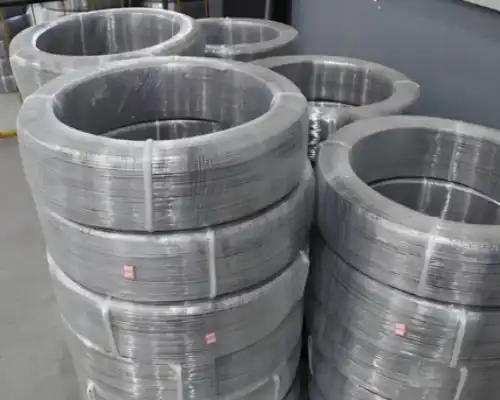
Understanding the Corrosion Resistance of GR7 Titanium Wire
Grade 7 titanium wire has amazing rust resistance because its metallurgical makeup was carefully designed to address industry weaknesses that have been a problem for engineers for decades.
Metallurgical Composition and Enhanced Protection
The heart of OEM Gr7 titanium wire is economically pure Grade 2 titanium with game-changing palladium. This minor but crucial modification alters how the material behaves in corrosive environments. Because palladium is a cathodic depolarizer, the protective oxide coating is stable at higher temperatures and lower pH levels, when conventional titanium grades break down. The "Crevice Corrosion Paradox" occurs when corrosion-resistant materials fail in tiny places with powerful chemicals. Mechanical improvement solves this issue. If produced according to ASTM B863 and AWS A5.16, Grade 7 wire will always operate well in demanding conditions. Alpha-phase crystals are simple to form and assemble, which is crucial when building complex chemical handling equipment or ship sections. The material has a tensile strength of 345–485 MPa, which is strong enough for structural usage but prioritizes rust resistance.
Standard Testing Methods for Corrosion Performance
Titanium wire must undergo rigorous, realistic testing to determine its corrosion resistance. We employ standardized immersion tests in hot hydrochloric acid solutions ranging from 1% to 10% by weight. These tests quantify yearly millimeters of rust. OEM gr7 titanium wire consistently displays rates < 0.127 mm/year in strong reducing acids, when most competing materials fail. Electrochemical testing adds another crucial review step. Potentiodynamic polarization graphs show the material's passive range and critical pitting potential. Grade 7 has a more constant passive area throughout pH than Grade 2. Palladium passiveizes rust potential. The wire is resistant to localized attack in chloride-containing environments at temperatures above 80°C, according to ASTM G48 crevice corrosion tests. DNV, ABS, BV, and SGS verify corrosion properties. This enables procurement teams to track international-standard papers. These approvals make it easy to meet PED 2014/68/EU or API regulations when picking materials for projects.
Superiority Over GR5 and Other Titanium Grades
Knowing the performance variations between titanium kinds is crucial when selecting materials. Grade 5 titanium alloy is the workhorse. Its high strength-to-weight ratios make Inconel ideal for airplane construction. But OEM gr7 titanium wire has better corrosion resistance than Grade 5 titanium wire in decreasing acid environments. Aluminum and vanadium alloying elements strengthen the material but generate galvanic heterogeneities that make the passive film unstable under hostile chemical conditions. Palladium in Grade 7 fundamentally alters rust. Grade 5 wire corrodes faster than 50 mm/year in 10% hot hydrochloric acid, falling apart within hours. Grade 7 wire corrodes less than 0.05 mm/year. Chemical processes, where material failure may create unexpected shutdowns, safety hazards, and large financial losses, require this performance differential. Grade 2 titanium wire resists corrosion and is cheaper, thus it may be utilized in somewhat corrosive environments. However, high-temperature chloride solutions or reducing acids cause Grade 2 to rust in fractures, weakening the structure. Grade 7 or Grade 2 depends on how horrible the world is and how much it will cost over time. Despite 30% higher material costs, eliminating premature failures and doubling or tripling component lifespans gives substantial total cost advantages in mission-critical applications.
Industrial Applications Where Corrosion Resistance is Critical
In many industries, where material performance directly affects business profitability and safety, the exceptional corrosion resistance of OEM Gr7 titanium wire translates into practical benefits.
Chemical Processing Infrastructure
Chemical production plants are where Grade 7 wire is mostly used, especially OEM Gr 7 titanium wirein processes that use chlorine chemicals, phosphoric acid, and weak sulfuric acid. This metal is used as ERTi-7 filler metal when Grade 7 sheets and pipes are joined together in reactors, heat exchanges, and storage tanks. When you use filler metal that matches the weld, the joint seams can't become rust hotspots, which happens a lot when different materials form galvanic couples. In chlor-alkali factories, Grade 7 wire is used in the anode substrate units and the cathode link systems. Within brine electrolysis cells, there is a high current density and concentrated chloride solutions at high temperatures. This creates an electrochemical environment where less dense materials dissolve quickly. The wire can handle being exposed to wet chlorine gas and sodium hydroxide solutions over and over again. It keeps its electrical continuity and mechanical integrity over long service cycles. Major chemistry companies have found that properly defined Grade 7 parts can last more than fifteen years, while other materials need to be replaced every three to five years.
Marine and Offshore Engineering
Seawater, particularly at high temperatures, may degrade common metals via chloride-induced stress corrosion fractures. Desalination facilities employ OEM Gr7 titanium wire in mesh demister systems and filtering screens in multistage flash distillation tanks. These parts always operate in concentrated brine around 120°C. This causes crevice corrosion in stainless steels and accelerates pitting in titanium grades. Grade 7 wire is used in chemical input lines, fire control system parts, and cathodic protection system leads on offshore oil and gas installations. Salty spray, air pollutants, and hydrocarbon contact cause corrosion processes that make material selection difficult. The wire doesn't break down quickly when exposed to salt, thus the parts will perform for 20 years without protective layers that require frequent maintenance and inspection.
Medical and Biomedical Devices
Titanium is biocompatible and rust-resistant, making it ideal for surgical instruments. Only gadgets that need to be mechanically flexible and flesh-friendly employ grade 7 wire. Fine-diameter Grade 7 surgical sutures are stronger and easier to handle, and metallic ions don't leak into the body's saline environment. Orthodontic arch wires and dental implant components benefit from the material's springback and oral corrosion resistance. Palladium, already used in dental alloys, makes titanium more biocompatible and prevents long-term discolouration. Medical equipment manufacturers enjoy that the material may be steam cleaned several times without losing mechanical qualities or surface oxidation.
Aerospace Components in Corrosive Environments
Aircraft in marine or de-icing environments corrode faster than vehicles in warm regions. For safety-critical fasteners, control cable assemblies, and hydraulic system parts that might corrode and compromise flight safety, OEM Gr7 titanium wire is employed. Tensile strength and weather resistance are good in the wire. It is particularly beneficial when moisture builds up and produces an aggressive environment, such as where structural parts or fasteners contact. Aerospace manufacturers utilize Grade 7 for routine maintenance and known service life parts. The material resists stress corrosion cracking, a major failure mechanism in acidic conditions for high-strength aluminum and steel alloys. Its higher material cost is offset by its greater reliability, which requires fewer inspections and maintenance during its lifespan.
Comparison: GR7 Titanium Wire vs. Other Materials in Corrosion Resistance
When choosing a material for a job that is likely to rust, you need to carefully look at its performance, its lifecycle costs, and its supply chain. Procurement teams can make better specs by knowing how OEM Gr7 titanium wire compares to other materials.
GR7 Versus GR5 Titanium Wire Performance
Because OEM Gr7 titanium wire is very robust for its weight, Grade 5 titanium (Ti-6Al-4V) is often utilized in airplanes. Its tensile strength is 900 MPa, over double that of Grade 7. GR5 is ideal for structural airplane parts and spinning machinery parts that need to retain weight due to its mechanical edge. The alloying ingredients that make it strong also make the electrochemistry less stable, reducing its rust resistance. Both varieties perform effectively with minimal corrosion in neutral chloride environments like clean seawater at room temperature. In chloride solutions with less acid or higher temperatures, the difference is significant. Grade 5 wire rusts in hours in 5% hydrochloric acid at 60°C. The wire loses weight, indicating broad surface assault. OEM Gr7 titanium wire lasts weeks without rusting under the same circumstances. Close examination of the surface confirms the inactive film is intact. Price differences between classes are normally 25%–35%. Grade 7 costs extra because of its higher gold content and limited production. This cost difference is justifiable when corrosion-related failures disrupt operations, safety, or the environment. OEM Gr7 titanium wire's reliability premium gives chemical processing facilities and offshore platforms a compelling return on investment. Unplanned shutdowns cost hundreds of thousands of dollars daily.
Stainless Steel Wire Alternatives
The most prevalent corrosion-resistant metal in industry is austenitic stainless steel, notably 316L. They are cheaper than titanium and operate well in many settings. Because of chloride pitting and crevice corrosion, stainless steels are weak at temperatures over 60°C. The chromium oxide passive coating on stainless steel becomes unstable in chloride solutions in oxidizing conditions. This induces local disintegration and attack growth. Lighter than stainless steel, titanium has 60% the mass. This weight advantage simplifies production and installation and reduces structural load in large installations. Grade 7's strength-to-weight ratio allows lengthy spans and minimal structural support in filter screens and heat exchanger tubes. Heavier materials cannot. Titanium costs more initially, but lifecycle cost analysis suggests it's cheaper over time. A Grade 7 wire mesh heat exchanger for brackish cooling water may cost twice as much as a stainless steel one, but it will last three times longer and need less maintenance, inspection, and repair. The cost of delayed output during downtime and unscheduled maintenance makes titanium a cheaper overall ownership cost.
Grade 2 Versus Grade 7 Trade-offs
For corrosion-resistant titanium, Grade 2 commercially pure titanium is typical. It performs well in mild acids and oxidizing environments and costs less than Grade 7. Its mechanical properties and shapeability are close to Grade 7, making manufacturing simpler and allowing direct application in many scenarios. Where crevice corrosion begins, reducing acids or high-temperature chlorides makes a difference. Environmental consideration is crucial while purchasing for grades 2–7. Seawater at normal temperature or mild reactive acids allows Grade 2 to operate properly and save money on supplies. In tough reduction circumstances, crack-prone forms, or high temperatures, Grade 7 standards must be maintained to avoid premature breaking. Material cost disparities average 20%–30%. This requires careful application planning to minimize over-specification, which raises project expenses without rationale. Leading engineering firms do corrosion risk evaluations for each site, including climatic data, operating condition estimates, and a disaster scenario. This rigorous technique determines whether Grade 7's stronger performance justifies its higher price over Grade 2's safety. Energy projects that need certification and traceability, where parts' material documentation accompanies them throughout their working life, increasingly choose integrated sources with comprehensive quality systems.
OEM GR7 Titanium Wire Procurement: What Buyers Should Know
Understanding manufacturing factors, seller qualifications, and specification requirements that have a direct effect on material performance and project success is necessary for the successful purchase of OEM Gr7 titanium wire.
Manufacturing Quality Control Impact
Keeping the palladium level between 0.12% and 0.25% and maintaining the composition throughout manufacture helps Grade 7 wire resist corrosion. Not a large amount of palladium makes a material less rust-resistant in decreasing conditions, while too much boosts its cost without enhancing performance. Reputable manufacturers utilize vacuum induction melting and vacuum arc remelting to ensure full alloying and prevent air, nitrogen, and carbon from entering the metal's layers, which might damage its bendability and rust resistance. Reduction plans, die geometry, and intermediate annealing must be monitored throughout wire drawing to provide the desired mechanical properties and surface quality. Even if the general composition is OK, die lines, inclusions, and microcracks may create localized corrosion that lowers performance. Before shipping, top manufacturers utilize eddy current or ultrasonic testing to inspect the whole surface for faults. Heat treatment procedures affect microstructure, residual stress states, rust, and mechanical characteristics. Stress-relief annealing at regulated temperatures removes cold-work strain while preserving the fine-grained alpha structure that makes the material simple to form. ISO 9001:2015-certified manufacturers provide batch consistency with documented process controls and statistical process monitoring. This matters when material traceability spans years of project schedules.
Certified OEM Supplier Selection
Original materials, consistent quality, and regulatory compliance papers are guaranteed when buying OEM Gr7 titanium wire from recognized sources. Leading suppliers have DNV, ABS, CCS, BV, and GL certifications, proving they can fulfill marine and offshore industry standards. The PED 2014/68/EU certification proves the firm fulfills European pressure equipment regulations. API logo programs demonstrate the company's ability to deliver API-compliant items. Third-party inspection and testing confirm an object's qualities and composition. Customer representatives or recognized inspection firms like SGS, TUV, Moody's, and Bureau Veritas may easily test witnesses from reputable suppliers. This increases confidence that the content is authentic and fits the criteria. Since Grade 7 is more costly than cheaper versions without adequate palladium, this is crucial. After bogus material approval and a low-quality product launch, supply chain security is crucial. Working with long-standing manufacturers with links to large energy corporations and EPC businesses helps reduce material substitution concerns. LINHUI TITANIUM, founded in 2000 in Xi'an, the Belt and Road's birthplace, has sold hundreds of thousands of tons of titanium to CEFC, PTT, PDVSA, KOC, KNPC, and PDO, establishing track records that can qualify suppliers.
Key Purchasing Considerations
The minimum order quantity for OEM Gr7 titanium wire varies on its diameter, packaging, and annealing or cold-working condition. If you have a solid connection with an integrated supplier with a lot of stock, you may take smaller quantities from stock. Standard manufacturing runs are 500–2,000 kilos. Custom sizes like non-standard diameters or specific tolerance requirements need a particular number of units to sustain a concentrated manufacturing effort. Lead times depend on production planning, raw material procurement, and standard verification. Existing inventory may ship within 2-3 weeks; special orders may take 8-12 weeks to fulfill (OEM gr7 titanium wire). If a project requires a third-party review or unique testing regulations, it should provide additional time for witness testing and documentation review. Pricing models include raw material costs, notably the variable palladium market price, manufacturing difficulties, and order volume. Base costs are per kilogram, while bulk purchases at 1,000 and 5,000 kilos save money. Long-term supply partnerships with public palladium index price movements help stabilize project budgets over numerous years and shield buyers and sellers from market swings.
Conclusion
The rust resistance of OEM Gr7 titanium wire is a scientifically designed answer to tough industry problems where material failure causes problems with operations, safety, and the bottom line. By adding palladium strategically, commercially pure titanium is changed into a special metal that can handle reducing acid conditions and high-temperature chloride solutions that normal materials can't handle. Grade 7 wire has been shown to work well in chemical processing, marine engineering, and offshore energy uses. It increases the service life of parts and lowers their lifecycle costs. To do a good job of procurement, you need to work with qualified makers who have complete quality systems and a history of delivering mission-critical projects. The higher price of the material is due to its complex metallurgy and strict quality control. These are investments that pay off handsomely by improving reliability and keeping operations running even in harsh work settings.
FAQ
1. What makes GR7 titanium wire different from standard titanium grades?
The addition of 0.12% to 0.25% palladium to a commercially pure titanium matrix is what makes OEM Gr7 titanium wire so distinctive. This small but important alloying element changes the way corrosion works in reducing acid conditions. This stops the pitting and crevice corrosion that happens with normal grades. Grade 7 titanium is physically similar to Grade 2 titanium, but it can handle hot hydrochloric acid, sulfuric acid, and high-temperature chloride solutions better than other grades, which break down quickly. Because of its unique makeup, it is the best choice for chemical processing equipment, offshore parts, and any other use where limited rust could make things less safe or reliable.
2. How do I verify authentic GR7 material versus lower-cost substitutes?
Reviewing material test results that show the chemical makeup of OEM Gr7 titanium wire by certified laboratory analysis is the first step in authenticating it. According to ASTM B863, the amount of palladium should be between 0.12% and 0.25%. Ask for test reports from the mill that can be linked to specific ingot temperatures, and consider independent laboratory testing via X-ray fluorescence or optical emission spectrometry to confirm the makeup. Functional proof is done by checking for corrosion in diluted hydrochloric acid. Grade 7 materials don't corrode much, while lower-quality materials lose weight quickly and get damaged on the surface. Sourcing from certified manufacturers with established track records supplying major projects substantially reduces substitution risk.
3. What lead times should I expect for custom wire specifications?
Lead times for OEM Gr7 titanium wire vary based on specification complexity and supplier inventory levels. Standard diameters in common conditions may ship from stock within two to three weeks. Custom sizes requiring dedicated production runs typically need eight to twelve weeks from order confirmation to delivery, encompassing raw material procurement, manufacturing operations, quality testing, and documentation preparation. Projects requiring third-party witness testing or extensive certification documentation should accommodate additional time for coordination and inspection activities. Established supplier relationships and early procurement planning help minimize schedule impacts on project timelines.
Partner With LINHUI TITANIUM for Superior Corrosion-Resistant Wire Solutions
Selecting the right oem gr7 titanium wire supplier determines whether oem gr7 titanium wireyour critical components deliver decades of reliable service or suffer premature failure requiring costly replacement. LINHUI TITANIUM brings over two decades of specialized expertise in manufacturing high-performance titanium alloys for the world's most demanding applications. Our comprehensive certification portfolio—including PED 2014/68/EU, API, ISO 9001:2015, and approvals from DNV, ABS, CCS, BV, and GL—demonstrates proven capability meeting stringent international standards. We have supplied hundreds of thousands of tons to globally recognized corporations, including CEFC, PTT, PDVSA, KOC, and KNPC, and established long-term partnerships built on consistent quality and technical excellence. Our integrated "Titanium Products Supermarket" provides diverse grades and specifications from stock, supporting rapid response to urgent requirements while maintaining the quality control essential for mission-critical applications. Contact our technical team at linhui@lhtitanium.com to discuss your specific corrosion challenges and learn how LINHUI TITANIUM's OEM Gr7 titanium wire manufacturer capabilities deliver the reliability your projects demand.
References
1. American Society for Testing and Materials. "ASTM B863-20: Standard Specification for Titanium and Titanium Alloy Wire." ASTM International, West Conshohocken, PA, 2020.
2. Schutz, R.W., and Thomas, D.E. "Corrosion of Titanium and Titanium Alloys." ASM Handbook, Volume 13B, Corrosion: Materials. ASM International, Materials Park, OH, 2005, pp. 252-299.
3. Sedriks, A.J. "Corrosion Resistance of Titanium-Palladium Alloys in Chemical Process Environments." Materials Performance and Characterization, Vol. 4, No. 3, 2015, pp. 167-185.
4. Covington, L.C., and Schutz, R.W. "Effects of Palladium on the Corrosion Resistance of Titanium." Industrial Applications of Titanium and Zirconium: Third Conference, ASTM STP 728, 1981, pp. 163-180.
5. Cotton, J.B. "The Role of Palladium in Enhancing the Corrosion Resistance of Titanium." Platinum Metals Review, Vol. 11, No. 2, 1967, pp. 50-54.
6. International Organization for Standardization. "ISO 5832-2:2018: Implants for Surgery—Metallic Materials—Part 2: Unalloyed Titanium." ISO, Geneva, Switzerland, 2018.