
The decision between Zirconium 705 (Grade R60705) and Zirconium 702 (Grade R60702) is a very important one for procurement workers who buy things for tough industrial settings. ASTM B550 sets the standards for bar and wire ASTM B550 Zirconium Alloy Bar made of zirconium and zirconium alloys that are not used in nuclear power plants. Both of these types are in this standard. The main difference is the material they are made of. Zirconium 702 is straight zirconium that is sold in stores and is very flexible and doesn't rust. Zirconium 705 has 2.0 to 3.0% niobium in it, which makes it harder and better at working at high temperatures. With this information, engineering teams can pick materials that work best for them and cost less in the heavy industry, oil, and chemical-producing fields.
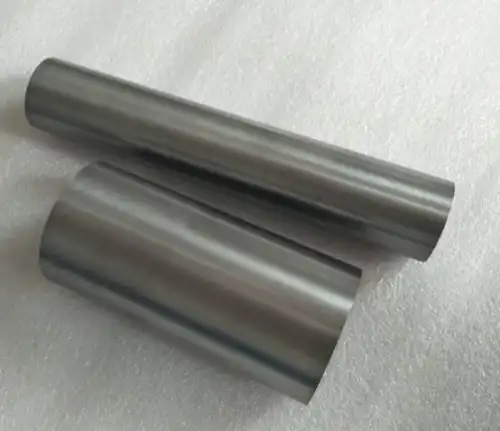
Understanding ASTM B550 Zirconium Alloy Bars
There are strict rules in ASTM B550 for ASTM B550 Zirconium Alloy Bar products and lines that are meant to be used in high-temperature and general corrosion-resistant situations. Hafnium has to be carefully taken out of zirconium, which is used in nuclear power plants. On the other hand, ASTM B550 allows up to 4.5% natural hafnium content. This means that these products can be used for business without costing a fortune. This standard talks about three main grades: R60702 is pure zirconium, R60704 is zirconium-tin, and R60705 is zirconium-niobium. Most of the time, R60702 and R60705 are used in industry areas.
Chemical Composition Standards and Elemental Control
ASTM B550 sets tight limits on the types of materials that can be used so that they always work the same way in all kinds of settings. Zinc and hafnium must make up at least 99.2% of Grade R60702, along with no more than 0.05% carbon, 0.025% nitrogen, and, most importantly, 0.005% hydrogen. Any more than that and the material will become weak. In Grade R60705, there is at least 95.5% zirconium and hafnium. Niobium is put on purpose to make the material stronger, and it makes up 2.0 to 3.0% of the material. By changing these parts, you can directly change how the protective zirconium oxide layer grows and stays solid. This layer is what makes the material so strong that it doesn't rust in tough chemical environments. Before receiving a package, procurement teams should look at the supplier's credentials by using Spark OES or ICP to find metals and Inert Gas Fusion to find hydrogen, nitrogen, and oxygen.
Mechanical Properties and Heat Treatment Effects
The mechanical performance traits set out in ASTM B550 show that different types of alloys are very different from one another. It can be pulled apart at least 550 MPa (80 ksi) and stretched at least 380 MPa (55 ksi). It also has a lot of stretch, which makes it easy to shape while it's being made. By adding niobium, R60705 has a minimum tensile strength that is about the same as R60702, but a much higher yield strength, which is generally 100–150 MPa higher in real life. These qualities change a lot depending on how the heat is applied. An annealing process at temperatures between 600°C and 760°C fully recrystallizes microstructures, making the material more flexible. Stress-relief methods at lower temperatures keep the strength that was gained from cold working. According to ASTM E8 guidelines, material certificates should show the history of heat treatment, the range of grain sizes, and the mechanical tests that were carried out after heat treatment. People who want to buy something should ask for this information to make sure that the material can handle heavy loads, high power transfer, or long-lasting high temperatures.
Corrosion Resistance Across Chemical Environments
Zirconium bar goods don't rust easily because they make a thick, stick-together film of zirconium dioxide (ZrO2) when they come into contact with air. This extra layer of defense lets both R60702 and R60705 materials stand up to any amount of hot hydrochloric acid. Stainless steels and a lot of nickel metals can't do this. Zinc stays strong in sulfuric acid service at levels below 70% and temperatures close to boiling points, but you should be careful with types that are very volatile. Zirconium doesn't crack from stress corrosion when used in places that process acetic acid, while austenitic stainless steels do when used in hot organic acid settings. Zr parts that have been properly described don't have much of a problem with environments that are alkaline, either. Chemical processing plants have done tests that show zirconium stirrer shafts and reactor inner parts usually last more than 15 years before they need to be replaced. Most metal steels, on the other hand, need to be changed every two to four years. Because it lasts longer, places that work with corrosive materials can save money on maintenance and get more done.
Technical Comparison Between Zirconium 705 and Zirconium 702
When deciding between these two main grades of zirconium, you need to carefully consider how their compositions differ, how their mechanical properties change, and how they are made. These factors affect both the purchase itself and how well the ASTM B550 Zirconium Alloy Bar works in the long run.
Compositional Differences and Their Performance Impact
Zirconium 705 is special because it has 2.0–3.0% niobium added on purpose to the main zirconium material. When this alloying method is used at certain temperatures, it creates a two-phase microstructure. This makes the yield strength and creep resistance much higher than in pure Zirconium 702. The recrystallization temperature goes up when niobium is present. These bars are better at withstanding high temperatures than R60702 materials, so they can stay strong even when they're around those temperatures. R60702 is very pure, which makes it easy to shape and work with when it's cold. This is helpful for complicated manufacturing processes that need to deep draw, spin, or bend in more than one direction. Both types of hafnium are found naturally. When not used for nuclear purposes, it doesn't make a big difference in how well it works, but it does raise the price of the material because it's harder to find. To keep from having to pay extra, the acceptable hafnium ranges should be made clear in the purchase specs. These ranges are usually between 1.5 and 4.5%. Keeping an eye on trace impurities is still very important. Too much hydrogen in a material can cause hydrogen embrittlement, which is when the material breaks apart suddenly when it is pulled apart. Similarly, too much nitrogen or carbon can make it harder to weld or shape.
Mechanical Strength and Thermal Stability Comparison
In situations where the material needs to be strong and hold a load for a long time, R60705 always performs better than R60702. The tensile strength of both grades is at least 550 MPa, but after being annealed, R60705 usually ASTM B550 Zirconium Alloy Bar has a 30–40% higher yield strength than R60702. To put it another way, it works better in structural, fastener, and shafting uses where the most deformation needs to be avoided. Niobium makes the substructure of R60705 stronger, so it has a strong preference for creep resistance. This is important for parts that are under a lot of stress at high temperatures all the time. This better resistance to creep helps parts like heat exchanger support rods, autoclave tank internals, and high-temperature valve stems keep their shape for longer periods of time between repairs. Different grades all have about the same thermal expansion value, which is 5.8 × 10⁻⁶/°C. This helps you figure out the thermal stress in systems that are made of more than one material. The thermal conductivity of both types is between 21 and 23 W/m·K, which puts them in the middle of carbon steels and stainless steels. They are still structurally sound, so they can be used for most heat transfer tasks.
Manufacturing Methods and Quality Verification
To make zirconium bar stock that meets ASTM B550 standards, the material has to go through several controlled steps that directly affect how it turns out. First, the bars are solidified by hot rolling or forging over a vacuum arc. They then go through a number of cooling steps that make them usable again. As the metal is cold-drawn, the cross-sectional dimensions get smaller, and as it works, it gets stronger. Last but not least, warmth brings back some mechanical properties. As a way to find flaws inside the material that could lead to service breakdowns, suppliers who care about quality use 100% ultrasonic testing. Surface finish needs usually call for centerless grinding or chemical peeling for tasks that need smooth, flaw-free surfaces, such as dynamic seals, fatigue loads, or crevice rust. Most of the time, measurement tolerances meet h9 or h11 ISO standards. This means that they can be made directly without having to take out too much stock. Chemical analysis using accepted methods, mechanical test results from representative samples, and certifications for non-destructive testing should all be included in material test records (MTRs) as part of the paperwork for buying something. Verification by a third party, like an agency like DNV, TUV, or SGS, gives you more peace of mind when things are very important and failing would have very bad results.
Application Suitability and Industry Use Cases
Zirconium 702 and 705 have different qualities, but they can be used together in tough industries where the right ASTM B550 Zirconium Alloy Bar choice affects both how well the business runs and how much it costs to maintain.
Chemical Process Industry Applications
Places that handle chemicals are the best places to use zirconium bars because the aggressive media breaks down other materials fast. Zirconium 702 is often used when it's important to protect against rust as much as possible while also keeping mechanical needs low. One example is the impeller shafts of centrifugal pumps that deal with hot hydrochloric acid. Because the fluid is acidic, these need to be resistant to chemicals and strong enough to handle moving loads. In companies that make acetic acid, reactor tank agitator units often need R60702 bars that have been machined into complicated shaft shapes. This is possible because it's easy to shape the material while it's being made. It is used in hydrometallurgical processes to keep the shape of the tube bundle while preventing the flow of corrosive washing solutions through holes on the shell side. R60702 bars are used in these systems. As a result of its higher strength, zirconium 705 can be used in places with higher temperatures or more mechanical stress. In high-viscosity chemical synthesis units, heavy-duty mixing rods need the extra yield strength of R60705 to keep them from breaking and bending. They also need to stay rust-free. R60705 can hold its shape better than other materials, which means that even in corrosive environments, smaller parts can be used to bolt and connect things safely. In one case study from a fertilizer factory, failed titanium mixer shafts were switched out for R60705 replacements. This allowed the plant to run continuously for more than eight years without any corrosion or mechanical breakdown. This is different from the first titanium parts, which had to be fixed every 18 months.
Petrochemical and Energy Sector Deployment
Oil and gas processes use tough fluids that break down materials, high pressures, and high temperatures that push the limits of what materials can withstand. Units that use sulfuric acid to make high-octane fuel need parts made of zirconium for the valve stems and pumps to keep them running smoothly. The material can withstand higher amounts and temperatures of sulfuric acid than stainless steel can. This means that parts don't need to be changed too often, which would stop production. Control valves that handle corrosive fluid flows last longer when valve trim kits made from R60705 bars are used. This is because the hardness and strength of the material stop corrosion and rust from high-velocity fluid contact. Petroleum and gas sites in the ocean, where hydrogen sulfide can cause sulfide stress cracks in regular steels, have used zirconium parts successfully in important tasks that are exposed to saltwater. One big problem with stainless steels in the sea is taken care of by the fact that they don't break when they come in contact with salt. Zirconium bars are used for electrode support structures and ASTM B550 Zirconium Alloy Bar electrical separation parts in facilities that use electrolysis to make hydrogen. This is because the metal is resistant to rust and has good electrical properties. These uses make it clear how important it is to pick the correct stuff for the job. Even though some materials cost more at first, they save money in the long run because they last longer, need less maintenance, and work better every day.
Manufacturing and OEM Component Production
Zirconium bar stock is often used in the designs of companies that make unique equipment for the chemical processing, pharmaceutical, and specialty materials industries when the performance of the material makes a difference in the market. When reactor vessel manufacturers cut R60702 bars, they use them to make thermowell assemblies, dip tubes, and sample tools. These tools must keep their shape and measurements for a long time when they are in process fluids. Companies that offer pumps for tough environments, zirconium shafts, and machine precision bearing surfaces and seal faces from bar stock that was picked because it has the best surface finish and is the most stable in terms of size. Different kinds of R60702 and R60705 are used to make seat rings, stem extensions, and trim parts for custom valves. The type of application determines the pressure, temperature, and corrosion conditions. It is hard to make because the material reacts when heated up. To make accurate parts, you can use regular machine tools that have sharp carbide cutting edges and the right water flood systems. You can easily make thread shapes, close-tolerance bearing fits, and complex curves if you know how to set up your machine and deal with the scrap that you make. Because zirconium powder tends to catch fire, this is the case. More and more, when OEMs buy things, they look at how well the sellers can track materials, fill out quality paperwork, and approve dimensions. The reason for this is that they know the quality of the raw materials is a big part of how well the parts work.
Market and Procurement Considerations for ASTM B550 Zirconium Bars
If you want to buy ASTM B550 Zirconium Alloy Bar products the right way, you need to understand how the market works, how to find good sellers, and how to handle the many logistics problems that can affect the price and dependability of the supply chain.
Pricing Structures and Volume Considerations
These days, zirconium bars are very expensive because they need to be mined and processed in a very difficult way in order to meet certain standards. A kilogram of R60702 bars can cost anywhere from $75 to $120, but it varies depending on the width, the amount needed, and the finish that is needed on the outside. You have to pay more for bars that have tight standards or special surface treatments. R60705 costs 15–25% more than R60702 because it requires more processing and niobium alloying, which costs more. When you buy more than 500 kilograms, you can save a lot of space. You can save 10 to 18% on prices if you sign an annual deal that covers more than one order. When you buy less on the spot market, you have to pay setup and handling fees that make the price per kilogram much higher. This means that smart product placement is a good idea for people who know exactly how much they are going to buy. The diameter of the bar has a big impact on the price. Standard widths are between 25 and 100 mm. Widths below 10 mm or over 200 mm have size fees that represent the need for special processes. Customers who want custom pieces longer than the standard 3-meter parts might have to pay extra to have the material cut or be fined for waste. In their questions, buyers should say how much inventory they are ready to hold, the total amount of volume they expect each year, and the range of acceptable shipping dates. This will let providers offer the best business terms that take into account the money that can be saved on production through planned campaigns.
Supplier Qualification and Certification Requirements
For important service uses, material integrity requires strict source approval that looks at things like how well the product is made, its quality systems, and how it is documented. To meet the requirements, you need to show proof that you know how to use the ASTM B550 standard. You can do this by displaying examples of your production records and material test results. It's good if the system has a basic quality management system certification like ISO 9001. But it's even better if it has industry-specific certifications like API Q1 for petroleum uses or ASME Section II material approvals for pressure tank service. Acceptance of a third-party inspection is another important qualification factor. Providers must let companies like DNV, Bureau Veritas, TUV, SGS, and Lloyd's Register provide proof and offer witness points during the production, testing, and final review steps. Material traceability systems that let you track the process heat by heat from getting the raw materials to providing the finished product are necessary for uses that need government oversight or safety-critical service. Chemical makeup checks should be done in-house in analysis labs, mechanical testing should be done in testing facilities with calibrated equipment and trained staff, and non-destructive testing should be able to be done on the product forms that are given. Site audits of possible sellers show how they make things, keep their tools in good shape, and make sure their quality culture fits what buyers want. Buyers are more likely to trust this than just paper records. The value of preferred supplier partnerships grows through better communication, more efficient ordering of production, and working together to solve problems when there are issues with meeting standards. These partnerships are based on a history of on-time deliveries.
Lead Times and Delivery Logistics
You need to think about how the bars will be made and how the world supply chain works when you plan how to get them. When you place an order for stock sizes of R60702 and R60705 bars, you should expect to wait 8 to 12 weeks for delivery, as long as the materials are in stock at the supplier's warehouse or in production lines. Longer wait times are caused by custom specs that need non-standard sizes, special heat treatments, or better testing methods. This is because providers have to plan production campaigns and finish quality checks. Different types of goods and sellers may have different minimum order quantities (MOQs). For standard widths, MOQs can be as low as 100 kilograms, but for special sizes or finishes, they may need 500 kilograms to cover the costs of setting up the production line. International shipping rules usually call for wooden boxes that are wrapped in protective material so that the surface doesn't get damaged while being handled and moved. Each box can only be a certain weight because of the rules for delivery and the size of the crane. The shipping terms should make it clear which Incoterms are in charge of what while the goods are being shipped. FOB origin terms, on the other hand, make the buyer responsible for the shipping costs, while CIF or DDP terms make the seller responsible for getting the goods to the location. Goods made of zirconium need to be brought into the country with certain paperwork, including certificates of origin, material safety data sheets, and records of material tests. The freight forwarder and seller need to work together to make sure the paperwork goes through customs quickly. For times when supplies are tight, strategic buys keep a safety stock of important sizes on hand. When they do this, they weigh the risks to production accuracy against the costs of having inventory.
Strategic Decision-Making: Choosing Between Zirconium 705 and 702
An organized alloy selection method that takes technical needs, working conditions, and cost into account can help procurement and engineering teams choose the best ASTM B550 Zirconium Alloy Bar for a wide range of uses.
Performance Criteria Evaluation Framework
The first thing you need to do to choose the right material is make a list of all the conditions and performance standards that the material must meet while it is being used. When you describe the corrosion environment, you should talk about the fluid's make-up, like what chemicals are present and how much of each there is, the temperature ranges that are used (both steady-state and changing conditions), and the pressure levels that affect the stress states of the material. There are different types of stresses that need to be measured in order to do a mechanical loading analysis. These include static stresses from pressure or structure loads, dynamic stresses from cycle operation or vibration, and possible impact or shock loading from process upsets or equipment problems. Material is chosen based on the part's shape and how it needs to be made. R60702 is better for complicated shapes that need to be shaped a lot, while R60705 is better for simpler shapes that need to be stronger. The type of material used depends on how easy it is to heat treat during production. Parts that need to release stress or get their properties back after production need materials that can handle these treatments without breaking. It is easier to compare things accurately when more than one material is needed. This is because evaluation grids that perform factors different levels of value make this possible. Total cost of ownership models that are built into decision tools look at how much the materials cost at first, how much it costs to make (like scrap rates and machine wear), how much it costs to install, how often it needs to be maintained, and how much it costs to replace over the equipment's design life. This displays the economic best options, which may be different from the minimum original buy price options.
Industry-Specific Selection Guidelines
R60702 is often used in chemical processing that takes place in fairly ASTM B550 Zirconium Alloy Bar hot and highly corrosive environments because it offers the best rust protection while still meeting mechanical needs by making sure that the parts are the right size. It's easy to shape, so it can be used to make heat exchanger heads with many tube holes, agitator blades with difficult shapes, and reactor internals that need to be put together in the field using threaded or fixed connections. Increasingly, petrochemical plants that need both high mechanical strength and resistance to rust are choosing R60705 for valve stems, pump shafts, and high-stress bolts. This is because if a part failed, it would be so badly damaged that the extra cost of the material would be worth it. R60705 has a higher creep resistance than R60702, which is helpful when it is constantly loaded at temperatures above 250°C, where R60702 might gradually bend over time. The pharmaceutical and food processing industries value R60702 a lot because it is very pure and has a smooth surface that makes it easy to clean and keeps products from getting contaminated when they come into direct contact with it. If you're not in a nuclear fuel reprocessing plant, ASTM B550 materials are still useful for comparison: nuclear-grade specifications remove hafnium to levels below 0.01%, which shows the exact requirements when neutron absorption properties matter. ASTM B550 materials, on the other hand, are used in non-nuclear settings where natural hafnium content doesn't affect operations. The information that comes with tools should tell you how to pick the right material. Based on the study into the application and experience in the field, they should suggest R60702 or R60705, but they should also give other materials as options in case the customer wants a different one.
Long-Term Performance and Maintenance Planning
When you choose the right materials for an item, they affect how it is managed, how many spare parts you keep on hand, and when it needs to be changed. Zirconium parts usually last 15 to 20 years in fairly corrosive environments if they are chosen and fixed correctly. Stainless steel parts, on the other hand, only last 3 to 5 years in the same conditions. Because it lasts longer, it doesn't need to be taken apart for upkeep as often. This means that production doesn't have to stop as often, which saves money that usually far outweighs the cost of replacing the part. When you plan your maintenance, you should include regular check dates that work for the service conditions. These should include an eye check for surface pitting or deposits, a dimensional check to see if there is wear or rust thinning, and a non-destructive test to see if there are cracks below the surface or hydrogen absorption when the exposure level is high enough to be a problem. Standard tests can be used at installation to use trend analysis to see how things are slowly breaking down and needing repair before they fail. Strategies for extra parts need to look at how much it costs to keep an inventory on hand, how long it takes to get it, and how bad the loss is. For critical parts that have long lead times and high failure effects, you need to keep safety stock. For non-critical things that are easily available, you can use just-in-time buying. By keeping track of materials throughout the life of a piece of equipment, you can repair only the broken parts in certain heats or production lots instead of all the good parts. Systematic failure analysis is a way to keep track of performance and build institutional knowledge that helps with future material choices and optimizing working parameters. This leads to rounds of continuous growth that bring down the overall cost of owning all the assets in a pool.
Conclusion
You can tell that Zirconium 705 and Zirconium 702 work together because they are both used in harsh manufacturing settings that are different but linked. R60702 is the best at resisting rust and being shaped because it is commercially pure. It is the best choice for uses where chemicals are strong and mechanical needs are low because of this. R60705's niobium-strengthened base makes it stronger and more stable at high temperatures and loads. This makes it useful for applications that are exposed to toxic substances and high loads. The quality will always be the same if you buy them from qualified manufacturers who use strict process controls and quality testing methods. This is because both grades meet ASTM B550 standards. You should think about how the materials will be used, how well they will work, and how much they will cost over the course of their life before you buy them. This means taking a look at more than just the purchase price. Professionals in procurement can get technical help, knowledge about the materials, and supply chain skills from experienced suppliers. This means that material purchases are no longer just buying things to buy them; they become strategic value creation that supports operational excellence and competitive advantage.
FAQ
1. What Makes Zirconium 705 Stronger Than Zirconium 702?
Because it has 2.0 to 3.0% niobium mixed in, zirconium 705 is stronger than zirconium 702, which is almost pure. The yield strength goes up by about 30 to 40 percent because the architecture gets harder. Adding niobium raises the temperature at which the crystals re-crystallize and makes it harder for them to grow. In other words, R60705 can keep its mechanical properties even when it is heated to high temperatures that would make R60702 soft. This better strength grade is helpful when the material needs to be strong enough to hold a lot of weight or not break when it is stressed for a long time.
2. How Does ASTM B550 Certification Ensure Material Quality?
A product must meet certain chemical makeup limits, mechanical property minimums, and physical standards that can be shown through certain testing methods to be approved by ASTM B550. Inert Gas Fusion and spectroscopy are used to do chemistry tests on materials that meet this level. As required by ASTM E8, they are also put through mechanical tests and a non-destructive analysis to find any flaws inside. This method for thorough testing makes sure that materials always work the same way and can be tracked. This helps make sure quality when it matters.
3. What Are Typical Procurement Lead Times for Zirconium Bar Stock?
When ASTM B550 Zirconium Alloy Bar products meet ASTM B550 standards, the normal wait time is between 8 and 12 weeks for standard sizes that suppliers keep in stock or that are planned for production. Custom specs, such as non-standard shapes, special heat treatments, or tighter testing needs, make lead times longer, to 12 to 16 weeks. The minimum order number can be anywhere from 100 to 500 kilograms, depending on how the product is made. When you commit to a big order, you can get a better price and scheduling.
Partner With LINHUI TITANIUM for Your Zirconium Alloy Bar Requirements
Zirconium material is hard to get, so you need a source that has science knowledge, full certifications, and a track record of getting things to people on time. Since 2000, LINHUI TITANIUM has been one of the biggest companies in the world that makes and sells ASTM B550 Zirconium Alloy Bar products to companies in the aircraft, chemical, oil, and gas industries. Having a lot of quality certificates, like ISO 9001:2015, PED 2014/68/EU, CCS, ABS, DNV, BV, and more, shows that we try to meet foreign standards. We can handle tough jobs because we work with big names like CEFC, PTT, PDVSA, and PEMEX. We keep a lot of Grade R60702 and R60705 bars in round, square, and rectangular forms at our Xi'an office. This lets us stick to planned supply deals and meet urgent project needs at the same time. Our team of experts can help you choose the best materials for any job. They will help you find the best balance between performance needs and the cost of getting them, so the product has the most value over its entire life. Send an email to linhui@lhtitanium.com right away to get prices, technical specs, or to talk to our experienced materials experts about your unique zirconium alloy bar needs. People who work for them know how important quality and reliability are to your company.
References
1. ASTM International. "ASTM B550/B550M-19: Standard Specification for Zirconium and Zirconium Alloy Bar and Wire." West Conshohocken, PA: ASTM International, 2019.
2. Schemel, J.H. "Manual on Zirconium and Hafnium." ASTM International Special Technical Publication 639, 1977.
3. Cox, B. "Corrosion of Zirconium Alloys." In: Shreir's Corrosion, Volume 3: Corrosion and Degradation of Engineering Materials, Fourth Edition. Elsevier, 2010.
4. Gangloff, R.P. and Somerday, B.P. "Gaseous Hydrogen Embrittlement of Materials in Energy Technologies: Mechanisms, Modelling and Future Developments." Woodhead Publishing Series in Metals and Surface Engineering, 2012.
5. Smith, L.T. and Little, E.A. "The Mechanical Properties of Zirconium Alloys for Nuclear Applications." International Materials Reviews, Vol. 32, No. 1, 1987.
6. Northwood, D.O. "The Development and Applications of Zirconium Alloys." Materials and Design, Vol. 6, No. 2, 1985.