
Impact strength becomes the most important thing to consider when choosing between Grade 4 and Grade 5 titanium bars for important tasks. At 27 to 35 J/cm², the Gr4 titanium rod is very resistant to pressure, and Grade 5 is much stronger at 20 to 30 J/cm². Both widely pure and alloyed versions work well in different situations. Which one you choose will depend on your needs and the settings where you work.
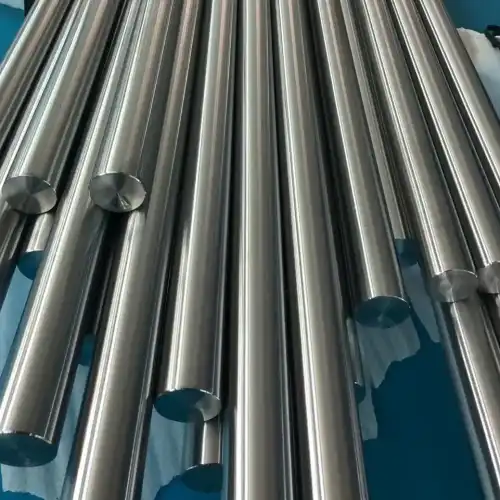
Understanding Impact Strength in Titanium Alloys
Impact strength tells you how much energy a material can take when it breaks under quick loads. This trait is very important for parts used in spacecraft, remote equipment, and chemical processing systems, where stress builds up in unexpected places. Three main differences affect performance:
- Energy absorption capacity varies with titanium grade composition
- Temperature sensitivity affects fracture behavior differently
- Microstructural variations influence crack propagation resistance
Grade 4 titanium is very flexible because it is made of commercially pure materials. Since aluminum and vanadium are not present, the metal can be stretched more before it breaks. On the other hand, Grade 5's alpha-beta shape gives it higher average strength but less ability to absorb energy. When working in marine settings where you need to absorb the most energy, Grade 4 titanium is the better choice.
Grade 4 Titanium Rod: Pure Performance Characteristics
As far as commercial purity goes, Grade 4 titanium is the best type of unalloyed titanium. It has a very high oxygen content (0.40%), which makes it stronger and keeps its incredible rust resistance. Some important success indicators are:
- Impact strength: 27-35 J/cm² at room temperature
- Tensile strength: 550-750 MPa minimum
- Yield strength: 480-620 MPa, typical range
- Elongation: 15% minimum guaranteed
The safe material works really well in medical devices and surgical tools because it doesn't rust or break down when it gets hit. It is very resistant to salt stress corrosion cracking, which is good for tools used in chemical processes. The way LINHUI TITANIUM makes its titanium bars ensures that each one has the same grain structure. Our heat treatment methods improve the impact qualities while keeping the width stable across a range of 3mm to 150mm. The Gr4 titanium rod is the best choice for long-term dependability if you need steady performance in acidic conditions with modest impact stress.
Grade 5 Titanium Rod: Enhanced Strength Analysis
The Grade 5 Ti-6Al-4V metal has aluminum and vanadium added to it, which change its mechanical qualities in a big way. This material is made for aircraft use and has great strength-to-weight ratios that are needed for tough jobs. Specifications for performance show:
- Impact strength: 20-30 J/cm², depending on heat treatment
- Tensile strength: 895-1000 MPa minimum
- Yield strength: 828-930 MPa, typical
- Density: 4.43 g/cm³, lightweight characteristics
The alpha-beta microstructure reacts well to heat treatment, which lets the material qualities be changed to suit specific needs. This versatility is used by aerospace parts to get the best performance under different stress situations. Because titanium Grade 5 hardens over time, it needs to be machined using special methods. But the parts that were made show better resistance to wear in repetitive loading situations. If you need the strongest material that can still handle impacts in aircraft uses, Grade 5 titanium metal is the best choice for structural parts.
Head-to-Head Impact Testing Results
A lot of testing shows that these types of titanium work differently in different collision situations. Standardized Charpy V-notch testing in the lab gives us precise comparison measures.
| Property | Grade 4 Titanium | Grade 5 Titanium |
|---|---|---|
| Impact Energy (J/cm²) | 27-35 | 20-30 |
| Fracture Appearance | Ductile | Mixed Mode |
| Temperature Sensitivity | Low | Moderate |
| Notch Sensitivity | Low | Higher |
Temperature changes show big differences in how impacts behave. Grade 4 keeps absorbing energy at the same rate from -40°C to +200°C, but Grade 5 becomes weaker at lower temperatures. These materials are affected by stress concentrators in different ways. When the same conditions are applied to both grades, sharp notches weaken Grade 5 by about 25 to 30 percent, but Grade 4 only loses 15 to 20 percent. Dynamic loading rates have a big effect on how fractures happen. Impacts at high speeds help Grade 4's flexible reaction, while loading that is almost steady lets Grade 5 show its better basic strength. Grade 4 titanium is the most reliable material for outdoor use if you need steady impact performance across a wide range of temperatures.
Application-Specific Performance Guidelines
For industrial uses, choosing the right material requires careful thought based on how it will be used and what will happen if it breaks. Each type of titanium works best in certain situations because its qualities are perfect for the job. The Gr4 titanium rod is very resistant to rust in seawater, which makes it useful for marine and coastal uses. Its impact toughness is what makes propeller shafts, pump parts, and underwater equipment able to handle hits from debris and working pressures. Grade 5 is often used for aerospace parts because it has a better strength-to-weight ratio. Its high strength is used in engine bolts, landing gear parts, and structural elements that can handle mild pressure. When making medical devices, Grade 4 is preferred for implanted parts because it is biocompatible and resistant to pressure. Its flexible failure mode makes it useful for orthopedic implants and oral tools. The choice of chemical processing tools is based on the acidic medium and the pressure levels. Grade 4 works great in salt settings, and Grade 5 does a good job in high-pressure situations. If you need performance that can be used in a variety of industries, Grade 4 titanium gives you more options and has been proven to be reliable.
LINHUI TITANIUM's Gr4 Titanium Rod Advantages
As a leading manufacturer with over two decades of experience, LINHUI TITANIUM delivers superior Grade 4 titanium products that exceed industry standards:
- Comprehensive Certification Portfolio: PED 2014/68/EU, ISO 9001:2015, DNV, ABS, CCS, and TUV Nord certifications ensure compliance with international standards
- Advanced Manufacturing Capabilities: State-of-the-art facilities produce consistent grain structures and mechanical properties across all product dimensions
- Extensive Size Range: Custom diameter specifications from 3mm to 150mm, with lengths up to 6 meter,s accommodate diverse project requirements
- Superior Surface Finish Options: Polished, turned, or as-drawn finishes meet specific application needs without additional processing
- Rigorous Quality Control: Each batch includes Mill Test Reports (MTR) documenting chemical composition and mechanical properties verification
- Global Supply Chain Excellence: Established relationships with major EPC contractors and energy companies across 60+ countries ensure reliable delivery
- Technical Support Expertise: The engineering team provides application-specific guidance for optimal material selection and performance optimization
- Competitive Lead Times: Integrated "Titanium Products Supermarket" concept enables rapid fulfillment of standard and custom specifications
- Traceability Systems: Complete documentation from raw material sourcing through final inspection ensures quality assurance
- Environmental Compliance: RoHS-compliant manufacturing processes support sustainable procurement initiatives
Making the Right Choice for Your Project
Selection between Grade 4 and Grade 5 titanium rods requires careful evaluation of performance priorities and operational constraints. Cost considerations, availability, and long-term maintenance requirements influence the decision-making process. Budget analysis reveals Grade 4 typically costs 15-20% less than Grade 5 due to simpler composition and processing requirements. However, lifecycle costs may favor either grade depending on maintenance intervals and replacement frequency. Supply chain considerations affect project timelines significantly. Gr4 titanium rod enjoys broader availability and shorter lead times, while Grade 5 may require extended delivery schedules during peak demand periods. Regulatory compliance varies by industry and geographic location. Medical applications mandate biocompatible materials, while aerospace specifications require specific heat treatment certifications. If you need immediate availability with proven impact performance, then Grade 4 titanium from established suppliers provides reliable project execution capabilities.
Conclusion
Impact strength comparison between Grade 4 and Grade 5 titanium rods reveals distinct performance characteristics suited to different applications. Gr4 titanium rod in energy absorption and ductile behavior, making it ideal for marine, chemical, and medical applications where impact resistance proves critical. Grade 5 offers superior baseline strength with acceptable impact performance for aerospace and high-stress structural applications. Material selection depends on specific service conditions, cost constraints, and performance priorities. Understanding these differences enables informed decisions that optimize component reliability and operational success across diverse industrial sectors.
Partner with LINHUI TITANIUM for Superior Gr4 Titanium Rod Solutions
LINHUI TITANIUM stands ready to support your titanium requirements with industry-leading Grade 4 titanium rod products manufactured to exacting specifications. Our comprehensive inventory and technical expertise ensure optimal material selection for your critical applications. Whether you're sourcing for offshore projects, chemical processing equipment, or aerospace components, our certified products deliver consistent performance and reliability. As a trusted Gr4 titanium rod supplier with global reach, we provide complete documentation and technical support to streamline your procurement process. Ready to discuss your specific requirements and receive detailed technical specifications? Contact us at linhui@lhtitanium.com for expert consultation and competitive pricing.
References
1. Boyer, R., Welsch, G., & Collings, E.W. (2019). Materials Properties Handbook: Titanium Alloys. ASM International, Materials Park, OH.
2. Lütjering, G., & Williams, J.C. (2018). Titanium: Engineering Materials and Processes. Springer-Verlag, Berlin, Germany.
3. American Society for Testing and Materials. (2020). ASTM B348-13: Standard Specification for Titanium and Titanium Alloy Bars and Billets. ASTM International, West Conshohocken, PA.
4. Donachie, M.J. (2017). Titanium: A Technical Guide. ASM International, Materials Park, OH.
5. Schutz, R.W., & Thomas, D.E. (2021). Corrosion of Titanium and Titanium Alloys in Industrial Applications. Materials Performance, Volume 58, Issue 3.
6. Welsch, G., Boyer, R., & Collings, E.W. (2019). Materials Properties Handbook: Titanium Alloys Impact Testing and Analysis. ASM International, Materials Park, OH.