
Zirconium Wire Welding is a reliable way to fix problems in chemical processing plants where acidic acids are a threat to equipment integrity. Yes, zirconium wire welding can handle acidic environments very well. This is because zirconium naturally forms a steady, self-healing oxide layer when it comes in contact with toxic substances. Acids like sulfuric acid, hydrochloric acid, and acetic acid can't get through this barrier, even at high amounts and temperatures. If zirconium welding is done right, it can keep structures together in places where other materials would quickly rust and break, unlike stainless steel or even titanium in some situations. Because of this, zirconium wire welding is a must for businesses that work with harsh chemicals.
Understanding Zirconium Wire Welding and Its Acid Resistance
What Defines Zirconium Wire Welding?
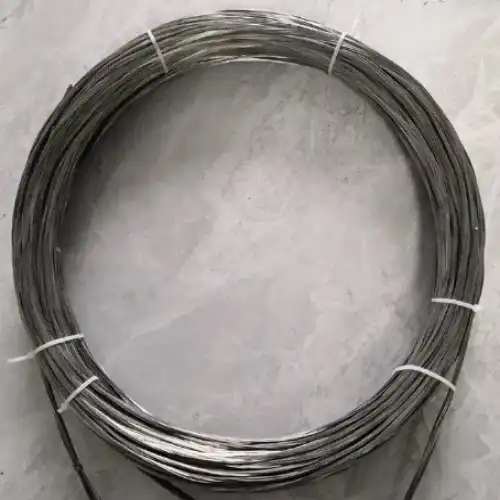
Zirconium Wire Welding is a special way to put things together that uses high-purity zirconium filler material to make machines that will be used in harsh environments where corrosion is a problem. At LINHUI TITANIUM, we offer zirconium alloy wire that meets UNS R60705 standards and zirconium welding wire that meets UNS R60702 standards. Gas Tungsten Arc Welding, or TIG welding, is usually used in this process, which has to follow strict rules about the atmosphere. At high temperatures, zirconium reacts reactively during welding, easily taking in oxygen, nitrogen, and hydrogen from the air. Because of this, the material becomes weak right away, so it is very important to use inert gas protection not only at the arc zone but also across the cooling heat-affected zone with the following shields and backing gas systems.
Chemical Properties That Enable Acid Resistance
The amazing rust resistance of zirconium comes from the way it reacts to heat. When oxidizing acids and water come in contact with the surface, a dense layer of zirconium dioxide forms right away. This layer is only a few nanometers thick, but it provides excellent shield protection. When this passive film gets broken, it heals itself automatically, so it keeps protecting even when it's under a lot of pressure or changing temperatures. In boiling sulfuric acid up to a 70% concentration, zirconium shows weathering rates below 0.1 millimeters per year. This is better than standard austenitic stainless steels, which would dissolve in months in the same conditions. Zirconium is stable in conditions that contain hydrochloric acid, acetic acid with metal salts, and nitric acid.
Welding Techniques Optimized for Corrosive Service
In acidic environments, different welding methods are better for different types of manufacturing needs:
TIG welding is still the most common way to join zirconium wires together. This method gives exact control over the heat and better weld quality, which are important when joining pressure tanks or heat exchangers that will be used in acetic acid factories. Clean, slag-free welds are made, which cuts down on cleaning after the join and keeps the base metal's ability to fight corrosion. When we draw and treat the surface of our zirconium welding wire, we get rid of any impurities that might weaken the weld. Laser welding is better in certain situations where little heat is needed, and the fusion zones need to be small. Lasers are used by companies that make aerospace and nuclear fuel assemblies to join thin-section zirconium parts together so that heat damage is kept to a minimum. Focused energy transfer lowers the heat-affected zone, which keeps the mechanical properties of the area next to the weld. Resistance welding uses continuous seam welding, especially when making tubular heat exchangers, where automatic production improves accuracy and cuts down on labor costs. This method works well in places where a lot of things need to be made, and the process needs to be repeated. All of these welding methods have one thing in common: they must keep the work area clean. Even small amounts of oxygen or nitrogen in the molten phase can make intermetallic compounds that are brittle and break easily when they are stressed. This breaks down the shield against rust and makes acidic sites more likely to form.
Key Parameters and Techniques for Effective Zirconium Wire Welding
Critical Temperature Control During Welding
Controlling the temperature has a direct effect on how resistant finished welds of Zirconium Wire Welding are to rust. Zirconium Wire Welding becomes more volatile above 400°C, which is also the temperature at which it absorbs oxygen the fastest. During multi-pass welding, the temperature between passes must stay below 150°C to keep the risk of contamination to a minimum and stop too much grain growth. We suggest not rushing manufacturing plans and giving enough time for cooling between passes. Being patient during welding keeps expensive equipment from breaking down during service. The conditions for preheating are different for carbon steel. Base metal that is at room temperature is usually fine, unless you are welding heavy parts that are more than 25 mm thick. In this case, heating the metal to 50 to 75 °C first lowers thermal shock. Too high preheat temperatures make the area more open to pollution from the air, which cancels out any benefits from lower thermal differences.
Shielding Gas Selection and Coverage
How pure the argon gas is has a big effect on the quality of the weld. Most uses can be protected by commercial-grade argon that is 99.99% pure, but for important nuclear industry work, 99.999% purity is needed to get rid of any leftover contaminants. Gas flow rates at the torch of between 15 and 20 cubic feet per hour keep the arc stable and provide enough covering. As the hot weld bead cools through the critical temperature range, trailing shield devices cover it with harmless gas to protect it. These attachable cups provide argon covering 75–150 millimeters behind the moving arc. This stops oxidation that would cause gold, blue, or gray spots, which are visible signs of weak corrosion resistance. Backing gas cleaning the inside of pipe or tank joints is also very important. Usually, 8 to 12 cubic feet per hour flow rates are needed to remove oxygen from the air.
Best Practices for Contamination Prevention
As strongly as welding settings, surface preparation affects the success of the weld. Joint areas need to be mechanically cleaned with stainless steel wire brushes that are made just for zirconium work. Brushes used on carbon steel or aluminum can introduce foreign elements that weaken welds. Chemical cleaning with acetone or methanol gets rid of grease and organic leftovers. In clean areas, the item is then left to dry in the air. Protocols for storage and handling protect the quality of the wire before it is used. Our zirconium welding wire comes in protected packaging that keeps damp out and contains materials that dry things out. Once it's been opened, the wire should be kept in clean, dry closets and only be handled with lint-free gloves to keep fingerprints and skin oils from getting on the wire. These small sources of contamination cause flaws like pores and inclusions that weaken the structure and make it more likely to rust. To protect their hands, welders must wear clean cotton or synthetic gloves that don't have any silicone-based hand creams on them. These creams can evaporate in the arc heat and spread silicon infection. Grinding operations on different metals should be kept away from work areas because flying particles that settle on prepared parts can cause problems that may not be seen by inspection until the equipment is in use.
Comparing Zirconium Wire Welding to Other Welding Materials in Acidic Applications
Zirconium Versus Titanium in Corrosive Service
Zirconium and titanium both make protective oxide plates, but in some acidic conditions, they work very differently. Titanium is very good at resisting oxidizing acids like nitric acid and chloride-containing solutions at normal temperatures. This makes titanium welding wire popular in seawater applications and chemical processing that uses oxidizing media. But reducing acids, especially hydrochloric and sulfuric acids, at high temperatures, damages titanium very quickly. When it comes to a wider range of acids, Zirconium Wire Welding works better. The substance can withstand both oxidizing and reducing acids. It can handle amounts and temperatures of hydrochloric acid that would kill titanium in hours. Making acetic acid is a huge industry that depends almost entirely on zirconium creation. This is because titanium can't handle the mix of organic acids and halide catalysts that are used in these processes. Even though zirconium costs about 40 to 60 percent more than titanium, it is the better choice when your buying requirements include exposure to multiple acid types or reducing acid environments.
Performance Against Stainless Steel Alternatives
Austenitic stainless steels, such as 316L, are the most common type used in chemical processing equipment because they are cheap and don't rust in slightly acidic settings. At room temperature, these metals work well in weak acids, and welding methods are well-known and use filler materials that are easy to find. There are big savings in cost—each kilogram of stainless steel welding wire costs about a tenth as much as zirconium. When the acid concentration, temperature, or chloride level goes above what stainless steel can handle, these economic gains go away. Stress corrosion cracking caused by chloride can happen quickly and badly in equipment that works above 60°C and has even a small amount of chloride in it. Pitting rust starts in areas of the weld that are hot and spreads quickly, making holes in the wall that let dangerous process fluids out. The original savings from choosing stainless steel are dwarfed by the costs of replacing broken equipment, cutting down on production, and cleaning up the surroundings after it fails.
Nickel Alloys as a Middle Ground Choice
Nickel-based alloys, like Inconel 625 and Hastelloy C-276, are in the middle of the performance range between zirconium and stainless steel. These materials can stand up to a lot of different acidic substances and keep their mechanical strength at high temperatures. This makes them useful in situations where rust and high stress are needed at the same time. Nickel metal welding wire makes welds that are flexible, don't crack, and don't corrode in many organic and mineral acids. However, nickel metals have problems in some harsh settings where zirconium does better. Even high-quality nickel metals can be damaged by concentrated sulfuric acid above 60% concentration at boiling temperatures. Zirconium, on the other hand, works consistently. Halide-contaminated organic acids also shorten the life of nickel alloys. Cost is also important. Premium nickel alloys are getting close to the price of zirconium, but they don't work as well in the harshest acid environments. This makes the small savings hard to explain when equipment life is very important. When buying, teams are deciding which Zirconium Wire Welding materials to use; they should look at the total cost of ownership over the planned life of the equipment. The initial prices of materials and construction are only one part of the economic picture. Frequency of upkeep, unplanned downtime, replacement intervals, and the risk of safety incidents make up the rest. Even though it costs more up front, zirconium wire welding often ends up being the most cost-effective long-term option for important acid-handling systems.
Procurement Insights: Sourcing High-Quality Zirconium Welding Wire for Acid-Resistant Applications
Evaluating Supplier Certifications and Quality Systems
When looking for Zirconium Wire Welding supplies, the choice of supplier has a big effect on the success of the job. Quality certifications are concrete proof of the ability to make things and the rules that are in place for the process. Suppliers who have ISO 9001:2015 certification have written quality control systems that cover creation, production, and testing. Along with ISO 9001:2015, LINHUI TITANIUM also has ISO 14001:2015 for environmental management and OHSAS 18001:2007 for worker health. These are all very strict standards that show how well the company runs. Pressure equipment instructions are important when making tanks and pipes for chemical handling. The European PED 2014/68/EU approval that our company keeps up shows that the ways we make things meet strict safety standards for pressure tools that are accepted across all European markets. In the same way, the Chinese government's Manufacturing License of Special Equipment and the TUV Nord AD2000-W0 approval prove that the company is qualified to make important pressure-retaining parts. Approvals from classification societies open up new markets and show that a product meets international technical standards. LINHUI TITANIUM products have certifications from CCS, ABS, DNV, BV, BSI, Lloyd's Register, and GL, which means they meet almost all of the major standards for marine and offshore classification. These approvals show that our zirconium welding wire meets the requirements for building ships and offshore platforms, where structural soundness and resistance to rust are constantly being checked.
Assessing Supplier Technical Capabilities
The infrastructure for manufacturing decides how consistent products are and how reliable supplies are. When it comes to batch-to-batch consistency, integrated producers who control everything from getting raw materials to finished wire drawing are better than wholesalers who get their materials from different mills. We buy zirconium sponges, cast ingots, work them hot, draw wires, and treat the surface. This lets us tightly control the makeup and make sure that all of the mechanical properties are the same. The ability to test shows how committed the seller is to quality assurance. Having in-house labs that can do spectrometry-based chemical makeup analysis, mechanical testing (including tensile and bend tests), and metallographic study shows that a lot of money has been spent on quality. Accepting inspections from third parties boosts trust. LINHUI TITANIUM accepts inspections by DNV, BV, SGS, Moody's, TUV, ABS, LR, GL, RINA, and other well-known foreign organizations, proving our honesty and the quality of our products.
Bulk Procurement and Custom Specifications
Prices and delivery times are affected by the amount that needs to be delivered. Cost savings are made possible by production economies of scale in bulk buying programs that offer metric ton amounts. LINHUI TITANIUM makes things to meet the needs of both large-scale building projects and smaller lots that are needed for upkeep and repair work. Our inventory management makes sure that we have both quick access for pressing needs and custom production for alloys with unique compositions or sizes that aren't standard. Custom specs go beyond standard wire lengths to meet the needs of a particular job. Special alloys made with niobium (Zr-2.5Nb) or tin (Zircaloy-2, Zircaloy-4) are used in the nuclear business for tasks that need specific neutron absorption properties. Different levels of cleanliness can be met by surfaces with finishes ranging from a normal drawn finish to an electropolished finish. Precision-wound spools, coil boxes, or straight lengths are some of the packaging choices that can be used with different welding tools and storage space. Lead times depend on how complicated the product is and how many orders are placed. Standard, commercially pure zirconium welding wire in standard sizes usually ships 4 to 6 weeks after the order is confirmed. For custom metal formulas or sizes that aren't common, it may take 8–12 weeks to finish production and quality testing. Sometimes, rush orders can be filled from stock that is already on hand or by changing the production plan. Talking about deadlines early on in the buying process helps everyone be on the same page and avoids costly project delays.
Troubleshooting and Avoiding Common Problems in Zirconium Wire Welding Under Acidic Conditions
Identifying and Preventing Weld Porosity
When Zirconium Wire Welding, the most common problem is porosity, which shows up as small circular holes in the welded metal. These holes are caused by gases getting trapped during solidification. The gases are usually hydrogen, oxygen, or nitrogen that were taken into the melting pool. When acids attack something, even small holes make it more likely to rust. This starts a localized attack that goes deeper than the surrounding material. Root reasons include not enough shielding gas, dirty base metal surfaces, or wires that cannot handle moisture. Strategies for prevention focus on getting rid of sources of contamination by thoroughly cleaning the surface and making sure it is completely protected by inert gases. Make sure the purity of the protective gas meets the requirements, and regularly check the accuracy of the flowmeter. Check the gas lines for leaks that could let outside air in. If you can't solder the base metal joints right away after cleaning them, put the assembled parts in a safe place until you can. Porosity susceptibility is directly affected by how wires are stored. Hydrogen is added to the weld pool when the wire sides absorb water. Our vacuum-sealed boxes with desiccants keep the quality of the wire safe while it's being shipped and stored. Once the packaging is opened, move the wire to sealed cases with new desiccant. During welding, limit the wire's contact with air.
Addressing Cracking Susceptibility
When zirconium welds crack, it's usually because of contamination, not heat stress. When sulfur, phosphorus, Zirconium Wire Welding, or carbon gets into a watery film and makes it less cohesive between grain boundaries, hot cracking happens during solidification. When hydrogen that was taken during welding hardens into brittle hydride phases when it cools, cold cracking happens. Both types of defects weaken the structure and make ways for acid to get inside. Controlling pollution through material choice and treatment is a big part of prevention. For important uses, choose zirconium types with low intermediate content. Pure R60702 material has tightly controlled levels of oxygen, nitrogen, carbon, and hydrogen. Galvanic partners can make it easier for hydrogen to absorb, so keep zirconium away from metals that are not the same while it is being stored or made. For zirconium work, only use tools that have been used on zirconium. Do not use tools that have been used on steel or aluminum. Welding factors affect how likely something is to crack by changing how fast it cools and how much heat is put on it. When movement speeds are moderate and the right amount of heat is applied, grain structures that are resistant to breaking are formed. Too much heat makes the grains bigger, which makes the material less flexible and tough. Not enough heat input leads to partial fusion and the formation of stress concentration sites. Welding methods that have been tested and proven to work regularly produce welds that are free of cracks.
Ensuring Complete Fusion
When the base metal and filler metal don't fully fuse together, leaving unbonded surfaces within the joint, this is called an incomplete fusion flaw. When this equipment goes into service, these flat flaws line up with the main stress directions in pressure tanks, making key failure planes. Acids get into areas of partial fusion and cause rust that moves deeper inside without showing on the outside until the wall loses enough thickness to break it. The shape of the joint has a big effect on the strength of the fusion. Too much root gap or not enough groove angle makes it hard for electrodes to reach, which stops full sidewall fusion. On the other hand, a bridge happens when there isn't enough gap between the roots and the weld metal that runs across the joint without joining. Standard groove preparations for zirconium welding call for root gaps of 2 to 3 millimeters and angles of 30 degrees for single-V grooves. This shape has been shown to work well through many years of production experience. The way you weld directly affects how the fusion turns out. Placing the electrodes correctly will direct the arc force toward the sides that haven't fused yet, not the weld metal that has already been formed. Travel speeds must give enough rest time for the base metal to melt. Rushing causes cold laps where liquid filler runs over base metal that hasn't melted yet. Before putting someone to work making welds on important acid service equipment, they have to pass a qualification test that checks their ability to make good welds.
Conclusion
When it comes to chemical processing, nuclear, and heavy industry settings where machine failure can have bad results, Zirconium Wire Welding is the best way to protect against acids. Because Zirconium Wire Welding can make self-healing oxide walls, the material is safe from sulfuric, hydrochloric, and acetic acids at levels and temperatures that would kill other materials. Welding methods that focus on keeping the work area clean and controlling the atmosphere make sure that weld zones keep the rust resistance of the parent metal. Even though zirconium costs more at first than other materials, it always ends up being cheaper in the long run because it lasts longer, doesn't break down, and has higher safety limits. Prioritizing certifications, technical skills, and past project experience when choosing a strategic provider gives you the quality guarantee you need for important acid service equipment.
FAQ
1. Can zirconium wire welding withstand concentrated sulfuric acid?
Zirconium is very resistant to sulfuric acid over a wide concentration range. It works successfully in liquids with up to 70% concentration at boiling temperatures. Under these harsh conditions, the protected zirconium dioxide film stays steady, with corrosion rates below 0.1 mm/year. When concentrations are higher than 70% or temperatures are getting close to acid boiling points, each case needs to be looked at separately because performance changes depending on the exact conditions and presence of contaminants.
2. What distinguishes welding zirconium wire from zirconium rod?
Wire form usually refers to smaller diameters that can be used for automatic or semi-automatic GTAW welding, while rod form refers to bigger diameters that are used for hand welding. Both work as filler materials and have the same basic makeup and protection against rust. Wire is better for production welding because it has steady feed rates and makes welders less tired. Rod, on the other hand, is better for difficult joint access or positional welding situations because it is easier to control with your fingers.
3. What post-welding practices enhance corrosion resistance?
Pickling to get rid of weld discoloration brings back even surface conditions and passive film properties. Before acid service exposure, passivation operations in nitric acid solutions or steam exposure speed up the formation of protective oxides. Long-term rust performance is maintained by keeping the surface clean to avoid contamination buildup and avoiding mechanical damage that breaks down the oxide layer. Regular inspections find early signs of wear and tear before they damage the structure of the equipment.
Partner with LINHUI TITANIUM for Superior Zirconium Wire Welding Solutions
Choosing the right Zirconium Wire Welding provider has a direct effect on the success of the project, the safety of the workers, and the long-term dependability of the equipment. LINHUI TITANIUM has been a top zirconium wire welding company for more than 20 years and has a wide range of foreign certifications, such as PED, ISO 9001:2015, and classification society approvals from DNV, ABS, CCS, and others. Our global supply chain ships to over 60 countries in North America, the Gulf region, Southeast Asia, and other places. This makes sure that the quality of our products is always the same, from the raw materials to the finished wire. Our technical team can help you with welding processes, choosing the right materials, and making sure the quality is high, whether you need large quantities for big building projects or specific measurements for unique uses. Contact linhui@lhtitanium.com right away to talk about your needs for acid-resistant welding materials with skilled experts who are dedicated to the success of your project.
References
1. International Atomic Energy Agency. "Zirconium Alloys in Nuclear Applications: Properties and Fabrication." IAEA Technical Report Series, 2018.
2. ASTM International. "ASTM B551-17: Standard Specification for Zirconium and Zirconium Alloy Strip, Sheet, and Plate." West Conshohocken: ASTM, 2017.
3. National Association of Corrosion Engineers. "Corrosion Resistance of Zirconium and Its Alloys in Chemical Process Industries." NACE International Publication, 2019.
4. Schweitzer, Philip A. "Metallic Materials: Physical, Mechanical, and Corrosion Properties - Zirconium." CRC Press, 2020.
5. American Welding Society. "Welding Handbook Volume 4: Materials and Applications - Reactive and Refractory Metals." AWS, 2016.
6. Louthan, M.R. and Derrick, R.G. "Hydrogen Embrittlement of Metals: A Primer for the Failure Analyst - Focus on Zirconium." ASM International, 2021.