
Zirconium Copper Wire handles high temperatures exceptionally well. This specialized alloy, designated as UNS C15000, maintains its mechanical strength and electrical conductivity at operating temperatures reaching 500°C to 550°C—far surpassing standard copper's limit of 150°C to 200°C. The zirconium content forms precipitates that prevent grain growth and thermal softening, making this material uniquely suited for demanding applications where heat, electrical current, and mechanical stress converge. Industries ranging from automotive resistance welding to aerospace electrical systems rely on this alloy's thermal durability to prevent premature component failure in critical high-temperature environments.
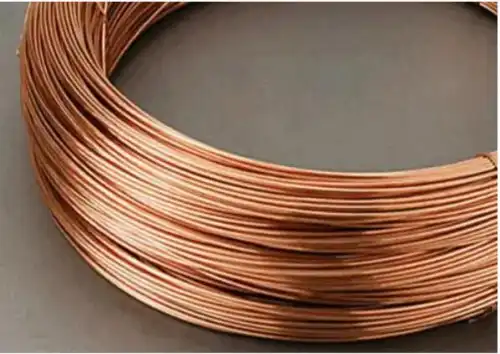
Understanding Zirconium Copper Wire and Its High-Temperature Properties
It can be hard for buying teams in the oil, gas, chemical, and aircraft industries to choose materials that can handle high temperatures and still work electrically. Copper zirconium alloys solve these problems by using precise chemical engineering to turn regular copper into a powerful metal that can handle high temperatures.
The Metallurgical Foundation of Thermal Stability
Zirconium Copper Wire has a mix of 0.10% to 0.20% zirconium and high-purity copper. This addition, which seems small, makes big changes to the material's architecture. Zirconium atoms make fine precipitates at the edges of grains during cold work and aging processes used in production. These precipitates hold the crystal structure in place on a tiny level. They stop the growth of grains, which is what makes pure copper soften at high temperatures. Therefore, a substance is created that stays hard and strong even when temperatures rise above what regular copper can handle.
Thermal and Electrical Performance Characteristics
The metal has great dual capabilities that solve a problem that has been bothering the business for a long time. Zirconium copper has 93–95% IACS (International Annealed Copper Standard) conductivity at room temperature, while many strengthening elements make copper much less conductive. Its thermal conductivity is between 360 and 385 W/(m·K), which means it gets rid of heat quickly in high-current situations. The tensile strength is between 350 and 550 MPa, based on how much cold work was done during production. The melting point is higher than 525°C, while electrolytic tough pitch copper's melting point is only about 200°C. This mix makes it possible for the wire to work consistently in places where regular copper would anneal, lose its springiness, and eventually break.
Manufacturing Standards Ensuring Consistent Quality
Global buying teams give more weight to sellers who follow strict international rules. Specifications like UNS C15000 (USA), EN CW120C (Europe), and JIS C1510 (Japan) are used to make zirconium copper wire. At LINHUI TITANIUM, we make things by carefully melting high-quality copper and zirconium material and then drawing the wire to the sizes that the customer specifies. Electrical conductivity, tensile strength, creep resistance, and rust behavior are all checked for every production batch using detailed testing procedures. Our factory has both ISO 9001:2015 and PED 2014/68/EU approval, which means that every meter of wire we deliver meets the strict standards of EPC contractors and global energy companies. Our quality control systems are checked by outside groups like DNV, BV, and SGS. This gives procurement workers written proof that materials will always perform the same way.
Zirconium Copper Wire vs Other Copper Alloys for High-Temperature Use
When engineers look at materials for hot places, they have to compare many things, such as how well they conduct heat, how strong they are, how much they cost, and how well they meet safety standards. When looking at copper-based metals side by side, Zirconium Copper Wire stands out in a special way.
Pure Copper: High Conductivity but Limited Thermal Resistance
Pure copper has about 100% IACS, which is the best electrical conductivity of any non-precious metal. This makes it perfect for electrical uses at room temperature, where low resistance losses are very important. When temps rise, pure copper shows its weakness. The material starts to anneal quickly above 150°C, losing its stiffness and ability to stay in its original shape. Parts that are mechanically stressed at high temperatures will bend and break, like spring contacts or commutator bars. Because it doesn't have any strengthening elements, pure copper can't keep its shape when it's under a lot of heat and pressure. This means Zirconium Copper Wire can't be used in places where temperatures change often.
Beryllium Copper: Superior Strength but Safety and Cost Concerns
Beryllium copper alloys have amazing tensile strengths of more than 1,200 MPa and good conductivity of 20 to 45% IACS. These metals work great in situations where extreme spring qualities are needed, along with average electrical performance. Their use is limited by major problems. There are major health risks at work with beryllium. Breathing in beryllium dust and fumes can lead to chronic beryllium disease while cutting or welding. In order to follow the rules, you need to have detailed plans for protecting workers, special air systems, and ways to get rid of waste. The cost of materials is a lot higher than for zirconium copper. Companies with strict rules about health, safety, and the environment often look for options that work just as well but don't pose any harmful risks.
Phosphor Bronze and Brass: Lower Conductivity Trade-offs
Copper-tin-phosphorus metals make phosphor bronze, which is good for springs and resists rust. Its conductivity is usually between 15 and 45% IACS. Copper-zinc metals like brass are very easy to work with, but they lose 27–37% of their conductivity when heated. In some places, both materials don't rust very easily and are cheaper than special metals. Because they don't carry electricity as well, they can't be used in high-current situations where resistive heating is a problem. When parts need to carry heavy electrical loads and keep their shape at high temperatures, the lower conductivity of these common metals is not appropriate.
The Zirconium Copper Advantage
Zirconium copper wire is more durable than pure copper and stronger than high-strength metals. It has an IACS conductivity of 93–95% and stays mechanically strong at temperatures where pure copper would break. The combination is much cheaper than beryllium copper and doesn't pose any health risks. When compared to phosphor bronze and brass, it has much better electrical properties without losing its high-temperature power. This set of properties is why purchasing managers in heavy industrial, aerospace, electrical systems, and the car industry are choosing zirconium copper more and more for important parts that need to work in high-temperature settings.
Practical Applications of Zirconium Copper Wire in High-Temperature Environments
When buying, teams know where copper zirconium alloys really help operations, and they can back up their choices of materials. The usefulness of this specific Zirconium Copper Wire is shown by its use in real life in many different industries.
Resistance Welding Electrodes in Automotive Manufacturing
Resistance spot welding is used to join galvanized steel body panels on auto production lines. When welding zinc-coated materials, standard copper electrodes quickly break down because the tips of the electrodes stick to the zinc coating, bend under the pressure of welding, and need to be replaced often. Zirconium copper wire works well for these types of failure. The material is cold-headed into electrode cap tips that stay hard even after being heated and cooled many times up to 400°C and 500°C. The alloy's lower tendency to react with zinc coats keeps the electrodes from sticking, which increases their life by 300–400% compared to electrodes made of pure copper. After switching to zirconium copper caps, a car supplier that works with major makers cut the number of electrode replacements from every 800 welds to every 3,000 welds. This cut the cost of consumables by 65% per year while keeping the quality of the welds the same across production shifts.
High-Performance Motor Commutators
Commutators that can handle a lot of mechanical and heat stress are needed in electric car motors, industrial traction systems, and power tools. When the speed of spin is very fast, centrifugal forces try to bend the commutator bars outward, and high current densities raise the temperature through resistive heating. In these situations, traditional copper commutators get soft and break before they should. Zirconium copper wire with triangular cross-sections is used for the commutator parts. This wire keeps the structure of the motor strong over its lifetime. A company that makes electric vehicles reported a 40% drop in motor failures caused by commutator degradation after switching to zirconium copper components. This made the vehicles more reliable and cut down on insurance costs by a large amount.
Electrical Connectors in Aerospace and Defense Systems
Electrical systems in airplanes work in temperatures that range from -55°C at high altitude to over 200°C near the engines. Connectors need to keep their low contact resistance, not rust from Zirconium Copper Wire, water, and salt spray, and their spring force even after thousands of heat cycles. Copper zirconium contacts meet these strict standards better than other materials. The creep resistance of the metal ensures that connections keep the right contact force over decades of use, even when they are repeatedly stretched and contracted. An aerospace contractor that makes parts for commercial planes said that after using zirconium copper contact springs, there were no field failures due to connector degradation in five years of operational data. This is in contrast to the 2% annual failure rate that they saw with the old phosphor bronze parts.
Circuit Breaker Components in Power Distribution
When fault currents are cut off, high-voltage equipment that protects electrical lines gets very hot. Instantaneous temperatures above 2,000°C are caused by arcing, while joule heating from high-current transfer all the time causes long-term thermal loads. Flexible links inside breakers have to handle thousands of amps of current without getting soft, but they also have to stay flexible so that they can be moved mechanically. By combining great conductivity with the ability to maintain mechanical qualities at high temperatures, Zirconium Copper Wire satisfies these contradictory requirements. Utility companies have found that using zirconium copper instead of standard copper alloys in critical internal parts of breakers makes them more reliable and extends the time between maintenance visits. This means that transmission and distribution infrastructure has less downtime and lower lifecycle costs. These uses all have one thing in common: they all happen in places where heat and electricity cause failure modes that hurt safety, dependability, and the bottom line of operations. For mission-critical thermal uses, procurement workers in the energy, automobile, aircraft, and industry sectors are increasingly specifying copper zirconium alloys because they improve performance and save money.
Procurement Considerations for Zirconium Copper Wire
To find high-performance products, you need to carefully look at the skills of the suppliers, the quality control methods, and the dependability of the supply chain. Before accepting purchase orders, procurement teams in the oil, gas, chemical, and aerospace industries that are in charge of multimillion-dollar projects must make sure that material sources meet strict requirements.
Evaluating Supplier Credentials and Quality Systems
International licenses are a reliable way to show that a company is good at producing and managing quality. When purchasing managers look at possible suppliers, they should make sure that they have ISO 9001:2015 certification as a minimum condition. This certifies that the suppliers follow systematic quality control methods. For European markets, projects that use pressure tools must follow PED 2014/68/EU. When materials are used in marine, offshore oil platform, or shipbuilding projects, they need to be approved by classification societies like DNV, ABS, CCS, GL, BV, and Lloyd's Register. Third-party review acceptance by organizations like SGS, TUV, Moody's, and RINA is another way to make sure that the material meets the requirements. LINHUI TITANIUM has a lot of different types of certifications, such as ISO 9001:2015 for Quality Management Systems, ISO 14001:2015 for Environmental Management, and OHSAS 18001:2007 for Occupational Health and Safety. Our factory has the Manufacturing License of Special Equipment of China and the TUV Nord AD2000-W0 approval, which shows that it can make materials for tough pressure tank uses. All of the major classification societies have given their approval, and we regularly have third-party inspectors come in to watch tests and check paperwork before shipping materials. With this level of approval, we can provide zirconium copper wire for projects all over the world and meet the compliance needs of large energy companies and EPC providers.
Understanding Lead Times and Minimum Order Quantities
The supply of materials has a direct effect on project plans. Standard Zirconium Copper Wire in standard diameters usually takes 4 to 6 weeks to deliver from the time an order is placed if the seller keeps raw materials in stock. For unique manufacturing runs, wait times may go up to 8 to 12 weeks if the customer requests non-standard diameters, tempers, or mechanical qualities. Minimum order numbers (MOQs) depend on the seller and the diameter of the wire. For standard sizes, MOQs are usually between 100 kg and 500 kg, but bigger providers may be able to work with smaller quantities for test orders or prototype development. Setting up a framework that deals with sellers who promise to reserve production capacity and material supply is helpful for procurement teams that are in charge of big, multi-year projects. Our production planning tools can handle both one-time purchases and planned shipping schedules that are in line with the milestones of the customer's project. We keep a strategic stockpile of raw materials so that we can quickly meet pressing needs. We also offer freedom on MOQs for customers who are creating new uses or testing the material's performance before deploying it on a large scale.
Price Dynamics and Market Positioning
The price of zirconium copper wire depends on the cost of the raw materials, how hard it is to make, and how many orders are placed. Copper prices change based on quotes from the London Metal Exchange. This makes material costs more volatile because of metal prices. The addition of zirconium and the special processes needed to get uniform precipitation hardening make copper wire more expensive than regular copper wire. Prices on the market usually run from 8 USD to 15 USD per kilogram, based on the size of the wire, the number of kilograms ordered, and the state of the market. When you commit to buying more than one metric ton, you usually get lower prices. Beyond the price of the base materials, global buying issues affect the total landing cost. North American and European suppliers usually charge 20–35% more than Asian producers for the same grades of materials, but being close may lower transportation costs and wait times. Chinese makers offer reasonable prices and are getting better at meeting foreign quality standards. Instead of just looking at per-kilogram prices, procurement workers who are reviewing suppliers should do total cost of ownership studies that include the price of the materials, the cost of freight, the cost of keeping inventory, and any quality-related risks.
Ensuring Post-Sale Support and Technical Collaboration
In workplace settings that are very complicated, expert help is often needed in addition to just delivering materials. Suppliers who know a lot about metals can help you choose the best wire sizes, tempers, and making methods for your needs. Customer service teams that are quick to respond answer questions about the features of materials, give mill test certificates, and set up faster shipping when project deadlines are tight. Suppliers who are ready to help with testing materials, figuring out why things fail, and making apps are seen as valuable partners instead of just business vendors. The engineers on our team have decades of experience using copper alloys in the aircraft, automobile, and industrial fields. We work with customers during the planning process to choose the best materials and forming methods. This cuts down on development time and avoids expensive changes. As part of our commitment to excellent customer service, we offer quick technical help via email at linhui@lhtitanium.com, full paperwork that includes material certifications and test reports, and proactive contact about the progress of your order during the production and logistics phases. With this consultative method, long-term strategic partnerships have been made with global companies such as CEFC, PTT, PDVSA, PETROECUADOR, KOC, and PETRO VIETNAM.
Ensuring Long-Term Success: Tips for Optimizing Performance and Handling
The way a material works in service depends on its own qualities, as well as how it is handled, installed, and maintained. The procurement team should make sure that the people who work in handling, fabrication, and repair know the best ways to keep materials in good shape from the time they are delivered until they are no longer needed.
Handling and Storage Best Practices
Zirconium Copper Wire comes from sources in protective packaging that is meant to keep the surface clean and avoid damage during shipping. When you get the coils or spools, check the packaging for damage and keep them somewhere clean and dry that is away from water, chemicals, and physical damage. Stay away from acidic substances or places that have sulfur compounds that can change the color of copper or damage it. When unwinding wire for manufacturing, make sure to use the right tension controls to keep it from kinking or strengthening past the desired temper levels. Before making, clean the surfaces with lint-free cloths and Zirconium Copper Wire-approved chemicals to get rid of any processing oils or other contaminants that might get in the way of later steps like plating or welding.
Forming and Installation Considerations
Zirconium copper wire can be cold worked by bending, pressing, and drawing, but to get the best results, you need to know how the material works. When annealed or slightly hardened, the metal is very easy to work with when it is cold. For tough forming jobs or sharp bends, intermediate annealing may be needed to recover elasticity and keep the metal from breaking. When making parts like springs, contacts, or connections, make sure the forming radius is the right size for the wire diameter and temper. For harder tempers, the minimum bend radius is usually two to three times the wire diameter. To get the final strength qualities through precipitation hardening, heat treatment may be needed after the shape has been formed. To find the best aging factors for a given application, look at the material details or talk to the supplier's expert support.
Quality Assurance Testing and Inspection Protocols
By doing quality checks on a regular basis, you can be sure that the material will continue to meet performance standards while it is being stored and used. Calibrated micrometers or optical measurement tools should be used for the incoming review to check the accuracy of the dimensions. Four-point probe testing of electrical conductivity shows that the material meets the basic requirements. Tensile testing on representative examples makes sure that the material's mechanical qualities match its certifications. Visual inspection finds flaws, discolorations, or contamination on the surface that could affect how well it works. Setting up written inspection processes and keeping test records helps with finding the root cause of quality problems that happen during manufacturing or field service. Periodic condition tracking is helpful for parts that are used in high-temperature settings. During repair times, a visual check can find rust, discoloration, or physical deformation that could be caused by too much heat. Electrical resistance measurements identify degradation before complete failure occurs. Inspection results that are written down set the baseline conditions and show patterns of wear that are speeding up, allowing for proactive replacement before major failures stop operations.
Addressing Common Challenges and Failure Modes
Although copper metals are strong at resisting corrosion, they may need extra protection in some places. Surface rusting or pitting can happen when sulfur chemicals, ammonia, or acidic condensates come into contact with it. Protective plating with nickel or silver keeps electrical flow while adding extra rust protection in harsh settings. Components that are subjected to repeated mechanical spinning may break down due to fatigue. To avoid this, designers should limit stress concentrations at bends and changes and set the right safety factors based on the expected number of cycles. To avoid thermal stress caused by repeated expansion and contraction, you need to choose materials that are resistant to creep and stable in their dimensions across the temperature range you expect. Systematic root cause analysis finds the reasons why things fail even when the right materials are used and handled. Look at broken parts for signs of burning, too much cold work, or rust attack in the metal. Check the material's specs against the working conditions to see if thermal or mechanical loads went beyond what was intended. Go over the steps for handling and installing things again to find places where contamination or damage could come from. This way of looking at things analytically lets you fix problems so they don't happen again and improves long-term dependability.
conclusion
At high temperatures, zirconium copper wire is a reliable option for industrial uses that need both good electrical conductivity and mechanical strength. Because it has a melting point higher than 525°C and a conductivity of 93–95% IACS, it can be used reliably in places where copper fails, like in resistance welding, electric motor commutators, electrical connections, and power distribution equipment. It's helpful for procurement workers in the oil, gas, chemical, aerospace, and automobile industries to know what makes this material better than other alloys and to use strict criteria to evaluate suppliers that guarantee quality, compliance, and supply chain reliability. When handled, installed, and maintained properly, zirconium copper wire can last a long time and give a good return on investment. This makes it a good choice for companies that work in settings with a lot of heat stress.
FAQ
1. What maximum continuous operating temperature can zirconium copper wire handle?
Zirconium copper wire can work continuously at temperatures up to 500°C–550°C without losing its structural integrity or mechanical qualities. This is much higher than the 150°C–200°C limit of standard electrolytic copper. Zirconium precipitates stop grain growth and weakening, which is what gives it this thermal ability. Applications that experience random temperature spikes may be able to handle short trips above this range, but long-term contact above 550°C may cause properties to slowly break down. The upper and lower temperature limits are based on the amount of mechanical stress, the length of exposure, and the property retention values that are accepted for each application.
2. How does zirconium addition improve copper's thermal performance?
During controlled age heat treatment, zirconium forms small particles at the edges of copper grains. When heated, these precipitates physically hold the grain structure in place, stopping the growth of grains and border movement that softens pure copper. As a result, a substance is created that stays hard, strong, and flexible at temperatures where regular copper would soften. Zirconium copper has a precipitation hardening process that makes it very good at conducting electricity and staying stable at high temperatures, which is not possible with pure copper or other copper alloys.
3. What certifications should procurement teams verify when sourcing this material?
As a minimum, industrial buyers should make sure that providers have ISO 9001:2015 quality control certification. For European markets, projects that use pressure tools must follow PED 2014/68/EU. Classification society licenses from groups like DNV, ABS, CCS, GL, BV, or Lloyd's Register are needed for maritime and marine uses. Materials that are going to be sold in North America may need to meet ASTM or ASME standards. Acceptance by third-party inspection bodies like SGS, TUV, Moody's, or Bureau Veritas adds to the proof that materials and source quality systems are correct.
Partner with LINHUI TITANIUM for Your Zirconium Copper Wire Requirements
Your projects will be safe from quality problems and supply problems if you get high-performance materials from a qualified and skilled Zirconium Copper Wire manufacturer. LINHUI TITANIUM has a lot of foreign certifications and approvals, such as ISO 9001:2015, PED 2014/68/EU, and approvals from DNV, ABS, CCS, BV, and other big classification societies. They can also make very advanced products. Our Xi'an plant uses decades of metalworking experience to make zirconium copper wire that meets the high standards of EPC contractors and global energy companies in more than 60 countries. We offer full expert support, from choosing the right materials to making sure the best application is used. This is backed up by helpful customer service and dependable global shipping. Email our team at linhui@lhtitanium.com to talk about your unique needs and find out how our track record of delivering world-class projects can help your business succeed.
References
1. Avis, J.R. (2001). Copper and Copper Alloys: ASM Specialty Handbook. Materials Park, OH: ASM International.
2. Copper Development Association. (2019). Properties and Applications of High-Performance Copper Alloys. Technical Publication Series, CDA Publication A4078-10.
3. Sladek, T.A. and Williams, J.C. (2015). "Precipitation Hardening in Copper-Zirconium Alloys: Microstructural Evolution and Mechanical Properties," Metallurgical and Materials Transactions A, Vol. 46, pp. 2523-2536.
4. International Copper Association. (2020). Material Selection Guide for Electrical Applications in High-Temperature Environments. New York: ICA Technical Document Series.
5. Rosenqvist, T. (2004). Principles of Extractive Metallurgy, Second Edition. Trondheim: Tapir Academic Press.
6. Zhang, L., Wang, X., and Liu, P. (2018). "Thermal Stability and Electrical Conductivity of Dilute Copper Alloys for Electrical Contact Applications," Journal of Materials Engineering and Performance, Vol. 27, No. 8, pp. 4156-4165.