
Withstanding temperatures as high as 350°C (660°F), Titanium 6Al4V Wire performs very well. The composition of this Grade 5 titanium alloy is alpha-beta, which makes it more stable at high temperatures than pure titanium grades. It has 6% aluminum and 4% vanadium in it. Because of how it is made, the metal can keep its tensile strength, not rust, and keep its shape when heated. Because of this, it is great for parts of rocket engines, chemical processing equipment, and other industry uses that need to work reliably in hot places.
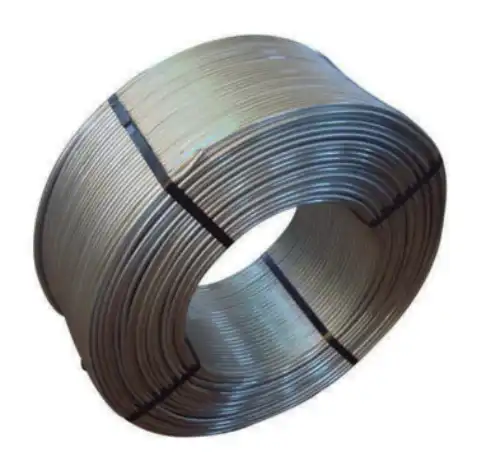
Understanding Titanium 6Al4V Wire and Its High-Temperature Capabilities
Most of the titanium used in industry is Grade 5 titanium wire, which is also known as titanium 6Al4V. It makes up more than half of all the titanium used in the world. This amazing stuff is made up of titanium, aluminum, and vanadium, in that order. It is made of an alpha-beta metal structure that works very well in both dynamic and heating situations.
Composition and Thermal Properties
It is stronger and better able to handle high temperatures because the aluminum in Ti-6Al-4V works as an alpha stabilizer. What the vanadium does, though, is strengthen the beta bond. This makes the metal more flexible and simple to work with. The melting point is about 1,660°C (3,020°F), which is much higher than the melting point of many popular metals. This is because the elements are balanced. The metal is strong at temperatures up to 350°C (660°F), which makes it useful for tasks that need to be done at high temperatures. Our Grade 5 titanium wire will always be of high quality and work well in any case, as long as it passes the standards set by ASTM B863 and AWS 5.16. It moves heat around very well; its thermal expansion coefficient is 8.6 × 10⁻⁶/°C, which is less than that of steel and aluminum alloys.
Heat Treatment Response and Thermal Cycling
There are very good heat treatment methods that can be used to make Ti-6Al-4V wire better for certain uses. A solution treatment and aging method can be used on the metal to get the right amount of strength while keeping its thermal stability. As a general rule, temperatures used for heat treatment are between 700°C and 950°C. However, this can change depending on the texture and final qualities that are needed. When something is heated and cooled a lot, it doesn't lose its mechanical properties. This is called thermal resistance. This quality is very useful for parts that are used in airplanes and are subject to big changes in temperature while they are working.
Performance Analysis of Titanium 6Al4V Wire at Elevated Temperatures
The performance of Ti-6Al-4V wire stays the same because it can handle higher temperatures better than other materials. As it stands, its yield strength is between 825 and 895 MPa, and its tensile strength is between 895 and 1,000 MPa. It keeps about 80% of its strength from when it was at room temperature up to 300°C.
Structural Integrity Under Thermal Stress
Grade 5 titanium is very solid at high temperatures because it is made up of alpha and beta particles. At high temperatures, pure titanium grades can change phases, but Ti-6Al-4V keeps its two-phase structure. This means that its mechanical properties and size don't change. It stays stable because it has balanced alloying elements, Titanium 6Al4V Wire, that stop phase changes that aren't wanted when it gets hot. At high temperatures, a test shows that Ti-6Al-4V wire keeps its higher strength and better resistance to creep better than pure titanium types (Gr1 and Gr2). Because its nanoscale is better and its chemical makeup is carefully controlled, the metal works better when it's hot.
Oxidation Resistance and Surface Protection
When temperatures get high enough, titanium metals naturally make an oxide layer that keeps them from burning even more. The Ti-6Al-4V wire makes a thin layer of titanium dioxide (TiO₂) that sticks together. This layer stops oxygen from getting into the air. Because the material doesn't break down much, this self-protecting system can be used for a long time in places with high temperatures. Advanced surface treatments and protective coats can make rust resistance even better for uses that need to be able to handle high temperatures. These steps increase the temperature range at which the product can be used. They also make it more durable over time in harsh manufacturing settings.
Welding Considerations for High-Temperature Applications
You have to use certain techniques when welding Ti-6Al-4V wire so that it keeps its high-temperature properties. E-beam welding and gas tungsten arc welding (GTAW) are the best ways to join because they protect the welds with neutral gas. When you use the right welding methods, you can keep the material's mechanical structure and heat efficiency. After welding, it might be necessary to do a heat treatment to make the metal stronger and reduce any stress that is still there. When you follow these steps, the welded parts will work at high temperatures just like the other parts did.
Comparative Overview: Titanium 6Al4V Wire vs Other Materials in High-Temperature Use
To fully understand how Ti-6Al-4V wire is better than other materials commonly used in high-temperature settings, we need to compare them in detail. The review looks at how well the material works mechanically, how well it works thermally, and how much it costs.
Strength-to-Weight Ratio Advantages
Not only is Ti-6Al-4V wire very strong, but it is also very light—about 40% lighter than steel—but it is just as strong. This benefit is very important in places with high temperatures, where weight loss is important, like the car and airplane businesses. Since the material is very strong and not very dense (4.43 g/cm³), parts can be made lighter without affecting how well they work. Stainless steel wire can handle high temperatures, but it is heavy and doesn't have as much specific strength. Inconel and other superalloys are good at high temperatures, but they are also very expensive and heavy. For many uses, Ti-6Al-4V wire is a better choice.
Titanium Alloy Comparisons
Ti-6Al-4V works better than other titanium metals when it comes to high temperatures. While it is hot, Ti-3Al-2.5V is not as strong, but it is easy to shape. It's not as easy to find or as solid as Grade 5 titanium, but Ti-5Al-2.5V has some good points. Because it is made up of alpha and beta atoms, Ti-6Al-4V is strong, flexible, Titanium 6Al4V Wire and stable at high temperatures. Other types of titanium can't do these things as well. Because of these things, it is the best choice for jobs that need to be done at high temperatures.
Wire vs. Bar Stock Considerations
Titanium wire or bar stock should be chosen based on the product's needs and how it will be made. The form of the wire is better because it has more surface area per unit volume, is easier to work with, and can be used for current processes. Making wire by drawing it also makes it better mechanically by making it harder to work with. No matter what, our titanium wire, which ranges in size from 0.05 mm to 6 mm, can be used. The very exact way of making the product makes sure that the tolerances are ±0.02mm, which means that the product will always work in important cases.
Procurement Guide: Sourcing High-Quality Titanium 6Al4V Wire for Heat-Intensive Uses
To buy good Ti-6Al-4V wire, you need to know about some important specs, the skills of the seller, and how they ensure the quality of the wire. To be used in modern production, products must meet strict performance standards and have a strong supply chain.
Critical Specification Requirements
Procurement staff must make sure that the titanium wire purchased for use at high temperatures meets standards such as ASTM B863, AMS 4951, and ASTM F136. These rules make sure that the material meets the needs of the business in terms of its chemical makeup, mechanical properties, and size accuracy. Our Grade 5 titanium wire meets all of the major standards around the world and has been approved by well-known testing labs. Material certificates help you find goods and make sure they meet certain standards, which makes sure they work well even when things get tough.
Minimum Order Quantities and Supply Chain Considerations
At LINHUI TITANIUM, the minimum order amount can be changed and starts at 1 kg. This means that it can be used for both idea development and production. People can use this way to test how well things work without having to buy a lot of them. When you buy in bulk, you save money on big jobs and make sure you always have things on hand. Through our global delivery network, we can serve customers in Southeast Asia, Africa, the CIS countries, the Gulf area, North America, and South America with confidence. Shipping is faster, and projects that need to be done quickly don't have to wait as long when relationships between delivery companies are in place.
Quality Assurance and Certification
People you can trust that you buy from have quality control systems that meet ISO 9001:2015 standards. Materials are checked by outside testing services from firms such as DNV, SGS, and TUV to make sure they meet guidelines and have the right qualities. As part of its quality assurance program, LINHUI TITANIUM tests the end product and looks over the materials that come in. This all-around method makes sure that all products are the same in terms of quality and speed.
Supplier Evaluation Criteria
When looking at possible providers, Titanium 6Al4V Wire, you should check how well they can make things, how well they control quality, how much help they can give you, and how stable their finances are. You can trust sellers who have been around for a while and have done well in tough industries. You can also work with them for a long time. Our business has been around for 24 years and has worked with big foreign companies like PETROECUADOR, CEFC, PTT, and PDVSA. This proves that we can make useful titanium items of great quality.
Trust and Quality Assurance: Why Choose Our Titanium 6Al4V Wire Solutions
Since it began in 2000, LINHUI TITANIUM has grown to become one of the best companies for making and selling high-quality titanium goods. Its buildings in Xi'an, China, are in a great spot. Our commitment to quality goes back more than 20 years. During that time, we've learned a lot about how to make titanium alloys and make sure they are of good quality.
Manufacturing Excellence and International Certifications
Our companies have a lot of different certificates from government agencies, classification societies, and other groups from around the world that vouch for their quality. Some examples are TUV Nord AD2000-W0, PED 2014/68/EU, and GL. We work hard to meet the strictest international standards for goods that are used for important jobs, as shown by these awards. The company has a Manufacturing License of Special Equipment from China and is still certified by ISO 9001:2015. This makes sure that all of their production methods meet the same standards. Our method for quality control checks everything that goes into making something, from getting the raw materials to giving you the finished item.
Proven Track Record in Demanding Industries
Because we have worked with the oil, gas, chemical, airplane, and marine industries so much, LINHUI TITANIUM is a trustworthy partner for important tasks. The fact that we've worked well with big EPC firms, LUKOIL, PDO, PEMEX, and PETRONAS, shows that we can meet even the tightest needs. To keep these relationships going, you need to keep sending high-quality goods that meet or go beyond what is needed, as well as quick technical support and reliable shipping. For each business, we know what they need, so we can make products that are made to solve particular problems.
Global Logistics and Technical Support
We can do business in over 60 countries and regions around the world because we have strong technology and transportation networks in those places. They can deliver on time and help customers all over the world, so no matter where the job is, they can be sure of good service. Technical support teams help with every step of the buying and setting up process. They help you pick out the right materials at the beginning and give you tips on how to use them in different situations. This help makes things easier for customers and makes sure that the materials work well when things get tough.
Sustainable Manufacturing Practices
We still care a lot about doing the right thing by the environment, Titanium 6Al4V Wireand our ISO 14001:2015 certification shows that we are committed to using environmentally friendly ways to make things. The way we make things has the least impact on the earth possible while still meeting the highest quality standards. Because we keep putting money into new technologies and process changes, we can make better things with less damage to the environment. This method is used by companies that care about the earth in many areas because it helps them stay alive.
Conclusion
The titanium 6Al4V wire is very strong and can handle temperatures up to 350°C without losing its mechanical or structural properties. Because it has a balanced chemical makeup and a unique alpha-beta structure, the metal is more stable at high temperatures, less likely to rust, and stronger over time than other materials. When you need to use high-temperature titanium wire, LINHUI TITANIUM is the best company to work with because we can make many different goods, have certifications from other countries, and have a history of success in tough industries. Because we care about quality, technical excellence, and customer service, our goods always work in the harshest heat conditions in industries like chemical processing, airplanes, and manufacturing.
FAQ
1. What is the maximum operating temperature for Ti-6Al-4V wire?
Ti-6Al-4V wire is recommended for use at temperatures that stay the same up to 350°C (660°F). The material keeps about 70–80% of its strength at room temperature when it is this hot. It also stays the same size and shape.
2. How does thermal cycling affect the properties of Grade 5 titanium wire?
This grade 5 titanium wire doesn't wear down easily when heated or cooled many times. Its properties stay the same. The alpha-beta microstructure keeps the qualities steady at high temperatures, so they don't break down during thermal cycle use.
3. What welding techniques preserve high-temperature properties in Ti-6Al-4V wire?
Gas tungsten arc welding (GTAW) and a neutral gas cover are the best ways to join Ti-6Al-4V wire. If you use controlled heat and do a post-weld heat treatment if needed, when you weld something the right way, you can keep the material's high-temperature qualities.
4. How does Ti-6Al-4V wire compare to stainless steel in high-temperature applications?
Ti-6Al-4V wire is stronger for its weight than stainless steel. Even though it gets hot, it stays strong and is 40% lighter than stainless steel. Titanium is also better at standing up to rust and getting along with living things for some uses.
Partner with LINHUI TITANIUM for Premium Titanium 6Al4V Wire Solutions
LinHui Titanium has Grade 5 titanium wire ready to help you with your high-temperature needs. This wire is made to work well in harsh temperatures. Our large selection of goods, with diameters from 0.05mm to 6mm and tight tolerances of ±0.02mm, gives you the best choices for uses in airplanes, chemical processing, and industry. We are the best at making titanium 6Al4V wire. We have more than 20 years of experience and are certified to meet foreign standards like ASTM B863, AMS 4951, Titanium 6Al4V Wire and ASTM F136. Our quality and reliability can't be beat. Send an email to linhui@lhtitanium.com to talk to our buying experts about your specific needs and get prices that are tailored to your needs with full tech support.
References
1. Donachie, Matthew J. "Titanium: A Technical Guide, 2nd Edition." ASM International Materials Park, Ohio, 2000.
2. Peters, M., Kumpfert, J., Ward, C.H., and Leyens, C. "Titanium Alloys for Aerospace Applications." Advanced Engineering Materials, Vol. 5, No. 6, 2003.
3. Lutjering, Gerd and Williams, James C. "Titanium: Engineering Materials and Processes, 2nd Edition." Springer-Verlag Berlin Heidelberg, 2007.
4. Boyer, Rodney, Welsch, Gerhard, and Collings, E.W. "Materials Properties Handbook: Titanium Alloys." ASM International, Materials Park, Ohio, 1994.
5. Froes, F.H. and Eylon, D. "Titanium Technology: Present Status and Future Trends." Titanium Development Association, Dayton, Ohio, 1985.
6. American Society for Testing and Materials. "ASTM B863-17 Standard Specification for Titanium and Titanium Alloy Wire." ASTM International, West Conshohocken, Pennsylvania, 2017.