
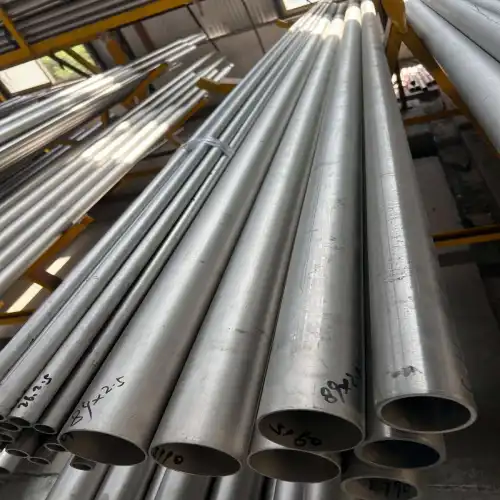
ASTM B861 Titanium Seamless Pipe works exceptionally well at high temperatures in numerous diverse industry settings. At high temperatures, these channels do not lose their auxiliary astuteness and do not rust, so they can be utilized in unforgiving conditions in the oil, gas, chemical, aviation, and maritime industries. Distinctive grades of titanium can handle distinctive temps. Review 2 can work up to 315°C (600°F), whereas Review 5 can handle higher temperatures since it is more grounded.
Introduction
ASTM B861 Titanium Seamless Pipe is a vital material determination for areas that require working exceptionally well beneath high temperatures. This standard depicts consistent titanium and titanium amalgam channels that are made for applications where normal materials do not last long enough or do not withstand erosion well enough.
High-temperature execution is exceptionally critical in numerous mechanical settings, such as oil refineries, chemical plants, airplane frameworks, and marine situations. The security, proficiency, and cost-effectiveness of operations are all influenced by how well channeling frameworks can maintain their basic keenness and battle erosion at high temperatures.
When choosing materials for vital employments, B2B buyers in the chemical, aerospace, and energy businesses require precise data on how well they handle heat. Knowing the most elevated and lowest temperatures that a fabric can go through, as well as its long-term execution, makes a difference when making shrewd purchasing decisions that will guarantee the success of your project and lower the risks of it failing due to thermal expansion.
Understanding ASTM B861 Titanium Seamless Pipe and Its High-Temperature Capabilities
Material Properties and Grade Specifications
A standard called ASTM B861 sets out all the requirements that seamless titanium pipes must meet in order to have the best mechanical properties and corrosion protection. The standard covers a number of different grades of titanium, each with its own unique properties that make it best suited for different thermal uses. The ductility and corrosion resistance of grade 2 titanium are among the best. These qualities stay strong at temperatures up to 315°C. Because it is so easy to shape and weld, it is perfect for use in chemical processing settings with complicated pipe systems.
It is made of grade 5 titanium metal (Ti-6Al-4V), which is stronger and can handle higher temperatures better. The aluminum and vanadium alloying elements help make the structure more stable at high temperatures, so it can be used at temperatures up to 427°C without losing its shape. This grade is especially useful in aerospace applications that need to reduce weight and work well at high temperatures.
Thermal Performance Characteristics
It is easy to see how the mechanical qualities of titanium seamless pipes change as the temperature changes. Tensile strength usually goes down slowly as temperature rises, but stays at a level that is good for most commercial uses. The elongation qualities stay the same at moderate temperatures, which ensures that the ductility is maintained even when temperature stress is applied.
Titanium is naturally resistant to corrosion, so it stays strong at high temperatures and regularly works better than stainless steel alternatives in corrosive environments. This feature comes in handy in marine settings where saltwater and temperature changes happen often, as well as in chemical processes where harsh media work at high temperatures.
Manufacturing and Heat Treatment Processes Enhancing High-Temperature Performance
Production Methods and Quality Control
Advanced methods, such as rotating piercing, extrusion, and cold pilgering, are used to make ASTM B861 titanium seamless pipes. To withstand thermal stress, these ways make sure that the walls are all the same thickness and that the structure is all the same. The initial hollow is made by rotary piercing. Next, controlled distortion during cold pilgering improves the size and mechanical properties.
Throughout the production process, quality control methods prevent flaws that could weaken heat resistance from happening. Ultrasonic screening and eddy current testing are two non-destructive testing methods that find flaws inside a product that could spread when it is heated and cooled. These strict rules make sure that every pipe meets the strict needs of high-temperature uses.
Heat Treatment Optimization
Titanium smooth pipes work much better at high temperatures when they've been treated with heat. When you anneal grains, you improve their structure, which makes them less likely to expand and more stable at high temperatures. Stress-relieving steps get rid of any leftover stresses in the manufacturing process, which keeps things from breaking too soon when they are heated and cooled many times.
During heat treatment, the controlled atmosphere keeps out contaminants that could damage the high-temperature qualities. Vacuum or inert gas conditions keep the material pure, which ensures that the pipe works well for as long as it lasts. These processes also change the chemistry at the grain boundaries, making the material more resistant to oxidation and weakening at high temperatures.
Comparative Analysis: ASTM B861 Titanium Seamless Pipe vs Alternatives at High Temperatures
Standards Comparison and Performance Differences
The ASTM B861 and ASME SB861 specifications have some of the same basic requirements but different details that are unique to each application. Both standards make sure that the mechanical properties and size tolerances are the same, but ASME SB861 usually has extra requirements for pressure tank uses. These small differences change how thermal suitability studies are done for certain industrial settings.
When it comes to thermal stress, seamless construction is much better than bonded construction. Because the microstructure is uniform, there are no heat-affected zones that could become failure places when the temperature changes. This structural stability is very important in situations where temperatures change quickly or where temperatures stay high for a long time.
Material Performance Comparison
When exposed to high temperatures and corrosive conditions, titanium pipes last longer than stainless steel pipes. Case studies from petroleum plants show that titanium systems work well for decades, while stainless steel systems need to be replaced more often. When you combine thermal stability with corrosion protection, you get great value in tough situations.
Grade 2 vs. Grade 5 performance traits help you choose the best material for your thermal needs. Grade 2 is best for moderate temperature environments that need the best corrosion protection, while Grade 5 is best for high-strength, high-temperature settings that are common in aerospace and advanced chemical processing systems.
Practical Applications and Limitations of ASTM B861 Titanium Seamless Pipe in High-Temperature Environments
Industry Applications and Operating Parameters
In engine systems that are used in aerospace, titanium seamless pipes are used in places where temperatures regularly go over 400°C. The lightweight and temperature stability make it possible to make heat exchangers and fuel system parts that work well. These pipes are used in the chemical processing industry to handle acidic media at high temperatures, where stainless steel pipes would break too soon.
Titanium is very resistant to corrosion in seawater at high temperatures, which makes it useful for marine uses. ASTM B861 pipes are used in heat exchangers and cooling systems in desalination plants, offshore platforms, and military ships. These systems are exposed to harsh marine environments and thermal cycling.
Temperature Limits and Operational Considerations
In most commercial settings, ASTM B861 Grade 2 titanium works well up to 315°C. Grade 5 titanium can handle temperatures up to about 427°C. When temperatures go above these levels, oxidation rates go up a lot, which could hurt long-term performance. In some situations, protective atmospheres or special coatings may make the operational boundaries longer.
For high-temperature uses, ways to reduce risks include designing the system correctly so that it can handle thermal growth and using the right support structures. Controlling the climate with things like controlled atmospheres or protective coatings stops oxidation and makes things last longer in places with very high temperatures.
Procurement Guide: Buying ASTM B861 Titanium Seamless Pipes for High-Temperature Needs
Supplier Selection and Certification Requirements
Before making a purchase choice, you need to carefully look at the manufacturer's skills and credentials. The best suppliers have complete quality control systems that include ISO 9001:2015 certification, PED compliance, and approvals from classification societies like DNV, ABS, and Lloyd's Register. These certifications make sure that the quality is always the same and that the rules are followed for important high-temperature uses.
Quality and dependability can be further assured by global suppliers who have worked with major energy companies and EPC firms in the past. Experience working on world-class projects shows that you can meet the strict technical standards and tight deadlines needed for big industrial projects.
Technical Specifications and Custom Requirements
To select the right fabric, you have to fit the properties of a certain type of titanium with the temperature needs. Review 2 is great for most applications where the temperature is gentle, whereas Review 5 is superior for high-strength needs at high temperatures. For certain operational circumstances, custom warm treatment determinations may make strides in performance.
Knowing how the showcase works, like how costs alter over time, how much you require to purchase, and how long the regular lead time is, makes a difference in how you arrange your buys well. Companies that let you place orders at any time and offer master consultation are more profitable since they can make arrangements that are one of a kind to your venture's needs.
Conclusion
The ASTM B861 Titanium Seamless Pipe is very good at working in high-temperature environments for many different industry uses. With the right grade choice and production methods, the material's natural properties make it reliable at high temperatures while still having excellent corrosion resistance. For important high-temperature uses, making smart decisions requires knowing the material's thermal limits, its benefits over other materials, and the right way to buy it. Titanium seamless pipes are the best choice for demanding thermal uses that need long-term performance and reliability. They have been used successfully in aerospace, chemical processing, and marine environments.
FAQ
Q: What is the maximum operating temperature of ASTM B861 Grade 2 titanium seamless pipes?
A: ASTM B861 Grade 2 titanium seamless pipes can effectively operate at temperatures up to 315°C (600°F) while maintaining structural integrity and corrosion resistance. Beyond this temperature, oxidation rates increase and may compromise long-term performance without protective measures.
Q: How does heat treatment improve the high-temperature resistance of ASTM B861 pipes?
A: Heat treatment optimizes grain structure through annealing processes, enhancing creep resistance and thermal stability. Stress-relieving eliminates manufacturing residual stresses, while controlled atmosphere treatments prevent contamination that could degrade high-temperature properties.
Q: Can ASTM B861 titanium seamless pipes replace stainless steel pipes in high-temperature marine applications?
A: Yes, ASTM B861 titanium seamless pipes offer superior performance compared to stainless steel in high-temperature marine environments. They provide exceptional seawater corrosion resistance combined with thermal stability, making them ideal for desalination plants, offshore platforms, and naval applications where thermal cycling occurs in aggressive marine conditions.
Partner with LINHUI TITANIUM for Superior High-Temperature Titanium Solutions
LINHUI TITANIUM stands as your trusted ASTM B861 Titanium Seamless Pipe manufacturer with over two decades of expertise serving global energy, aerospace, and chemical processing industries. Our comprehensive certification portfolio, including PED 2014/68/EU, ISO 9001:2015, and approvals from major classification societies, ensures uncompromising quality for your high-temperature applications. We have successfully supplied hundreds of thousands of tons of premium titanium products to renowned companies, including CEFC, PTT, PDVSA, and PETROECUADOR across more than 60 countries. Our integrated manufacturing capabilities and rigorous quality control processes guarantee consistent performance under the most demanding thermal conditions. Contact us at linhui@lhtitanium.com to discuss your specific requirements and receive expert technical consultation tailored to your high-temperature piping needs.
References
1. ASTM International. "ASTM B861-17 Standard Specification for Titanium and Titanium Alloy Seamless Pipe." American Society for Testing and Materials Annual Book of Standards, Vol. 02.04, 2017.
2. Boyer, R., Welsch, G., and Collings, E.W. "Materials Properties Handbook: Titanium Alloys at Elevated Temperatures." ASM International Materials Park, Ohio, 1994.
3. Schutz, R.W. and Thomas, D.E. "Corrosion of Titanium and Titanium Alloys in High Temperature Environments." Corrosion Engineering Science and Technology, Vol. 42, No. 4, 2007.
4. Peters, M., Kumpfert, J., Ward, C.H., and Leyens, C. "Titanium Alloys for Aerospace Applications: Processing, Properties and Performance." Advanced Engineering Materials, Vol. 5, No. 6, 2003.
5. Donachie, Matthew J. "Titanium: A Technical Guide for High Temperature Applications." ASM International Technical Publications, 2nd Edition, 2000.
6. Lutjering, G. and Williams, J.C. "Engineering Materials and Processes: Titanium Behavior at Elevated Temperatures." Springer-Verlag Engineering Publications, 2nd Edition, 2007.