
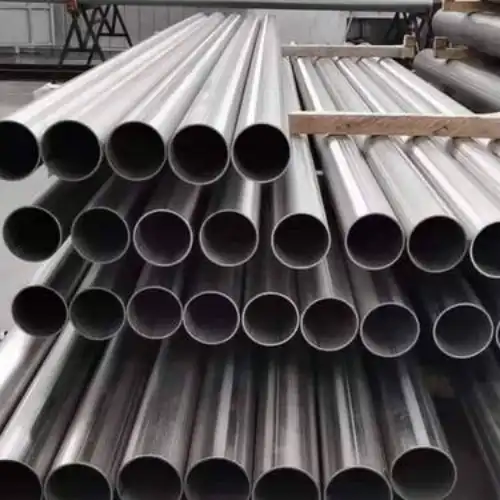
Mechanical acquisition groups confront critical potential and challenges in the 2026 ASTM B861 Titanium Seamless Pipe showcase. Review 2 channels fetched $45-65 per kilogram and Review 5 $55-75 per kilogram universally, demonstrating a stabilizing period after a long time. Supply chain elements from aviation requests and vitality industry improvements proceed to shape titanium consistent pipe estimating across all categories.
Introduction
Acquirement specialists in the 2026 mechanical materials market must get the ASTM B861 Titanium Seamless Pipe estimating. These particular channels are basic in high-performance oil and gas, chemical handling, aviation, and marine applications that require erosion resistance and auxiliary integrity.
Tracking estimating designs goes beyond taking toll administration. To get ideal obtaining windows, arrange alluring long-term contracts, and keep up competitive investment edges, acquisition groups must expect market improvements. For consistent channels made from commercially pure titanium and titanium amalgams, the ASTM B861 standard sets strict chemical composition, mechanical characteristics, and dimensional resistances that influence pricing.
These criteria are more imperative as businesses need higher-performance materials that can survive unforgiving conditions. The standard has different grades for specialized employments, creating a layered estimating demonstration that speaks to the complex metallurgical forms required for making.
Current Market Overview and Pricing Dynamics of ASTM B861 Titanium Seamless Pipes
The titanium seamless pipe market is complicated, involving technical criteria, production capabilities, and global economic variables. Grade 2 and Grade 5 versions account for 75% of industrial volume, according to the market study.
ASTM B861 Titanium Seamless Pipe Grades and Specifications
Four main grades of ASTM B861 meet different performance standards. Grade 2, commercially pure titanium with good corrosion resistance, dominates the market because of its versatility and affordability. Grade 5, an alpha-beta alloy of aluminum and vanadium, is strong enough for high-stress applications.
Technical specifications determine manufacturing complexity and pricing. To meet wall thickness tolerances of ±10% for ordinary applications and ±5% for precision applications, new production procedures are necessary, affecting final prices. Prices vary with pipe diameter from 6mm to 610mm, with greater diameters requiring specialized manufacturing equipment.
Key Factors Influencing Price Fluctuations in 2026
Titanium sponge prices ranged from $6,000-8,500 per metric ton in 2026, driven by raw material costs. Despite regional variances due to energy infrastructure and regulatory frameworks, manufacturing energy costs have stabilized.
Supply chain consolidation among large producers has stabilized prices and reduced market volatility. Modern manufacturing methods, including melting processes and quality control, have increased production efficiency and countered raw material cost increases.
Seamless vs. Welded Titanium Pipe Prices in 2026
Seamless versions cost 25-40% more than welded ones due to their mechanical qualities and production complexity. Aerospace and critical chemical processing applications justify greater prices due to improved reliability and performance.
Market data shows seamless pipe pricing stability until 2026, whereas welded pipe volatility is influenced by raw material supply and manufacturing capacity restrictions.
Emerging Trends Impacting ASTM B861 Titanium Seamless Pipe Demand and Pricing
Industry evolution continues to reshape demand patterns and pricing structures across traditional and emerging market segments. Technological advancement in manufacturing processes and changing regulatory landscapes create new opportunities while presenting unique challenges for procurement professionals.
Industry-Specific Demand Shifts – Aerospace, Chemical, and Energy Sectors
Certification and zero-defect tolerance criteria make aerospace applications expensive. Commercial aircraft manufacture and space exploration have increased demand for high-grade titanium seamless pipes, which require specialist testing and paperwork that adds 15-25% to base pricing.
Demand for Grade 2 pipes in corrosive conditions is rising in chemical processes. Energy industry investments in renewable infrastructure and advanced power generation systems offer new markets for specialized pipe layouts and improved performance.
Technological Innovations in Manufacturing and Heat Treatment Processes
Electron beam melting and better forging have increased product quality and reduced production costs. Heat treatment improvements improve mechanical property control, material waste, and yield rates across grades.
Quality control improvements like automated inspection systems and real-time process monitoring have lowered defect rates, saving manufacturers and end users money. These technical advances reduce production uncertainty and material losses, stabilizing prices.
Geopolitical and Environmental Factors Affecting Pricing and Supply
Recent trade policy stability among key titanium-producing nations has reduced pricing volatility. Environmental policies supporting sustainable manufacturing raise production costs and operational costs, affecting pricing.
Major consumers' supply chain diversification has increased market competition, providing procurement teams with pricing transparency and supplier reliability.
Strategic Comparison: ASTM B861 Titanium Seamless Pipe vs Alternative Materials in 2026
Comprehensive material selection requires careful analysis of performance characteristics, lifecycle costs, and availability factors that influence total ownership expenses beyond initial purchase prices.
Price and Performance Comparison with ASTM B337 and ASTM B338 Titanium Pipes
For applications where seamless construction offers little performance, ASTM B337 welded pipes are cheaper. For large-volume, lower-pressure applications that require joint integrity, welded alternatives are 25-35% cheaper.
ASTM B338 condensers and heat exchanger tubes are priced for specific production and performance requirements. Precision dimensional tolerances and improved heat transfer make these components expensive.
ASTM B861 Titanium Seamless Pipe vs Stainless Steel Pipes – Cost-Benefit Analysis
Stainless steel options cut initial costs by 60-75% over titanium. Titanium benefits in corrosive situations when stainless steel replacement frequency and maintenance costs balance initial savings, according to a lifetime study.
Titanium's corrosion resistance is economically advantageous in applications over five years, especially in maritime and chemical processing environments where material failure causes significant operational disruptions.
Evaluating Grade 2 vs Grade 5 ASTM B861 Pipes for Cost Optimization
Mechanical property requirements and cost must be balanced for grade selection. Grade 2 pipes are cost-effective and corrosion-resistant for applications that do not require great strength. High-pressure and high-temperature applications require Grade 5 pipes' improved strength-to-weight ratios, justifying their higher price.
Application analysis shows that Grade 2 selection optimization can save 15-20% in applicable applications without affecting performance or safety.
Procurement Insights: Navigating Suppliers, Pricing, and Lead Times in 2026
Effective supplier selection and procurement strategy development requires a comprehensive evaluation of technical capabilities, quality certifications, and supply chain reliability factors that impact project success.
Selecting Reliable ASTM B861 Titanium Seamless Pipe Suppliers
Supplier evaluations must include technical certifications like PED, API, and ISO quality management systems to assure product compliance with international standards. Manufacturing capability assessment should verify seamless pipe manufacturing, quality control, and testing facilities that meet standards.
Industry references and project track records reveal supplier reliability and service excellence. Evaluation of supplier financial stability and production capacity expansion plans to meet growing demand, and benefit from long-term supply agreements.
Price Trends by Supplier Type: Manufacturers vs Stockists vs Exporters
Direct manufacturer contacts offer 8-15% lower prices than distributor channels for large-volume orders. Stockist providers specialize in fast delivery for standard orders, although they charge 10–20% more for inventory carrying expenses and convenience.
Export professionals offer affordable worldwide shipping prices and provide documentation and logistics for global purchases. Supply type selection depends on volume, delivery urgency, and specification complexity.
Lead Times and Delivery Considerations for Efficient Supply Chain Management
Standard standards take 12-16 weeks, and special configurations take 16-24 weeks, according to market conditions. Supply chain planning must account for peak demand delays and buffer inventory for important applications.
Logistics optimization through pooled shipments and targeted supplier locations reduces procurement costs and ensures delivery schedule reliability. Advanced planning and supplier communication reduce project disruptions and improve inventory management.
LINHUI TITANIUM: Your Trusted Partner for Premium Titanium Solutions
Since 2000, LINHUI TITANIUM has led titanium manufacturing and supply for worldwide industrial markets. As a titanium goods supermarket in Xi'an, China, at the crossroads of the old and modern Silk Road, we offer a wide range of grades and specifications to fulfill industrial needs.
Our international certifications include PED 2014/68/EU, TUV Nord AD2000-W0, ISO 9001:2015 QMS, and approvals from DNV, ABS, CCS, GL, and BV, demonstrating our dedication to excellence. These certifications guarantee that our ASTM B861 titanium seamless pipes fulfill the highest international quality and safety standards.
We have shipped hundreds of thousands of tons of premium titanium products to 60 countries in North America, South America, the Gulf, Africa, CIS, and Southeast Asia. CEFC, PTT, PDVSA, PETROECUADOR, KOC, KNPC, PETRO VIETNAM, LUKOIL, PDO, PEMEX, and PETRONAS are among our global clients, demonstrating our capacity to meet the most demanding industrial applications.
Conclusion
The ASTM B861 titanium consistent pipe showcase in 2026 presents both opportunities and challenges for procurement experts exploring advancing industry requests. Cost stabilization patterns, mechanical fabricating enhancements, and supply chain solidification make favorable conditions for key acquisition planning. Understanding grade-specific estimating elements, provider capabilities, and showcase patterns empowers educated decision-making that optimizes both cost and execution results. Fruitful acquisition methodologies must adjust prompt taken toll contemplations with long-term value recommendations, considering variables such as erosion resistance, mechanical properties, and provider unwavering quality. As businesses proceed to extend applications for high-performance materials, key associations with certified producers have become fundamental for keeping up competitive preferences in demanding market situations.
FAQ
What causes fluctuations in the price of ASTM B861 titanium seamless pipes?
Price fluctuations primarily result from titanium raw material cost variations, manufacturing capacity changes, and global supply chain dynamics. Energy costs, regulatory compliance requirements, and technological improvements in production processes also influence pricing structures throughout the market.
How do grade differences impact the price and application of ASTM B861 pipes?
Grade variations create distinct pricing tiers reflecting different chemical compositions and mechanical properties. Grade 2 pipes offer excellent corrosion resistance at lower costs, while Grade 5 pipes command premium pricing due to superior strength characteristics and more complex manufacturing requirements.
What should procurement managers consider when choosing between seamless and welded titanium pipes?
Procurement decisions should evaluate application pressure requirements, corrosion resistance needs, and structural integrity demands. Seamless pipes provide superior mechanical properties and reliability for critical applications, justifying 25-40% price premiums through enhanced performance and longer service life.
Partner with LINHUI TITANIUM for Your Titanium Procurement Needs
LINHUI TITANIUM offers unparalleled expertise as your trusted ASTM B861 titanium seamless pipe supplier, combining advanced manufacturing capabilities with comprehensive quality assurance systems. Our extensive certification portfolio and proven track record with major international projects position us as the ideal partner for your strategic procurement initiatives.
We invite you to leverage our expertise and global supply capabilities for your titanium requirements. Our technical team provides customized solutions tailored to your specific application needs, ensuring optimal performance and cost-effectiveness. Contact us at linhui@lhtitanium.com for detailed quotations and technical consultations that will enhance your procurement success.
References
1. American Society for Testing and Materials. "ASTM B861-21 Standard Specification for Titanium and Titanium Alloy Seamless Pipe." ASTM International Annual Book of Standards, Volume 02.04, 2021.
2. Donachie, Matthew J. "Titanium: A Technical Guide, Second Edition." ASM International Materials Park, Ohio, 2000.
3. Peters, M., Kumpfert, J., Ward, C.H., and Leyens, C. "Titanium Alloys for Aerospace Applications." Advanced Engineering Materials, Vol. 5, No. 6, 2003.
4. Boyer, R.R. "An Overview on the Use of Titanium in the Aerospace Industry." Materials Science and Engineering: A, Volumes 213-214, 1996.
5. Lutjering, G. and Williams, J.C. "Titanium, Second Edition: Engineering Materials and Processes." Springer-Verlag Berlin Heidelberg, 2007.
6. Rack, H.J. and Qazi, J.I. "Titanium Alloys for Biomedical Applications." Materials Science and Engineering: C, Volume 26, Issues 8, 2006.