
ASTM B861 Titanium Seamless Pipe represents the pinnacle of engineering excellence for chemical processing applications, offering unmatched corrosion resistance and mechanical integrity. These specialized pipes are manufactured to stringent specifications, delivering superior performance in harsh chemical environments where conventional materials fail. The seamless construction ensures optimal structural integrity, making them indispensable for critical chemical processing operations worldwide.
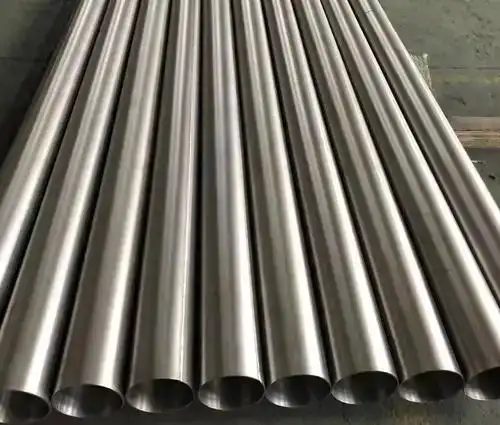
Understanding ASTM B861 Titanium Seamless Pipe Specifications and Properties
The ASTM B861 standard covers 34 different types of titanium and titanium alloy seamless pipes, each designed for a unique use in chemical processing. This complete standard meets the growing needs of modern chemical businesses that need materials that can work in harshly corrosive conditions and still maintain their structural integrity.
Chemical Composition and Grade Classifications
Some of the grades of titanium that are covered by ASTM B861 are commercially pure titanium (Grades 1, 2, 3, 4) and titanium alloys (Grades 5, 7, 9, 11, 12, 23). The exact amounts of nitrogen, carbon, hydrogen, iron, oxygen, aluminum, vanadium, and other alloying elements used in each grade are carefully managed. Grade 2 titanium is most often used in chemical processes. It has the highest amounts of iron (0.25%) and oxygen (0.25%). This makes it very resistant to rust while still being easy to shape. The chemical makeup has a direct effect on how well the pipe works in chemical working settings. It is stronger to use higher-grade metals like Grade 5 (Ti-6Al-4V), and pure grades sold in stores are better at resisting rusting from harsh chemicals like acids and chlorides.
Mechanical Properties and Performance Standards
When used in chemical handling, these titanium seamless pipes have better mechanical qualities than pipes made of other materials. Tensile strength varies from 240 MPa for Grade 1 to over 895 MPa for Grade 5. Yield strength also changes in the same way. The stretch qualities make sure that the material is flexible enough for shaping and installation. The seamless manufacturing method gets rid of weld seams, which makes the walls of the pipe the same thickness and gives the pipe the same mechanical qualities all the way through. This way of making things gives them better wear resistance and higher pressure-bearing capacity, both of which are important in chemical processing systems that work with repeated loading.
Corrosion Resistance in Chemical Environments
ASTM B861 pipes are very resistant to rust in a wide range of chemical environments. The layer of inactive titanium dioxide that forms on top of the surface naturally protects against oxidizing acids, chloride solutions, and organic substances that are common in places that process chemicals. When used in real life, these lines are very resistant to chlorine gas, hydrochloric acid, sulfuric acid, and many chemical solvents. In many chemical conditions, the rate of rusting is very low—often less than 0.025 mm per year. This means that the equipment lasts longer and costs less to maintain.
Comparing ASTM B861 Against Other Titanium Pipe Standards and Materials
To choose the right materials for pipes, ASTM B861 Titanium Seamless Pipe, you have to carefully look at the different standards and material choices on the market. Procurement workers can make better choices that meet the needs of their specific applications when they know the differences between different standards.
ASTM B861 vs. ASTM B338 and B862
ASTM B861 talks about requirements for seamless pipes, and ASTM B338 talks about requirements for both seamless and welded tubes, mostly for heat exchanges and condensers. ASTM B862 is only about titanium lines that have been bonded together. Because B861 pipes are seamless, they don't have any weak spots that can happen with welded joints. This makes them perfect for high-pressure chemical handling uses. These standards have different requirements for surface finish and limits on sizes. ASTM B861 keeps tighter controls on sizes, making sure that walls are always the same thickness and roundness, which is important for chemical working systems. The specs for the surface finish also make it better at working with harsh chemical media.
Advantages Over Stainless Steel and Inconel
While stainless steel 316L and Inconel alloys are common materials used in chemical handling, ASTM B861 titanium pipes have many important benefits. Titanium's low weight-to-strength ratio makes it very useful for large-scale installs, as it cuts down on the need for structural support and the cost of installation. The ability to fight corrosion is likely the biggest benefit over stainless steel choices. Titanium stays strong in a wider range of chemical conditions than stainless steel, which can rust in chloride-rich settings through pitting corrosion, stress corrosion cracking, or general corrosion. Even though inconel metals work well at high temperatures, titanium is better at resisting corrosion in many chemical production tasks. Titanium often has a lower total cost of ownership, even though it costs more to buy at first. Chemical processing plants have good long-term economics because their equipment lasts longer, needs less upkeep, and doesn't need to be replaced very often.
Procurement Guide: How to Source ASTM B861 Titanium Seamless Pipes
To buy ASTM B861 titanium seamless pipes successfully, you need to know how the market works, what the seller can do, and how to handle logistics. Manufacturers, wholesalers, and end users all need to work together carefully in the global supply chain for these specialized goods.
Supplier Selection and Qualification Criteria
The first step in finding suitable providers is to look at their manufacturing and certification portfolios. Manufacturers with a good reputation keep full quality control systems that include ISO 9001:2015 certification, PED compliance, and approvals from classification societies like DNV, ABS, and CCS. The supplier's history with chemical processing uses tells us a lot about how well they understand the needs of this business. Having long-term partnerships with big chemical companies and EPC workers shows that you can offer high-quality goods that meet strict requirements. Manufacturing capacity and production skills have a direct effect on shipping times and the dependability of order fulfillment. Suppliers who also make their own products can better control quality and delivery times than selling companies or middlemen who don't have as much control over production.
Pricing Factors and Market Dynamics
Titanium prices change based on the cost of raw materials, how full factories are, ASTM B861 Titanium Seamless Pipe and changes in world demand. Understanding these changes in the market helps buying pros make the best decisions about what to buy and how much to spend. Prices usually include the cost of the raw materials, the cost of preparing them, the cost of checking them, and the cost of certifying them. Price deals are often better when you commit to a certain volume, but specialty grades or non-standard measurements may require higher prices. When you have a global supply chain, you have to think about things like freight costs, insurance, customs fees, and changes in the value of the currency. When you work with providers who know how foreign trade works, you can avoid delays and extra costs as much as possible.
Minimum Order Quantities and Lead Times
Most makers set minimum order amounts based on how efficiently they can make things and how easy it is to move the materials. Minimum order quantities (MOQs) usually run from 500 kg to several tons, based on the grade and size that is needed. Lead times are very different depending on the grade that is needed, the production plan, and the testing requirements. Standard grades, like Grade 2, may be ready in 8 to 12 weeks. Special metals or custom sizes, on the other hand, may take 16 to 20 weeks or longer. Planning purchases ahead of time helps make sure that materials are available at the right time for the job. Setting up a framework that deals with qualified vendors can cut down on wait times for repeat orders and give suppliers priority during times of high demand.
Ensuring Quality and Performance: Verification and Testing Standards
Protocols for quality assurance are the basis of good ASTM B861 pipe procurement. They make sure that materials meet the standards and work efficiently in chemical processing applications. Comprehensive testing and certification processes give people faith in the compliance and purity of materials.
Chemical Analysis and Mechanical Testing
Chemical research makes sure that the material fits the standards set by ASTM B861 for each grade. The methods of optical emission spectroscopy and wet chemistry analysis make sure that the amounts of alloying elements and impurities are correctly measured. Tensile testing at room temperature is part of mechanical testing. It checks the yield strength, final tensile strength, and elongation qualities. The testing is done according to standard processes with approved testing tools and trained staff. For important uses, extra tests may include strength tests, impact tests at different temperatures, and wear tests. These additional tests give a full picture of the material's properties and confirm its performance.
Dimensional Verification and Surface Quality
Dimensional checking makes sure that the outside width, wall thickness, length, and straightness are all within the allowed ranges. Ultrasonic testing and laser measurement systems are two examples of advanced measurement methods that make sure that important measures are checked correctly. Surface quality checking finds flaws like scratches, gouges, or inclusions that might affect how well something works in chemical processing settings. Visual inspection plus penetrant testing or eddy current testing gives a full picture of the surface. Under controlled settings, hydrostatic testing proves that something can handle pressure. The testing pressure is usually higher than the planned service pressure by a certain amount. This gives trust in the structure's strength when it's being used.
Supplier Certification and Documentation
Each package comes with a full set of material proof papers, such as mill test certificates, chemical analysis reports, mechanical test results, and records of dimensional inspections. These papers make it possible to track things and show that certain standards have been met. Inspection services by a third party can check the quality and compliance of materials without being involved in the process. Inspection services from companies like DNV, SGS, and TUV boost trust in the quality of ASTM B861 Titanium Seamless Pipe of materials and the performance of suppliers. Quality audits of suppliers check the technical skills, production methods, and quality systems. Regular checks help keep performance standards high among suppliers and find ways to keep getting better.
Making the Right Decision: Selecting the Best ASTM B861 Titanium Seamless Pipe for Your Application
Technical needs, economic factors, and long-term working goals must all be carefully considered during the decision process. The best way to choose a material is to understand how different grades and specs fit with the needs of a particular purpose.
Grade Selection Based on Service Conditions
Chemical harmony is the most important thing to think about when choosing a grade. Grades 1, 2, 3, and 4 that are sold commercially are very resistant to corrosion in most chemical settings. Grades that are alloyed, on the other hand, have better mechanical qualities for high-stress situations. The operating temperature affects the choice of material because types that are better at resisting creep or staying stable at high temperatures may be needed. Grade 5 titanium metal works well at temperatures up to 400°C, but commercially pure grades are usually only good at lower temperatures. Minimum mechanical property standards are based on the amount of stress and pressure that must be present. To keep enough safety gaps, systems with higher pressure may need stronger metals or walls that are thicker.
Cost-Benefit Analysis and Life-Cycle Considerations
The initial cost of materials is only one part of the total cost factor. Long-term economics in chemical processing uses are affected by things like maintenance costs, how often parts need to be replaced, and how reliable the system is. Titanium pipes often justify their higher starting cost because they last longer than pipes made of other materials. Less downtime for upkeep and longer periods between replacements help make plants more available and productive. It's possible that the smooth inside finish and resistance to rust of titanium lines will help save energy. Lowering pressure drops and the chance of fouling can lower running costs over the life of a device.
Future-Proofing and Sustainability Benefits
Choosing high-performance materials like ASTM B861 titanium pipes helps with environmental efforts by making tools last longer and using fewer resources. Titanium's ability to be recycled adds to its environmental benefits. Rising environmental standards encourage the use of materials that are better at resisting rust and last longer. Titanium pipes help make sure that changing rules are always followed while keeping operations running smoothly. Titanium pipe systems are reliable and last a long time, so they don't need to be fixed in an emergency or for maintenance tasks that weren't planned. This helps keep operations on schedule and has less of an effect on the environment.
Conclusion
As far as corrosion protection, mechanical soundness, and long-term dependability go, ASTM B861 Titanium Seamless Pipe is the best choice for difficult chemical processing uses. When you fully understand the requirements, buying strategies, and application factors, you can make smart choices that improve operations while lowering the overall cost of ownership. Chemical handling industries are moving toward harsher working conditions and tighter environmental rules. Because ASTM B861 pipes perform better than other pipes, they are important parts of facilities that are ready for the future.
FAQ
1. What distinguishes ASTM B861 from other titanium pipe standards?
The ASTM B861 standard covers 34 different types of seamless titanium pipes, which are better for structural stability than welded pipes. The seamless construction gets rid of possible weak spots at the weld lines, making the product more reliable in chemical handling tasks that need consistent performance.
2. Which ASTM B861 grades are most suitable for chemical processing?
Due to its high resistance to rust and low cost, grade 2 titanium is mostly used in chemical processing. Grade 5 (Ti-6Al-4V) is stronger for uses with high pressure, and Grade 7 is better at resisting rust in settings with less acid.
3. What are typical lead times for ASTM B861 pipe orders?
Standard grades usually take 8 to 12 weeks to deliver from the time the order is placed, but it could take up to 16 to 20 weeks for special alloys or custom sizes. Lead times are affected by things like grade supply, quantity needs, testing requirements, and production plans.
4. How do minimum order quantities impact procurement planning?
Most makers set MOQs that are between 500 kg and several tons, based on the grade and size. Planning the needs of multiple projects at the same time or making framework agreements can help you get the best deal on order amounts and unit prices.
5. What testing and certification should be required from suppliers?
Chemical analysis reports, mechanical test results, physical inspection records, and hydrostatic test papers are some of the most important pieces of paperwork that you need. Third-party review by groups like DNV, SGS, or TUV adds to the quality guarantee.
Contact LINHUI TITANIUM for Premium ASTM B861 Titanium Seamless Pipe Solutions
LINHUI TITANIUM offers top-notch ASTM B861 Titanium Seamless Pipe options that are backed by a wide range of certifications, such as PED, ISO 9001:2015, and approvals from several classification societies. Our streamlined production processes and track record with major energy companies around the world guarantee that you will always have access to high-quality titanium products for your chemical processing needs. Get in touch with our technical experts at linhui@lhtitanium.com to talk about your unique needs and find out how our ASTM B861 titanium seamless pipe maker knowledge can help you get the best deals and best performance from your purchases.
References
1. ASTM International. "ASTM B861 Standard Specification for Titanium and Titanium Alloy Seamless Pipe." Annual Book of ASTM Standards, Volume 02.04, 2023.
2. Donachie, Matthew J. "Titanium: A Technical Guide." ASM International Materials Engineering Series, Second Edition, 2000.
3. Schutz, R.W. "Corrosion of Titanium and Titanium Alloys in Chemical Process Industry Applications." Materials Performance Journal, Volume 42, Issue 3, 2003.
4. Peters, M. and Leyens, C. "Titanium and Titanium Alloys: Fundamentals and Applications." Wiley-VCH Chemical Processing Engineering Series, 2003.
5. Boyer, R.R. "An Overview on the Use of Titanium in the Chemical and Process Industries." Materials Science and Engineering: A, Volume 213, Issues 1-2, 1996.
6. Craig, B.D. "Handbook of Corrosion Data for Titanium Alloys in Chemical Processing Environments." ASM International Corrosion Reference Series, Second Edition, 2004.