
Understanding the differences between ASTM B550 zirconium welding wire and titanium is crucial for project success when selecting welding materials for critical jobs. Zirconium welding wire ASTM B550 is very resistant to rust in nuclear and chemical conditions. Titanium, on the other hand, has a better strength-to-weight ratio for aircraft uses. In the oil, gas, chemical, and naval industries, both materials are utilized in distinct ways; however, their performance, cost, and suitability for certain situations differ significantly.
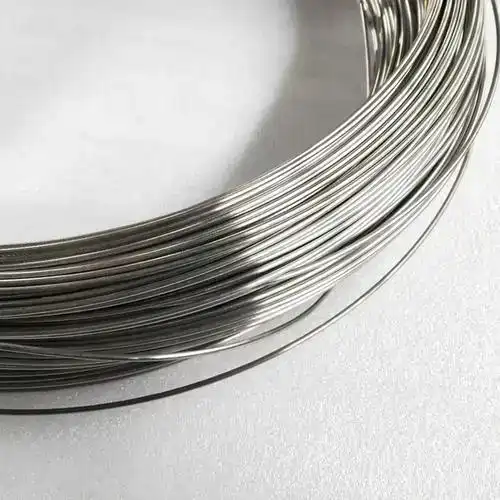
Understanding ASTM B550 Zirconium Welding Wire Fundamentals
In gas tungsten arc welding (GTAW), the ASTM B550 guideline sets the standards for zirconium welding wire. It is amazing how well this special welder filler metal works in places where regular materials don't work. The standard covers several different types of zirconium alloy:
- Zr-2 welding wire - Contains tin additions for enhanced strength
- Zr-4 welding wire - Features tin and iron additions for improved corrosion resistance
- Nuclear grade zirconium wire - Meets stringent purity requirements for reactor applications
To meet manufacturing standards, the amount of pollutants, especially nitrogen, oxygen, and hafnium, must be carefully controlled. The width of the welding wire is usually between 1.0mm and 4.0mm, so it can be used for a variety of welding methods and joint shapes. Zirconium welding supplies are better than other options if you need welding materials for nuclear or chemically very corrosive situations.
Titanium Welding Wire: Properties and Applications
Titanium welding wire is used in chemical processing, aircraft, and naval applications that need high strength-to-weight ratios. Grades 1 (commercially pure) through 5 (Ti-6Al-4V alloy) are the most common. Some important things about welding titanium are:
- Excellent corrosion resistance in seawater and chloride environments
- High strength retention at elevated temperatures
- Biocompatibility for medical applications
- Low density compared to steel alternatives
Titanium welding needs to be done with an inert gas shield and careful control of the heat input. Because the material reacts with gases in the air, it needs to be handled in a certain way during the manufacturing process. Titanium welding wire works better than other materials when you need ones that are strong but not too heavy for aircraft or naval uses
Material Properties Comparison: Zirconium vs Titanium
Knowing what the main differences are between these materials helps engineers choose the right welding supplies for each job.
| Property | Zirconium (ASTM B550) | Titanium |
|---|---|---|
| Density | 6.51 g/cm³ | 4.51 g/cm³ |
| Melting Point | 1855°C | 1668°C |
| Tensile Strength | 380-550 MPa | 240-1170 MPa |
| Thermal Conductivity | 22.7 W/m·K | 17 W/m·K |
Test data from business use shows big differences in how well things work. In hydrofluoric acid settings, zirconium is more resistant to rust than other metals, with corrosion rates below 0.01 mm/year. In chloride liquids, titanium works very well, but it corrodes more quickly in reducing acid conditions. The mechanical qualities of welding wire depend a lot on the metal it is made of and how it is heated. Materials that are safe for nuclear power need extra testing and approval procedures. If you need materials for work with hydrofluoric acid, ASTM B550 zirconium welding wire is the best choice because it doesn't rust as titanium wire does.
Corrosion Resistance Analysis
Corrosion resistance is the main factor used to choose between the two materials in chemical processes. In different settings, each material has its own pattern of resistance. Features of zirconium that make it resistant to corrosion:
- Exceptional performance in hydrofluoric acid concentrations up to 70%
- Excellent resistance to sulfuric acid at temperatures below 150°C
- Superior performance in alkaline solutions and organic acids
- Immunity to stress corrosion cracking in most environments
Titanium demonstrates different corrosion patterns:
- Outstanding resistance in oxidizing environments
- Excellent seawater corrosion resistance
- Susceptible to hydrogen embrittlement in certain conditions
- Limited performance in hydrofluoric acid solutions
Tests that speed up erosion show that zirconium keeps its passive film stability over a wider pH range. When the protected oxide layer is damaged by mechanical forces, it quickly heals and restores long-term stability. Zirconium welding electrodes are better for settings with a mix of acids because they are more chemically compatible.
Cost Considerations and Economic Factors
The economic review looks at the beginning prices of materials, the costs of production, and the product's lifetime. Both of these products are more expensive than regular steel options. Zirconium costs depend on things like
- Higher raw material costs due to complex extraction processes
- Specialized welding equipment requirements
- Extended qualification and testing procedures
- Limited supplier availability globally
Titanium economic considerations:
- Established supply chains reduce procurement risks
- Broader fabrication expertise availability
- Higher material utilization efficiency
- Standardized inspection procedures
Lifecycle cost analysis shows that the choice of material affects how often things need to be maintained, replaced, and when they stop working. Longer service lives often make up for higher material costs in high-performance uses. To keep the total cost of ownership as low as possible over a 20-year or longer work life, it is important to choose materials carefully based on how they will be used.
Welding Procedures and Technical Requirements
To make execution work, you need to use specific welding techniques that are made to work with each material. Both materials need careful management of parameters and the surroundings. The steps for zirconium welding are:
- Ultra-high purity shielding gas (99.99% minimum)
- Vacuum or inert atmosphere welding chambers
- Precise heat input control to prevent embrittlement
- Specialized filler metal storage and handling protocols
Titanium welding requirements include:
- Continuous inert gas backing during welding
- Clean room conditions to prevent contamination
- Post-weld heat treatment for stress relief
- Non-destructive testing verification
Different types of applications have different ASTM B550 zirconium welding wire qualification standards. For nuclear uses, there needs to be a lot of paperwork and the ability to track the materials used throughout the whole process. If you want to be sure of the quality of the welding in serious situations, you need to do thorough process approval testing on all materials
Industry Applications and Market Demand
The way an object is demanded on the market shows how valuable it is in different industries. Knowing about application trends can help you guess how supply and prices will change in the future.The main uses for zr welding are in:
- Nuclear reactor components and fuel assembly hardware
- Chemical processing equipment for corrosive media
- Pharmaceutical manufacturing systems
- Specialized aerospace components requiring corrosion resistance
Titanium welding serves:
- Commercial and military aircraft structures
- Marine propulsion systems and hull components
- Oil and gas drilling equipment
- Medical implants and surgical instruments
Regional demand is very different. For example, nuclear markets drive zirconium use, while aerospace markets affect titanium prices. As global factors affect the quantity of materials, supply chain stability becomes more crucial. If you want to make sure that important projects have a safe supply chain, you need to work with approved sellers who offer full material tracking.
LINHUI TITANIUM ASTM B550 Zirconium Welding Wire Advantages
- Comprehensive Certification Portfolio: LINHUI TITANIUM maintains PED 2014/68/EU, CCS, ABS, DNV, BV, BSI, LLOYD'S, GL certifications, ensuring compliance with international nuclear and chemical industry standards for ASTM B550 applications.
- Advanced Quality Control Systems: ISO 9001:2015 quality management implementation with specialized testing protocols for zirconium welding wire, including hafnium content verification, mechanical property testing, and microstructural analysis.
- Global Supply Chain Reliability: Established distribution networks across 60+ countries with proven delivery capabilities to major oil, gas, and chemical projects, ensuring consistent availability of critical zirconium welding consumables.
- Technical Expertise and Support: Dedicated engineering team providing welding procedure development, material selection guidance, and on-site technical support for complex zirconium welding applications in nuclear and chemical environments.
- Customized Product Solutions: Flexible manufacturing capabilities producing various zirconium alloy grades (Zr-2, Zr-4, nuclear grade) in multiple wire diameters and packaging configurations to meet specific project requirements.
- Proven Track Record: Successful partnerships with world-renowned companies, including CEFC, PTT, PDVSA, PETROECUADOR, and major EPC contractors, demonstrating reliability in critical infrastructure projects requiring specialized zirconium welding materials.
- Integrated Supply Solutions: "Titanium Products Supermarket" concept enabling single-source procurement of both zirconium and titanium welding consumables, reducing supplier management complexity and ensuring material compatibility.
- Rigorous Testing and Documentation: Third-party inspection approval from DNV, BV, SGS, TUV, and other recognized agencies, providing comprehensive material certificates and traceability documentation for nuclear and chemical applications.
- Strategic Geographic Positioning: Xi'an headquarters location along the Belt and Road corridor, facilitating efficient logistics and competitive pricing for global zirconium welding wire distribution.
- Long-term Partnership Approach: Commitment to establishing stable, strategic relationships witha focus on continuous improvement, technical innovation, and supply chain optimization for critical zirconium welding applications.
Partner with LINHUI TITANIUM for Premium Zirconium Welding Solutions
LINHUI TITANIUM stands ready to support your critical welding applications with our comprehensive range of certified ASTM B550 zirconium welding wire consumables. As a trusted ASTM B550 zirconium welding wire supplier, we combine decades of manufacturing expertise with global supply chain capabilities. Our commitment to quality excellence and customer success has earned partnerships with industry leaders across oil, gas, chemical, and nuclear sectors worldwide. Contact us at linhui@lhtitanium.com to discuss your specific requirements and discover how our specialized materials can enhance your project outcomes.
Conclusion
The choice between ASTM B550 zirconium welding wire and titanium depends primarily on specific environmental conditions, performance requirements, and economic considerations. Zirconium excels in highly corrosive chemical environments, particularly those involving hydrofluoric acid, while titanium offers superior strength-to-weight ratios for aerospace and marine applications. Both materials require specialized welding procedures and qualified personnel to achieve optimal results. Understanding these fundamental differences enables engineers to select appropriate welding consumables that ensure long-term project success and operational reliability in demanding industrial environments.
References
1. American Society for Testing and Materials. "ASTM B550-20: Standard Specification for Zirconium and Zirconium Alloy Bar, Tube, and Wire for Nuclear Application." ASTM International, West Conshohocken, PA, 2020.
2. Davis, Joseph R. "ASM Specialty Handbook: Heat-Resistant Materials - Zirconium and Titanium Alloys in High-Temperature Applications." ASM International, Materials Park, OH, 2018.
3. Nuclear Regulatory Commission. "Materials and Welding Branch Technical Position on Welding of Zirconium Alloys in Nuclear Service." NUREG-0800, Office of Nuclear Reactor Regulation, Washington, DC, 2019.
4. Welding Research Council. "Comparative Study of Zirconium and Titanium Welding Consumables for Chemical Processing Applications." WRC Bulletin 534, New York, NY, 2021.
5. International Atomic Energy Agency. "Zirconium Alloy Welding Guidelines for Nuclear Reactor Applications." IAEA Technical Reports Series No. 487, Vienna, Austria, 2020.
6. Boyer, Rodney R. "Titanium and Zirconium Metallurgy: Welding Considerations for Critical Industrial Applications." Metallurgical and Materials Transactions A, Vol. 52, Issue 8, 2022.