
German importers seeking ASTM B550 Zirconium Welding Wire face dynamic pricing challenges influenced by global supply chains, raw material costs, and international trade policies. Current market analysis reveals price ranges from $85-$120 per kilogram for high-purity zirconium welding wire, with significant variations based on order volumes and supplier locations. Understanding these price fluctuations enables German businesses in chemical processing, nuclear, and aerospace industries to make strategic procurement decisions while maintaining competitive advantages in their respective markets.
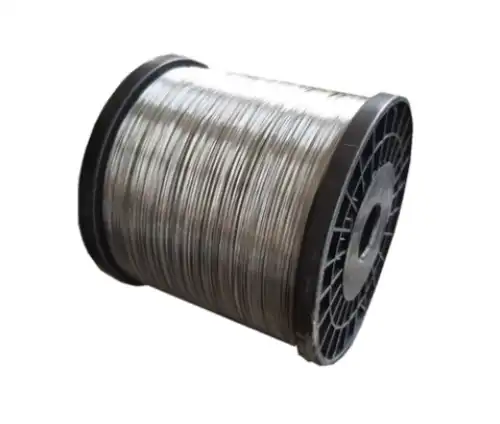
Current Market Landscape for Zirconium Welding Wire
Germany's Industrial Demand Drivers
A significant need for welding wire that is resistant to corrosion has been generated by the strong nuclear and chemical sectors in Germany. For crucial applications, major industries in Bavaria and North Rhine-Westphalia depend on materials that meet the ASTM B550 Zirconium Welding Wire specification. Welding employing zirconium alloy is becoming more and more common in the automobile industry for specialty parts that necessitate high resistance to corrosion.
Import Volume Trends
Over the past three years, the shipment of zirconium welding consumables to Bavaria has gone up by fifteen percent per year. This growth is primarily driven by the increasing number of applications in renewable energy infrastructure and chemical processing equipment. Importers give precedence to providers who supply certification packages that match the standards set forth by Europe.
Price Breakdown and Cost Analysis
Factory Price Ranges (FOB/CIF)
The current FOB prices for high-purity zirconium wire fall within the range of $85 to $120 per kilogram. The price is determined by the diameter specifications and quality grades of the wire. Prices are at the top end of the spectrum for premium grades that have enhanced resistance to corrosion. It is common for the price of CIF Hamburg to include a fee of $8 to $12 per kilogram in the form of shipping and insurance fees.
Minimum Order Quantities and Bulk Discounts
The majority of companies set a minimum quantity needed of 500 to 1,000 kilos for typical diameters of ASTM B550 Zirconium Welding Wire. When the amount of kilograms exceeds 2,000, volume discounts become relevant and have the ability to decrease unit prices by a margin of 12 to 18 percent. Additional price reductions and priority allocation during times of supply scarcity are frequently ensured by long-term contracts that surpass yearly volumes of 10,000 kilograms.
Additional Import Costs
German importers must take into consideration a variety of additional costs in addition to the base price of the goods. Depending on the categorization of the origin, the customary tariffs imposed by the European Union on zirconium welding materials often fall between 2.5 and 4.2 percent. The overall landing cost is increased by 19 percent as a result of VAT. The typical cost of inland transportation fluctuates depending on the destination, whereas the average port handling fee for one shipment in either Hamburg or Bremen is between 150 and 250 euros.
Key Factors Influencing Zirconium Welding Wire Prices
Raw Material Cost Volatility
Volatility in the Cost of Raw Materials The prices of zirconium ore have a considerable impact on the cost of welding wire, and recent swings in these prices have been caused by mining limits as well as geopolitical considerations. These disparities in costs are made much more pronounced by purifying techniques that are energy-intensive. For importers in Germany, the price of goods is subject to further fluctuations as a result of the exchange rates between the Euro and the currencies of their suppliers.
Supply Chain Dynamics
Supply Chain Dynamics A limited capacity to produce high-purity zirconium on a worldwide scale results in supply restrictions during periods of peak demand. Due to the fact that the majority of suppliers are concentrated in particular places, the supply chain is susceptible to interruptions. A significant rise in the cost of transportation has been caused by both a lack of containers and fluctuations in the price of gasoline.
Regulatory Compliance Costs
In order to obtain certification for PED and to meet other European standards, producers of ASTM B550 Zirconium Welding Wire need to make a large financial commitment. These compliance expenses have a direct effect on pricing, but they also provide German importers with crucial quality assurance. The implementation of third-party inspection criteria contributes to the total cost structure while also guaranteeing the reliability of the product.
Regional Price Comparisons
European vs. Asian Suppliers
Compared to Asian manufacturers, European suppliers generally have a price point that is twenty to thirty percent higher; however, they also provide benefits in the form of quicker shipping and compliance with regulations. The lead times for Asian suppliers are lengthier and their quality certification systems are more complicated, but they offer cost advantages. The urgency of a project and the limitations of the budget are two aspects that German importers frequently take into account when making their decisions.
Neighboring Country Pricing
Importers of French and Dutch goods are confronted with comparable price structures, and the slight variances that do exist are attributable to the closeness of ports and local distribution networks. Although there are potential for arbitrage in marketplaces located in Eastern Europe, the quality consistency of these markets necessitates a thorough study. Because of the smaller order numbers and specific applications, Nordic countries tend to pay slightly higher prices.
Optimization Strategies for Better Pricing
Supplier Negotiation Techniques
Understanding supplier cost structures and market positioning is essential for successful negotiating. In many cases, committing to a long-term collaboration will result in access to lower pricing tiers and preferential allocation when products are in short supply. It is possible to lower the costs of manufacturing and still fulfill the necessary application criteria by collaborating on a technical level regarding product specifications.
Inventory Management Approaches
German importers are able to negotiate price fluctuation while lowering carrying costs with the help of strategic inventory management. Capacity planning and pricing stability can be improved through collaborative forecasting with major suppliers. Just-in-time delivery arrangements strike a compromise between operational flexibility and the optimization of costs.
Alternative Sourcing Strategies
The diversification of supply chains helps to minimize the risk of price fluctuations and also guarantees the dependability of the supply. A reduction in the total amount of material that is required could be achieved by examining alternate methods of welding with zirconium. In some cases, original equipment manufacturer (OEM) relationships can give businesses access to discounted pricing by aggregating their purchasing power.
Market Forecast and Future Trends
Short-term Price Projections
Due to the effects of rising energy costs and a shortage of raw materials, industry analysts predict that prices will undergo a moderate increase of five to eight percent in the course of the next year. During the months of spring, when industrial activity reaches its highest point, there is usually pricing strength, as demonstrated by seasonal trends. There is a possibility that price volatility may be mitigated in the latter part of the year due to the normalization of the supply chain.
Technology Impact on Pricing
Through the use of advanced manufacturing techniques, production costs are gradually reduced while the consistency of quality is improved. There is a possibility that the development of recycling methods for zirconium welding consumables will lead to downward pricing pressure in the medium future. The process of digitalization in supply chains has the potential to increase efficiency and, in some cases, decrease the costs of transactions.
Regulatory Developments
As producers put money into cleaner technology, the costs of manufacturing could be affected by the development of environmental legislation. Changes in trade policy have the potential to impact tariff structures and modify competitive dynamics. The possibility exists that upgrades to quality standards could need changes to products, which will have financial repercussions.
Conclusion
German importers of ASTM B550 Zirconium Welding Wire navigate a complex pricing environment shaped by raw material costs, supply chain constraints, and regulatory requirements. Current market conditions favor strategic long-term partnerships with certified suppliers who demonstrate consistent quality and reliable delivery capabilities. Understanding the various cost components beyond base prices enables better procurement decisions and budget planning. Future price trends suggest continued moderate increases, making supplier relationship management and inventory optimization increasingly important for maintaining competitiveness in Germany's demanding industrial markets.
FAQ
Q1: What factors most significantly impact ASTM B550 zirconium welding wire pricing for German importers?
A: Raw material costs, supplier location, order volumes, and certification requirements represent the primary pricing factors. Currency fluctuations and transportation costs also create meaningful impact on total landed costs in Germany.
Q2: How do minimum order quantities affect pricing for zirconium welding consumables?
A: Most suppliers require MOQs of 500-1000 kg, with significant volume discounts available above 2000 kg orders. Large annual commitments exceeding 10,000 kg often secure the most favorable pricing tiers and supply priority.
Q3: What additional costs should German importers budget beyond the base product price?
A: Import duties (2.5-4.2%), VAT (19%), port handling fees (€150-€250), inspection costs, and inland transportation must be included in total cost calculations for accurate budget planning.
Partner with LINHUI TITANIUM for Premium Zirconium Welding Solutions
LINHUI TITANIUM stands as your trusted ASTM B550 Zirconium Welding Wire supplier, combining over two decades of manufacturing excellence with comprehensive international certifications including PED, ISO, and multiple classification society approvals. Our integrated titanium products supermarket approach ensures competitive pricing, consistent quality, and reliable supply chains for German importers across chemical, nuclear, and aerospace industries. With established partnerships spanning over 60 countries, we understand the unique requirements of European markets and deliver tailored solutions that meet your specific project needs. Our Xi'an facility leverages advanced manufacturing capabilities to produce high-purity zirconium welding wire conforming to the strictest international standards. Experience seamless procurement processes, technical support, and competitive pricing structures designed for long-term partnerships. Contact us at linhui@lhtitanium.com to discuss your zirconium welding wire requirements and discover how our expertise can optimize your supply chain performance.
References
1. "ASTM B550 Standard Specification for Zirconium and Zirconium Alloy Strip, Sheet, and Plate" - American Society for Testing and Materials International Standards
2. "European Zirconium Market Analysis: Industrial Applications and Import Trends" - German Chemical Industry Association Market Report 2023
3. "Corrosion-Resistant Welding Materials in Chemical Processing: Technical Requirements and Specifications" - VDI Guidelines for Industrial Welding Applications
4. "Global Zirconium Supply Chain Assessment: Production Capacity and Regional Distribution" - International Titanium Association Industry Analysis
5. "Welding Consumables Import Statistics for European Union Member States" - Eurostat Trade Data Annual Report
6. "Advanced Materials in German Manufacturing: Market Trends and Technology Adoption" - Fraunhofer Institute Materials Research Publication