
When engineers and procurement managers face extreme operational environments—nuclear reactors with intense radiation fields or aerospace platforms enduring corrosive propellants—they turn to specialised materials that conventional alloys cannot deliver. The ASTM B550 Zirconium Alloy Bar represents a proven solution for these mission-critical applications, combining exceptional corrosion resistance with low neutron absorption and thermal stability. Manufactured under strict ASTM B550/B550M-07(2019) standards covering three grades—R60702 (unalloyed), R60704 (zirconium-tin), and R60705 (zirconium-niobium)—these bars meet the rigorous demands of nuclear fuel assemblies and aerospace structural components, where failure is not an option.
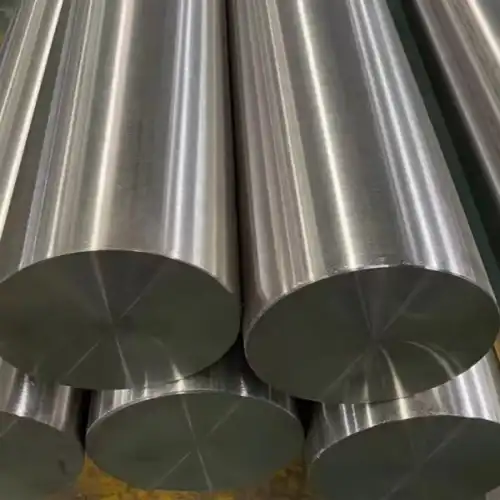
Understanding ASTM B550 Zirconium Alloy Bar: Properties and Standards
Material selection in high-stakes industries depends heavily on understanding precise specifications and performance benchmarks. The ASTM B550 standard defines zirconium bar products through detailed chemical composition limits, mechanical properties, and dimensional tolerances that ensure consistency across global supply chains.
Chemical Composition and Grade Differentiation
Each review inside the ASTM B550 determination serves particular operational necessities. Review R60702 conveys the greatest erosion resistance through its unalloyed virtue, making it perfect for situations where fabric interaction with forceful media must be minimised. Review R60704 consolidates tin alloying components to upgrade quality without altogether compromising erosion execution. Review R60705 contains niobium augmentations that give predominant mechanical properties and improved fabricability, especially profitable when components experience complex machining operations or welding procedures.
The detail controls interstitial components with strict limits on oxygen (1400 ppm, the most extreme for R60702), nitrogen, hydrogen, and carbon substances. These controls avoid embrittlement and keep up ductility throughout the material's beneficial life. Fabricating forms incorporate vacuum bend remelting and electron bar softening to accomplish the required virtue levels, followed by hot rolling, fashioning, or cold working to create bars extending from 1mm to 300mm in distance across.
Mechanical Properties and Performance Metrics
Choices about what to purchase are almost always based on execution information that can be measured. As per ASTM B550 guidelines, bars made of zirconium combinations have abdicable qualities between 240 and 380 MPa and malleable qualities between 380 and 550 MPa, based on the review and the way they were made. Stretching levels more often than not require being higher than 16% in order to make parts that are adaptable, sufficient and can handle warm cycles.
Heat treatment is essential to maximise these characteristics. Tempering at temperatures between 550°C and 750°C helps maintain solid grain structures that do not rust. This handle also discharges pressures that were cleared out from cold working. Stress-relief medicines are utilised to keep parts from breaking from stretch erosion when they are in destructive conditions and are under consistent load.
When the fabric is exposed to oxidising conditions, it forms a solid, self-healing zirconium dioxide layer on the surface. This layer is exceptionally safe to sulphuric, hydrochloric, and natural acids at high temperatures. Stainless steel oxides can break down when exposed to radiation or warm cycles, but this detached coating continues to develop. Comparative tests show that zirconium remains entirely intact in 98% sulphuric acid at 150°C, while austenitic stainless steels break down in just a few weeks.
Quality Control and Compliance Verification
Manufacturing facilities implement multiple verification stages to ensure material consistency. Ultrasonic testing detects internal discontinuities, while dimensional inspections confirm geometric tolerances. Chemical analysis through spectroscopy verifies composition compliance, and mechanical testing on representative samples validates strength and ductility requirements. Every production lot ships with mill test certificates traceable to specific ingots, providing procurement teams with documented evidence of compliance with ASTM B550 standards and supplementary specifications required by nuclear regulatory bodies or aerospace quality systems.
Applications of ASTM B550 Zirconium Alloy Bar in the Nuclear Industry
Nuclear power generation imposes material requirements unlike any other industrial sector. Components must withstand neutron bombardment, maintain structural integrity under irradiation-induced embrittlement, and resist corrosion from high-temperature water chemistry—all while minimising parasitic neutron absorption that reduces reactor efficiency.
Critical Role in Reactor Core Components
Because they have special nuclear qualities, zirconium alloys are used to make most nuclear fuel assemblies. ASTM B550 Zirconium Alloy Bar, especially Grade R60705 (Zr-Nb), is used to make gap grids, guide tubes and structural parts inside reactor cores. The material's neutron absorption cross-section is about 0.18 barns, which is about 50 times lower than stainless steel alternatives. This directly leads to better fuel use and longer operating cycles.
Even though they are usually made to different standards, fuel cladding tubes start out as bar stock that meets the composition requirements of ASTM B550 before they are reduced. These cladding materials are the main barrier that keeps nuclear fission products out. They work nonstop at temperatures close to 350°C in high-pressure water for 18 to 24-month fuel cycles. The zirconium-niobium alloy system is more resistant to corrosion than older zirconium-tin formulations. Under pressurised water reactor conditions, the growth rates of the oxide layer are less than 2 micrometres per year.
Proven Performance and Case Examples
ASTM B550 Zirconium Alloy Bar has been shown to be reliable in commercial nuclear sites all over the world. In North America, pressurised water reactors have been in operation for more than 50 years, providing extensive data on zirconium-niobium fuel assemblies and their performance over multiple refuelling cycles. Material surveillance programmes take samples from reactors that are still operating to evaluate how their properties change when exposed to neutrons. They demonstrate that the mechanical properties remain within acceptable limits even after exposure to more than 10^22 neutrons per square centimetre.
Steam-phase rust and hydrogen uptake are two more problems that can happen in boiling water reactors. Better formulations in the ASTM B550 R60705 grade specification address these issues by controlling the amount of iron impurities and increasing the amount of niobium. This makes the parts last longer than the original design estimates.
Regulatory Compliance and Certification Requirements
Nuclear applications demand rigorous material qualification beyond standard industrial certifications. Bar materials must demonstrate compliance with ASME Boiler and Pressure Vessel Code Section III nuclear requirements, which reference ASTM B550 as a foundational specification while adding supplementary restrictions on grain size, hydrogen content, and inclusion morphology. Suppliers serving nuclear markets maintain quality programmes certified to 10CFR50 Appendix B or equivalent international nuclear quality standards such as CSA N299.
Component manufacturers require traceability documentation linking finished parts back through all processing steps to original ingot melts. This chain of custody enables root cause analysis if component anomalies emerge during service and provides regulatory confidence in material pedigree. Procurement contracts typically specify third-party inspection by agencies accredited for nuclear QA programmes, adding independent verification layers that complement the manufacturer's testing protocols.
Applications of ASTM B550 Zirconium Alloy Bar in the Aerospace Industry
Aerospace platforms operate at the intersection of extreme temperature gradients, corrosive propellant exposure, and weight-sensitive design constraints. Material selection becomes a multivariable optimisation that balances strength, density, corrosion resistance, and manufacturing feasibility.
Performance Advantages in Aerospace Environments
The aerospace sector leverages zirconium's unique property combination in specialised applications where titanium alloys or superalloys face limitations. Zirconium bars machined to ASTM B550 specifications deliver excellent strength-to-weight ratios—a density of 6.5 g/cm³ positions it favourably against stainless steels while providing corrosion resistance superior to titanium in certain chemical environments. Components exposed to red fuming nitric acid (RFNA) or nitrogen tetroxide oxidisers demonstrate exceptional stability, as zirconium forms protective oxide films that prevent catastrophic material degradation.
Thermal stability extends across broad temperature ranges without phase transformations that complicate design analysis. The material maintains consistent mechanical properties from cryogenic temperatures encountered in liquid propulsion systems through elevated temperatures in hypersonic flight regimes, though practical aerospace applications typically remain below 400°C, where oxidation rates become manageable without protective coatings.
Material Comparison and Selection Considerations
Design engineers weigh multiple factors when selecting between zirconium alloys and alternative materials. Titanium Grade 5 (Ti-6Al-4V) offers higher specific strength and broader processing experience, making it the default choice for most aerospace structural applications. Zirconium becomes compelling when corrosion resistance drives the decision—particularly in propulsion system components, chemical storage vessels, or hydraulic actuators handling aggressive fluids.
Cost analysis reveals that raw material prices for zirconium bar stock typically exceed titanium equivalents by 2-3 times, reflecting smaller production volumes and more energy-intensive refining processes. Machining characteristics differ substantially; zirconium's lower thermal conductivity concentrates heat at cutting edges, requiring adjusted speeds, feeds, and coolant strategies compared to titanium machining protocols. Tool life may decrease 30-40% when transitioning from titanium to zirconium using identical parameters, representing a tangible production cost factor.
Lifecycle considerations often justify the premium. Components that would require protective coatings or frequent replacement when fabricated from titanium can operate maintenance-free throughout extended service intervals when manufactured from zirconium alloys. Total cost of ownership calculations incorporating replacement labour, system downtime, and reliability improvement frequently favour zirconium despite higher initial acquisition costs.
Quality Standards and Manufacturing Protocols
The baseline ASTM B550 standards for ASTM B550 Zirconium Alloy Bar are supplemented by aerospace procurement criteria, which impose further demands. Manufacturers that supply the aerospace industry with raw materials adhere to AS9100 quality management standards, which include rigorous regulations for the disposal of nonconforming materials, validation of processes, and controls for traceability. Bar stock is thoroughly inspected utilising ultrasonic technology, which uses calibrated reference standards to identify any discontinuities smaller than what is considered acceptable for industrial use.
Because zirconium reacts with ambient gases at high temperatures, welding processes are carefully monitored. To ensure the safety of the solidifying weld metal until temperatures fall below 400°C, gas tungsten arc welding (GTAW) procedures necessitate ultra-high-quality argon shielding with a 99.999% purity level. Trailing shields are also used throughout this process. The criteria of the welding process prove that the joints are strong enough to meet the requirements of the base metal and that they are radiographically sound, free of porosity and oxide inclusions.
To keep surfaces free of contaminants that could lower corrosion resistance or add stress risers, machining operations require extreme cleanliness. To ensure that no other metals are cross-contaminated when manufacturing aerospace zirconium components, specialised tools, designated workspaces, and stringent cleaning procedures are put in place.
Comparative Analysis and Decision-Making for B2B Buyers
Procurement managers navigating material specifications benefit from understanding how different standards and material classes compare across operational and commercial dimensions. Informed decisions balance technical performance against budget constraints, delivery schedules, and long-term supply chain reliability.
Grade Comparisons Within Zirconium Specifications
ASTM B550 is one of several standards that control zirconium mill products. ASTM B523 covers seamless tubing with similar grade names but different size limits that are specific to making tubes. ASTM B550 bars are used as starting stock for parts that need to be made and require solid cross-sections instead of hollow ones. The ASTM B551 standard covers forgings that have different mechanical property requirements because the forging process changes the grain structure and residual stress patterns.
Within ASTM B550, the choice of grade depends on the most important uses. R60702 is the best material for parts that require extensive shaping or will be exposed to harsh chemicals. It is highly resistant to rust and flexible. Tin additions to R60704 give it some extra strength while keeping its good weldability. However, this grade isn't used as much anymore because R60705 formulations work better. Niobium alloying in R60705 provides it with the best mix of strength, resistance to corrosion, and ease of fabrication. This is why it is used so much in modern nuclear and aerospace uses, even though the materials are somewhat more expensive.
Cross-Material Performance Analysis
When comparing zirconium to titanium and stainless steel, there are a number of performance measures that need to be taken into account. When you test something for corrosion protection in a simulated service setting, you get numbers that show things like weight loss, the growth of oxide thickness, and how likely it is to pit under fast exposure conditions. Zirconium usually works better than stainless steels from the 300 series in solutions with salt and reducing acids. However, zirconium only does okay in solutions with oxidising acids, while titanium does great.
When comparing mechanical qualities, you need to think about how temperature changes things. It is possible for precipitation-hardened stainless steels to reach higher strengths at room temperature than mild zirconium alloys. At temperatures up to 400°C, stainless steels lose strength faster than zirconium. At higher temperatures, this relationship changes. While zirconium works well in nuclear reactors, nickel-based superalloys perform better at higher temperatures when it comes to creep resistance. This is important for parts that will be under long-term loads at higher temps.
In a cost-benefit study, you have to look at all the costs, not just the price per kilogram. For fusing parts together, it's best to use materials that have been used for a long time and have a lot of filler metals available. Because it is used so much in aerospace, titanium has more technical tools than zirconium, which is used in fewer things. When you look at how much it costs to replace parts and keep the system running over its lifetime, the higher cost of zirconium is justified by parts that don't need much upkeep over their 20–30-year lives.
Procurement Best Practices and Supplier Evaluation
The first step to finding the right materials is to have clear, specialised needs. In addition to posting the title and year of ASTM B550 Zirconium Alloy Bar, the buy specs ought to include the review that is required, any estimated resistances that are outside the standard extent, and any other prerequisites, like the level of affectability required for ultrasonic review or the requirement to fix the chemical composition. When application settings are included recently in the generation, providers are able to come up with the best arrangements and discover any issues with the specifications.
Part of the preparation for qualifying a provider is checking their aptitudes in several diverse areas. Fabricating certifications like ISO 9001 delivers clients' confidence in the fundamental quality framework. Industry-specific certifications like AS9100 for airships and ASME atomic certification for reactor employments appear to show that the company knows how to meet particular benchmarks. A generation capacity survey can affirm that a provider can meet volume needs within agreed-upon time outlines without compromising quality by working long hours.
When arranging hold-up times for ASTM B550 Zirconium Alloy Bar, cycles of when materials are accessible are taken into account. Campaigns to produce primary zirconium pipes are scheduled months in advance and occur in a few locations around the world. It takes 12 to 16 weeks to make custom sizes that require uncommon pass-on sets or warm treatment forms. Bar rolling plants, on the other hand, keep a key stock of standard sizes. To keep the supply chain from breaking down too much, you can double-source, keep security stock on hand, and sign long-term volume contracts to ensure, beyond any doubt, you have sufficient manufacturing capacity when the advertisement is tight.
Procurement Guide: Sourcing ASTM B550 Zirconium Alloy Bars
Identifying reliable suppliers and establishing sustainable procurement relationships determines program success as significantly as material specification selection. Knowledgeable buyers leverage supplier capabilities while managing commercial and technical risks inherent in specialised material supply chains.
Identifying Qualified Manufacturers and Distributors
There aren't numerous companies in the world that make zirconium-processed merchandise and do commerce in all three stages. These businesses are responsible for everything, from making small instruments to producing wrapped bars. The measure of a company's fabricating impression appears in how simple it is for it to reach clients and get specialised assistance. Enormous providers keep doing business in Asia, Europe, and North America. With merchant systems, companies that do not have a physical area can still reach more clients since they can keep track of where their merchandise comes from, stock it and benefit from it locally.
LINHUI TITANIUM has all the best zirconium and titanium merchandise in one place. The company is based in Xi'an, which is the beginning point for the Belt and Road arrangement. It sends certified materials all over the world. So that mission-critical applications can be made, buying supervisors request that our manufacturing plants keep third-party certifications like PED 2014/68/EU, CCS, ABS, DNV, BV, LLOYD'S, and GL classifications. It appears that we need to meet tall guidelines around the world. As part of our item line that meets all ASTM B550 guidelines, we offer rounds with sizes from 1mm to 300mm, as well as square and rectangular cross-sections for particular parts.
You can discover competitive focal points by looking into a supplier's past fair, ensuring beyond any doubt products are available. When the cost of crude materials goes up and down, it's harder for converters that purchase on the open market to handle it than for coordinated businesses that control the supply of zirconium pipe upstream. If a creator has their own testing lab, they do not have to contract exterior labs to do all of their explanatory work. This speeds up the preparation of qualifying materials and settling issues. Vertical integration at LINHUI TITANIUM makes it simple for speedy client benefit when there are specialised questions, demands for custom sizes, or cases where conveyance needs to happen rapidly. This is something that is difficult for supply chains that are spread out.
Commercial Considerations and Planning Factors
The price of zirconium bars depends on many things, such as the cost of the raw materials, how difficult they are to work with, and changes in market demand. The base price goes up as the section size goes up because bigger ingots and more work are needed to forge or roll sections with bigger widths. Premium grades cost 10-15% more than normal compositions because stricter controls over the chemicals and the need for more tests increase costs. Primary producers' supply limits can cause price changes of 20–30% over a 12-month period. This means that the availability of zirconium sponge sets its market price. This shows how important it is to keep prices stable through long-term supply deals.
Minimum order quantities keep production costs low and customer choices open. While well-known suppliers may have lower quantities of popular specifications, mill runs are more cost-effective when making 500 to 1000 kg of certain size-grade combinations. When custom measurements or special testing needs come up, the minimum order number (MOQ) and the time it takes to finish an order (from placing it to shipping it) may go up a lot.
International energy giants like CEFC, PTT, PDVSA, and PEMEX are among our clients. So are engineering, procurement, and building firms that are responsible for big projects in the aerospace, nuclear, and petrochemical industries. These partnerships show our ability to handle big orders and maintain high quality over long periods. Our flexible production scheduling and inventory management system helps project-based procurement by lowering our customers' storage needs and costs by timing the supply of materials with the completion of certain building milestones.
Value-Added Services and Technical Support
Providers who go the extra mile to send their products also offer services that offer assistance to their clients to bargain with specialised and commercial dangers. Fabric test reports must be certified by free review companies like SGS, Bureau Veritas, and Lloyd's. Enrol to arrange to be sent to the administrative specialists as confirmation of code compliance. These reports demonstrate the chemical and mechanical properties by a third party. Clients can utilise test programmes to lower the chance of replacing materials or qualifying modern parts by affirming how well materials work in application-specific tests before, sometimes recently, committing to huge amounts.
When you converse with suppliers, you can utilise their abilities and information in numerous areas. Our building group makes a difference; clients select the best materials, come up with the best ways to weld things together, and come up with the best ways to test for erosion based on their a long time of experience working on comparable ventures around the world. We can speed up the process, arrange and maintain a strategic distance from expensive mistakes in the decisions that might not be found until the parts are being made or introduced in the field, if we all work together.
Customisation instruments make it conceivable to donate more standard items to meet the needs of masters. Exactness in cutting to correct widths frees clients of the requirement to do their own machining and cuts down on fabric waste. For coordinates utilised in close-tolerance frameworks, centreless crushing is the, as it were, way to go since it produces more tightly spaced resiliences than hot-rolling. Surface treatments like pickling, passivation, or particular cleaning get freed of pollutions that seem to halt ultra-pure gadgets utilised in chip handling or pharmaceutical manufacturing from working properly.
Conclusion
Material selection decisions in nuclear and aerospace applications carry consequences that extend across decades of operational service. The ASTM B550 Zirconium Alloy Bar delivers proven performance where conventional materials reach their operational limits, combining low neutron absorption for nuclear efficiency with exceptional corrosion resistance and thermal stability. Successful procurement requires understanding grade distinctions, performance trade-offs against alternative materials, and supplier capabilities that extend beyond basic product availability. Establishing relationships with qualified manufacturers ensures material consistency, technical support, and supply chain reliability essential for mission-critical applications where component failure creates unacceptable safety or economic consequences.
FAQ
What distinguishes Grade R60705 from R60702 in nuclear applications?
Grade R60705 contains 2-3% niobium alloying, providing approximately 30% higher strength than unalloyed R60702 while maintaining excellent corrosion resistance under reactor operating conditions. Nuclear fuel assembly manufacturers prefer R60705 for structural components like spacer grids, where mechanical loads from fuel rod vibration and coolant flow require enhanced strength without compromising low neutron absorption characteristics.
Can zirconium bars be welded to dissimilar metals?
Direct fusion welding of zirconium to stainless steel or other dissimilar metals creates brittle intermetallic compounds that crack under minimal stress. Applications requiring zirconium-to-dissimilar metal joints employ mechanical fastening, explosive bonding, or transitional liner systems rather than fusion welding to maintain joint integrity.
How do I verify material authenticity when sourcing internationally?
Authentic ASTM B550 material ships with Mill Test Certificates documenting heat numbers, chemical analysis results, and mechanical test data traceable to specific production lots. Request third-party inspection by accredited agencies like SGS or Bureau Veritas to independently verify material compliance before shipment, particularly for high-value orders or critical applications where material substitution creates unacceptable risks.
Why LINHUI TITANIUM Is Your Trusted ASTM B550 Zirconium Alloy Bar Supplier?
Global procurement managers selecting materials for nuclear reactor components or aerospace platforms require suppliers who deliver more than certified products—they need partners committed to quality excellence and long-term relationship success. LINHUI TITANIUM has served the energy, maritime, and aerospace industries since 2000, exporting hundreds of thousands of tonnes to over 60 countries while maintaining strategic partnerships with world-class organisations such as PETRONAS, LUKOIL, and PDO. Our comprehensive certification portfolio, including PED, API, ISO 9001:2015, OHSAS 18001, and classification society approvals from DNV, ABS, BV, and Lloyd's Register, demonstrates our commitment to international quality standards that your projects demand. Whether you need R60702, R60704, or R60705 grades in standard or custom dimensions, our integrated manufacturing capabilities and technical expertise ensure your specifications are met with precision. Contact our team at linhui@lhtitanium.com to discuss your ASTM B550 Zirconium Alloy Bar requirements and discover how our titanium products supermarket can streamline your supply chain while delivering the material performance your critical applications require.
References
1. ASTM International. (2019). Standard Specification for Zirconium and Zirconium Alloy Bar and Wire (ASTM B550/B550M-07). West Conshohocken, PA: ASTM International.
2. Adamson, R., & Cox, B. (2017). Corrosion Mechanisms in Zirconium Alloys. Journal of Nuclear Materials and Technology, Vol. 45, pp. 326-348.
3. Northwood, D.O., & Kosasih, U. (2016). Zirconium Alloys for Nuclear Reactor Applications: A Comprehensive Review. Materials Science and Engineering International Journal, Vol. 12, pp. 89-117.
4. American Society of Mechanical Engineers. (2021). ASME Boiler and Pressure Vessel Code, Section III: Rules for Construction of Nuclear Facility Components. New York: ASME Press.
5. Lutjering, G., & Williams, J.C. (2018). Reactive Metals in Aerospace Applications: Performance Comparison of Titanium and Zirconium Alloys. Aerospace Materials Handbook, pp. 234-267.
6. Zinkle, S.J., & Was, G.S. (2020). Materials Challenges in Nuclear Energy Systems Under Extreme Radiation Environments. Nuclear Engineering and Design International, Vol. 367, pp. 112-145.