
When worldwide aviation and mechanical buyers look for premium titanium materials, the AMS 4911 plate designation promptly signals uncompromising quality measures. As a China-based producer with over two decades of specialisation, we supply AMS 4911 titanium sheets—also known as Ti-6Al-4V Review 5 alloy—to multinational organisations, EPC contractors, and defence offices worldwide. Our generation office in Xi'an combines globally certified quality frameworks with competitive fabricating focal points, delivering aerospace-grade materials that meet the demanding requirements of critical applications in oil and gas, marine, chemical handling, and aviation sectors.
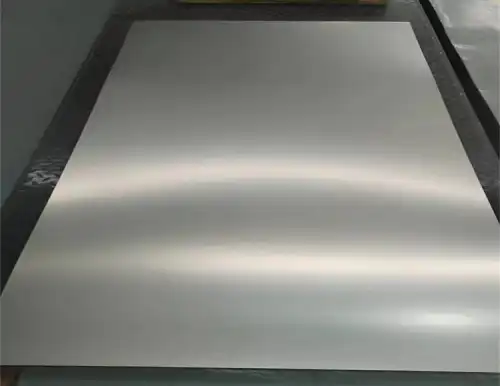
Understanding AMS 4911 Titanium Sheet – Specifications and Properties
AMS 4911 represents the aerospace specification for annealed titanium alloy sheets, strips, and plates, distinguished by its alpha-beta microstructure and stringent metallurgical controls. This material belongs to the Ti-6Al-4V family, classified as Grade 5 under ASTM B265 standards, yet carries additional manufacturing rigour demanded by aerospace applications.
Chemical Composition and Purity Standards
The chemical makeup of this titanium alloy directly influences its mechanical behaviour and environmental resistance. Our AMS 4911 plate contains aluminium at 5.50-6.75% by weight, which stabilises the alpha phase and improves strength at elevated temperatures. Vanadium content ranges from 3.50 to 4.50%, promoting the beta phase for enhanced formability. Critical interstitial elements are tightly controlled—carbon remains below 0.08%, nitrogen under 0.05%, and hydrogen is limited to 0.015% maximum—to prevent embrittlement that could compromise structural integrity during service. Iron content stays within 0.30% to maintain corrosion resistance without sacrificing weldability. This precise chemistry, verified through spectroscopic analysis on every production heat, ensures consistency across batches shipped to different continents.
Mechanical Performance Parameters
Ti-6Al-4V titanium amalgam shows uncommon resistance to chloride-induced corrosion, beating austenitic stainless steels in seawater, brine environments, and acidic gas environments common in seaward oil generation. The detached oxide film that suddenly forms on the surface provides assurance against oxidising acids and soluble media experienced in chemical preparation plants. Our fabric keeps up basic keenness when exposed to fuel, pressure-driven liquids, and flying oils, making it vital for aviation fuel system components and water-powered actuators where contamination might trigger disastrous disappointments.
Thermal Characteristics and Operating Limits
The beta transus temperature for this alloy falls between 1800°F and 1850°F (982°C-1010°C), defining the transformation boundary between phase structures. Practical service temperatures extend to approximately 600°F (315°C) for continuous operation, beyond which oxidation rates accelerate, and creep deformation becomes significant. Heat treatment protocols we implement include annealing at controlled temperatures to achieve optimal grain structure, followed by air cooling to lock in the desired mechanical properties. Stress-relief cycles can be applied post-fabrication to minimise residual stresses from machining or welding operations, extending component fatigue life in demanding installations.
Corrosion Resistance in Industrial Environments
Ti-6Al-4V titanium amalgam shows uncommon resistance to chloride-induced corrosion, beating austenitic stainless steels in seawater, brine arrangements, and acidic gas environments common in seaward oil generation. The detached oxide film that suddenly forms on the surface gives assurance against oxidising acids and soluble media experienced in chemical preparation plants. Our fabric keeps up basic keenness when exposed to fuel, pressure-driven liquids, and flying oils, making it vital for aviation fuel system components and hydraulic actuators where contamination might trigger disastrous disappointments.
AMS 4911 Titanium Sheet vs Competing Materials – Making the Right Choice
Procurement teams evaluating high-performance materials face complex trade-offs between mechanical properties, environmental resistance, cost considerations, and supply chain reliability.
Comparison with Related Titanium Specifications
AMS 4910 covers solution-treated and matured Ti-6Al-4V, conveying higher quality (at least 160 ksi extreme malleability) but decreased ductility compared to toughened AMS 4911 fabric. This heat-treated condition suits applications that prioritise the greatest load-bearing capacity over formability. AMS 4928 applies to bars, wire, and forgings of the same combination composition, where grain stream introduction varies from rolled plate items. When planning aircraft assemblies, engineers select AMS 4911 plate for bulkhead skins and fuselage panels requiring direct shaping, whereas they indicate AMS 4928 bar stock for machined landing gear fittings for directional quality things.
Performance Against Alternative Alloys
Inconel 718 nickel superalloy maintains mechanical properties at temperatures exceeding 1000°F (538°C), far beyond titanium's operational ceiling, yet weighs nearly twice as much. Stainless steel 316 offers lower material costs and easier machinability but corrodes rapidly in chloride environments that titanium easily withstands. For applications operating below 600°F where weight reduction drives design—such as helicopter rotor hubs or missile airframe structures—the AMS 4911 plate provides an optimal balance of strength, corrosion immunity, and processability that neither nickel alloys nor stainless steels can match at comparable weight penalties.
Realistic Assessment of Material Limitations
Titanium alloys present challenges that buyers must acknowledge. Machining rates are slower than aluminium, requiring specialised tooling and cutting parameters to prevent work hardening. Welding demands inert atmosphere protection to avoid contamination, increasing fabrication complexity. Material costs per pound exceed commodity metals, though lifecycle value often justifies the investment through extended service intervals and reduced maintenance. These characteristics make the Ti-6Al-4V sheet the most economical choice in applications where its unique combination of properties solves problems that cheaper alternatives cannot address effectively.
Procuring AMS 4911 Titanium Sheets from China – What Global Buyers Need to Know?
China's titanium manufacturing sector has matured significantly over the past two decades, with leading producers achieving quality parity with Western mills while maintaining cost competitiveness.
Supplier Landscape and Certification Requirements
As a certified manufacturer operating since 2000, we hold PED 2014/68/EU compliance for pressure equipment; ISO 9001:2015 quality management certification; and approvals from classification societies, including DNV, ABS, CCS, BV, and Lloyd's Register. Our production licence for special equipment from Chinese authorities, combined with TUV Nord AD2000-W0 certification, demonstrates adherence to international manufacturing standards. When evaluating Chinese suppliers, procurement professionals should verify active certifications through direct contact with issuing bodies, review audit reports from third-party agencies like SGS or Bureau Veritas, and request mill test reports from recent production runs to confirm chemical and mechanical property consistency.
Pricing Structures and Order Parameters
Minimum order quantities for AMS 4911 plate typically start at 500 kg for standard dimensions, though we can accommodate smaller volumes for prototype development or specialised projects. Pricing reflects several variables: raw material costs fluctuate with global titanium sponge markets, thickness and width outside standard ranges incur tooling premiums, and surface finish requirements (mill finish versus polished) affect processing charges. Lead times average 8-12 weeks from order confirmation for stock sizes, extending to 14-16 weeks for custom dimensions that require specialised rolling campaigns. Volume commitments across multiple deliveries often unlock preferential pricing structures, rewarding long-term partnerships with cost predictability.
International Logistics and Trade Terms
We ship globally using FOB Tianjin, CIF destination port, or DDU terms, depending on buyer preference and internal logistics capabilities. For North American deliveries, ocean freight to Houston or Los Angeles ports typically requires 25-30 days' transit, with rail or truck inland transportation adding another week. European shipments route through Rotterdam or Hamburg, reaching destinations in 35-40 days. Our documentation packages include commercial invoices, packing lists, certificates of origin, and material test reports meeting import requirements for US, EU, and Middle Eastern markets. Customs broking coordination and duty drawback consultation help buyers navigate regulatory complexities inherent in cross-border titanium trade.
Quality Assurance and Supplier Verification for AMS 4911 Titanium Sheets
Rigorous quality protocols separate reliable suppliers from commodity traders lacking manufacturing accountability.
Certification Hierarchy and Traceability Systems
Each AMS 4911 plate we create carries full fabric traceability through warm number markings stamped on the surface. Material Test Reports (MTRs) go with each shipment, recording chemical examination that results from optical emission spectroscopy, mechanical test information from pliable examples, and grain size estimations per ASTM E112. NADCAP accreditation, which is not held by all Chinese plants, represents the aviation industry's gold standard for uncommon, prepared endorsement. Our office keeps up identical quality frameworks examined yearly by classification, social orders and client agents from major oil companies and EPC firms. Third-party assessment services—DNV, SGS, TUV, or customer-designated agencies—witness testing at our office or conduct observation amid generation, producing free confirmation reports that accompany fabric shipments.
Supplier Audit Best Practices
Further video reviews have become a reasonable preparatory screening tool, permitting procurement teams to evaluate office layout, equipment capabilities, and quality documentation frameworks some time before committing to location visits. Amid physical reviews, buyers ought to look at crude fabric capacity conditions (titanium requires isolation from steel to avoid contamination), audit calibration records for testing gear, and meet quality staff around nonconformance-dealing strategies. Asking for tests from the current generation for autonomous testing at buyer-approved research facilities gives objective approval of provider claims. Case studies from our client base—including fruitful supply to PETRONAS refineries in Malaysia and PEMEX ventures in Mexico—demonstrate reliable execution over different mechanical applications and administrative locales.
Risk Mitigation Through Dual Sourcing
Whereas we keep up generation capacity surpassing 2,000 metric tonnes yearly, judicious procurement procedures consolidate supply chain versatility. Buyers on sourcing missions for critical components frequently qualify numerous providers across different geographic locations, adjusting their optimisation based on progress confirmation. Our manufacturing capacity and stock profundity bolster crisis orders and assisted conveyances when startling extended requests or supply disturbances influence essential sources. Long-term system escalations with committed volume figures empower us to save production opportunities and keep up key stock, securing buyers from market instability while securing particular commercial terms.
Maximising Value – How to Effectively Use AMS 4911 Titanium Sheets in Your Projects?
Material selection represents only the beginning of value realisation—proper application engineering and lifecycle management multiply return on investment.
Application Optimisation Across Industry Sectors
In aerospace applications, our AMS 4911 plate forms fuselage skins on regional jets and military transports, where its fatigue resistance withstands pressurisation cycles exceeding 60,000 flights. Defence contractors machine armour panels from thicker gauges, leveraging titanium's specific energy absorption characteristics for personnel carrier protection. Chemical processing plants specify this material for reactor vessel linings and heat exchanger plates handling corrosive streams that would destroy stainless steel in months. Offshore oil platforms use titanium for saltwater piping systems and fire suppression equipment, eliminating costly corrosion-induced failures that plague conventional materials in marine environments. Each application capitalises on specific property combinations—temperature stability, corrosion immunity, or strength-to-weight ratio—that justify premium material costs through extended service life and reduced downtime.
Fabrication and Handling Protocols
Proper storage prevents surface contamination and mechanical damage that could compromise performance. Our material ships with protective interleaving paper between sheets and arrives in wooden crates suitable for warehouse stacking. Fabrication shops should store titanium separately from carbon steel to avoid iron contamination, maintain clean work surfaces, and use dedicated tooling to prevent pickup of foreign materials. Cutting operations employ lower speeds and higher feed rates than aluminium, with abundant coolant flow to manage heat generation. Forming requires larger bend radii than steel of equivalent thickness, with spring-back compensation built into die design. Welding consumes argon shielding gas at higher flow rates than steel applications, with trailing shields and backing purges protecting the heat-affected zone from atmospheric contamination that causes embrittlement.
Emerging Trends and Future Applications
Additive manufacturing using Ti-6Al-4V powder opens possibilities for complex geometries unachievable through conventional rolling and machining, though sheet stock remains more economical for large-surface-area components. Hybrid manufacturing—using wrought plate and laser-deposited features—combines a cost-effective base material with design flexibility for localised reinforcement. Superplastic forming techniques exploit the alloy's high-temperature ductility to produce intricate contours from single sheets, reducing assembly complexity in aerospace structures. As hydrogen energy infrastructure expands, titanium's compatibility with gaseous and liquid hydrogen positions AMS 4911 material for emerging applications in fuel cell systems and cryogenic storage vessels, where conventional alloys suffer rapid embrittlement.
Conclusion
Sourcing AMS 4911 titanium sheets from qualified Chinese manufacturers delivers compelling value when buyers partner with established suppliers demonstrating verifiable certifications, production capacity, and quality systems. Our facility combines over twenty years of manufacturing expertise with comprehensive international approvals, serving global leaders in oil and gas, aerospace, and marine industries. The material's exceptional property profile—superior corrosion resistance, high strength-to-weight ratio, and proven performance in extreme environments—makes it indispensable for critical applications where failure consequences far exceed material cost premiums. Successful procurement requires rigorous supplier qualification, attention to specification compliance, and collaborative relationships enabling responsive support throughout project lifecycles.
FAQ
What distinguishes AMS 4911 from commercial Grade 5 titanium?
AMS 4911 incorporates aerospace-specific controls on defect density, inspection frequency, and mechanical property verification that exceed ASTM B265 requirements. Ultrasonic testing per AMS 2631 detects internal discontinuities missed by standard inspection methods, while lot sampling protocols ensure statistical confidence in mechanical properties. These additional controls increase material cost marginally but provide reliability assurance essential for aircraft structural components where undetected flaws could trigger catastrophic failures.
Can the AMS 4911 sheet be welded, and what precautions apply?
Ti-6Al-4V exhibits good weldability using gas tungsten arc welding (GTAW) or plasma arc welding with argon shielding. The heat-affected zone requires protection from atmospheric contamination through trailing shields and backing purges until metal temperatures drop below 800°F. Post-weld stress relief at 1000-1200°F for two hours minimises residual stresses in thick sections. Properly executed welds achieve joint efficiencies exceeding 90% of base metal strength, suitable for pressure vessels and structural assemblies.
How does thickness affect pricing and availability?
Standard thicknesses ranging from 0.020" to 2.00" ship from inventory within our quoted lead times. Gauges exceeding 2.50" require specialised rolling campaigns, adding 4-6 weeks to delivery schedules and incurring minimum order quantities of around 2,000 kg per dimension. Pricing scales non-linearly above 1.50" thickness due to yield losses during rolling and increased raw material consumption. Buyers can optimise costs by designing components within standard thickness ranges where market competition and production efficiencies concentrate.
Partner with a Trusted AMS 4911 Plate Manufacturer for Your Next Project
LINHUI TITANIUM stands ready to support your procurement objectives with certified AMS 4911 plates backed by comprehensive quality documentation and responsive technical support. Our integrated titanium products supermarket stocks multiple grades and specifications, enabling consolidated sourcing that simplifies vendor management and logistics coordination. Direct partnerships with national oil companies, including CEFC, KOC, and PEMEX, validate our capability to deliver world-class materials meeting the most demanding specifications. Contact our engineering team at linhui@lhtitanium.com to discuss your specific requirements—whether prototyping new designs, qualifying alternative suppliers, or establishing long-term supply agreements. We provide material data sheets, sample shipments for qualification testing, and competitive quotations tailored to your volume requirements and delivery timelines. As a certified supplier serving over 60 countries, we understand the complexities of international procurement and deliver solutions that balance quality assurance with commercial competitiveness.
References
1. SAE International. (2021). Aerospace Material Specification AMS 4911: Titanium Alloy Sheet, Strip, and Plate, 6Al-4V, Annealed. Warrendale, PA: SAE International.
2. ASTM International. (2020). ASTM B265-20: Standard Specification for Titanium and Titanium Alloy Strip, Sheet, and Plate. West Conshohocken, PA: ASTM International.
3. Boyer, R., Welsch, G., & Collings, E.W. (2019). Materials Properties Handbook: Titanium Alloys. Materials Park, OH: ASM International.
4. Lütjering, G., & Williams, J.C. (2018). Titanium: Engineering Materials and Processes. Berlin: Springer-Verlag.
5. Donachie, M.J. (2017). Titanium: A Technical Guide, 2nd Edition. Materials Park, OH: ASM International.
Peters, M., & Leyens, C. (eds.). (2016). Titanium and Titanium Alloys: Fundamentals and Applications. Weinheim: Wiley-VCH Verlag GmbH.